Artwork
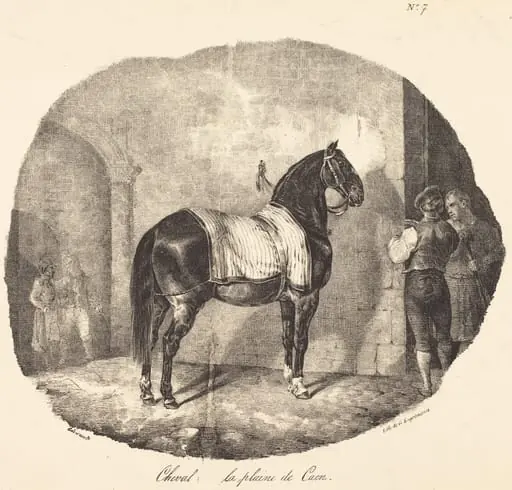
Lithographed Studies of Horses: Pl. 7, Horse from the Caen Plain
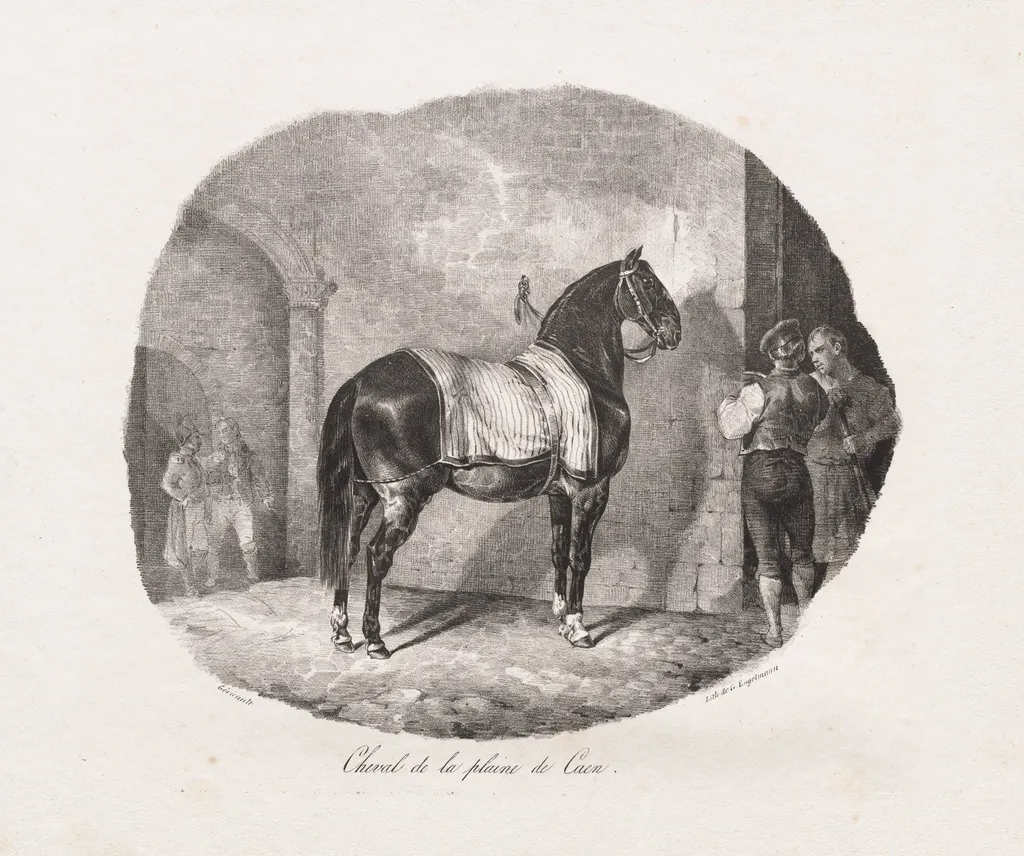
Lithographed Studies of Horses: Pl. 7, Horse from the Caen Plain is a print by the Romanticist artist Théodore Géricault. It dates from 1822 and is held in the collection of the Cleveland Museum of Art.
About this work
Overview
Created in 1822 by Théodore Géricault, this lithograph is part of a series exploring equine anatomy. Produced during the final years of the artist’s life, it reflects his sustained interest in horses, which also informed his larger works. The image is one of several lithographic studies made after his return from England, where he observed and sketched horses in rural settings.
Subject & Meaning
The print centers on a standing horse, equipped with a striped blanket and bridle, facing right against a stone wall with an arched opening.
The print centers on a standing horse, equipped with a striped blanket and bridle, facing right against a stone wall with an arched opening. Two figures stand beside it, one holding a hat, the other gesturing toward his chest. Their presence suggests a moment of quiet observation, possibly a stablehand or farmer. The composition emphasizes stillness and presence, avoiding drama in favor of attentive realism.
Technique & Style
Géricault employed lithography to achieve subtle tonal gradations and textured surfaces. The horse’s form is rendered with precise, controlled lines, while the stone wall and clothing are suggested through hatched shading. The contrast between the light blanket and dark garments enhances depth. The medium allowed for direct, immediate expression, aligning with his preference for observational accuracy over idealization.
History & Provenance
This print was made in 1822, shortly after Géricault’s trip to England, where he studied horses at racecourses and farms. He produced a series of lithographs based on these sketches, intending to publish them as an illustrated study. Though the full project was never completed, this plate survives as part of a small, privately circulated set, later acquired by institutions for its technical and artistic merit.
Context
In early 19th-century France, equine studies were both scientific and cultural, tied to military, agricultural, and sporting life. Géricault’s focus on the horse aligned with Romanticism’s interest in nature and lived experience, rejecting academic idealism. His approach was grounded in direct observation, distinguishing his work from mythological or heroic equestrian imagery common in earlier traditions.
Legacy
Though lesser known than his monumental paintings, Géricault’s lithographic studies influenced later artists interested in anatomical precision and expressive realism. His method of using lithography for scientific observation helped elevate the medium beyond commercial reproduction. These works remain valued for their quiet intensity and commitment to seeing the animal as it is, not as it was imagined.
Artist & collection
Artist
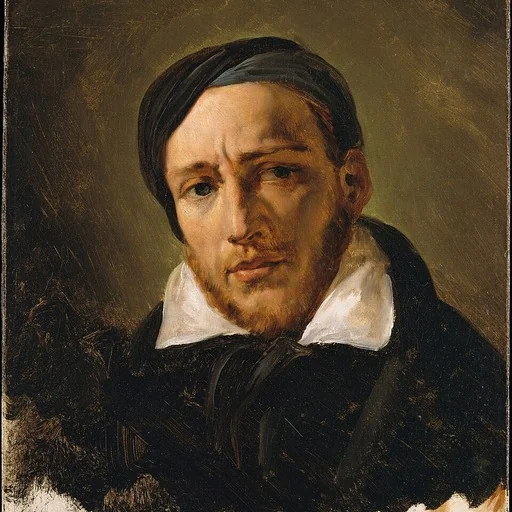
Jean-Louis André Théodore Géricault (French: ; 26 September 1791 – 26 January 1824) was a French painter and lithographer.

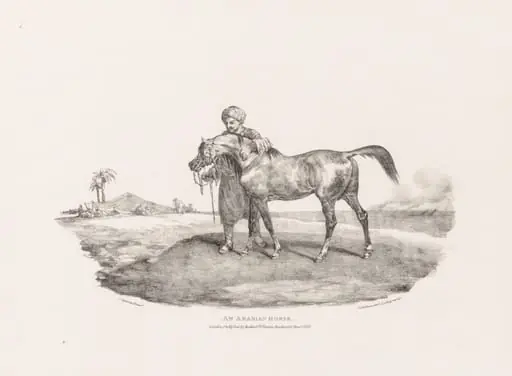 Various Subjects Drawn from Life and on Stone: An Arabian Horse
 Cheval de la plaine de Caen
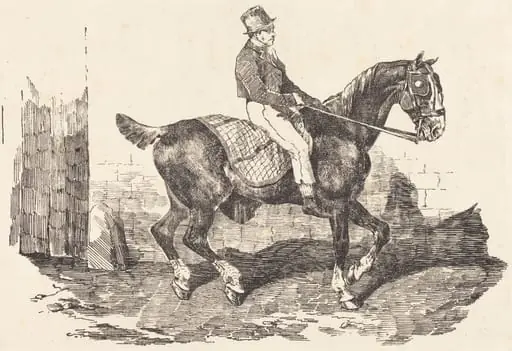 Groom Mounted on a Carriage-Horse (Cheval de carrosse monte par un palfrenier)
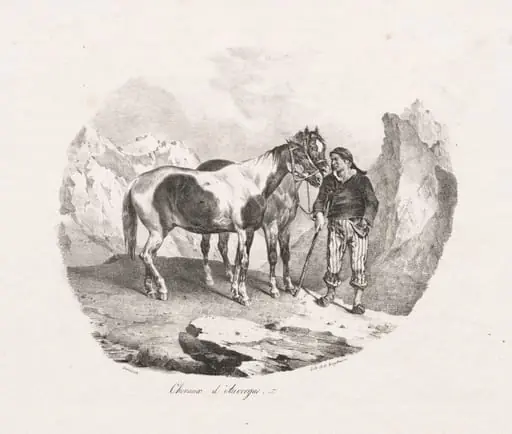 Chevaux d' Auvergne
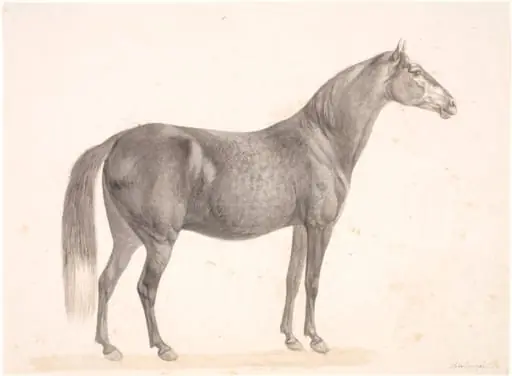 Sort hest
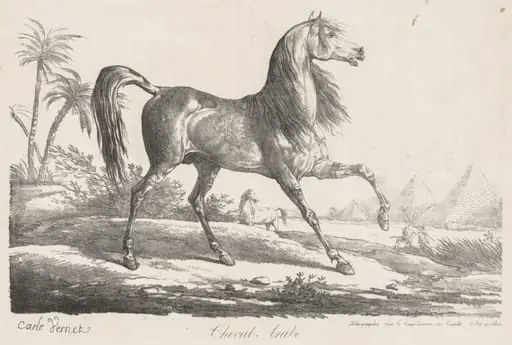 Suite de Chevaux: Cheval Arabe
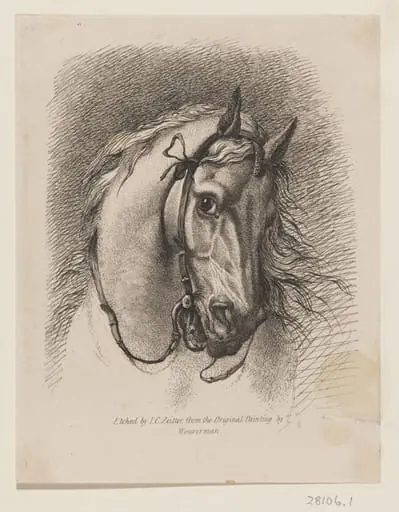 Untitled
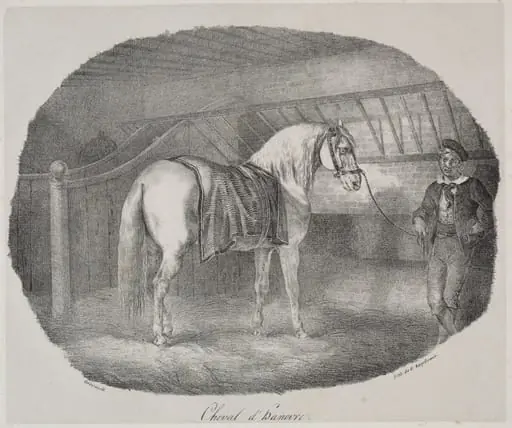 Horse from Hanover
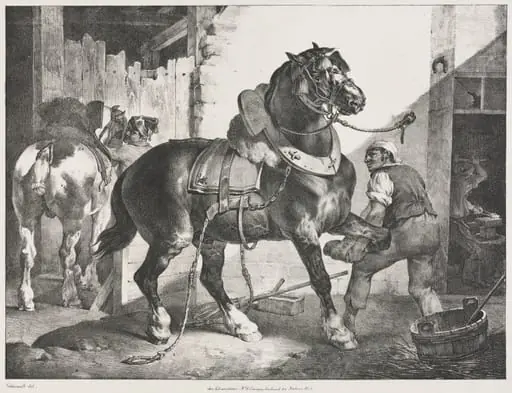 The French Blacksmith
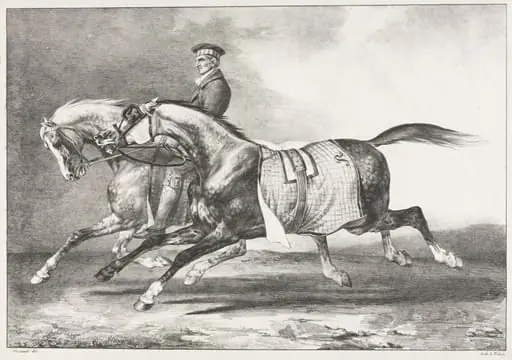 Two Dappled Horses Exercising
 Standing Brown Horse
 Cavalier on Horseback