Artwork
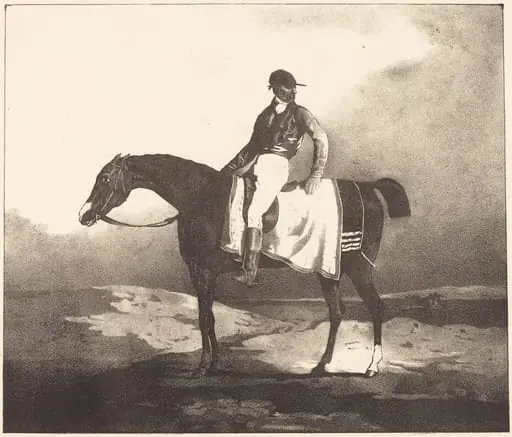
Groom Mounted on a Carriage-Horse (Cheval de carrosse monte par un palfrenier)
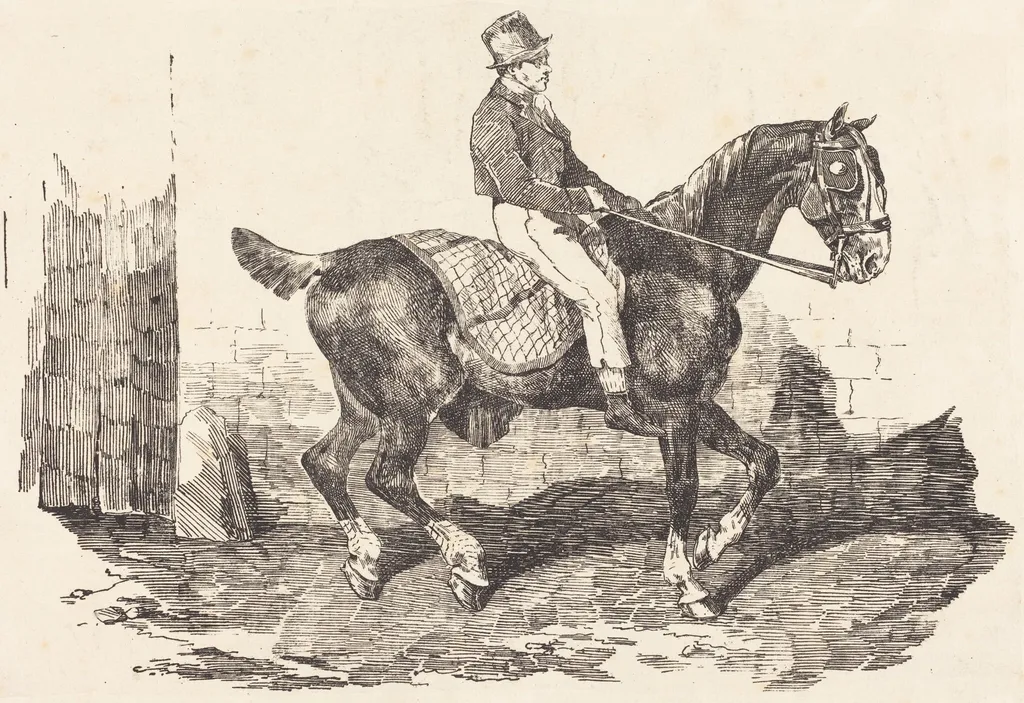
Groom Mounted on a Carriage-Horse (Cheval de carrosse monte par un palfrenier) is an ink print by the Romanticist artist Théodore Géricault. It dates from 1820 and is held in the collection of the National Gallery of Art.
About this work
Overview
Executed during the final years of the artist’s life, the work reflects his sustained interest in equine anatomy and equestrian labor.
Created in 1820 by Théodore Géricault, this lithograph captures a groom astride a carriage horse in motion. Executed during the final years of the artist’s life, the work reflects his sustained interest in equine anatomy and equestrian labor. Unlike his large-scale historical paintings, this piece focuses on an everyday scene, revealing his engagement with the physicality of animals and the quiet discipline of their handlers.
Subject & Meaning
The image portrays a stable worker testing a horse’s balance, seated sideways as the animal lifts one foreleg mid-stride. The loose reins and relaxed posture suggest a moment of controlled assessment rather than forceful command. The scene avoids idealization, presenting the horse and rider as functional partners in a working environment, underscoring Géricault’s fascination with real, unembellished movement.
Technique & Style
Géricault employed lithography to achieve rapid, expressive lines that convey tension and motion. The horse’s musculature is rendered with swift, confident strokes, while the background—rough stone and stacked logs—is minimized to focus attention on the figures. The medium’s immediacy allowed him to capture the animal’s dynamic posture, aligning with Romantic ideals of vitality over formal precision.
History & Provenance
Produced in 1820, this lithograph emerged during Géricault’s period of intense printmaking activity, following his return from England. It was likely made as part of a series exploring horses and their handlers, though few of these prints were widely distributed in his lifetime. The work remained largely in private collections until the 20th century, when it gained recognition for its technical innovation and emotional resonance.
Context
In early 19th-century France, equestrian imagery often served aristocratic or military themes. Géricault’s focus on a groom—a figure of modest status—shifted attention to the labor behind luxury transport. His interest in horses was also personal; he studied them at stables and races, rejecting academic conventions in favor of direct observation, a practice aligned with broader Romantic shifts toward authenticity.
Legacy
Though lesser known than his monumental paintings, this lithograph exemplifies Géricault’s influence on later artists who valued expressive line and anatomical truth. His use of lithography to depict motion prefigured 19th-century printmakers’ explorations of dynamic form. The work remains a quiet but significant testament to his commitment to capturing life in motion, beyond grand narratives.
Artist & collection
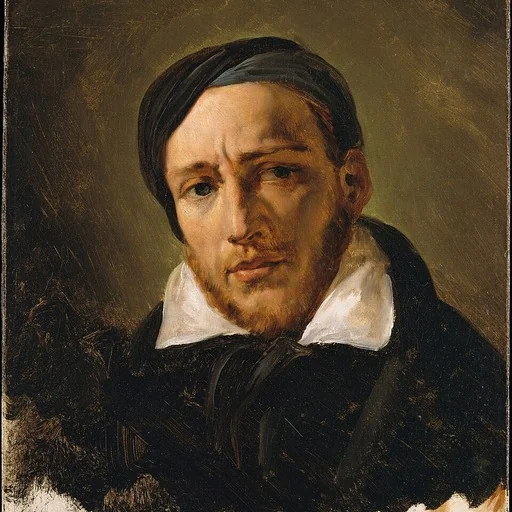
Artist
Jean-Louis André Théodore Géricault (French: ; 26 September 1791 – 26 January 1824) was a French painter and lithographer.

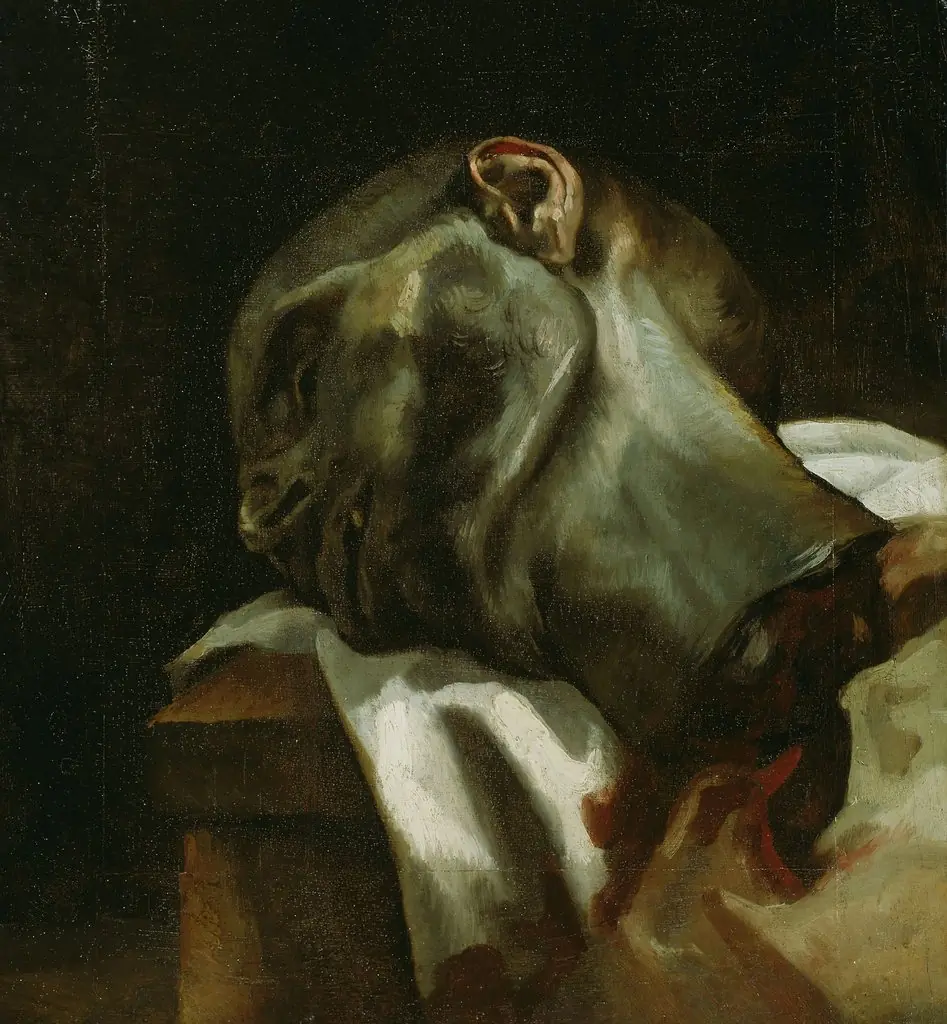
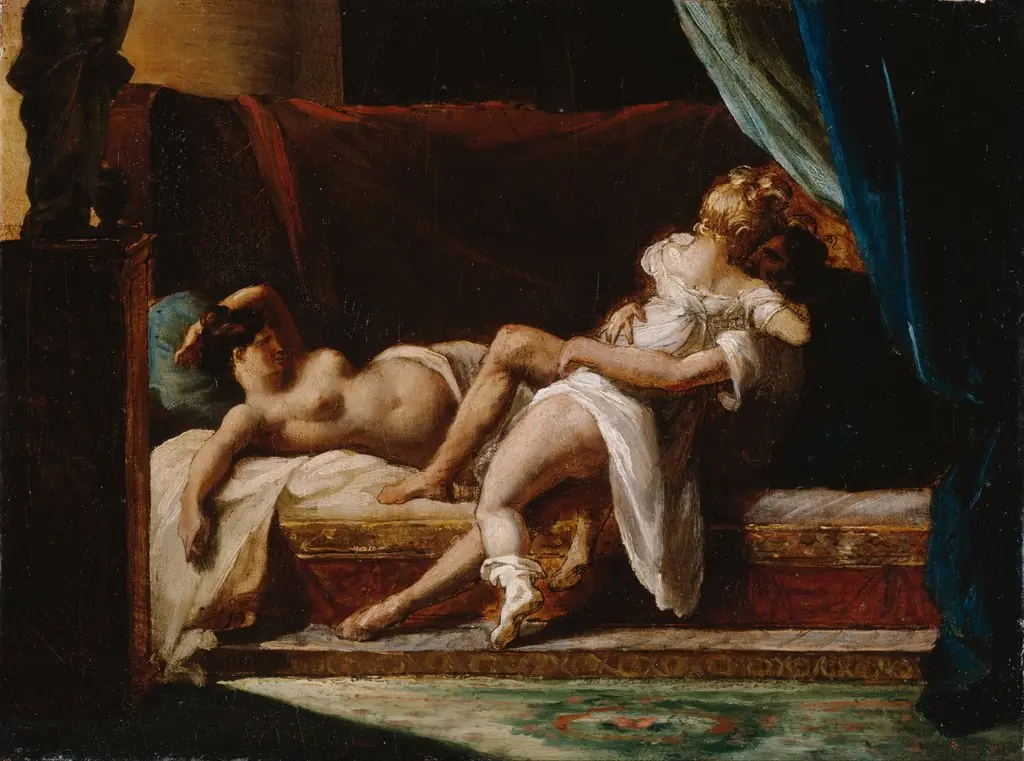
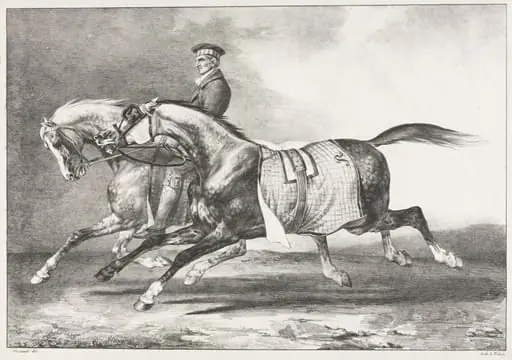 Two Dappled Horses Exercising
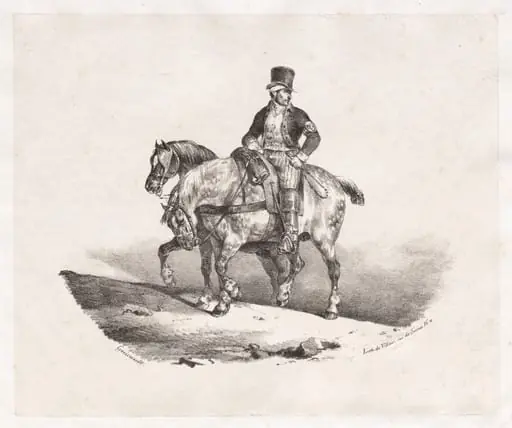 Postman or Two Harnessed Horses
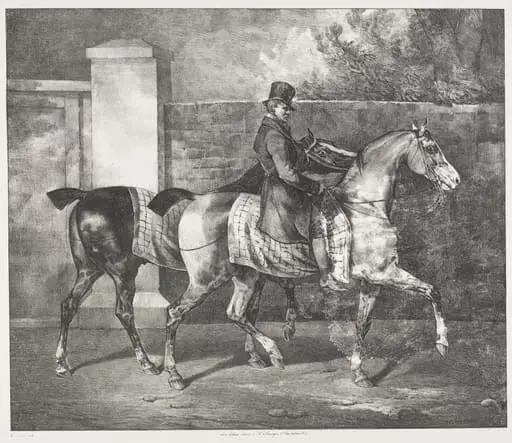 Two Horses Exercised by a Jockey
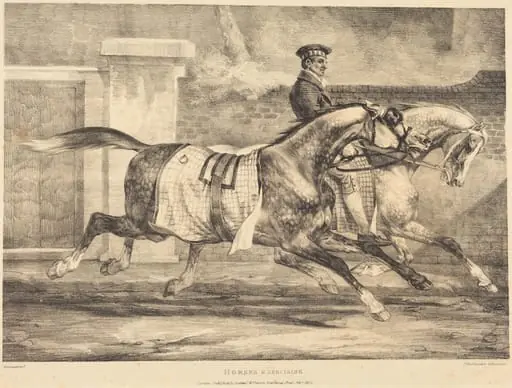 Horses Exercising
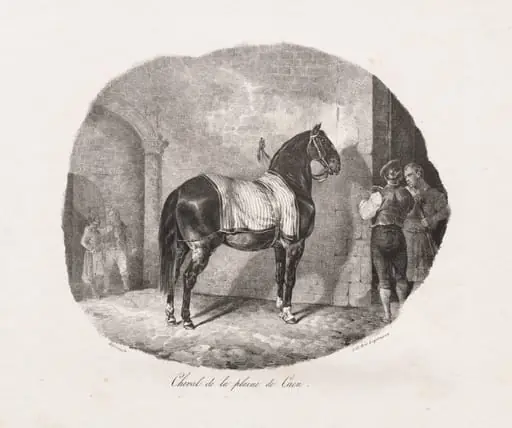 Lithographed Studies of Horses: Pl. 7, Horse from the Caen Plain
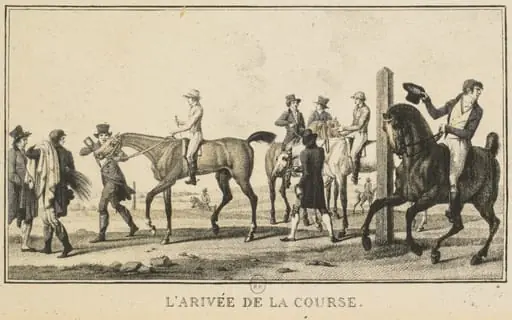 Racing Scenes: A Horse Arriving at the Race (Scènes Hippiques: Cheval arrivant de la chasse)
 British Horse and Jockey
 Horseman
 Outing on Horseback
 Équitation boutiquière