Artwork
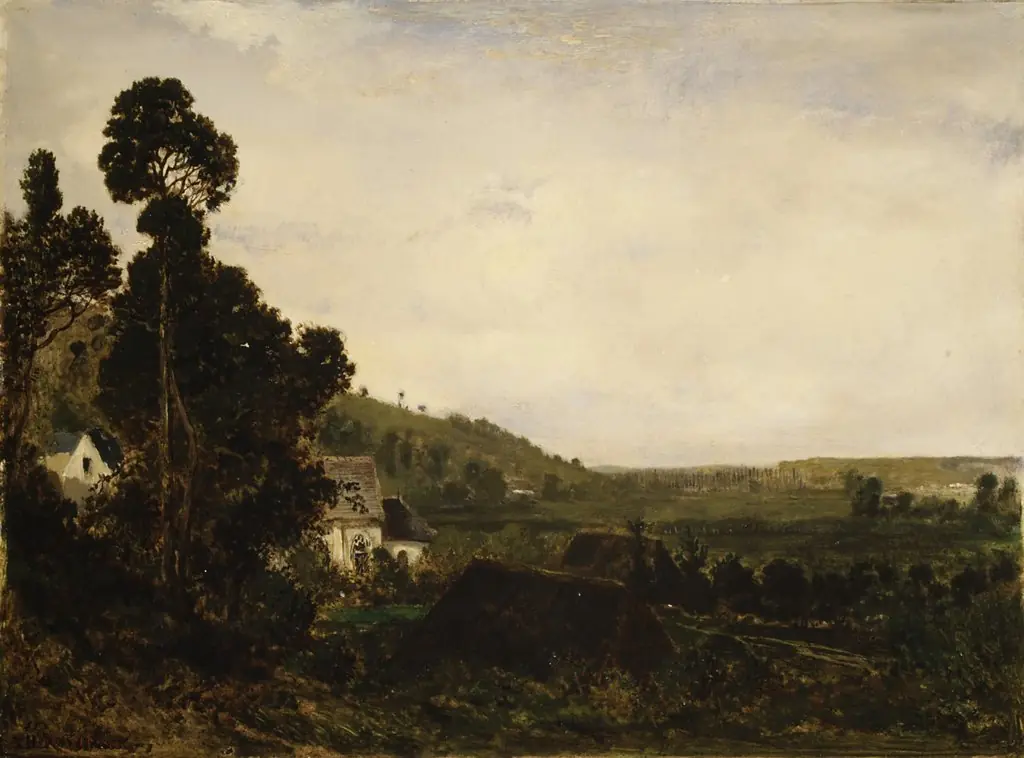
Farm in the Landes
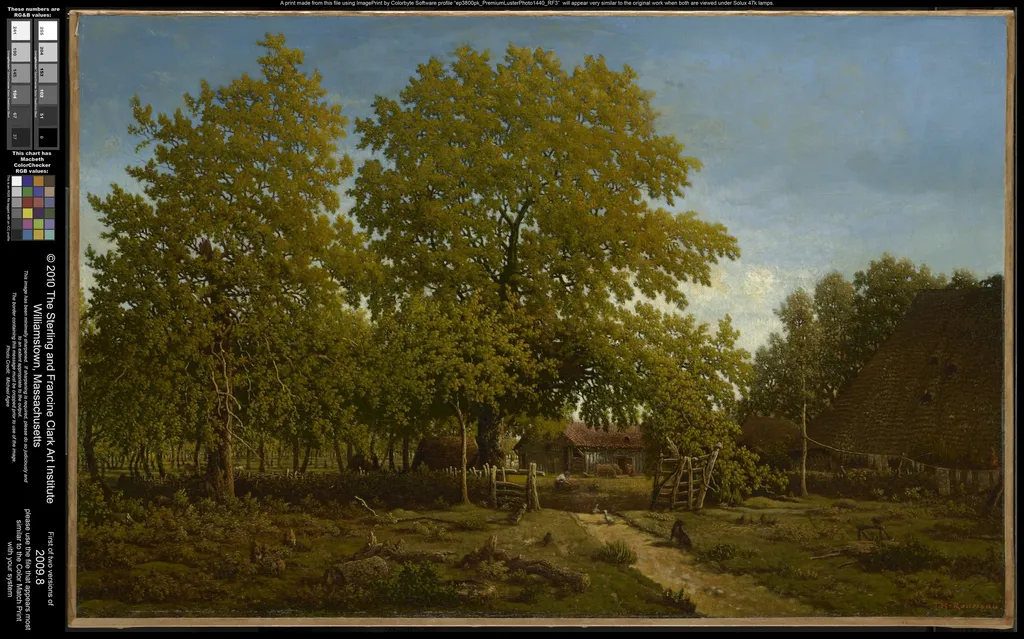
Farm in the Landes is an oil painting by the Barbizon school artist Théodore Rousseau. It dates from 1859 and is held in the collection of the Clark Art Institute.
About this work
Overview
Farm in the Landes, painted by Théodore Rousseau in 1859, is an oil painting exemplifying the Barbizon school’s emphasis on naturalistic rural landscapes through direct observation of nature.
Subject & Meaning
The painting portrays a serene rural scene with a prominent tree, fenced area, and distant cottage, evoking a peaceful atmosphere. The composition reflects Rousseau’s contribution to authentic and atmospheric land depictions.
Technique & Style
Rousseau employed chiaroscuro, achieving depth and volume through strong light and dark contrasts, notably in the interplay of sunlight and shadows beneath the trees.
History & Provenance
Created in 1859 by Théodore Rousseau, a key figure in the Barbizon school, the painting’s provenance details are not specified here.
Context
Part of the broader 19th-century shift towards naturalism in French art, Farm in the Landes aligns with the Barbizon movement’s rejection of idealized landscapes in favor of observed reality.
Legacy
While specific legacy details of Farm in the Landes are not provided, Rousseau’s overall body of work influenced the development of naturalistic landscape painting in France.
Artist & collection
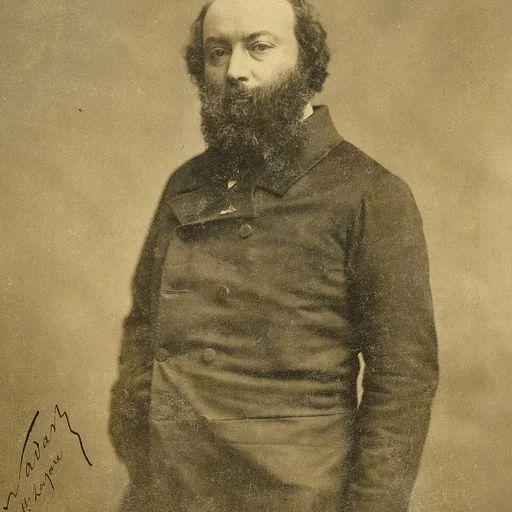
Artist
Étienne Pierre Théodore Rousseau (French pronunciation: ; 15 April 1812 – 22 December 1867) was a French painter of the Barbizon school.

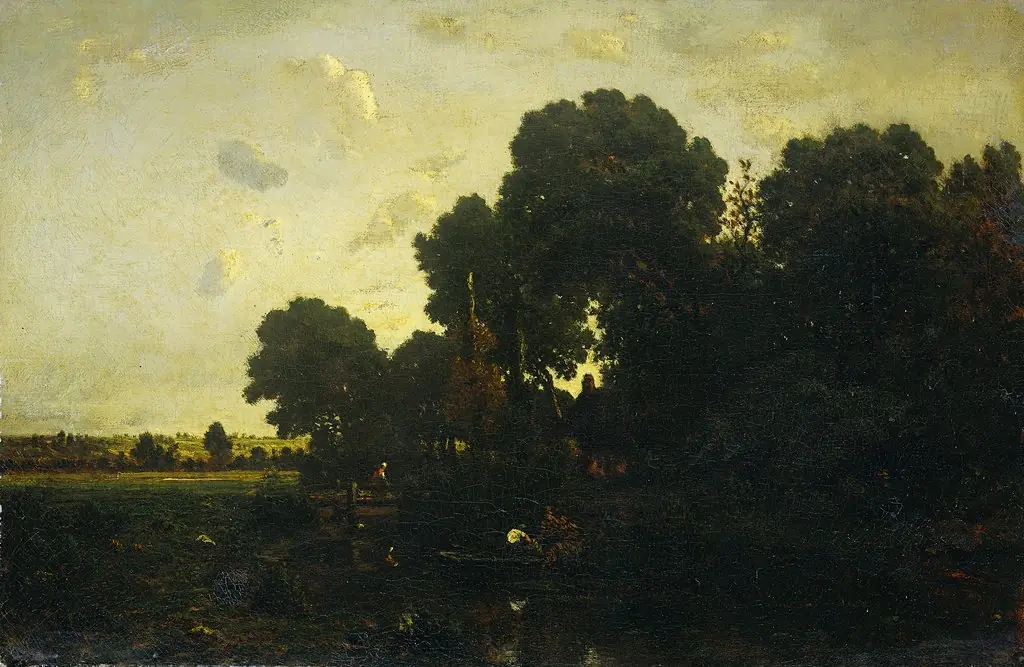
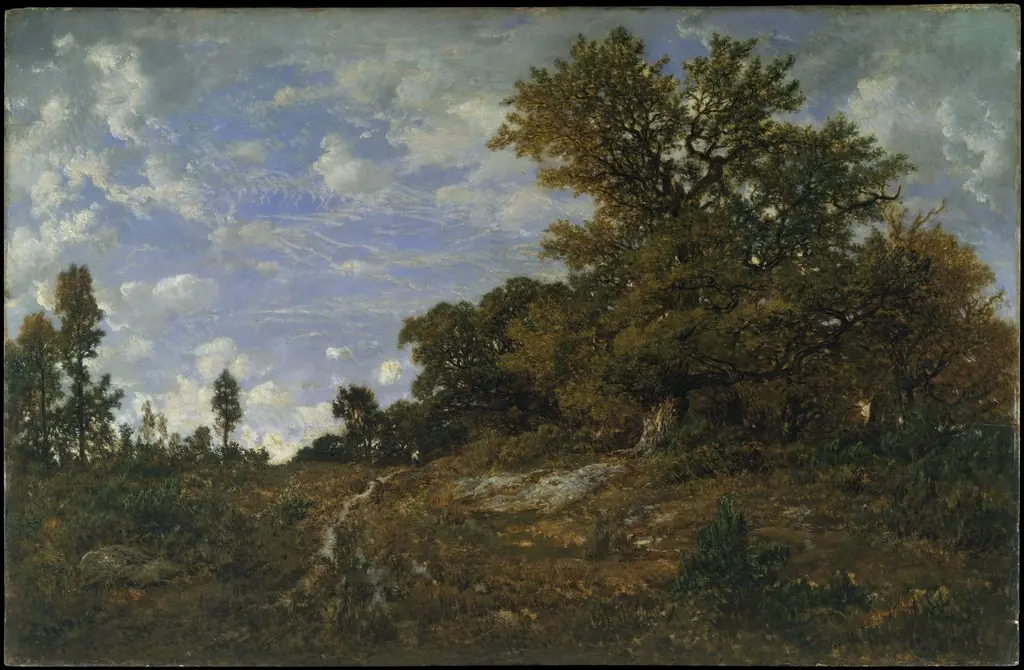
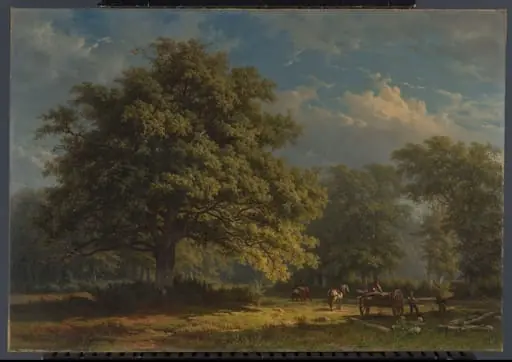 Gezicht in het Bentheimse bos
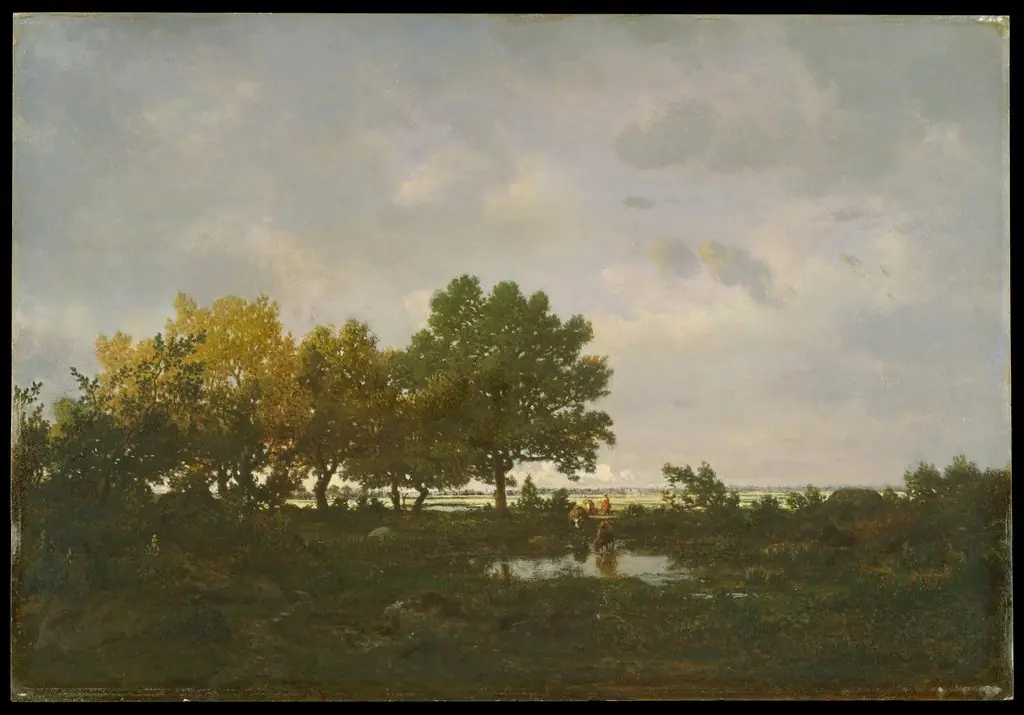 The Pond (La Mare)
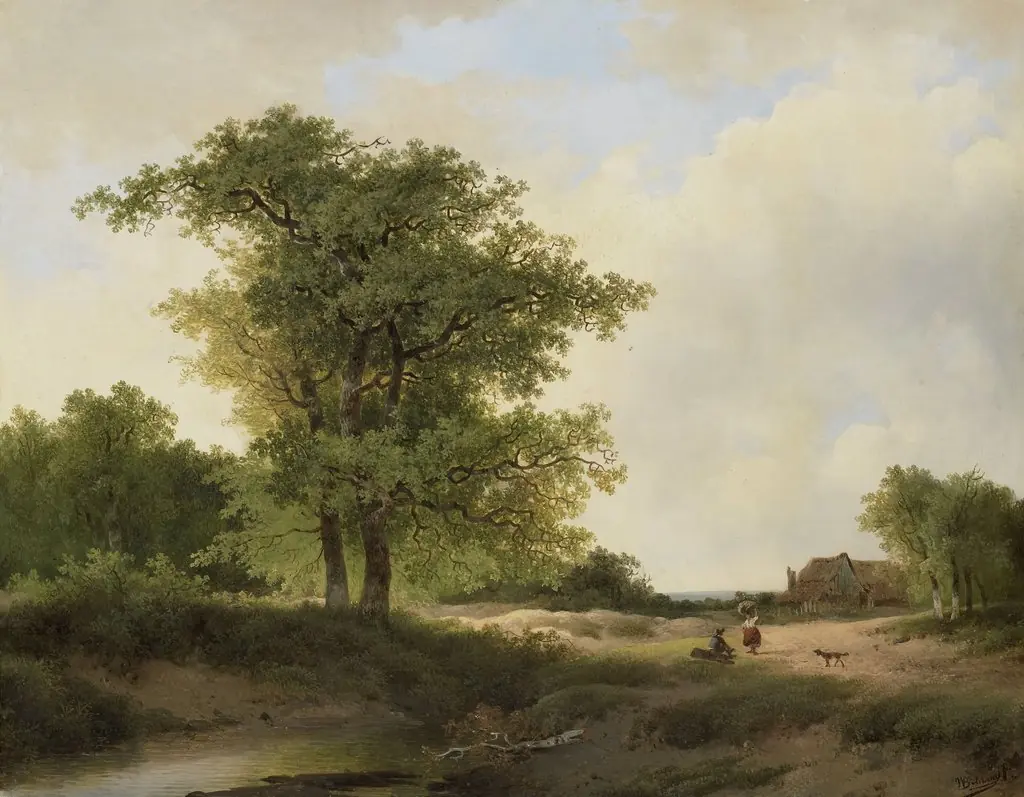 Landscape with Farmstead
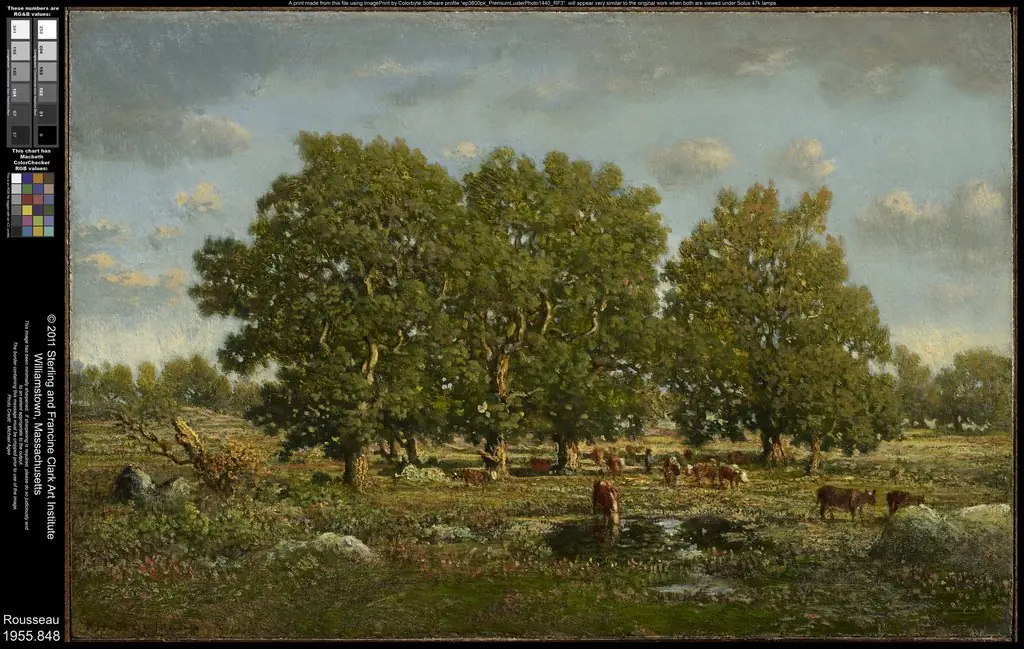 Landscape with Cows and Oaks
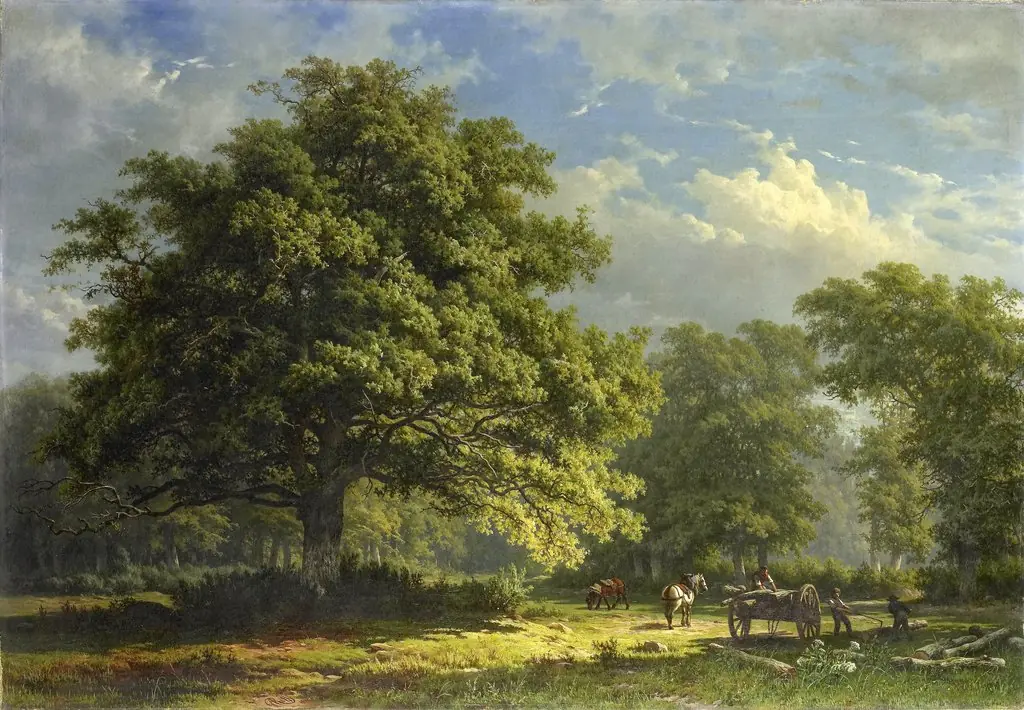 View in the Bentheim Forest
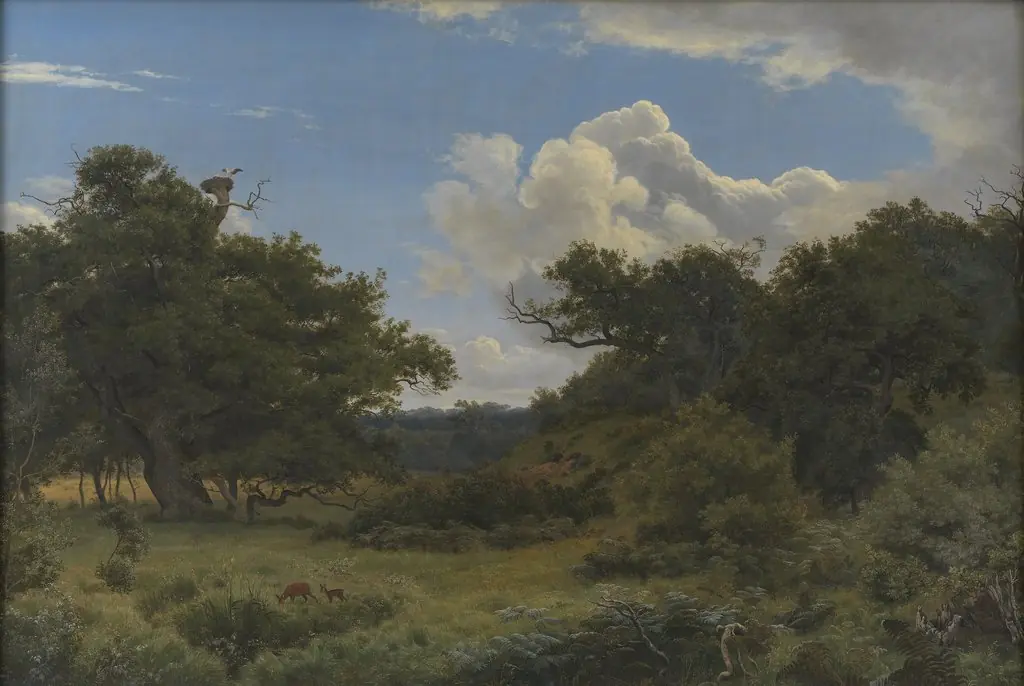 Oak Trees in Nordskoven near Jægerspris, Zealand
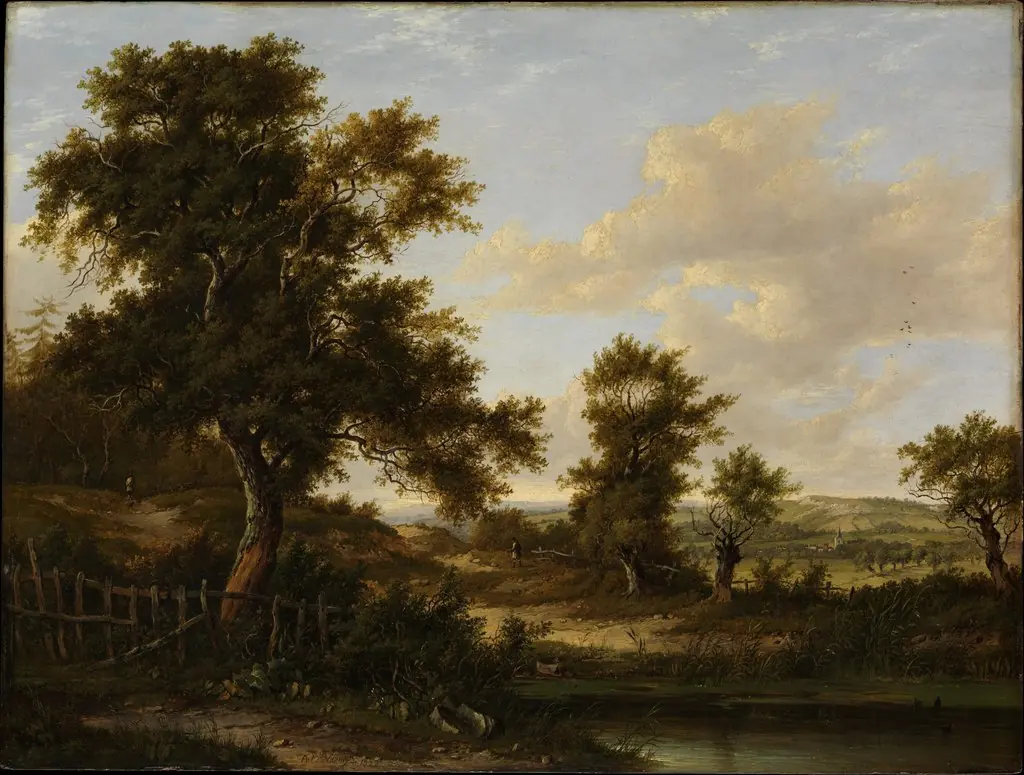 Near Penshurst, Kent
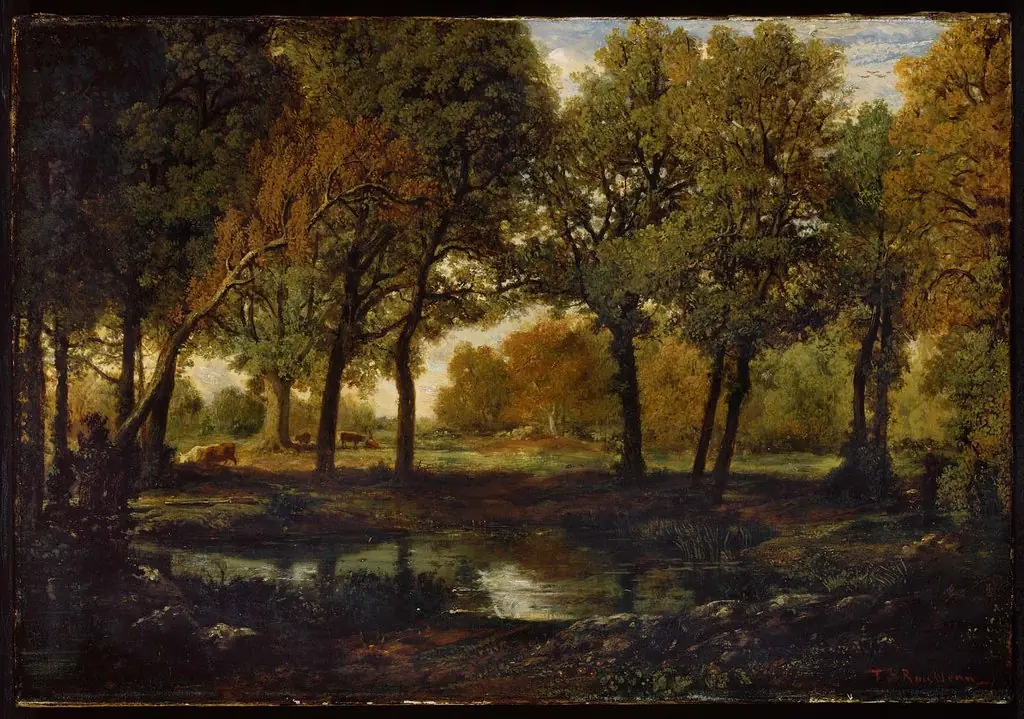 Pool in the Forest
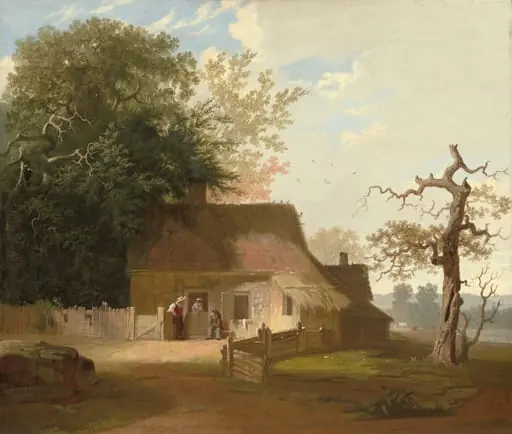 Cottage Scenery
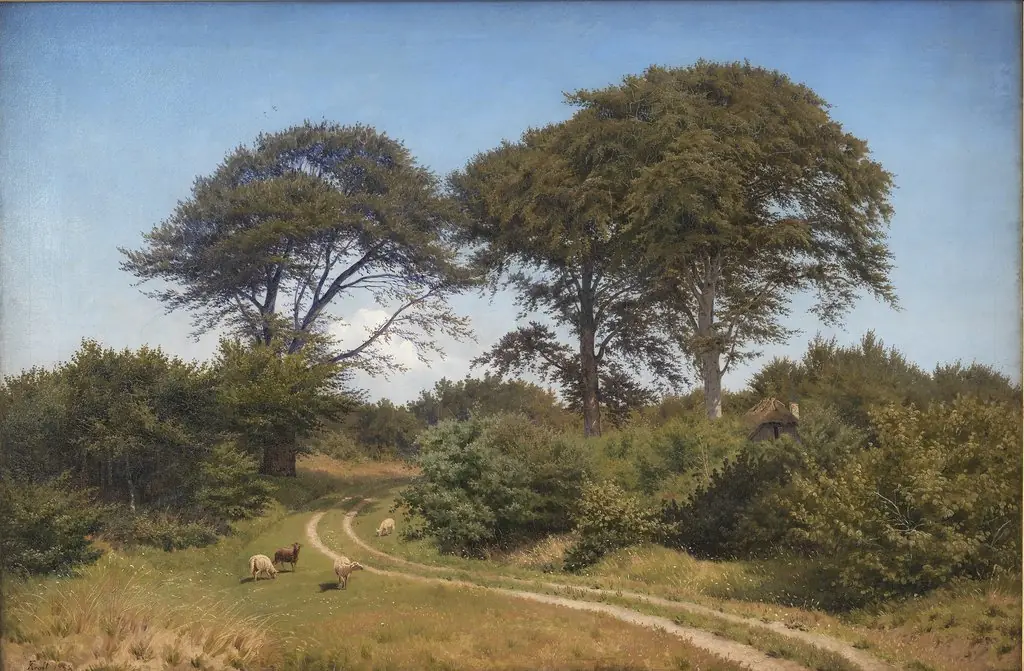 Parti af Færgelunden ved Jægerspris
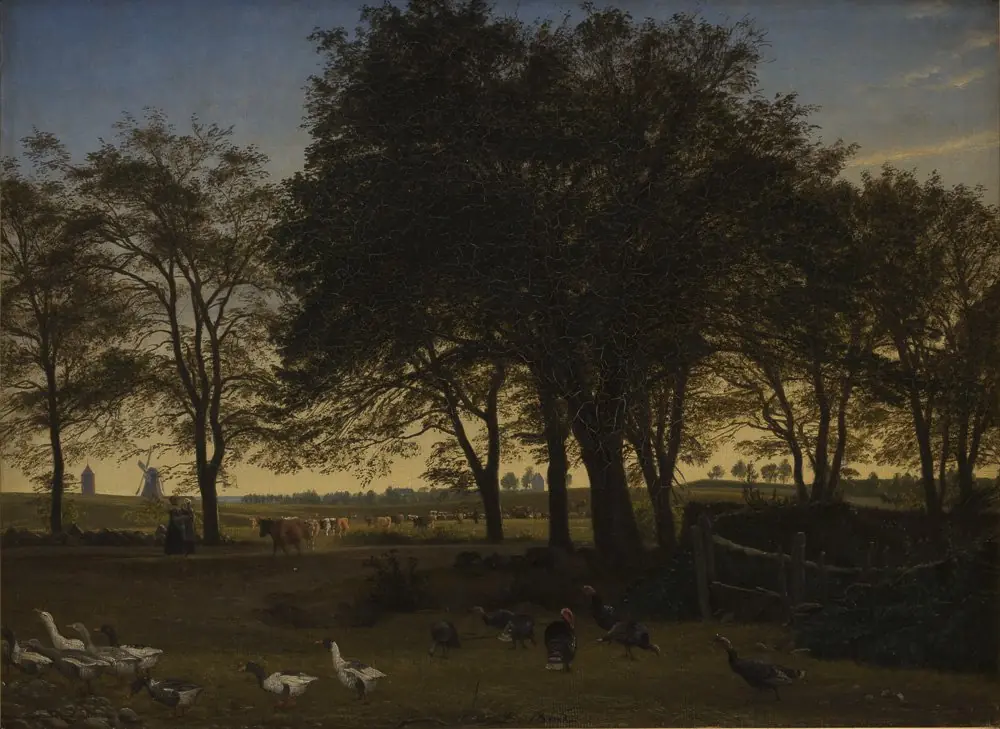 Parti ved Iselingen. I baggrunden Vordingborg Kirke og Gåsetårnet. Septemberaften
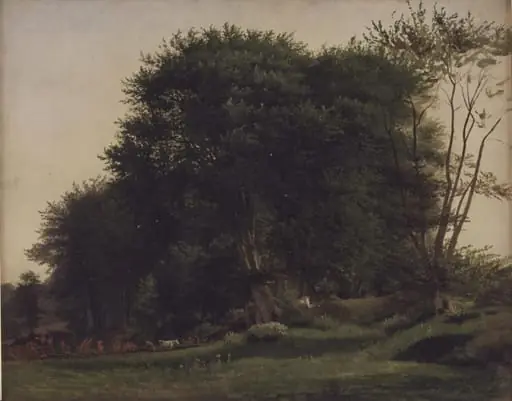 Skovlysning med kvæg