Artwork
Hoarfrost
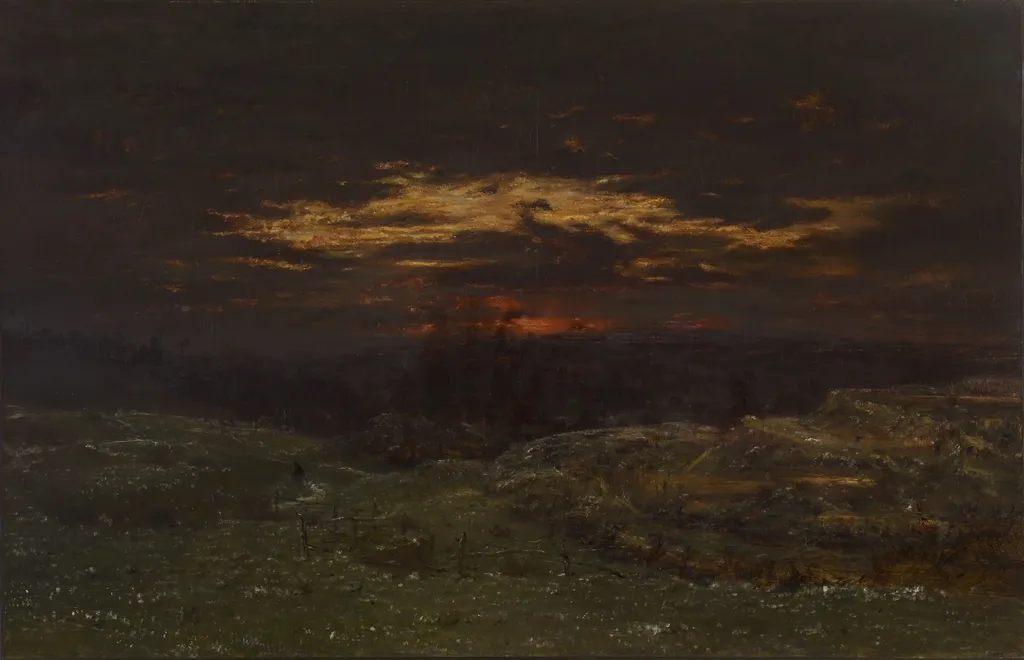
Hoarfrost is an oil painting by the Barbizon school artist Théodore Rousseau. It dates from 1845 and is held in the collection of the Walters Art Museum.
About this work
Overview
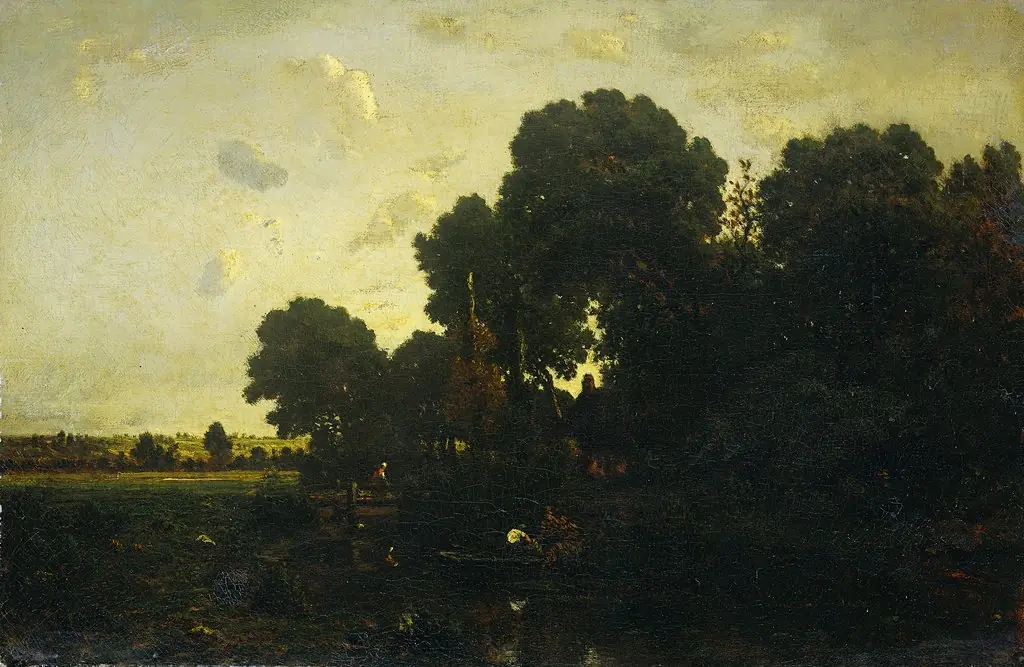
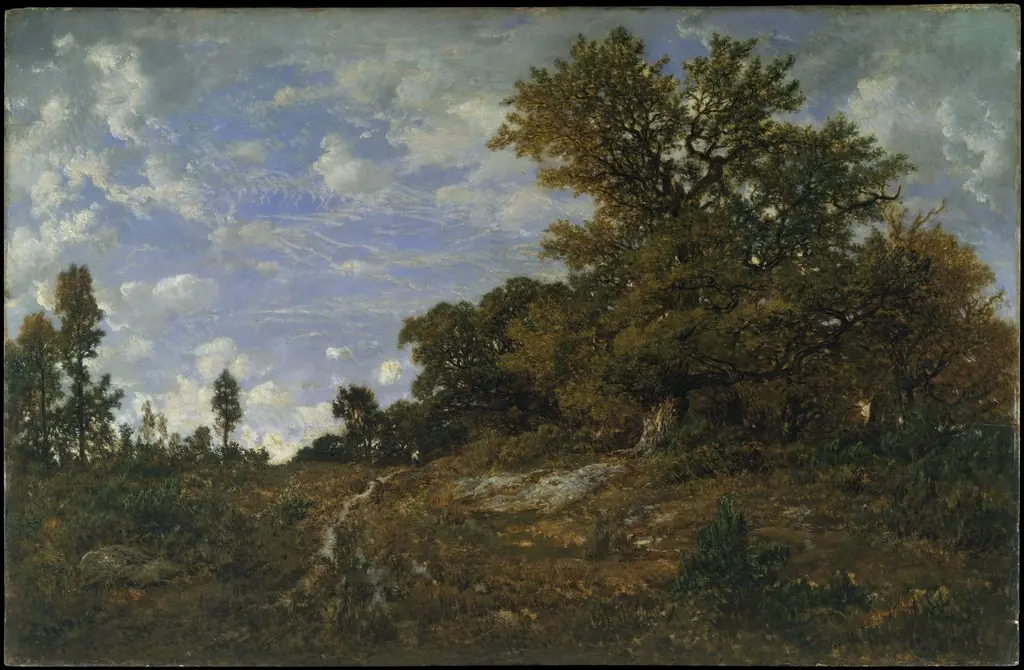
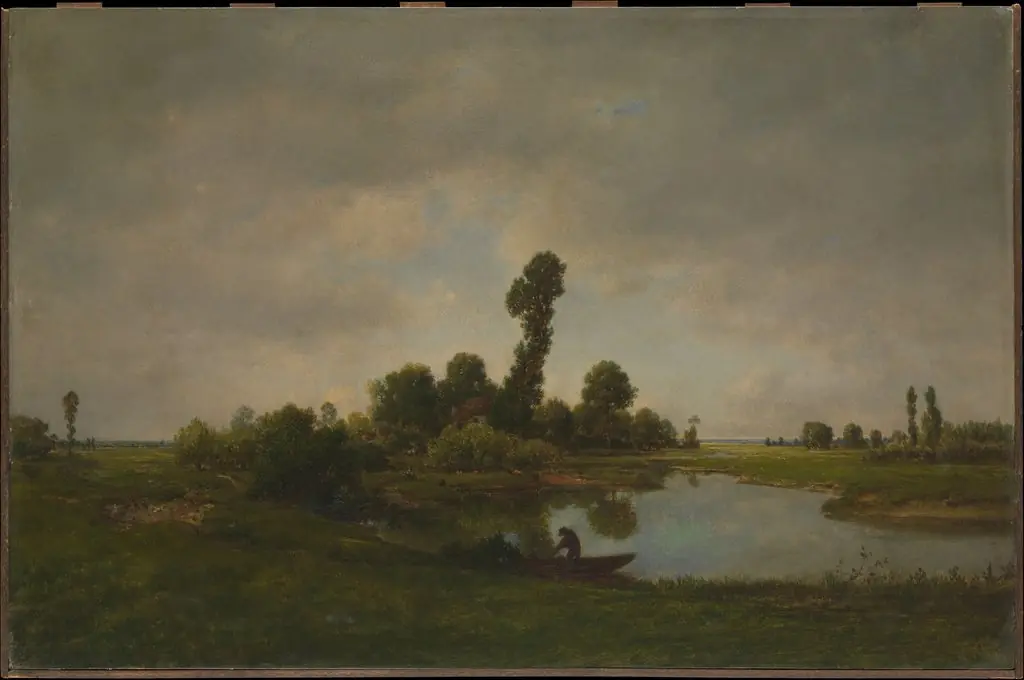
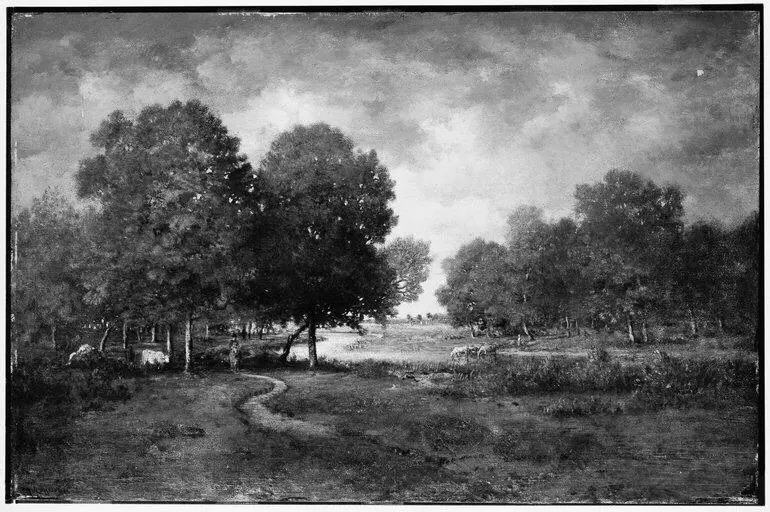
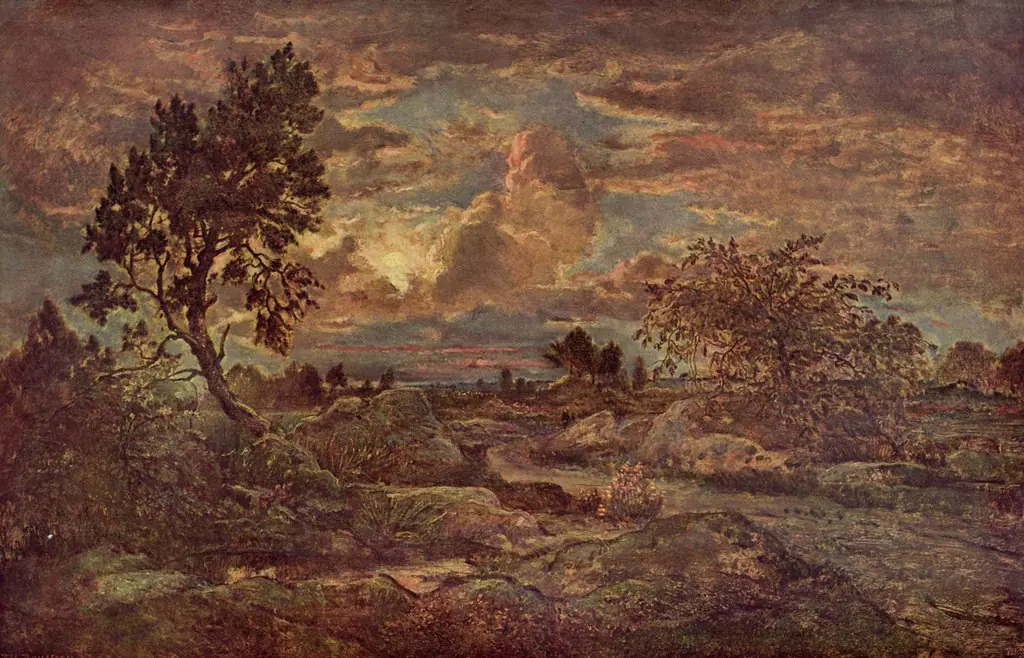
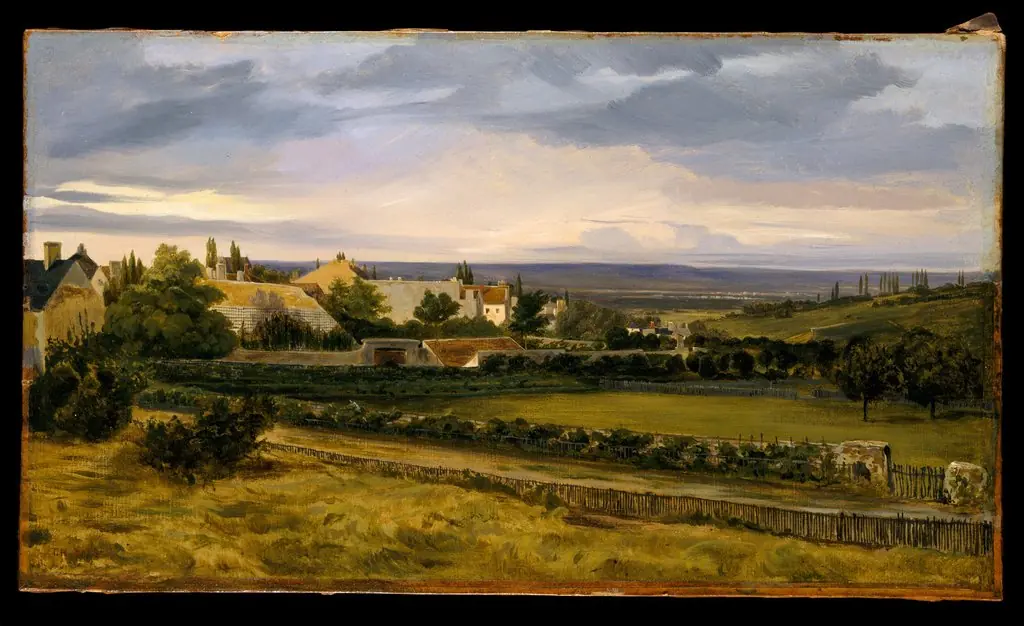
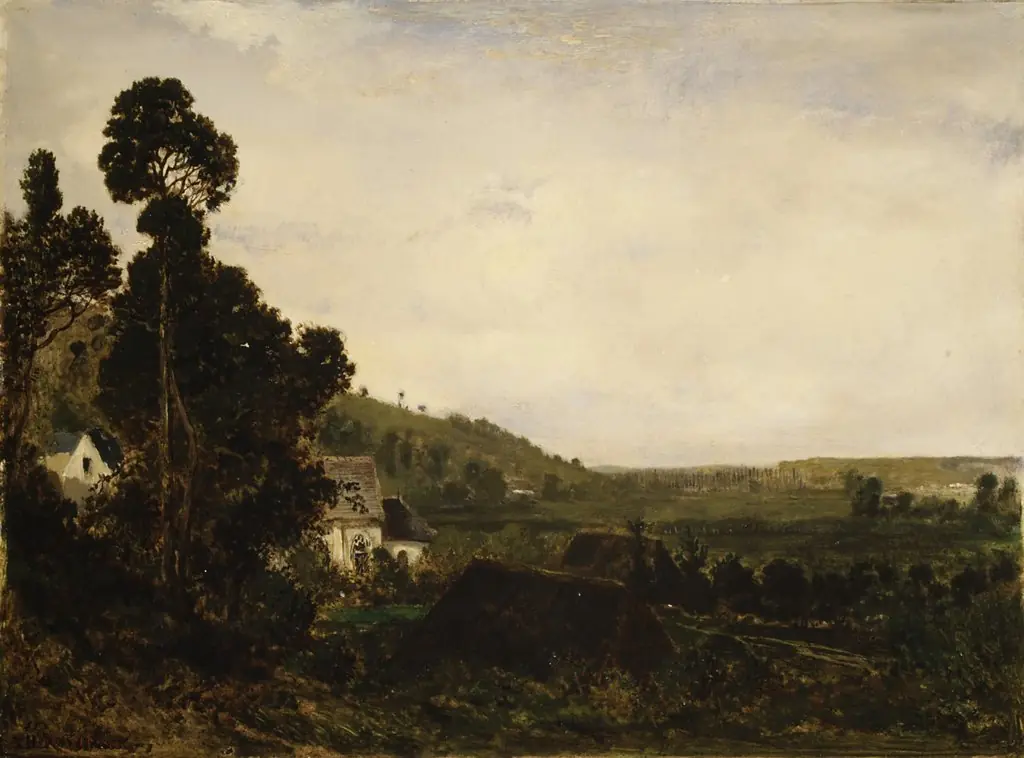
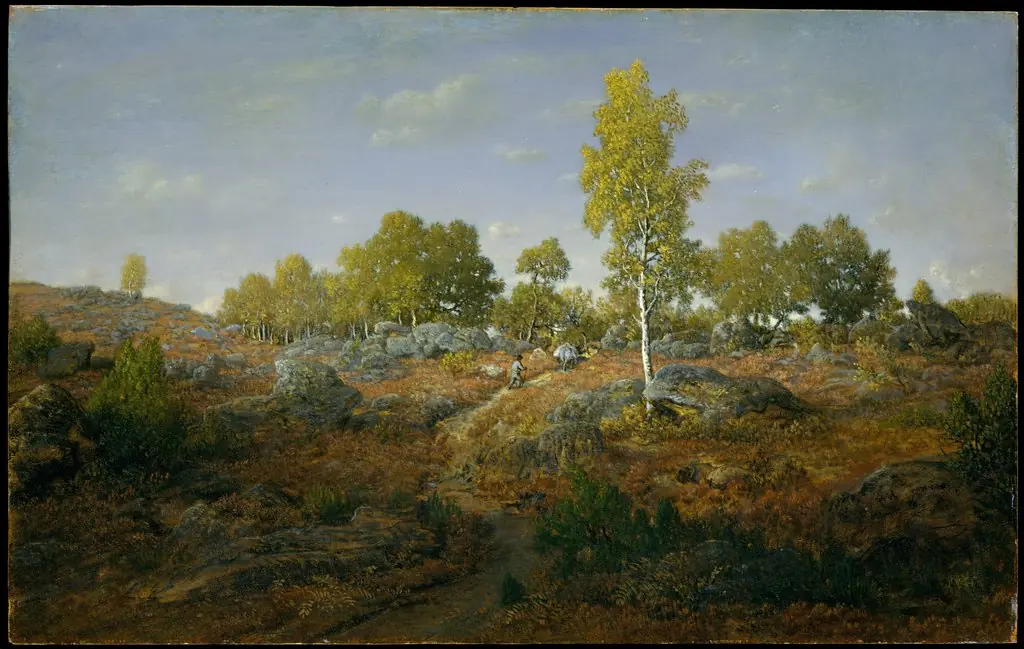
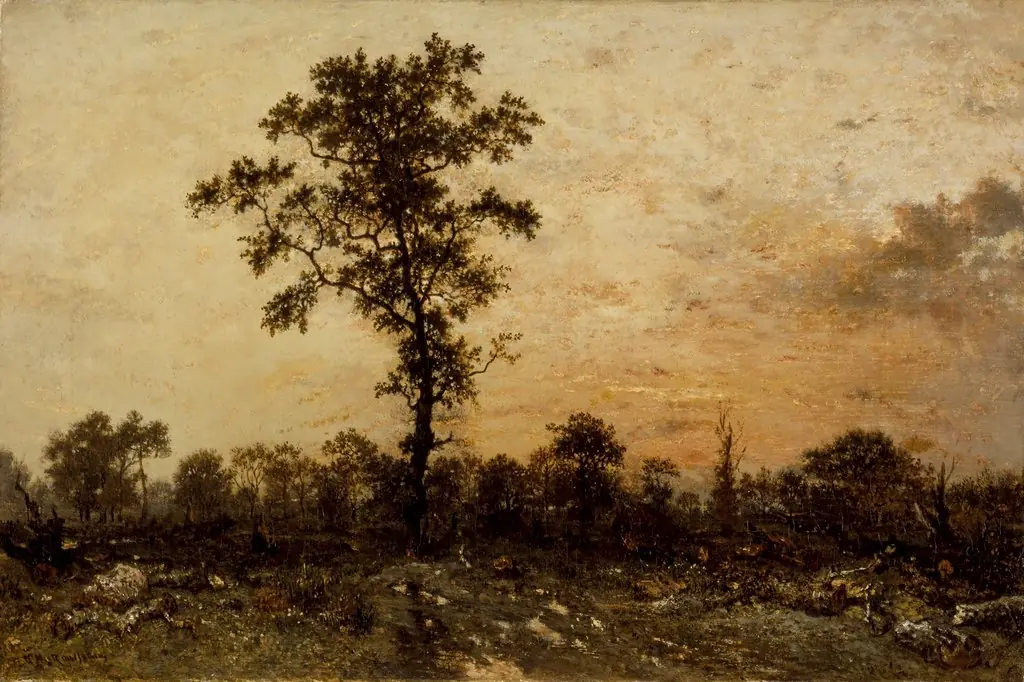
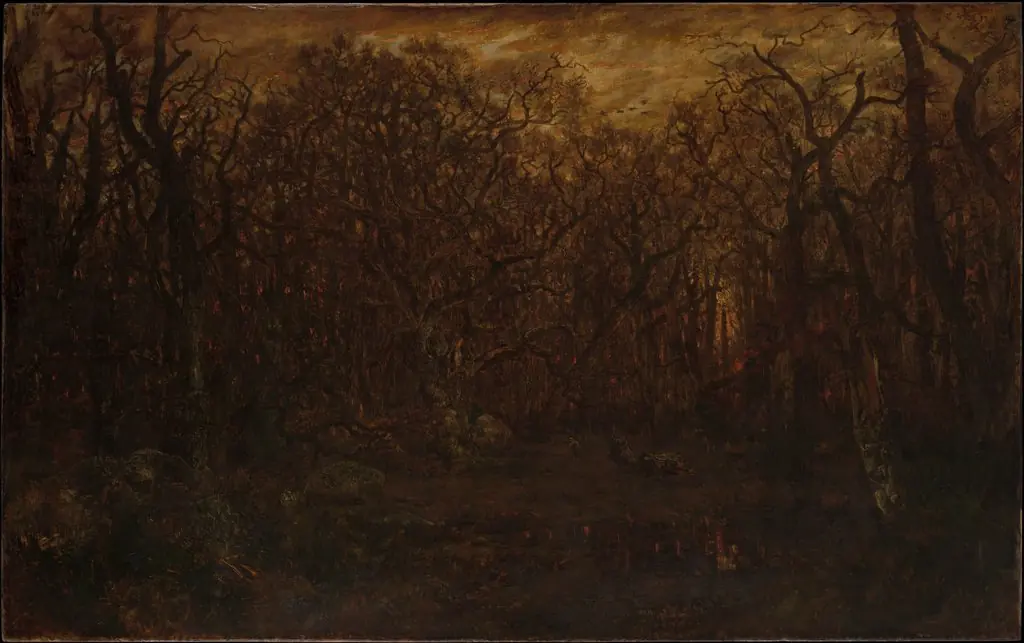
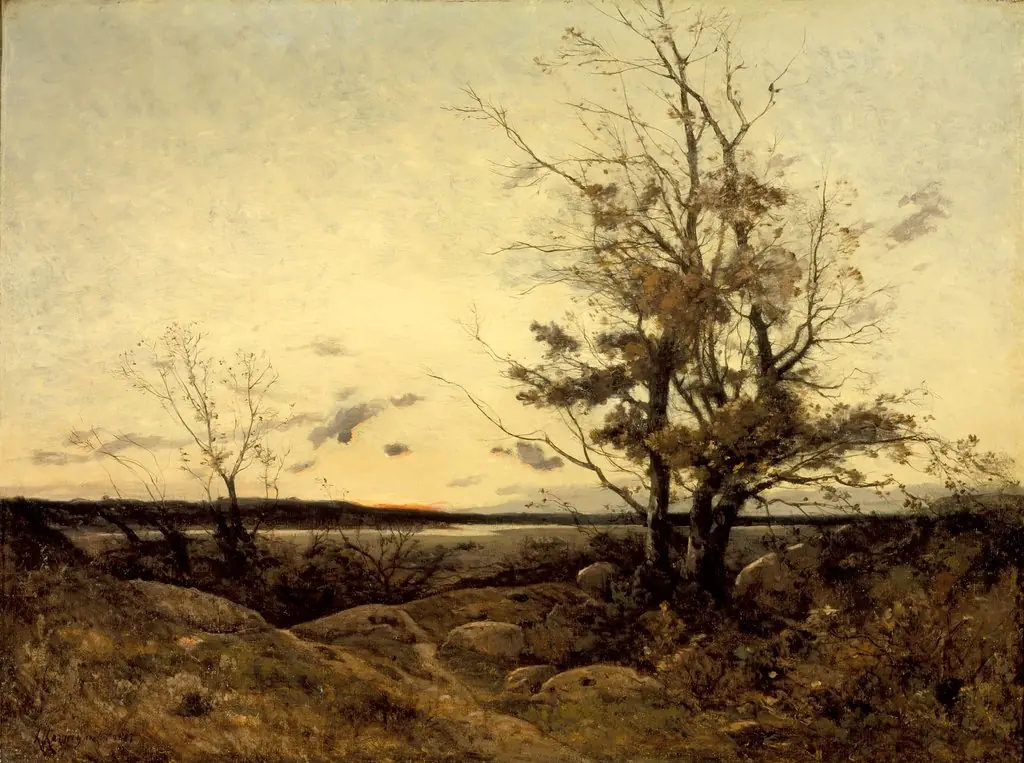
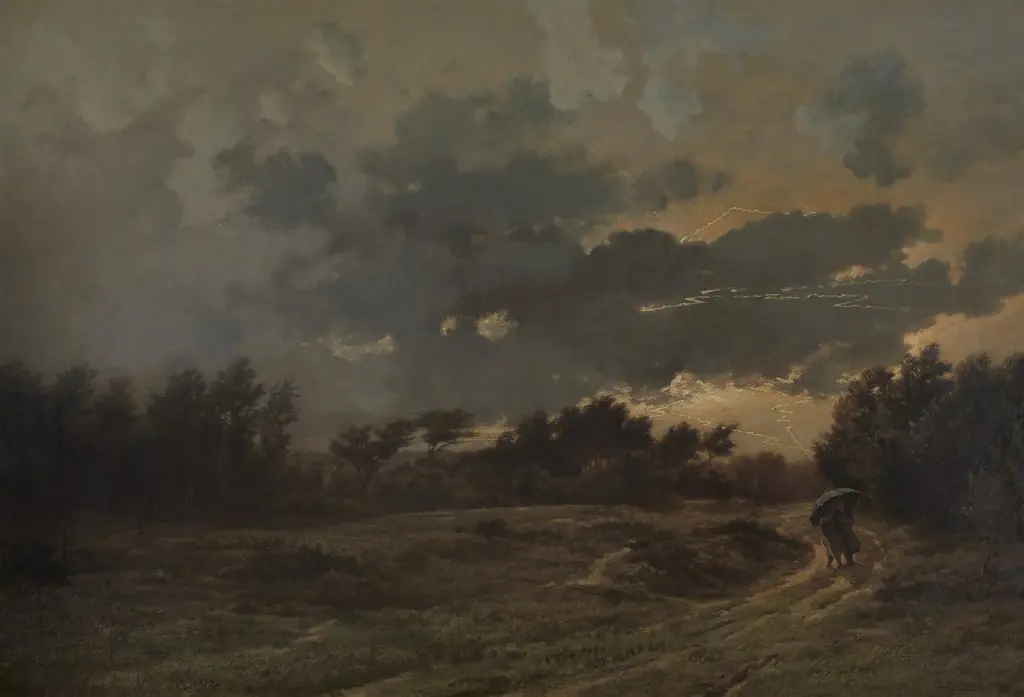
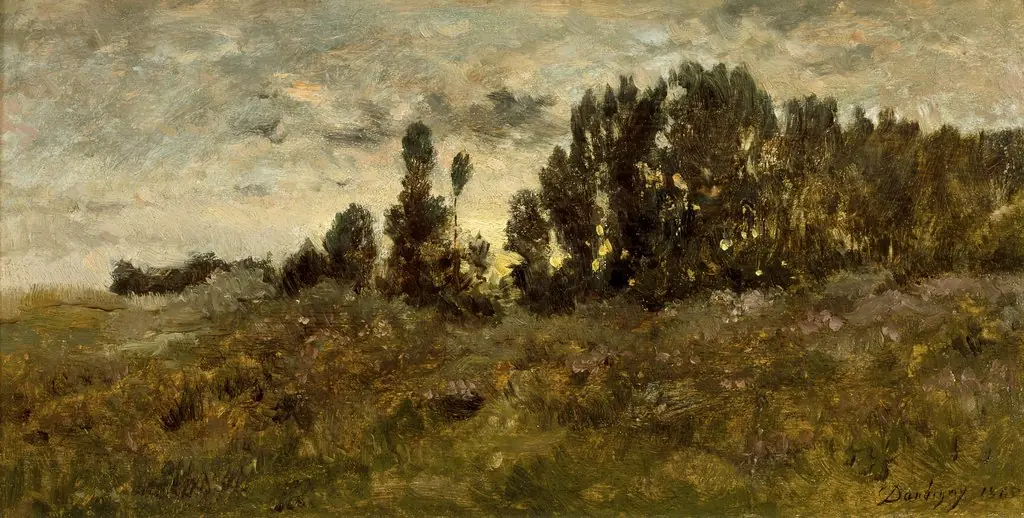
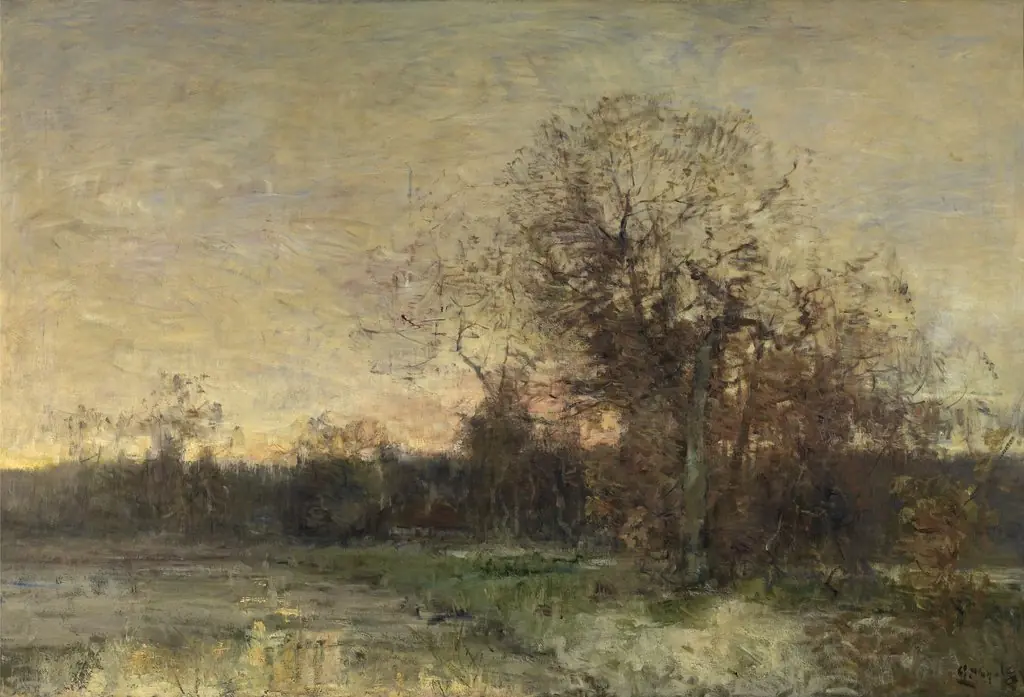
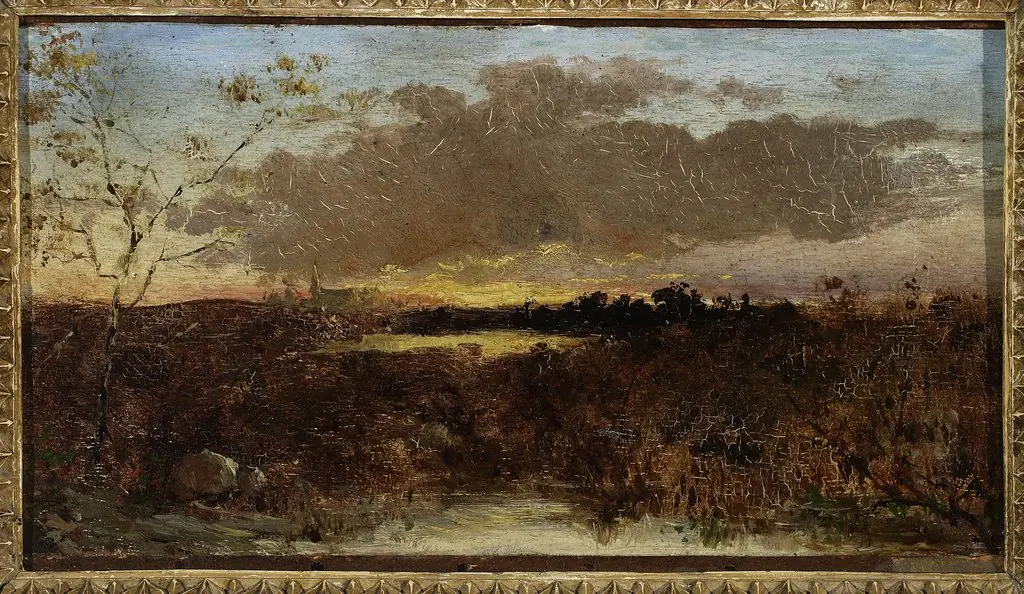
Painted in 1845, *Hoarfrost* is an oil on canvas landscape by Théodore Rousseau, a central figure in the Barbizon school. The work captures a quiet winter morning in the French countryside, emphasizing the subtle interplay of light and atmosphere. Its restrained palette and deliberate pacing reflect the movement’s commitment to direct observation of nature over idealized composition.
Subject & Meaning
The scene presents a frost-laden field under a dim, clouded sky, with the faint glow of dawn or dusk barely breaking through. Bare trees rise like silent sentinels, their branches etched with ice. There is no human presence, no narrative—only the stillness of the land at rest. The painting invites contemplation of nature’s quiet rhythms, free from romantic embellishment.
Technique & Style
Rousseau applied oil paint with soft, layered brushwork to convey the delicate texture of frost and the diffuse quality of twilight light. Colors are muted—grays, pale blues, and faint ochres—creating a tonal harmony that enhances the scene’s serenity. The brushstrokes are deliberate yet unobtrusive, avoiding dramatic contrast in favor of atmospheric cohesion.
History & Provenance
Completed in 1845, the painting remained within French artistic circles before entering the Walters Art Museum’s collection. Its preservation reflects its significance as an early example of Barbizon realism, valued for its unvarnished depiction of rural nature during a period when landscape painting was gaining new critical attention.
Context
In mid-19th century France, artists increasingly turned away from historical and mythological subjects to depict the natural world as it appeared. Rousseau and his peers worked en plein air, rejecting studio conventions. *Hoarfrost* embodies this shift, grounding art in the tangible, transient conditions of the French countryside.
Legacy
The painting stands as a quiet testament to the Barbizon school’s influence on later movements, including Impressionism. Its emphasis on light, mood, and unadorned nature helped redefine landscape painting’s purpose, shifting focus from grandeur to intimacy. Rousseau’s approach paved the way for artists who sought truth in the ordinary.
Artist & collection
Artist
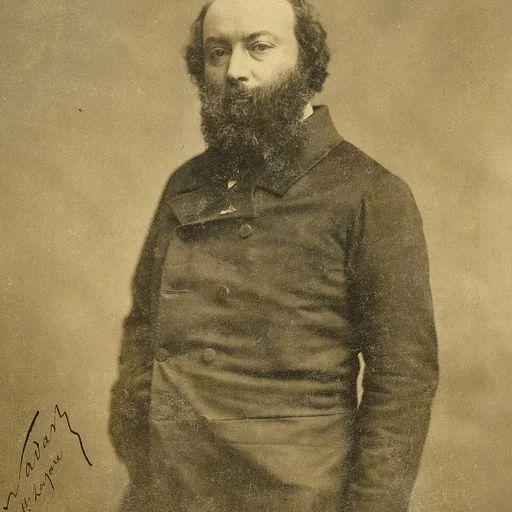
Étienne Pierre Théodore Rousseau (French pronunciation: ; 15 April 1812 – 22 December 1867) was a French painter of the Barbizon school.