Artwork
After the funeral
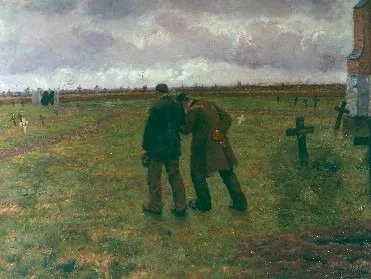
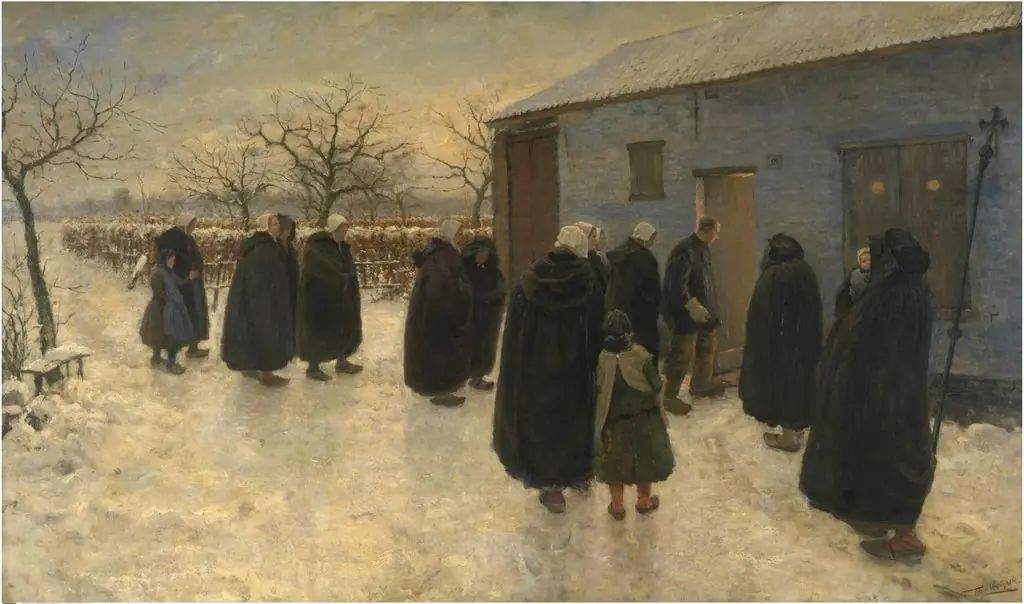
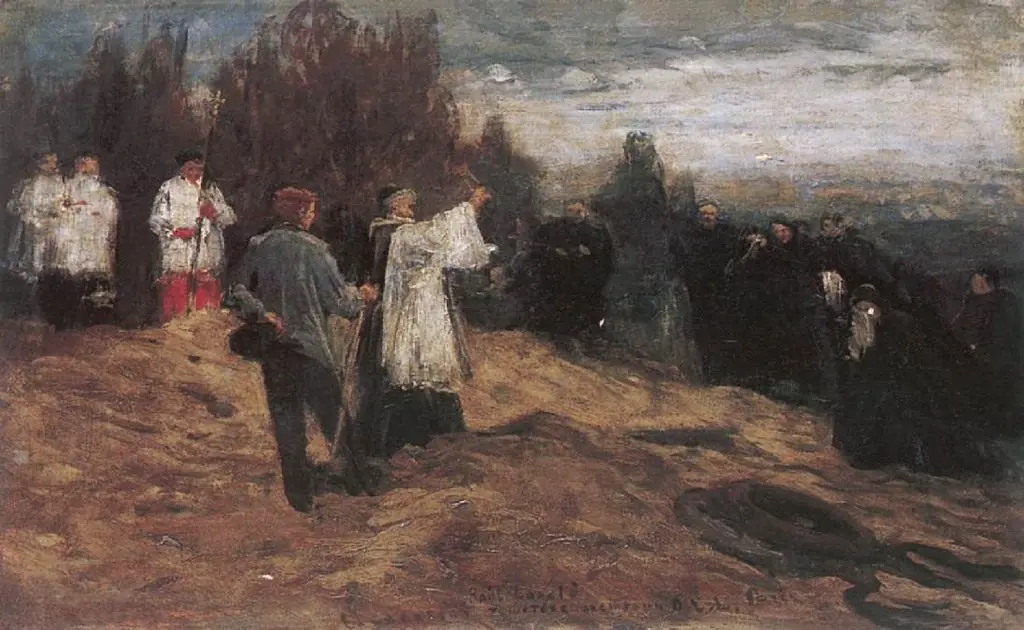
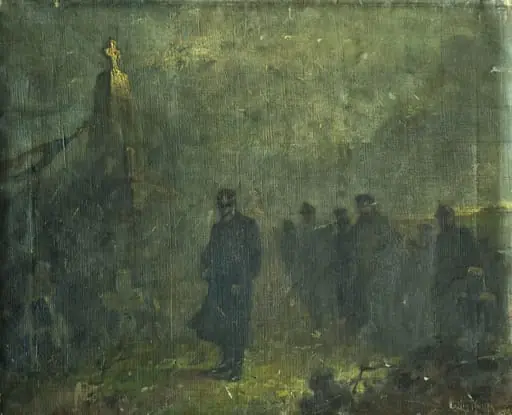
After the funeral is an oil painting by the Barbizon school artist Théodore Verstraete. It dates from 1888 and is held in the collection of the Royal Museums of Fine Arts of Belgium.
About this work
Overview
Painted in 1888 by Belgian artist Théodore Verstraete, *After the funeral* is an oil-on-canvas work that captures a quiet moment of communal grief.
Painted in 1888 by Belgian artist Théodore Verstraete, *After the funeral* is an oil-on-canvas work that captures a quiet moment of communal grief. It reflects the artist’s focus on rural Belgian life and aligns with the observational ethos of the Barbizon School. The painting is part of the Royal Museums of Fine Arts of Belgium’s collection, where it remains a quiet testament to everyday rituals of mourning.
Subject & Meaning
The scene depicts a small group of mourners departing a cemetery, their figures moving in a single file away from the viewer. Dressed in somber, period-appropriate attire, they convey a restrained sorrow without overt drama. The absence of a coffin or clergy suggests the ceremony has ended, leaving only the weight of absence. The painting emphasizes quiet endurance rather than religious spectacle.
Technique & Style
Verstraete employed muted earth tones and soft brushwork to evoke a subdued, overcast atmosphere. The landscape is rendered with attention to natural detail—flecked grass, weathered tombstones, and a hazy sky—while figures are simplified yet emotionally resonant. The composition leads the eye along the line of walkers, reinforcing the sense of procession and lingering grief. Light is diffused, enhancing the painting’s contemplative mood.
History & Provenance
Created in 1888, the painting remained within Belgian collections and was later acquired by the Royal Museums of Fine Arts of Belgium. Its provenance reflects its status as a representative work of late 19th-century Belgian Realism. No significant exhibitions or ownership changes are documented prior to its institutional acquisition, suggesting it was valued locally from its inception.
Context
In the late 1800s, Belgian artists increasingly turned to rural life as a subject, rejecting academic idealism in favor of observed truth. Verstraete’s work fits within this trend, echoing the Barbizon School’s emphasis on nature and human presence within it. Religious themes were often treated with understatement, reflecting broader societal shifts toward secular realism in visual culture.
Legacy
Though not widely exhibited beyond Belgium, *After the funeral* endures as a quiet example of regional Realism. It contributes to the understanding of how mourning was visually represented outside urban centers and grand religious narratives. The painting’s restraint continues to inform interpretations of everyday emotional life in 19th-century European art.
Artist & collection
Artist
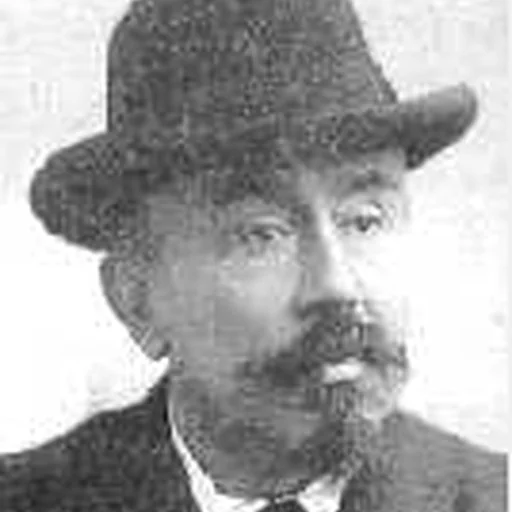
Theodoor Verstraete, also spelled Theodor Verstraete and Théodore Verstraete (5 January 1850 – 8 January 1907) was a Belgian Realist painter and printmaker who is known for his landscapes depicting life in the…

Museum
Royal Museums of Fine Arts of Belgium
Continue through works from the same source collection.