Artwork
The heath
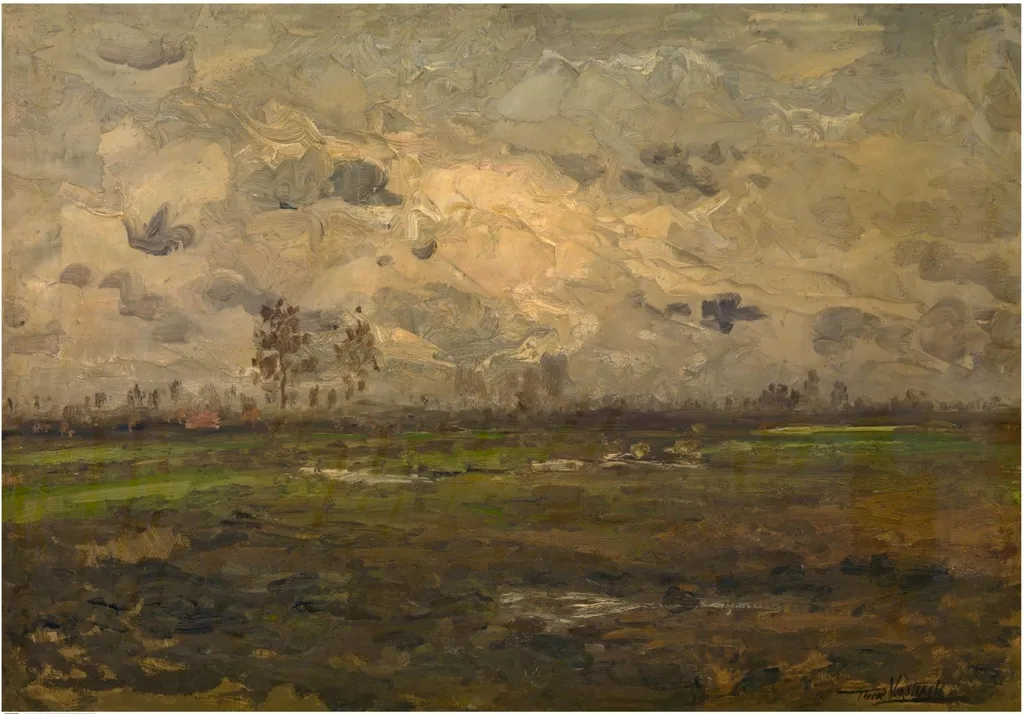
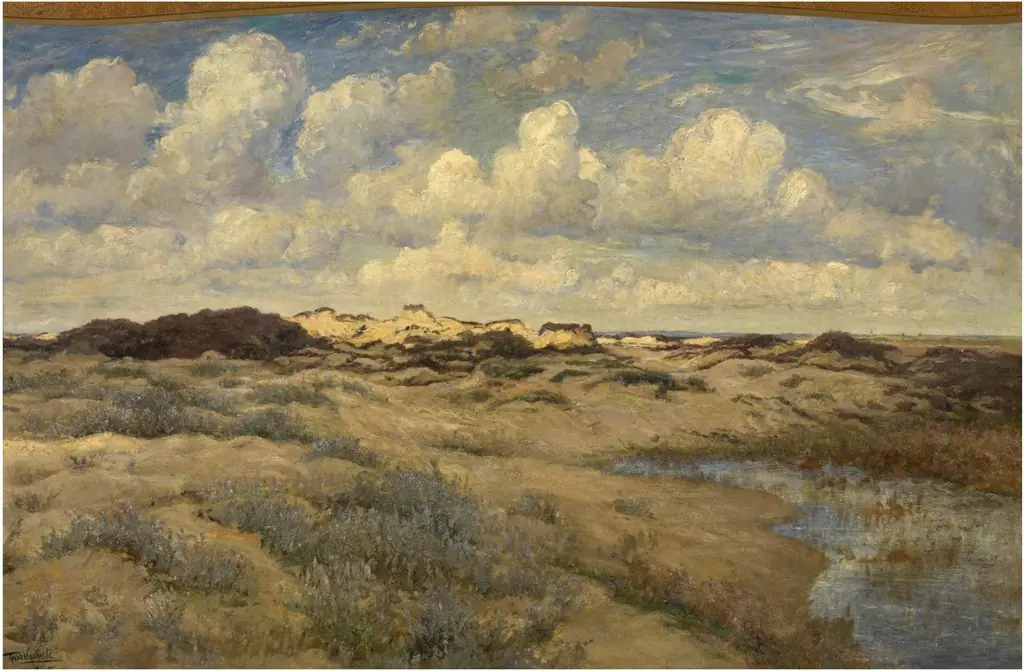
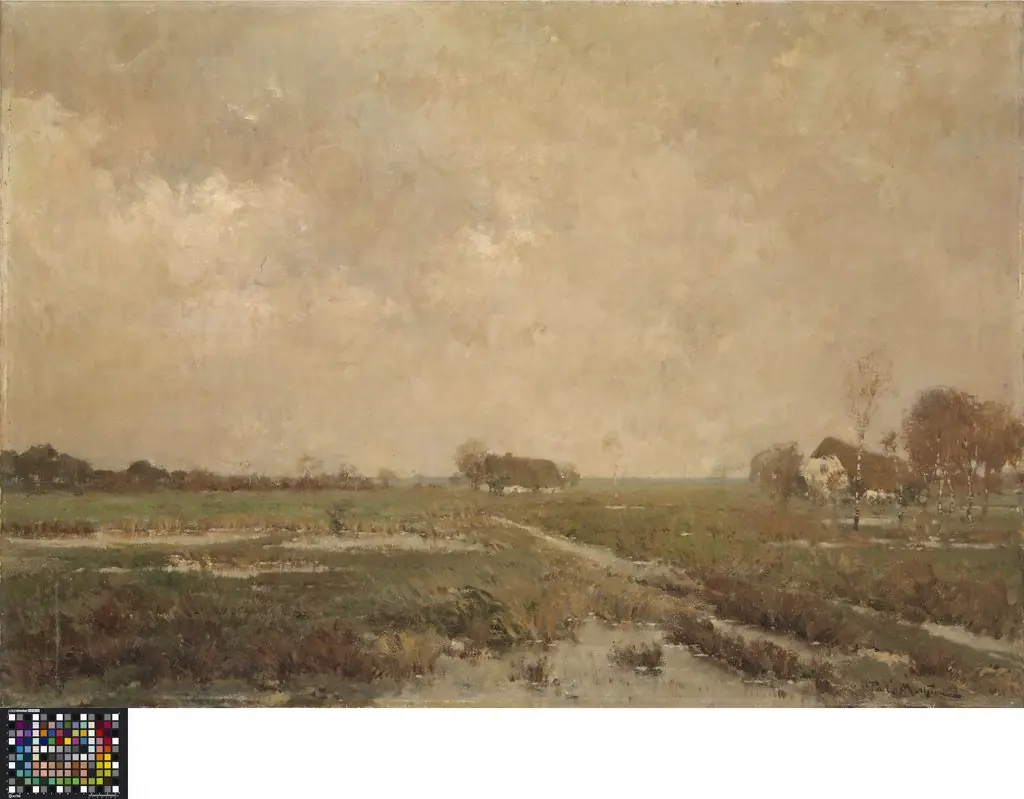
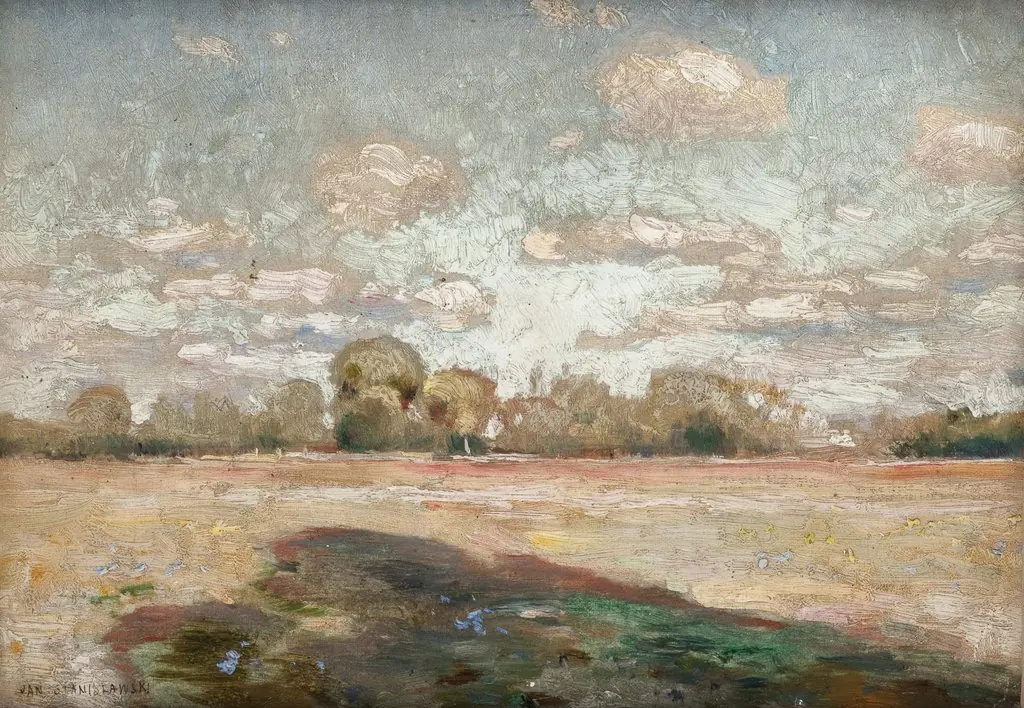
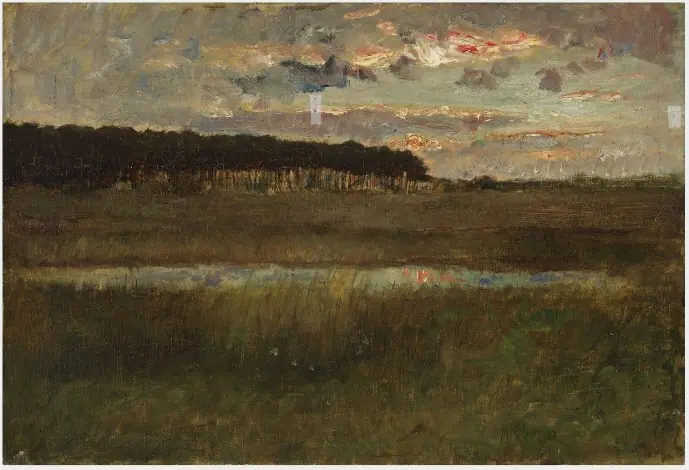
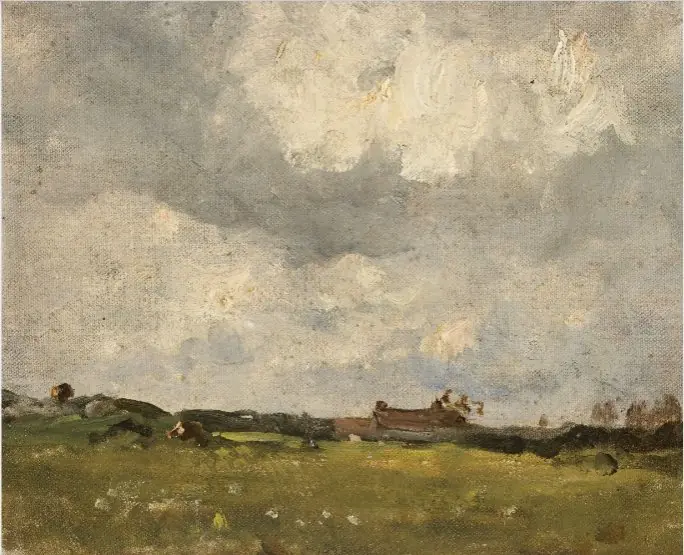
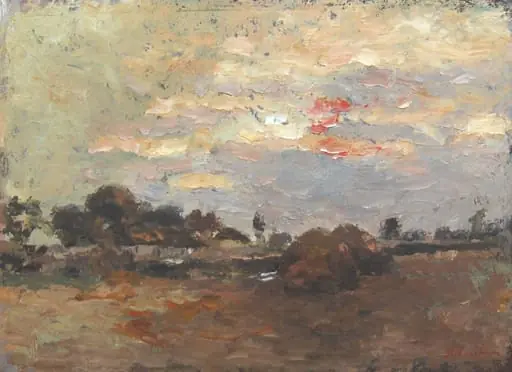
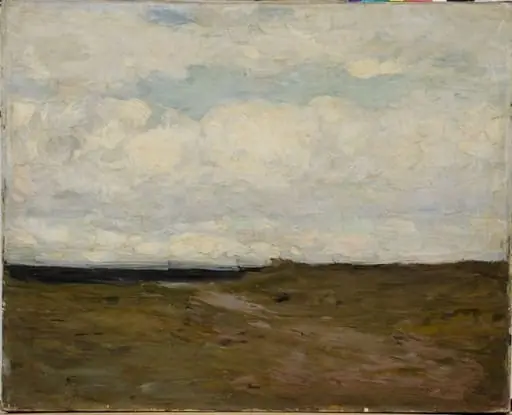
The heath is an oil painting by the Barbizon school artist Théodore Verstraete. It dates from 1850 and is held in the collection of the Royal Museum of Fine Arts Antwerp.
About this work
Overview
The Heath, an oil painting created by Belgian Realist Théodore Verstraete around 1850, exemplifies the Barbizon School’s emphasis on rural landscapes. Characterized by its muted palette and expressive brushwork, the piece captures a serene, misty heathland scene.
Subject & Meaning
The painting focuses on a solitary tree set within a vast, flat heathland, evoking a sense of solitude. Verstraete’s portrayal conveys his empathetic view of rural life, aligning with his reputation as a chronicler of the countryside’s quiet beauty.
Technique & Style
Visible, rough brushstrokes and a predominantly pale color scheme with accents of darker tones define the work’s texture and mood. The impasto technique lends a dreamy, foggy quality, enhancing the atmospheric, introspective feel of the landscape.
History & Provenance
Created circa 1850 as part of the Barbizon School movement, The Heath is now part of the Royal Museum of Fine Arts Antwerp’s collection, reflecting Verstraete’s contribution to Belgian Realist art.
Context
Within the broader Barbizon School, The Heath shares similarities with contemporaries in its focus on everyday rural life and landscapes, yet stands out through its somber, contemplative atmosphere and emphasis on light and fog.
Legacy
While not widely discussed in broad art historical narratives, The Heath remains significant within Belgian art history, illustrating Verstraete’s role in capturing the nation’s landscapes with sensitivity and expressive technique.
Artist & collection
Artist
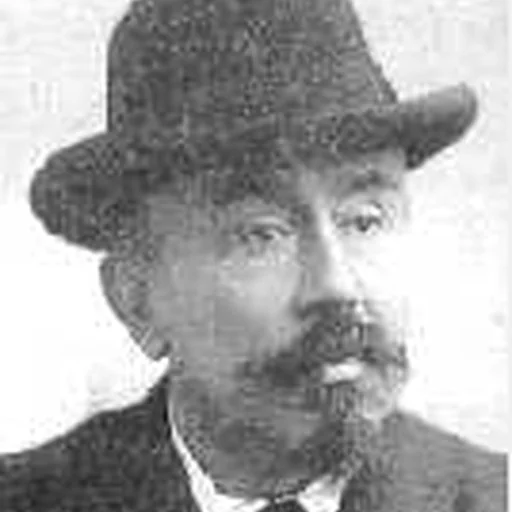
Theodoor Verstraete, also spelled Theodor Verstraete and Théodore Verstraete (5 January 1850 – 8 January 1907) was a Belgian Realist painter and printmaker who is known for his landscapes depicting life in the…