Artwork
Self-portrait
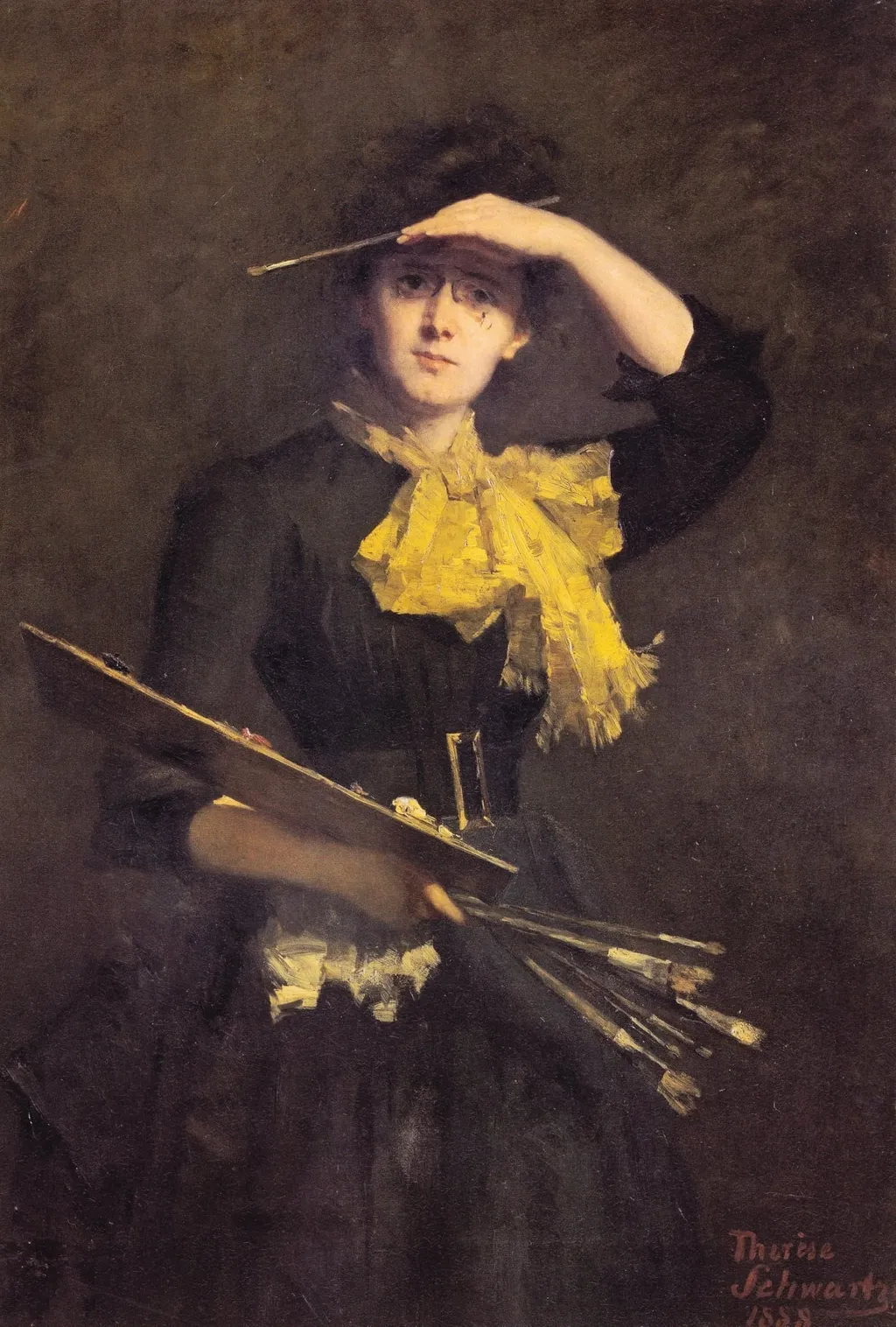
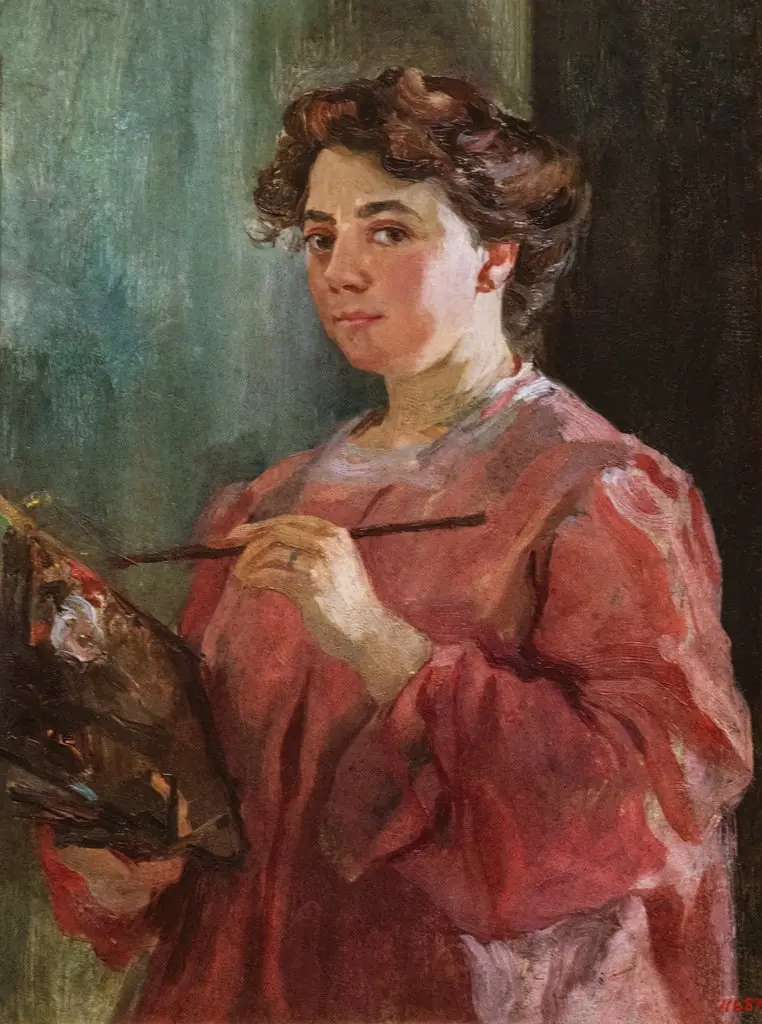
Self-portrait is an oil painting by the Impressionist artist Thérèse Schwartze. It dates from 1894 and is held in the collection of the Uffizi Gallery.
About this work
The woman holds a palette in her left hand and a paintbrush in her right, resting it on her forehead.
This painting is a self-portrait of a woman, likely the artist, created in 1888. She is depicted wearing a dark dress with a yellow scarf around her neck and a black hat. The woman holds a palette in her left hand and a paintbrush in her right, resting it on her forehead.
The painting is rendered in oil paint, showcasing the artist's skill with the medium. The subject's expression is contemplative, suggesting a moment of introspection.
To learn more about the artist's technique and style, explore the use of chiaroscuro in her work.
Overview
Thérèse Schwartze painted this self-portrait in 1888 using oil on canvas. It presents the artist at work, dressed in dark clothing with a yellow scarf and black hat. Her posture and gaze convey quiet focus, capturing a pause in the creative process. The painting is part of the Uffizi Gallery’s collection, where it contributes to the representation of women artists in historical European collections.
Subject & Meaning
The subject is the artist herself, depicted not as an idealized figure but as a working professional. Holding a palette and brush, she pauses with the brush resting on her forehead—an gesture suggesting reflection rather than action. The absence of embellishment or theatricality emphasizes her identity as a serious practitioner, asserting presence through quiet competence rather than spectacle.
Technique & Style
Schwartze employs a restrained palette dominated by dark tones, with the yellow scarf providing subtle contrast. Brushwork is precise yet unobtrusive, favoring clarity over flourish. Light falls evenly across her face and hands, enhancing form without dramatic shadows. The handling of fabric and texture demonstrates a controlled, observational approach rooted in academic training rather than expressive experimentation.
History & Provenance
Painted in 1888, the work entered the Uffizi Gallery’s collection in the 20th century, likely through acquisition or donation. Its inclusion in a major Italian institution reflects broader efforts to expand representation of non-Italian female artists. The painting’s provenance remains largely undocumented prior to its arrival at the Uffizi, though its date and attribution are consistently verified by scholarly sources.
Context
In late 19th-century Europe, women artists faced institutional barriers to recognition. Schwartze, trained in Amsterdam and active in the Dutch art scene, navigated these constraints by focusing on portraiture and maintaining professional networks. This self-portrait aligns with a growing trend among female artists to assert their identity through depictions of themselves at work, challenging prevailing gender norms in the art world.
Legacy
The painting endures as a quiet testament to Schwartze’s professional identity and technical discipline. While not widely exhibited outside the Uffizi, it remains a significant example of how women artists documented their roles within a male-dominated field. Its understated presence invites sustained attention, offering a counterpoint to more flamboyant self-representations of the era.
Own this work as a print
Artist & collection

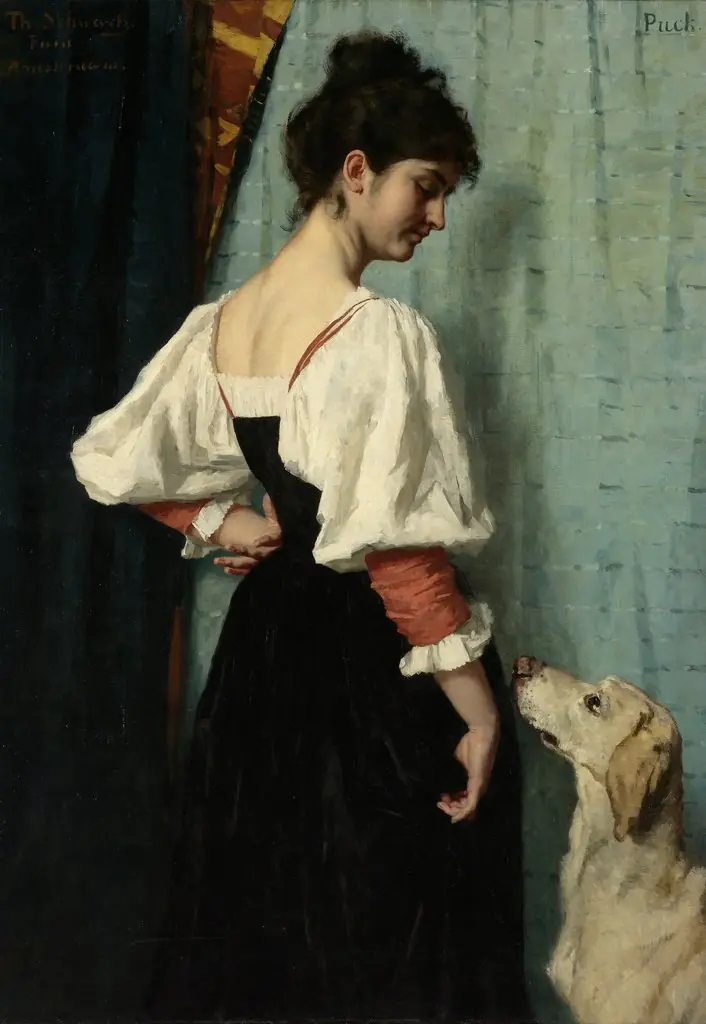 Young Italian woman with the dog Puck
 Untitled
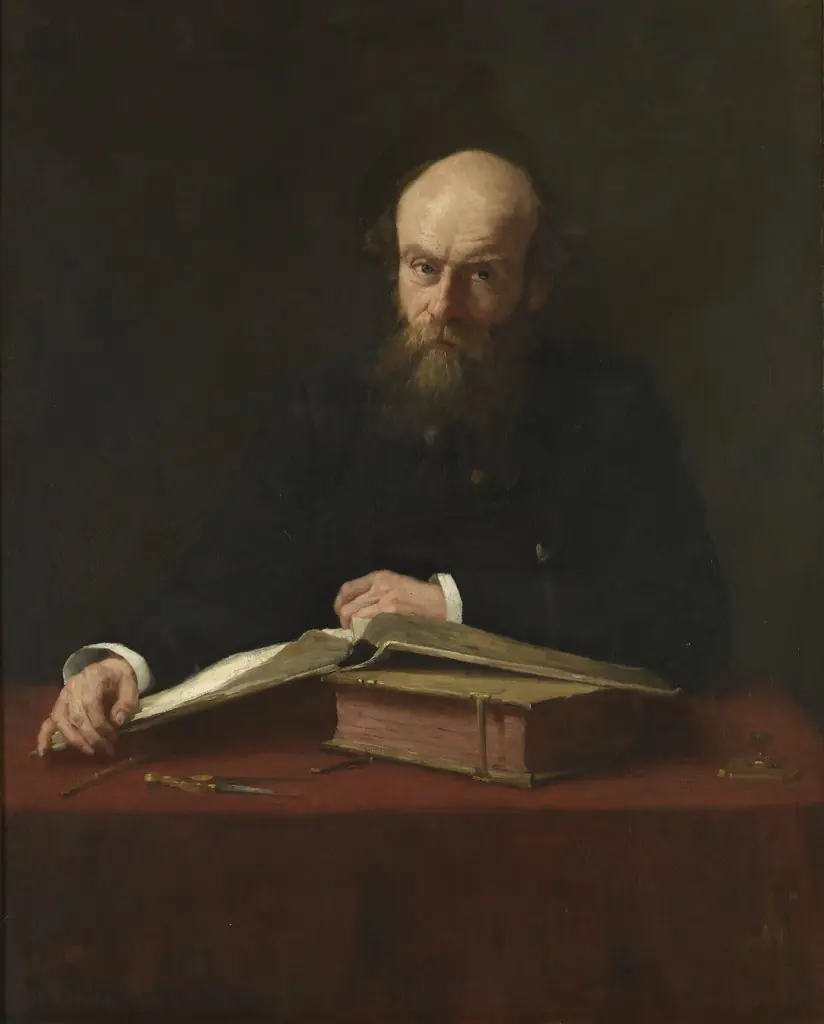 Portrait of Dr. P.J.H. Cuypers (1827-1921)
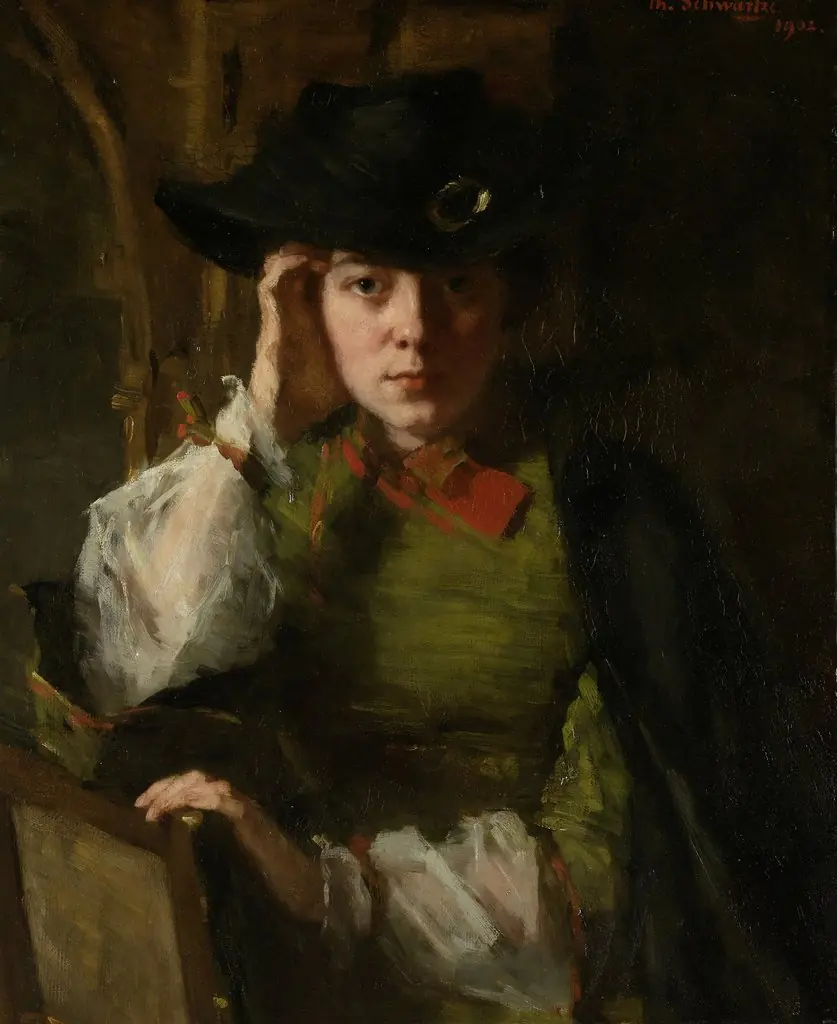 Portrait of Lizzy Ansingh
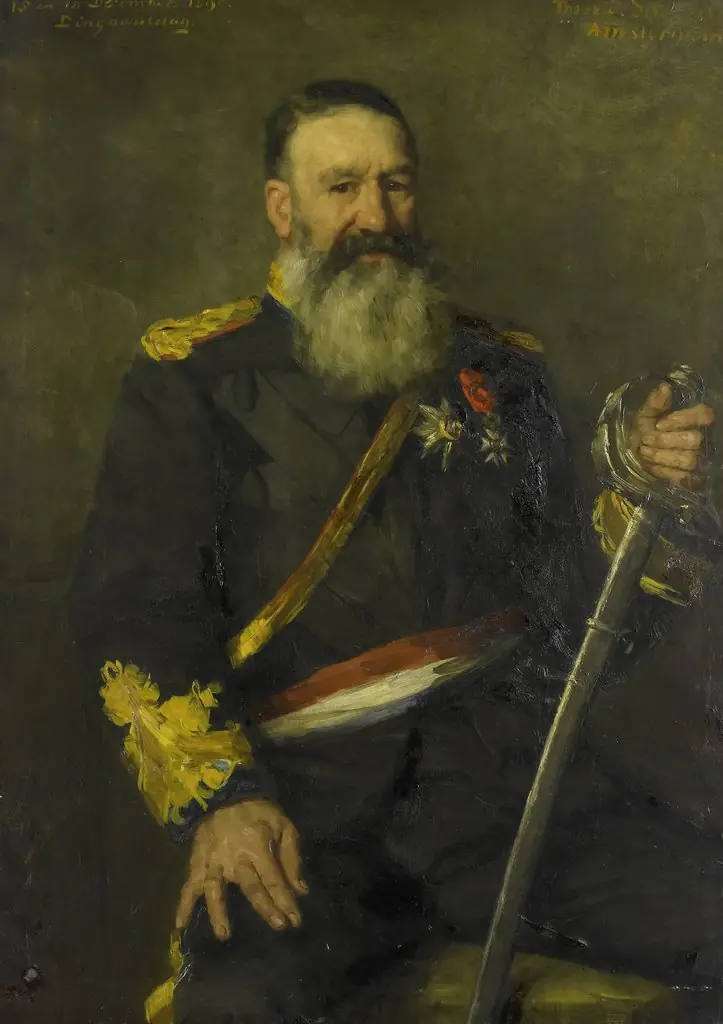 Portrait of Petrus Jacobus Joubert - Commander-General of the South African Republic
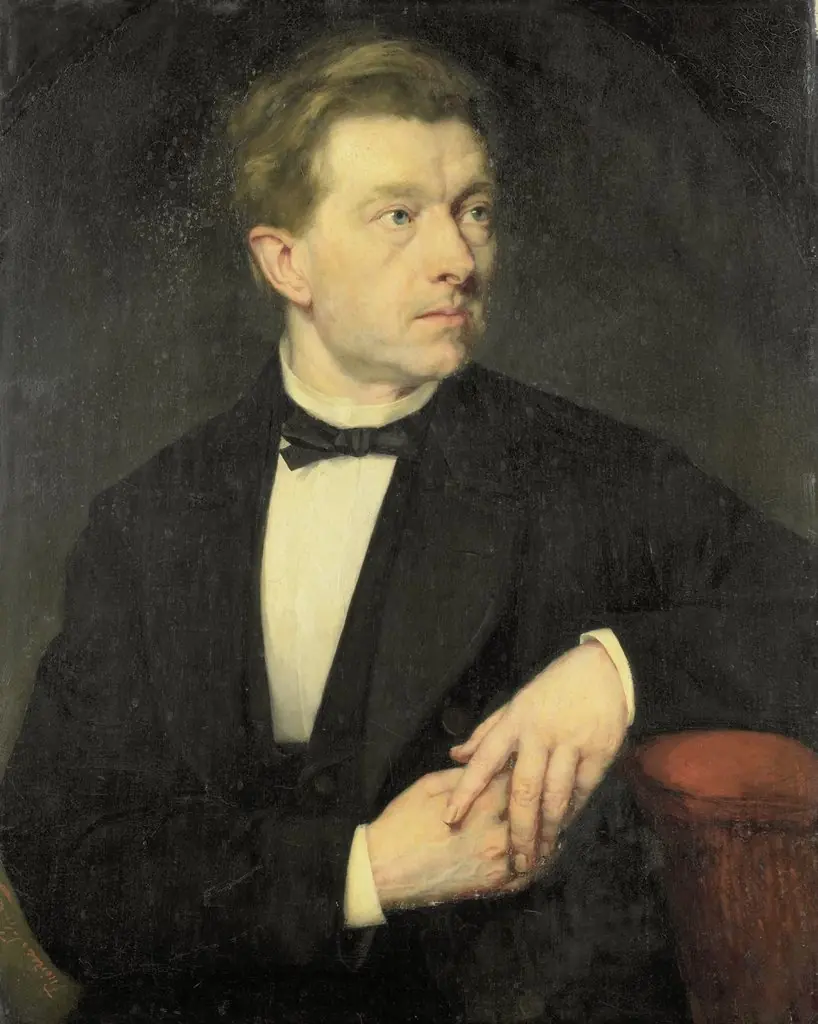 Portrait of Dr. J. L. Dusseau
 Portrait of Frederik Daniël Otto Obreen (1840-96), director Rijksmuseum
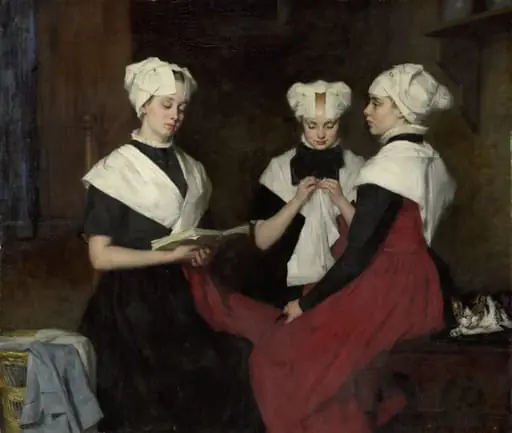
 Three girls from the Amsterdam Orphanage
 Self-portrait
 The Painter Agnes Paulsen, the Artist's Sister, at her Easel
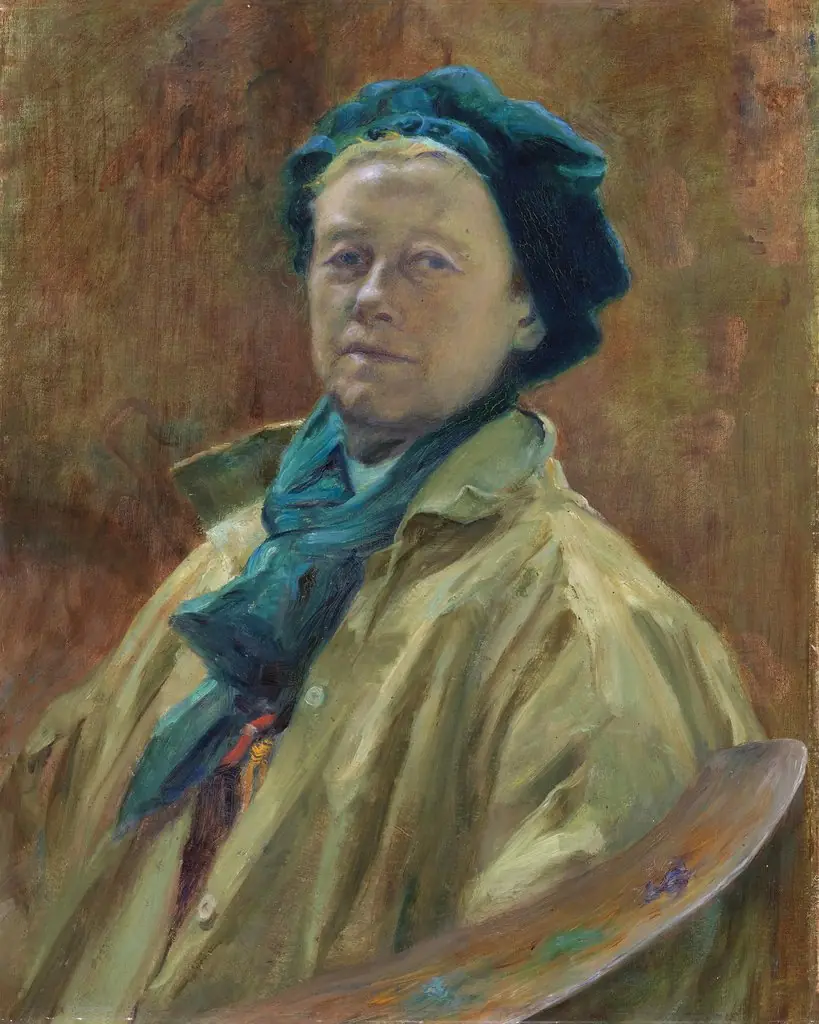 Self-Portrait
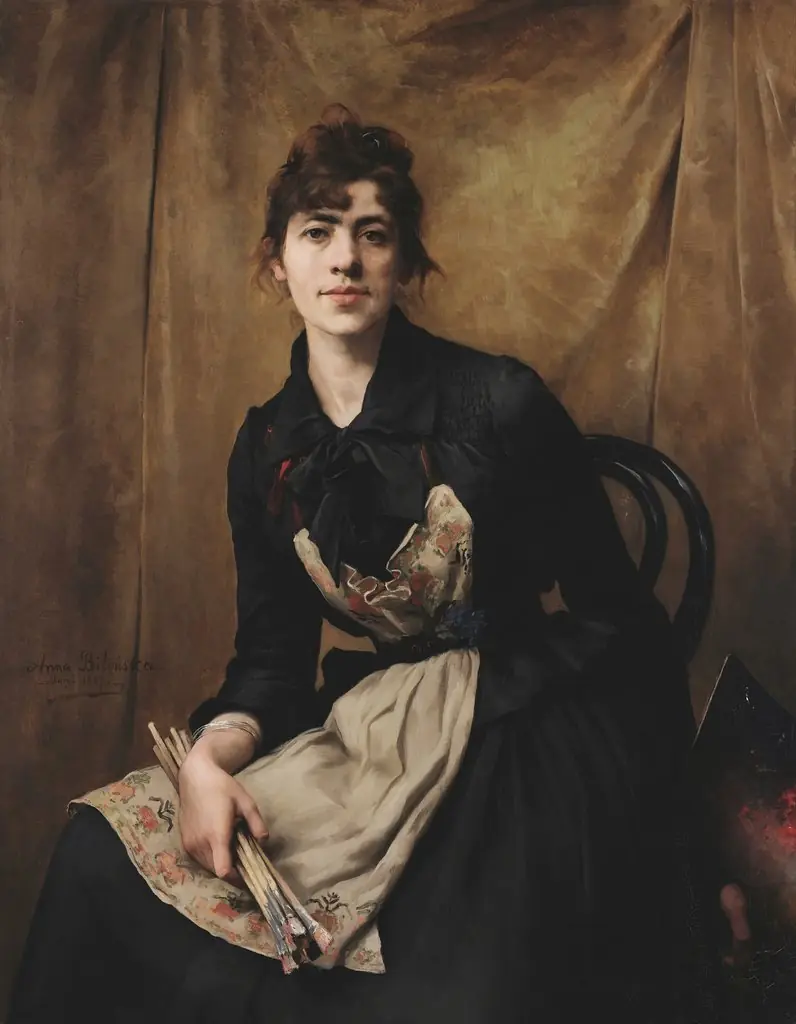 Self-Portrait with Apron and Brushes
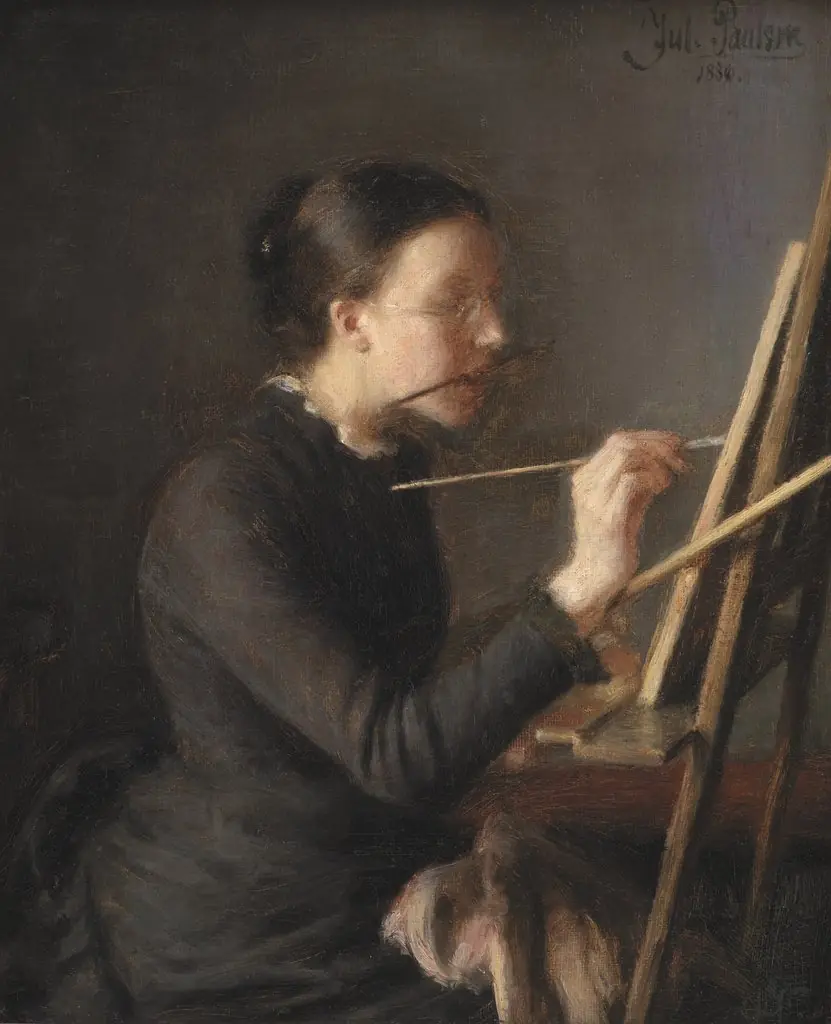 The Painter Agnes Paulsen, the Artist's Sister, at her Easel
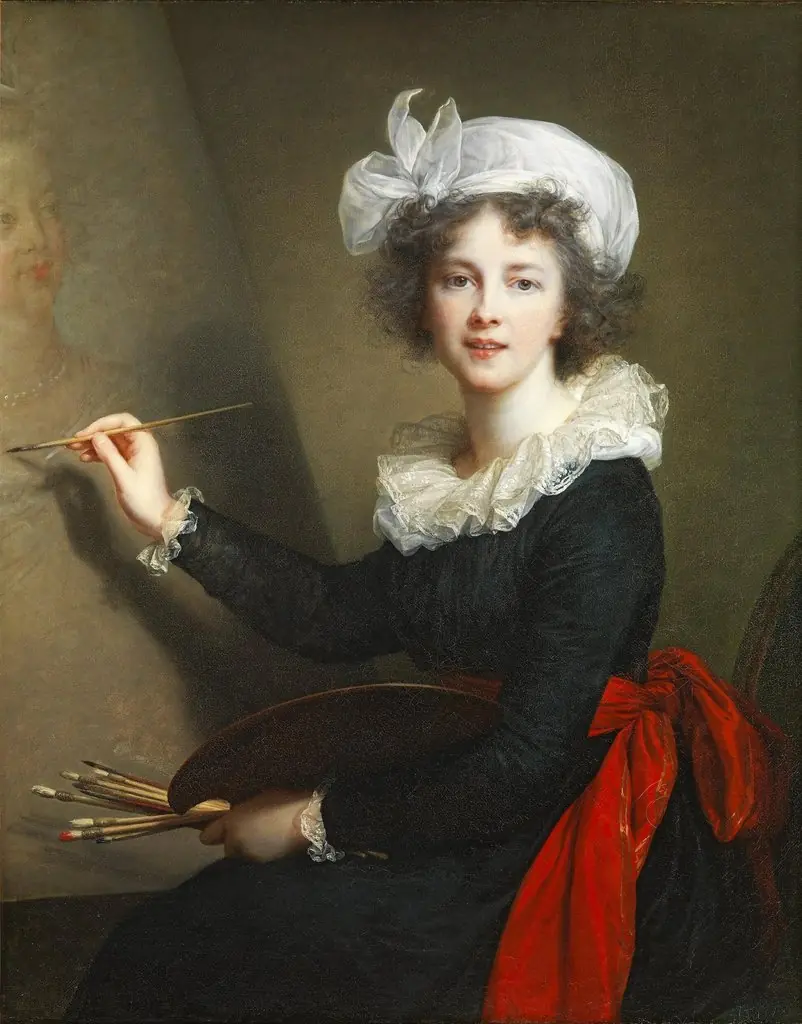 Self-portrait of Élisabeth Louise Vigée Le Brun
 Young Woman at an Easel
 Felicia Kirchdorffer, die Nichte des Künstlers
 Drawing lesson in the workshop
 Portret de femeie în costum de epocă
 Portrait of a Female Painter, Pupil of David