Artwork
A Chinese Barber
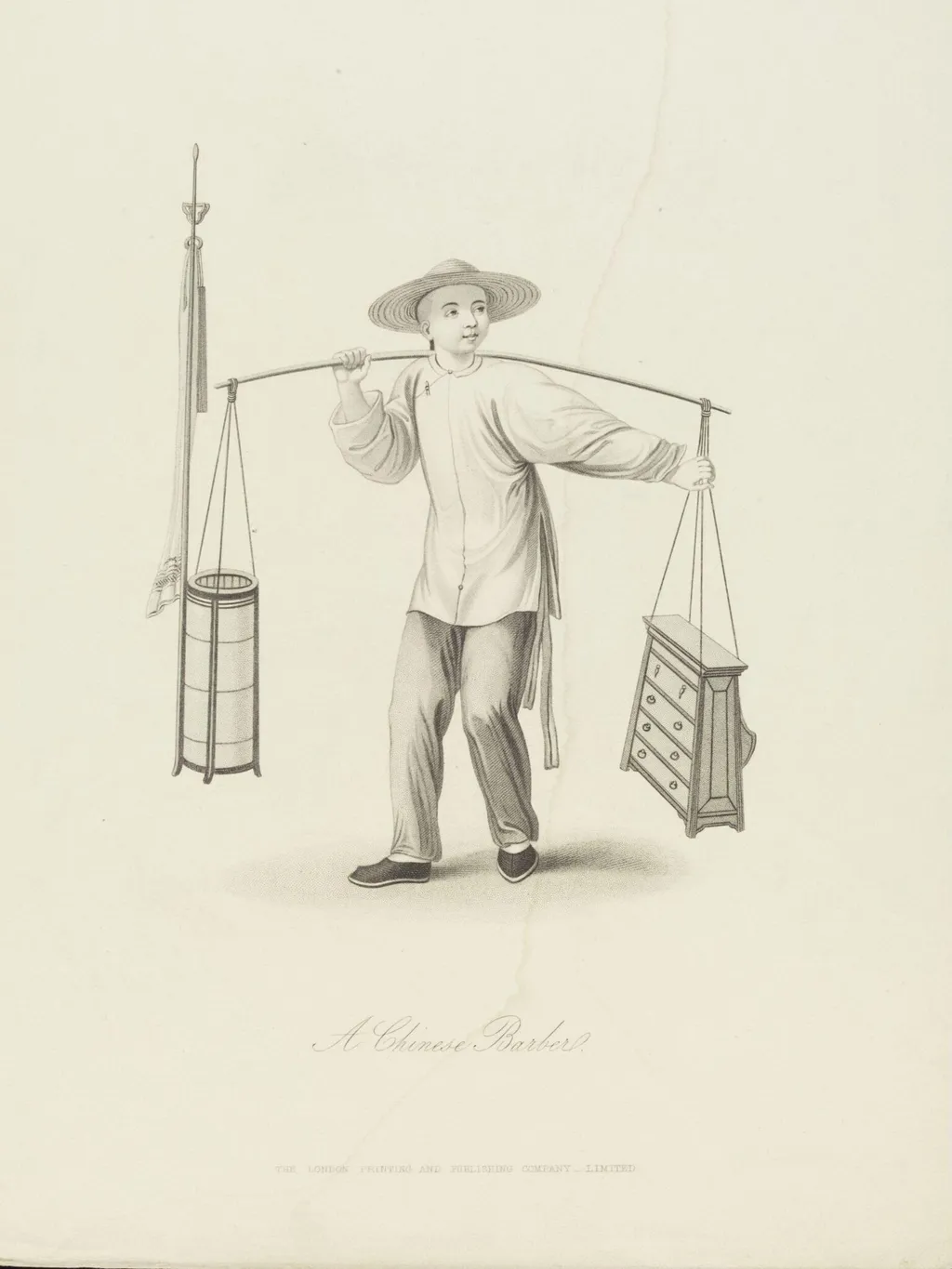
A Chinese Barber is an ink print by the Romanticist artist The London Printing and Publishing Company. It dates from 1814 and is held in the collection of the Victoria and Albert Museum.
About this work
Overview
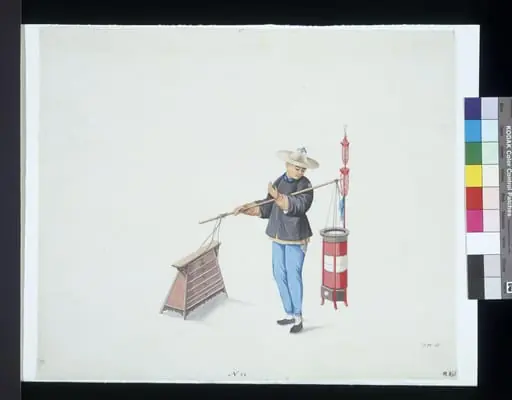
A Chinese Barber is an uncolored engraving created in 1814, portraying a mobile barber's daily scene. The composition focuses on a man in traditional attire carrying his profession's essentials on a pole.
Subject & Meaning
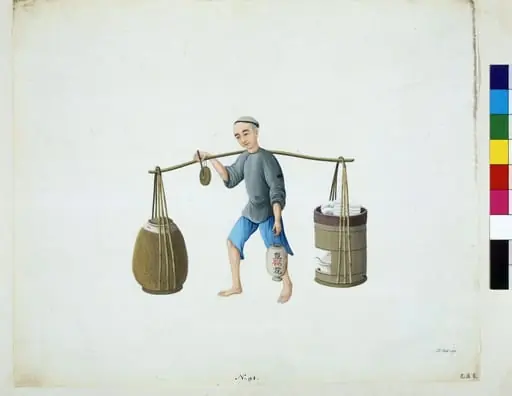
The subject, a barber, is identified by the tools of his trade suspended from the pole, alongside a lantern indicating potential nighttime or low-light operation. His attire includes a wide-brimmed hat, long coat, and loose pants, suggesting a practical, possibly itinerant, professional.
Technique & Style
Executed as an engraving, the piece showcases the medium's capability for detailed, high-contrast imagery. The absence of color emphasizes the intricate linework characteristic of early 19th-century engraving techniques.
History & Provenance
Dating back to 1814, the engraving offers a glimpse into the daily life and professions of early 19th-century China. Specific provenance details are not provided, highlighting the work's value as a cultural snapshot over its ownership history.
Context
The image reflects the mobility of certain professions in China during the period, with the barber's equipment and lantern underscoring adaptability and possibly catering to a diverse or nocturnal clientele.
Legacy
While not widely recognized beyond its illustrative historical value, 'A Chinese Barber' contributes to the broader understanding of early 19th-century Chinese life and the artistic techniques of its time, particularly in the engraving medium.
Artist & collection
Artist
The London Printing and Publishing Company
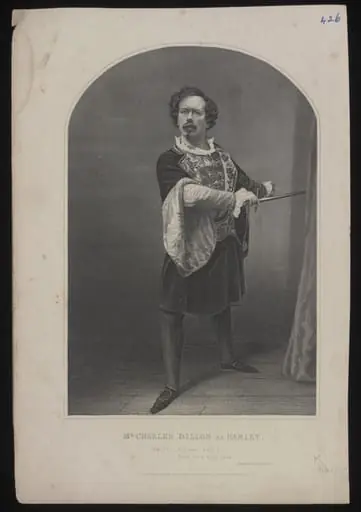
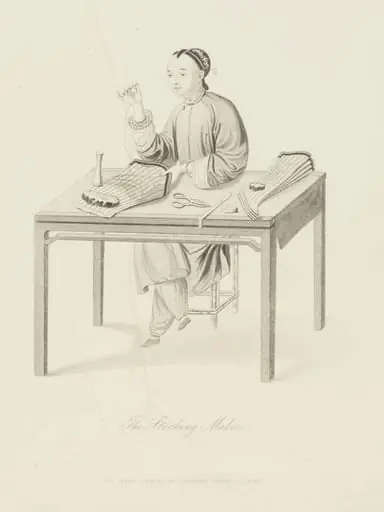
These prints from the early 1800s show everyday scenes and actors on stage, carved as engravings rather than paintings.