Artwork
Yar hudgi
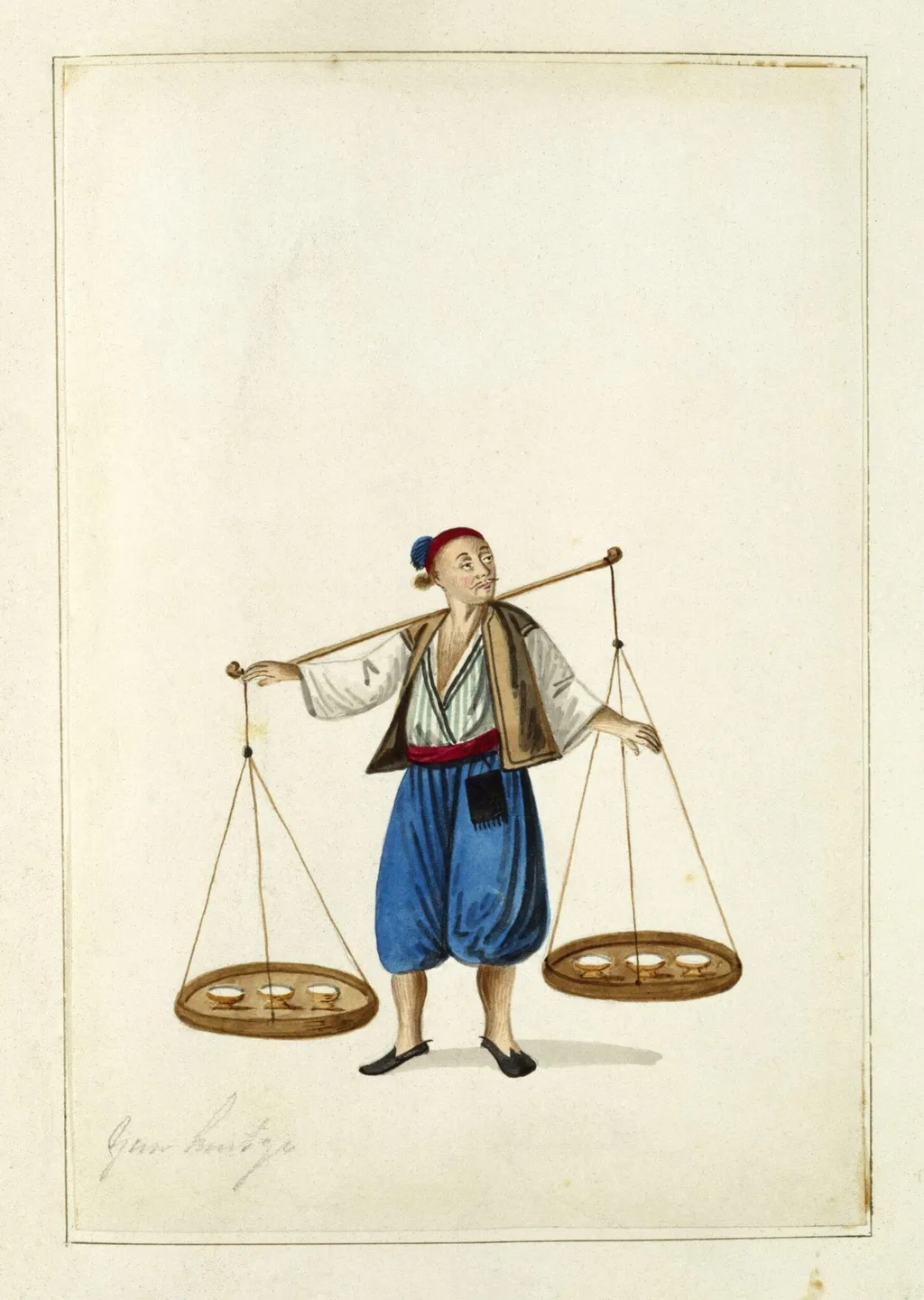
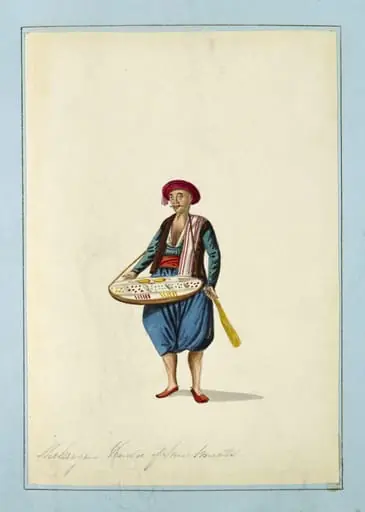
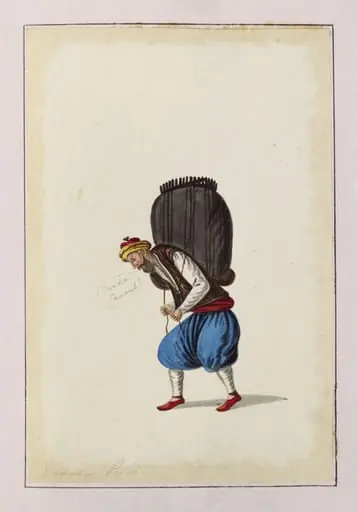
Yar hudgi is a watercolor work on paper by the Romanticist artist Charles Frederick Brockdorff. It dates from 1832 and is held in the collection of the Victoria and Albert Museum.
About this work
Overview
The work belongs to a broader 19th-century practice of ethnographic visual documentation, akin to albums held by the Victoria and Albert Museum.
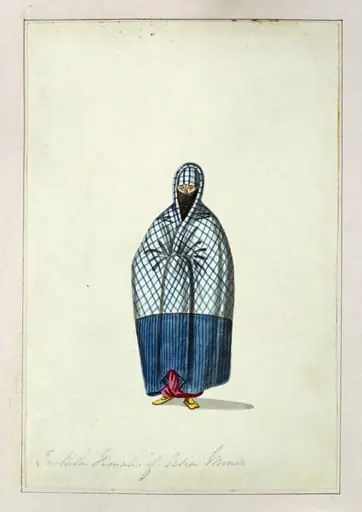
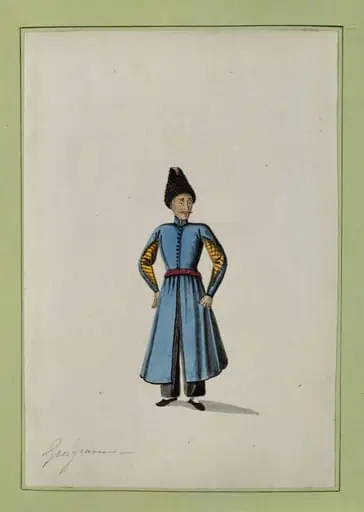
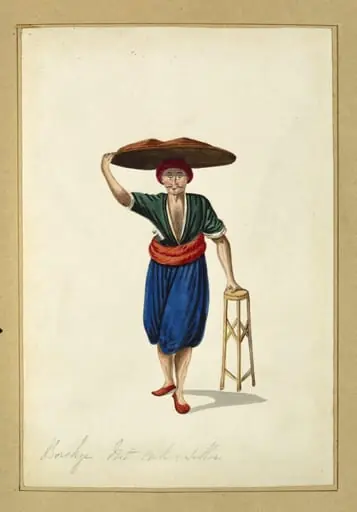
Yar hudgi is a watercolour sketch from a bound album of 54 figures, documenting Turkish individuals and objects. The album contains 116 pages, with drawings mounted on coloured paper and bound in morocco leather with gilt lettering. Forty-one sketches are credited to Charles Frederick Brockdorff; the remainder are by other artists. The work belongs to a broader 19th-century practice of ethnographic visual documentation, akin to albums held by the Victoria and Albert Museum.
Subject & Meaning
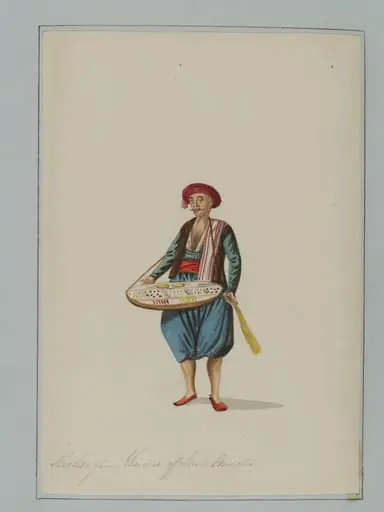
The drawing depicts a man in traditional attire—red hat, striped shirt, blue trousers—holding a balance scale with small round objects in each pan. His expression is solemn, and the composition isolates him against a blank background. While the scale may suggest themes of measurement, trade, or justice, no explicit symbolic meaning is confirmed. The figure’s identity and role remain unrecorded, leaving interpretation open to observation rather than narrative.
Technique & Style
Executed in watercolour, the sketch employs flat, unmodulated tones and precise, uncluttered lines. The absence of background detail directs attention to the figure and object, emphasizing clarity over atmosphere. The artist avoids shading or texture, relying on silhouette and colour contrast to define form. This restrained approach reflects a documentary intent, prioritizing visual accuracy over expressive embellishment.
History & Provenance
The album containing Yar hudgi was compiled in the early 19th century, likely during Brockdorff’s time in the Ottoman Empire. It shares formal and thematic similarities with albums by Lt. Col. Charles Hamilton Smith and those in the Victoria and Albert Museum. Titles within the album appear in both French and Turkish, indicating its use as a cross-cultural reference. The album’s binding and mounting suggest it was assembled for private or institutional study.
Context
This work emerged during a period when European officers and travellers systematically recorded Ottoman society through sketchbooks. Such albums served as visual archives, often used for military, diplomatic, or scholarly purposes. The inclusion of figures in traditional dress reflects an interest in cultural specificity, even as the drawings remain detached from broader political or social commentary.
Legacy
Yar hudgi contributes to a corpus of ethnographic drawings that shaped Western perceptions of Ottoman life in the 19th century. Though not widely exhibited, such works remain valuable as primary records of material culture and costume. Their stylistic simplicity and observational focus distinguish them from later romanticized depictions, preserving a more direct visual record of everyday figures.
Artist & collection
Artist
Charles Frederick Brockdorff painted detailed watercolours of North African life and costume in the 1830s.

![A Saka, or water carrier[?], by Anonymous Greek artist](https://artifactworldgallery.com/img/anonymous-greek-artist--a-saka-or-water-carrier--fea97d6d74c0c945-w320.webp)
![A Serbetci, or drinks seller[?], by Anonymous Greek artist](https://artifactworldgallery.com/img/anonymous-greek-artist--a-serbetci-or-drinks-seller--61bdf44039236f66-w320.webp)