Artwork
An Itinerant Barber
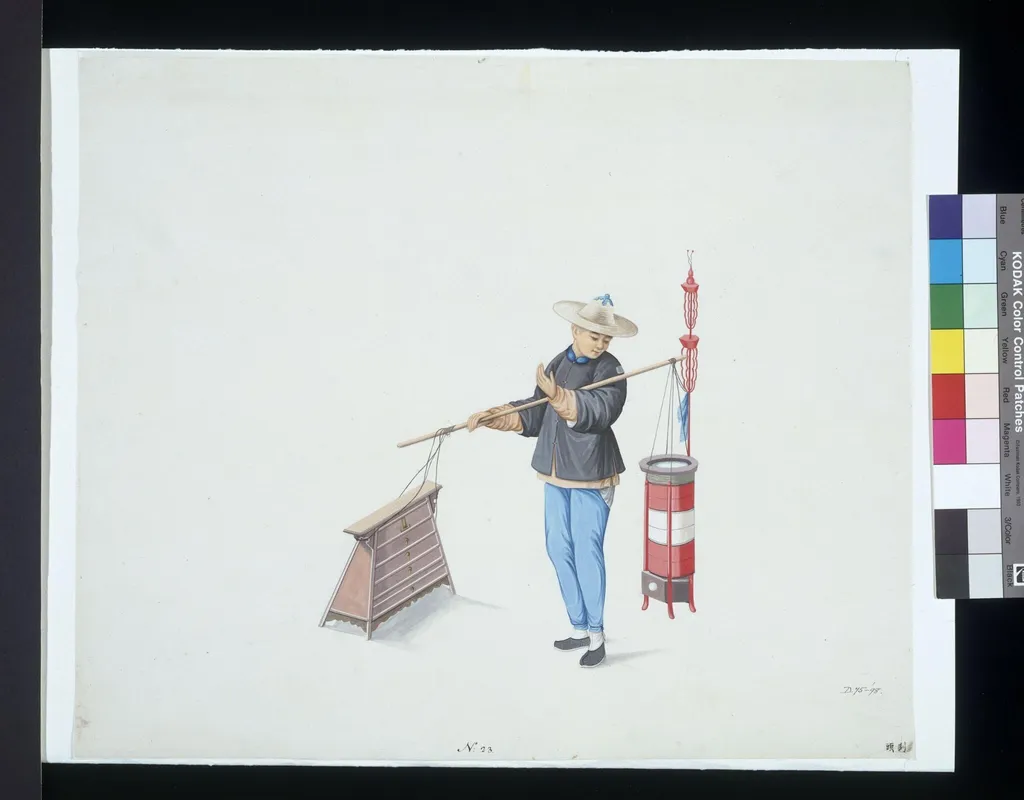
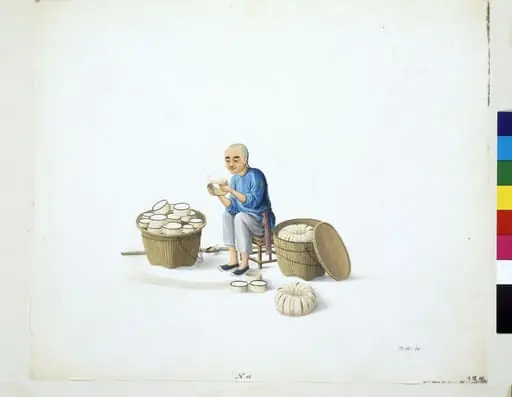
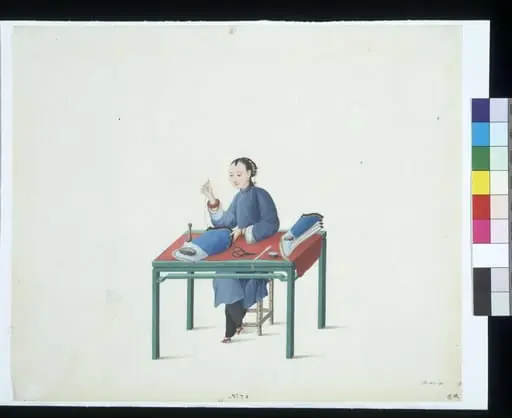
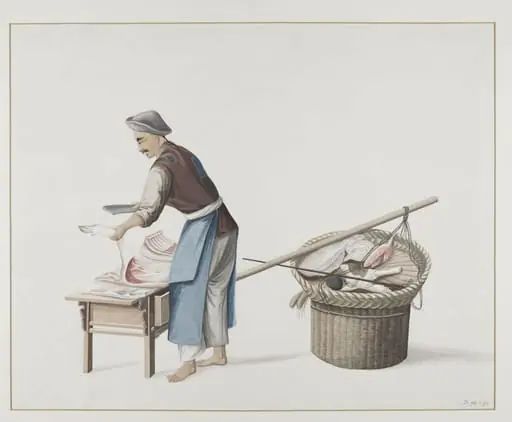
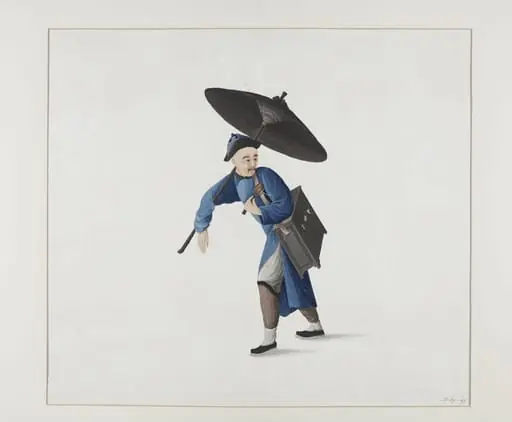
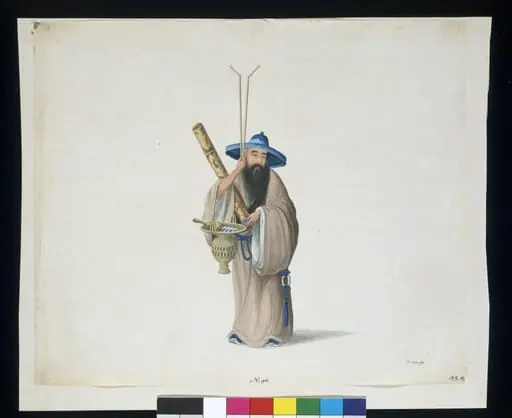
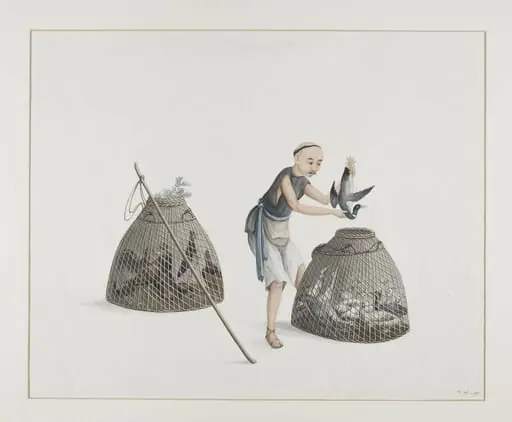
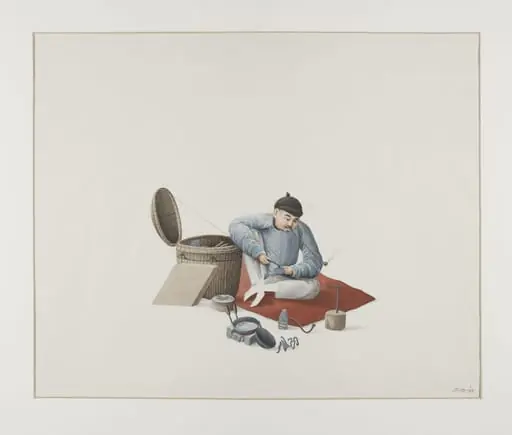
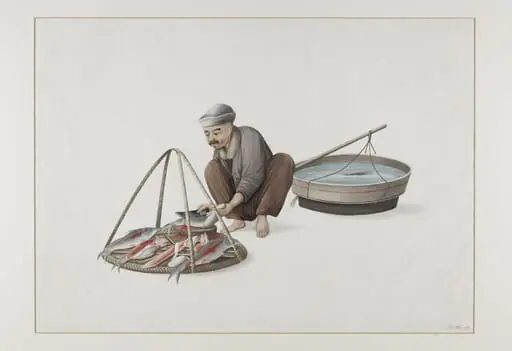
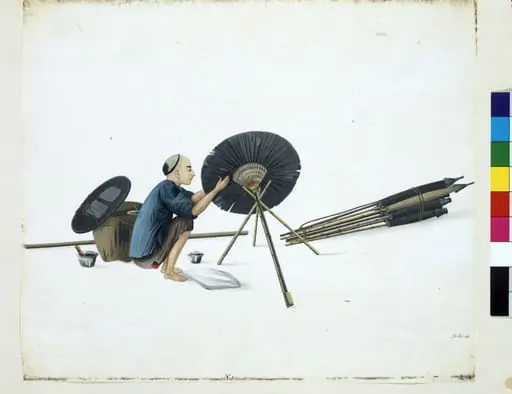
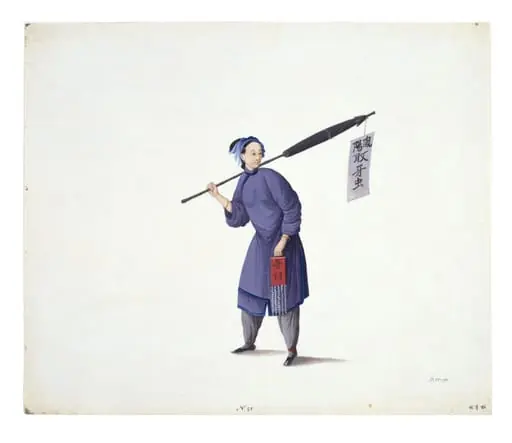
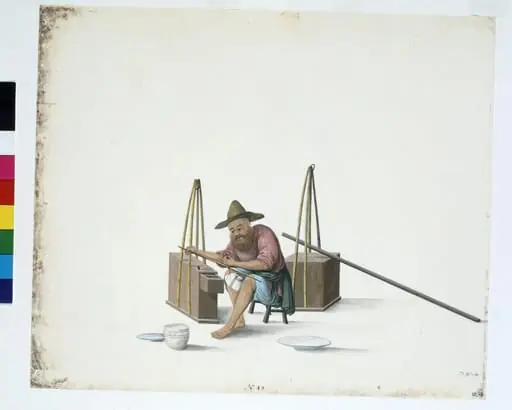
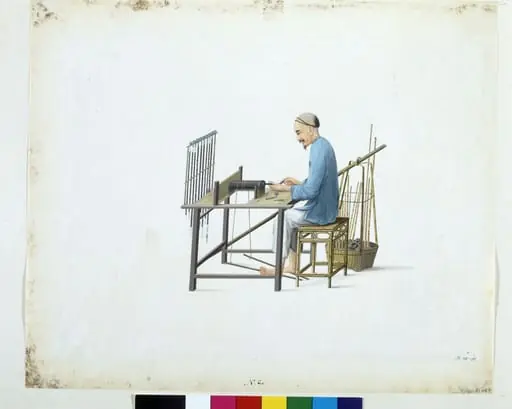
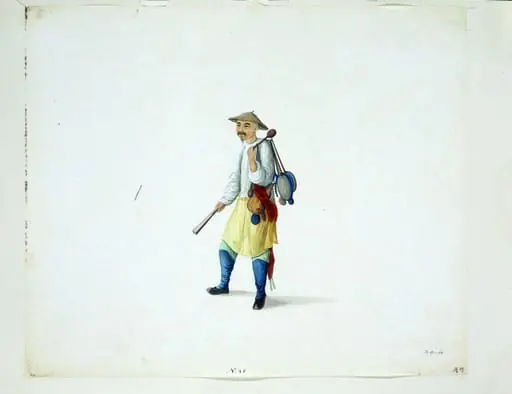
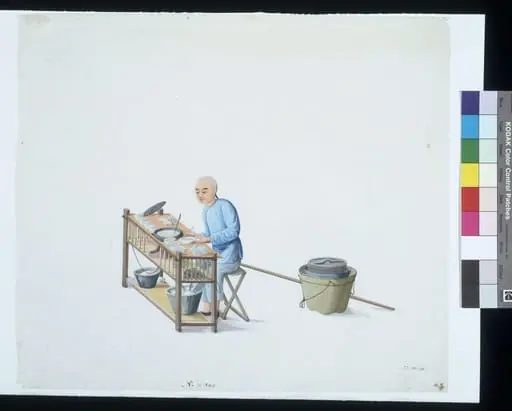
An Itinerant Barber is a paint painting by the Patna School of Painting artist Puqua. It dates from 1790 and is held in the collection of the Victoria and Albert Museum. This painting belongs to a series of one hundred works documenting occupational life in Canton during the late 18th or early 19th century.
About this work
Overview
This painting belongs to a series of one hundred works documenting occupational life in Canton during the late 18th or early 19th century.
This painting belongs to a series of one hundred works documenting occupational life in Canton during the late 18th or early 19th century. Created for European audiences with curiosity about Chinese society, each piece captures a distinct trade. The subject here is a traveling barber, shown performing his craft outdoors, reflecting a common practice among service providers who moved through urban neighborhoods to reach clients.
Subject & Meaning
The itinerant barber represents a mobile laborer who served communities without a fixed shop. His presence on the street underscores the informal economy of the time, where personal services were delivered directly to customers. The depiction avoids idealization, focusing instead on the practicality of his work—tools laid out, posture engaged, environment unadorned—offering a quiet testament to everyday labor in Qing-era China.
Technique & Style
The artist employs subtle contrasts of light and shadow to define form and spatial depth, aligning with techniques familiar in European painting traditions. Clothing folds, facial features, and the barber’s tools are rendered with careful attention to texture and volume. While the composition remains flat by Western standards, the use of chiaroscuro suggests an attempt to bridge Chinese visual conventions with the aesthetic expectations of foreign patrons.
History & Provenance
The painting was likely produced in Canton for export, part of a commercial series commissioned to satisfy European demand for ethnographic imagery of China. These works circulated among collectors and merchants, often serving as souvenirs or educational tools. Their survival in museum collections today reflects their role as cultural intermediaries during the height of Sino-European trade in the late Qing period.
Context
During the 18th and early 19th centuries, Canton was the primary port for Western trade with China. As foreign merchants and diplomats sought to understand local life, artists responded with visual catalogs of trades, customs, and festivals. These images were not ethnographic in the modern sense but shaped by both Chinese artistic practice and the tastes of their overseas buyers, blending observation with commercial appeal.
Legacy
The series remains a valuable record of urban labor in southern China during a period of increasing global contact. Though created for foreign consumption, the depictions preserve details of clothing, tools, and social interaction that might otherwise be lost. Today, they contribute to historical studies of cross-cultural exchange and the visual representation of labor in pre-modern China.
Artist & collection