Artwork
Book on Tournaments: Jouster Facing Right
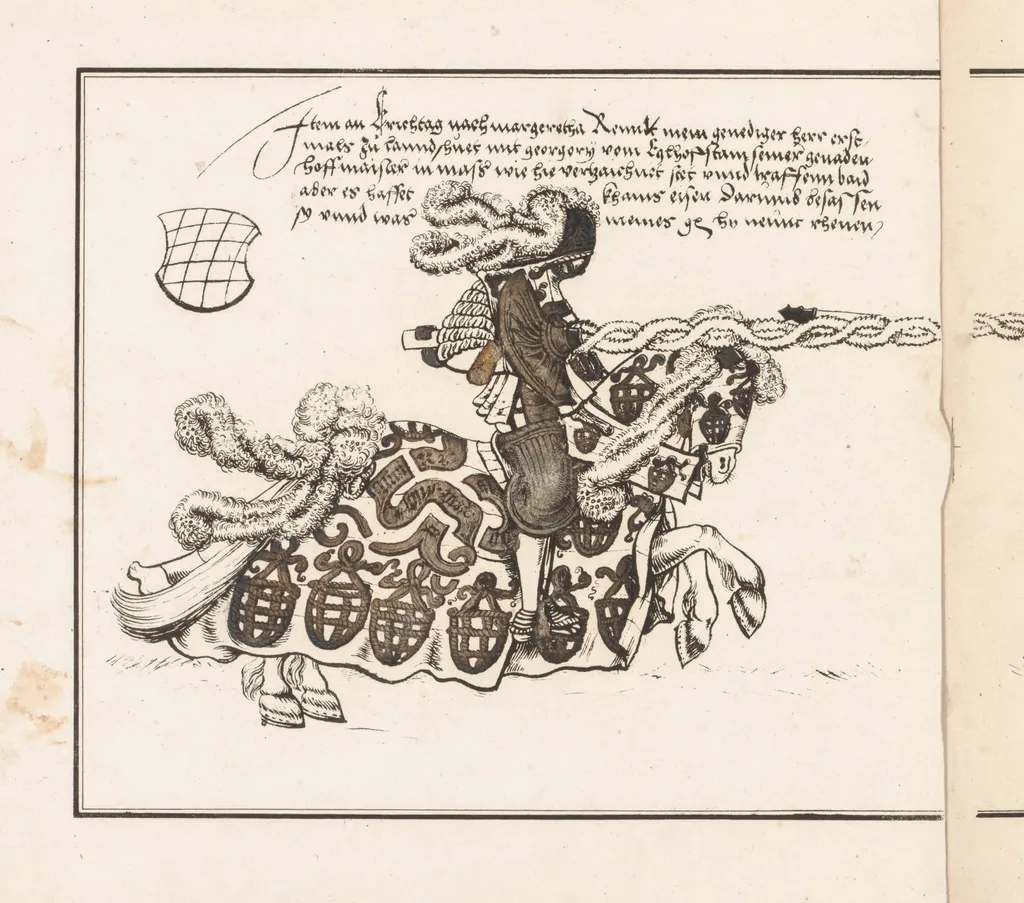
Book on Tournaments: Jouster Facing Right is a print by the Romanticist artist Theobald Senefelder. It dates from 1817 and is held in the collection of the Cleveland Museum of Art.
About this work
Overview
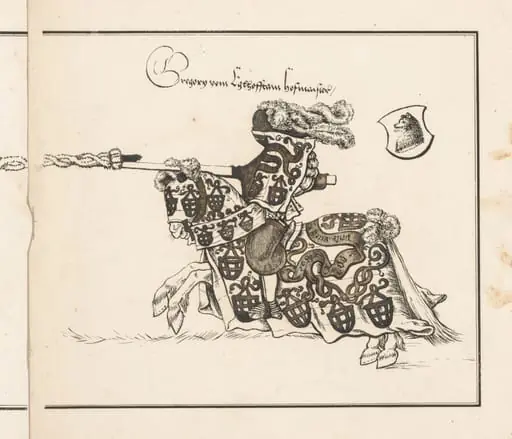
Created in 1817 by Theobald Senefelder, this print is part of a series documenting medieval jousting traditions. Executed in a precise, illustrative manner, it depicts a mounted knight in full armor, oriented to the right. The work was produced using lithography, a technique Senefelder pioneered, and reflects a scholarly interest in historical chivalric imagery during the early 19th century.
Subject & Meaning
The image portrays a solitary jouster, armed with a lance and clad in ornate armor, mounted on a horse adorned with a decorative blanket and plume. The figure is presented without narrative context, emphasizing ceremonial form over action. This focus on attire and posture suggests an intent to document armor and equestrian equipment rather than depict a specific tournament event.
Technique & Style
Rendered in lithography, the print exhibits fine linear detail in the armor’s engravings and the horse’s trappings. The background is left unmodeled, isolating the figures to highlight structural precision. Senefelder’s approach favors clarity and accuracy over dramatic expression, aligning with the documentary aims of early lithographic publishing rather than Romantic idealization.
History & Provenance
The print originates from a larger publication on tournament customs, likely compiled for antiquarian audiences. It entered the collection of The Cleveland Museum of Art as part of a broader acquisition of 19th-century European prints. Its survival in good condition reflects its role as a reference object rather than a widely circulated decorative piece.
Context
Produced during a period of renewed fascination with medievalism in Europe, the image aligns with scholarly efforts to record historical armor and equestrian culture. While Romantic artists dramatized chivalry, Senefelder’s work belongs to a more systematic tradition—akin to archaeological illustration—aimed at preserving visual records of bygone military customs.
Legacy
As one of the earliest uses of lithography for historical documentation, the print contributed to the standardization of visual reference in antiquarian studies. Senefelder’s technique enabled mass reproduction of detailed imagery, influencing later publications on armor and medieval life. The work remains a valuable resource for historians studying the material culture of knighthood.
Artist & collection

 Coat of Arms with a Lion and Unicorn
 Cheval de Main et Palfreniers Romains
 Maximilian, Duke of Austria, on Horseback
 Bookplate of Scheurl and Tucher
 Mock Joust of War with Flying Shields and Without Bevors
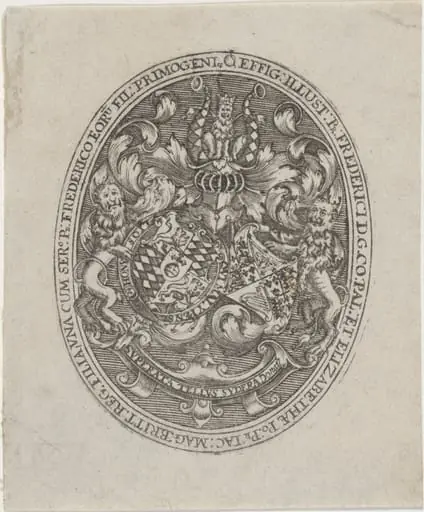 Shields of Frederick V, Elizabeth, and Prince Frederick Henry
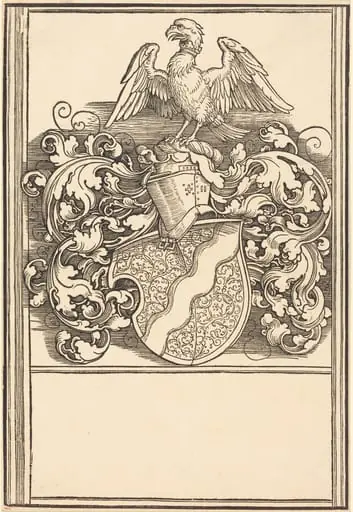 Coat of Arms of Michael Behaim
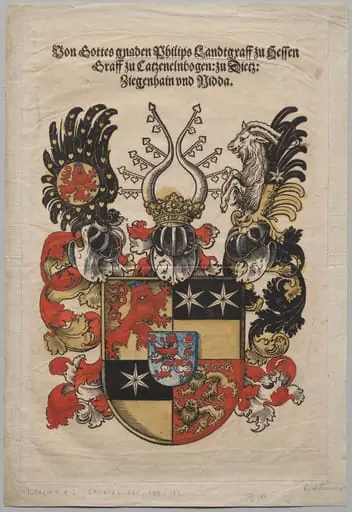 Coat of Arms of Philip, Landgrave of Hesse
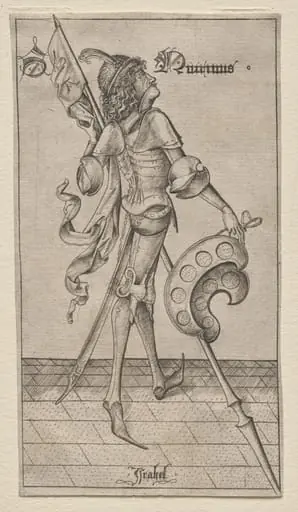 St. Quirinus
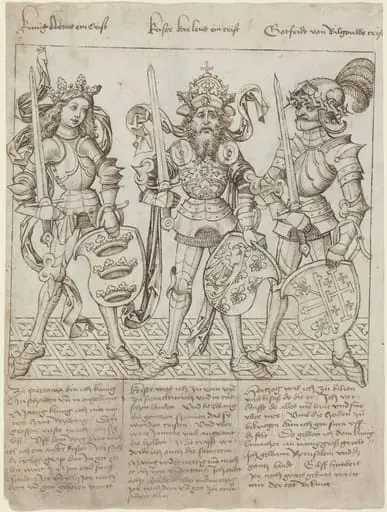 King Arthur, Charlemagne and Godfrey of Boulogne
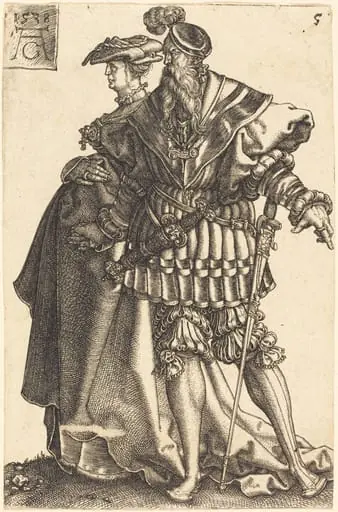 Large Wedding Dancers