Artwork
Coat of Arms of Michael Behaim
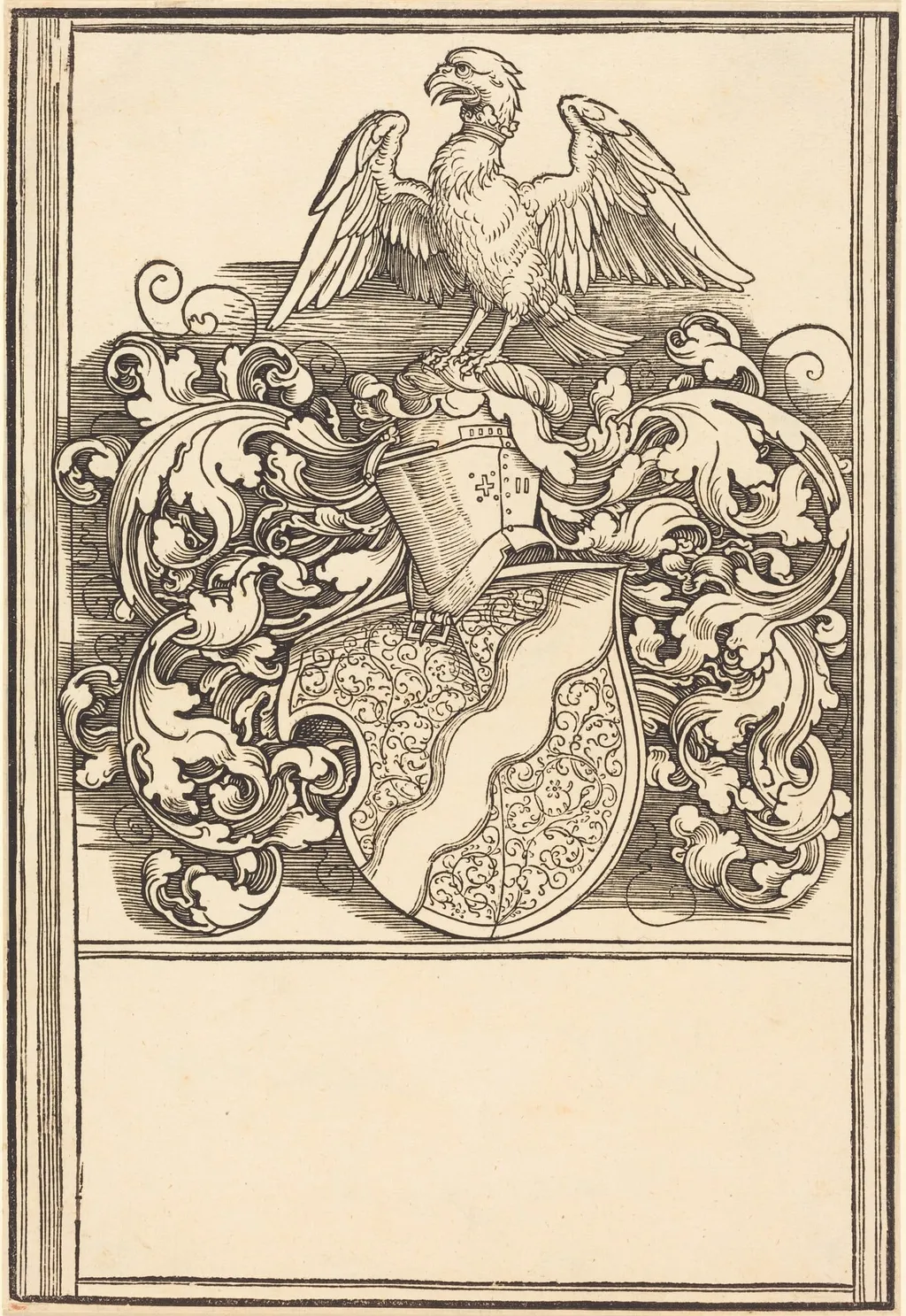
Coat of Arms of Michael Behaim is an ink print by the Northern Renaissance artist Albrecht Dürer. It dates from 1520 and is held in the collection of the National Gallery of Art.
About this work
Overview
Albrecht Dürer’s woodcut titled “Coat of Arms of Michael Behaim” dates from around 1520. Executed in the black‑and‑white medium of woodcut, the image presents an elaborate heraldic device framed by ornamental motifs. The composition centers on a shield supported by two hands, topped by a crowned bird, all surrounded by swirling, cloud‑like decorations.
Subject & Meaning
The central figure is a bird, resembling an eagle, crowned to signify authority, a conventional emblem of power in early modern heraldry. The shield bears decorative scrollwork and foliage, while the hands that hold it suggest patronage or the personal endorsement of Michael Behaim, the individual whose arms are being displayed.
Technique & Style
Dürer employs the precise incising characteristic of his mature woodcut practice, producing crisp, intersecting lines that render intricate patterns within a monochrome field. The contrast between dense hatching and open spaces creates a sense of depth and texture, allowing the elaborate heraldic details to stand out despite the medium’s limitations.
History & Provenance
Created circa 1520, the print was likely commissioned to commemorate or legitimize Michael Behaim’s status, possibly for use in documents or as a decorative emblem. As a work by Dürer, it reflects his involvement in producing personalized heraldic prints for patrons during the later phase of his career.
Context
The early sixteenth century saw a flourishing of personalized heraldic imagery in the Holy Roman Empire, where prints served both as status symbols and as portable representations of family identity. Dürer’s engagement with such commissions aligns with his broader activity in producing portraiture, emblem books, and civic prints.
Legacy
While not among Dürer’s most widely reproduced works, this woodcut exemplifies his skill in adapting fine‑art techniques to functional heraldic design. It offers insight into the intersection of art, patronage, and social symbolism in Renaissance Germany, and remains a reference point for scholars studying the artist’s lesser‑known print commissions.
Artist & collection
Artist
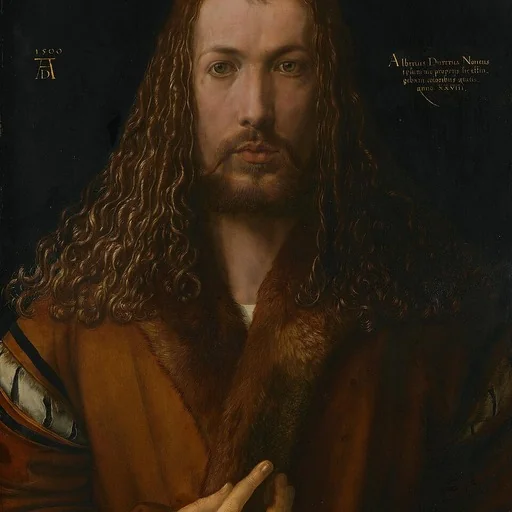
Albrecht Dürer spent his life in Nuremberg, a busy German city where artists traded prints like currency.

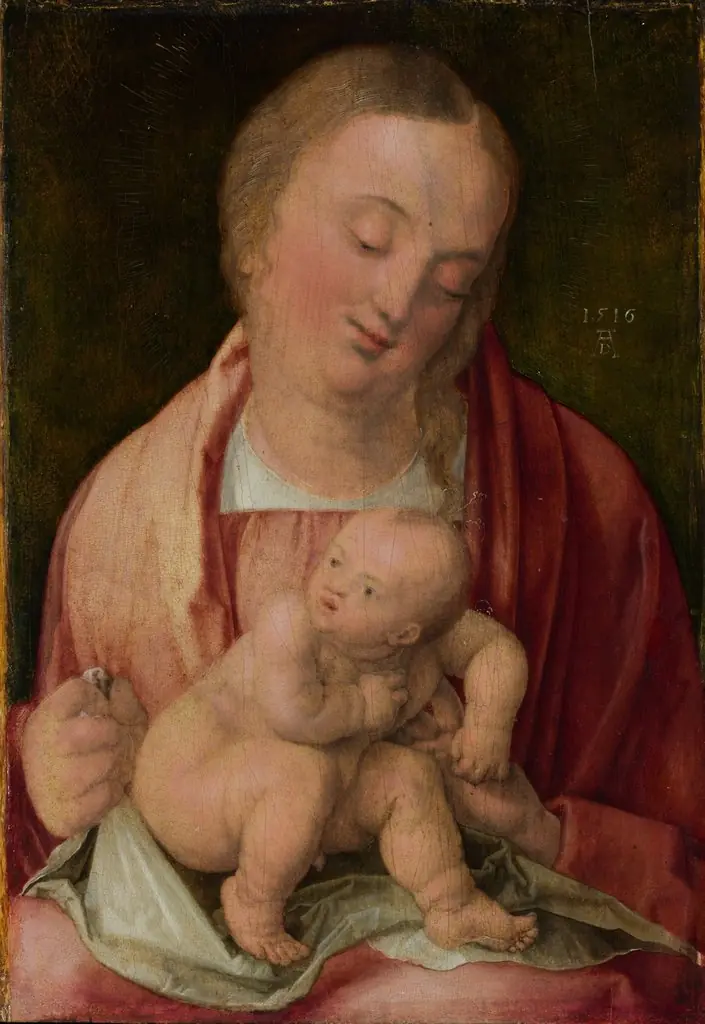
![Madonna and Child [obverse], by Albrecht Dürer](https://artifactworldgallery.com/img/albrecht-durer--madonna-and-child-obverse--d7b8ebf05d22ebe5-w320.webp)
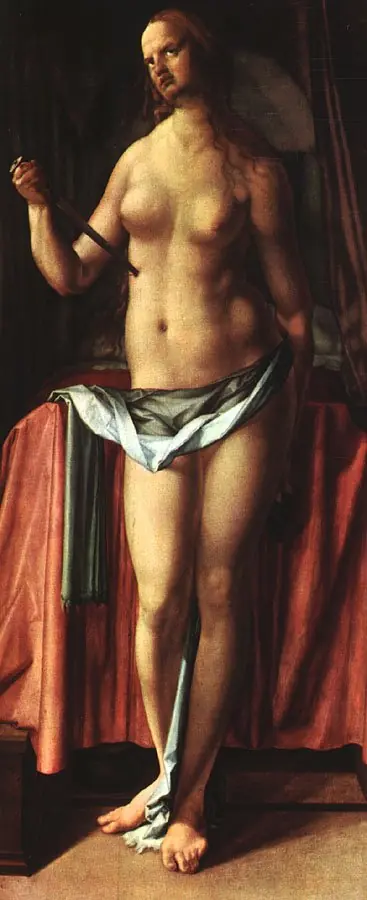
![Lot and His Daughters [reverse], by Albrecht Dürer](https://artifactworldgallery.com/img/albrecht-durer--lot-and-his-daughters-reverse--b4ebf9b282faa17a-w320.webp)
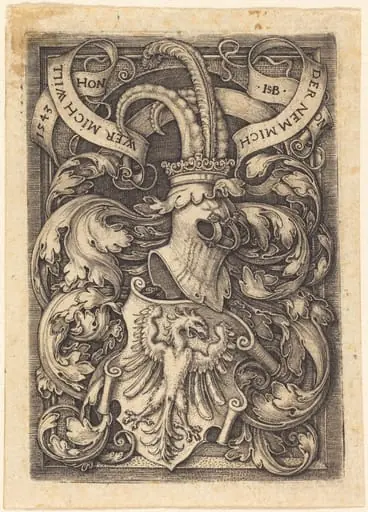 Coat of Arms with an Eagle
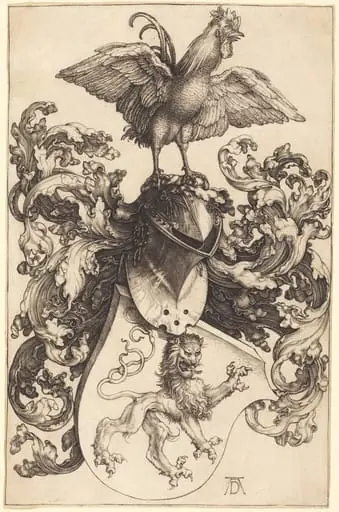 Coat of Arms with a Lion and a Cock
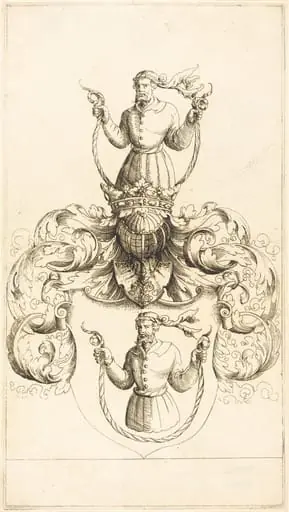 Coat of Arms of Unknown Man
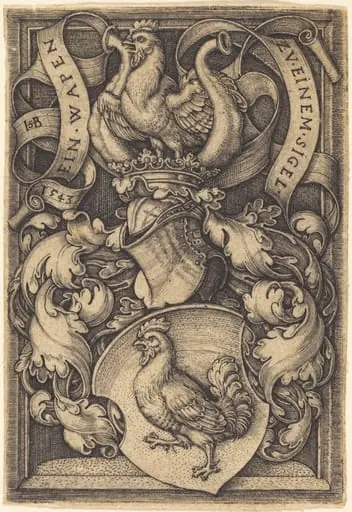 Coat of Arms with a Cock
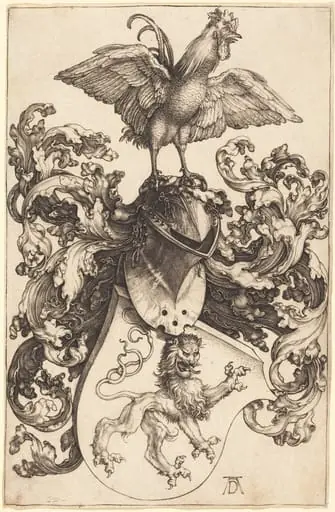 Coat of Arms with a Lion and a Cock
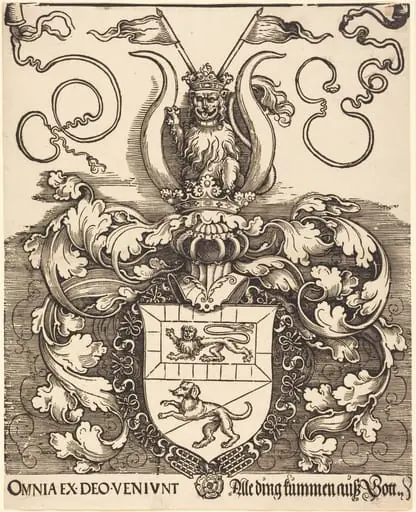 Coat of Arms of Lorenz Staiber
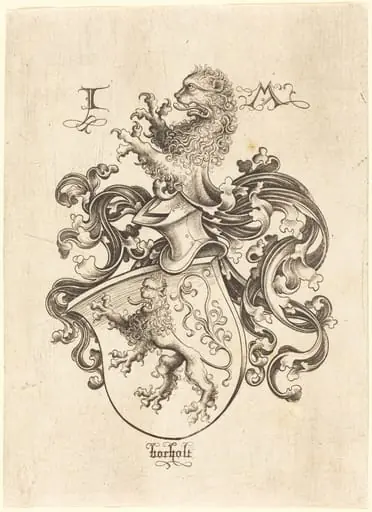 Coat of Arms with Lion
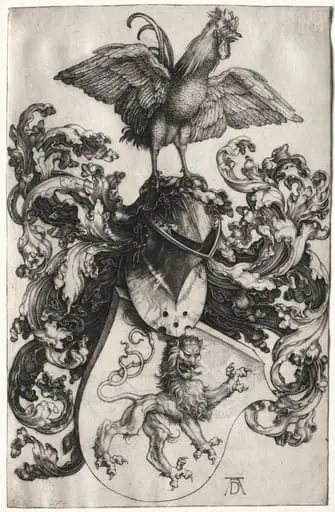 The Coat of Arms with a Lion and Cock
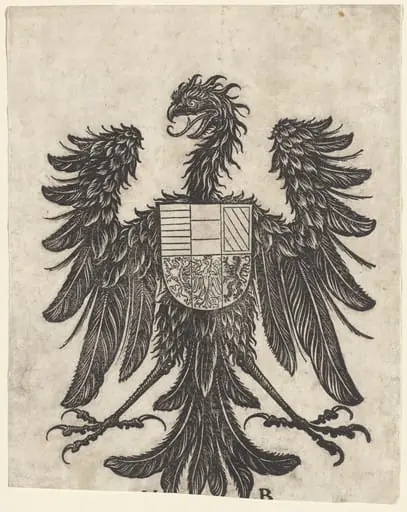 Coat of Arms with a Single Eagle
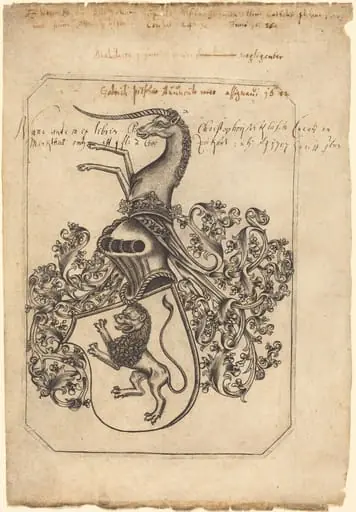 Coat of Arms with a Lion and Unicorn
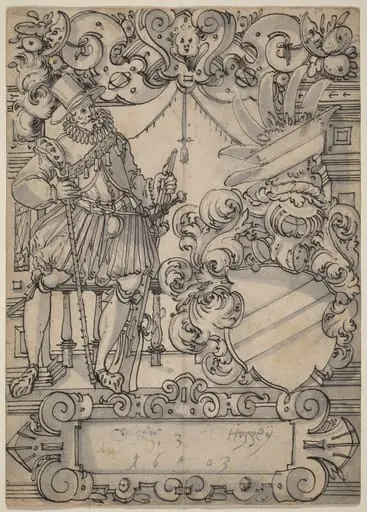 A Donor with a Coat of Arms (Schildbegleiter und Wappenschild mit Schrägbalken)