Artwork
Coat of Arms of Philip, Landgrave of Hesse
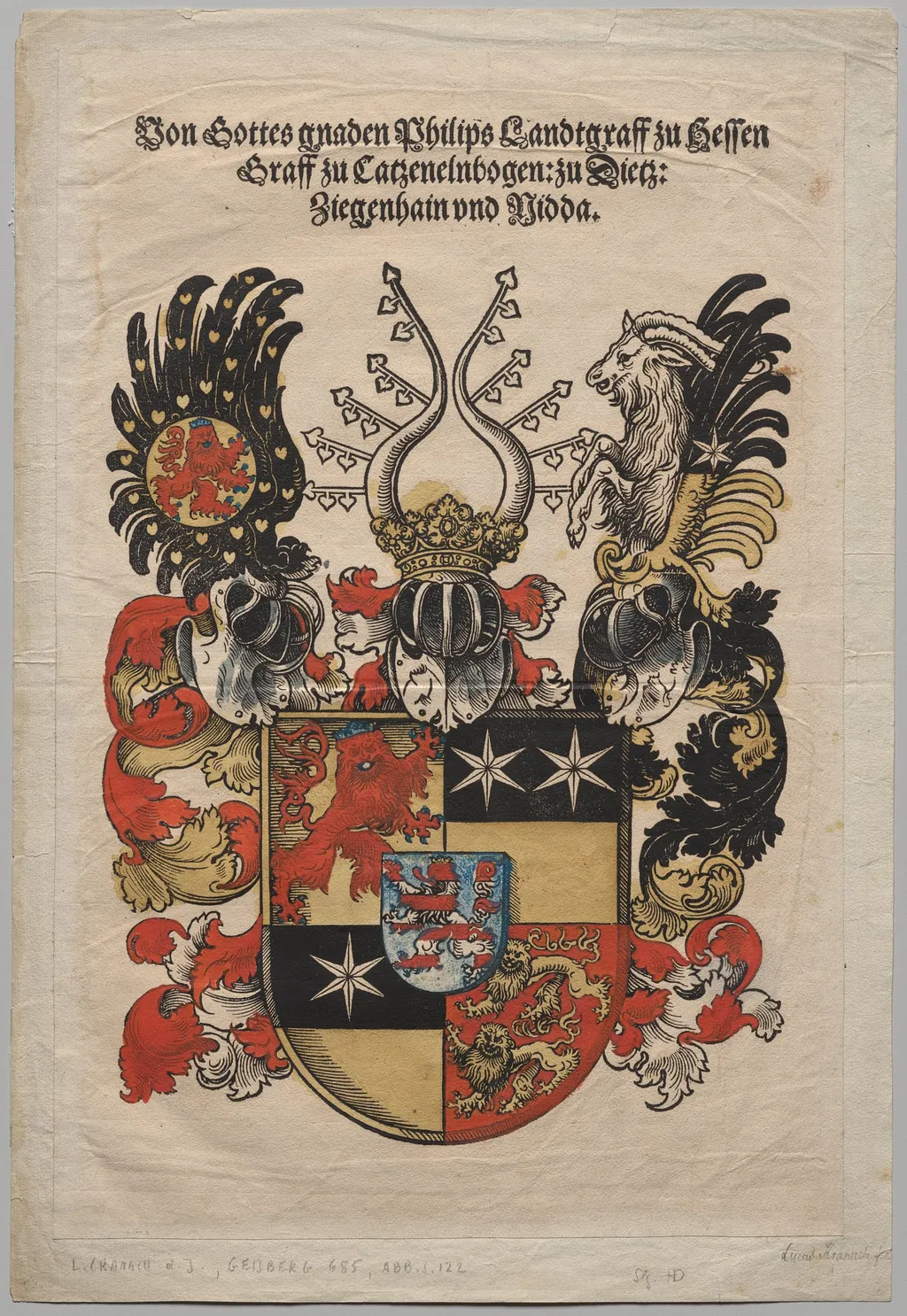
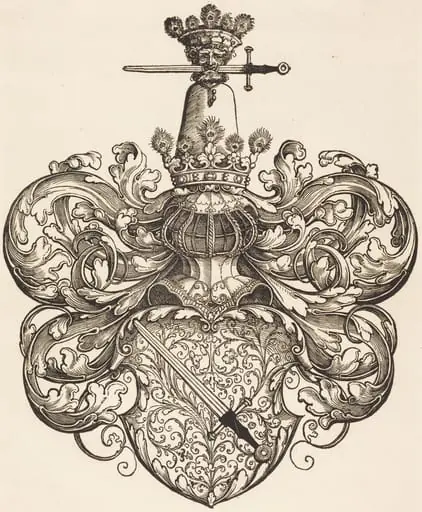
Coat of Arms of Philip, Landgrave of Hesse is a print by the Renaissance artist Lucas Cranach the Younger. It dates from 1546 and is held in the collection of the Cleveland Museum of Art.
About this work
This painting shows a coat of arms with symbols and colors.
It's interesting because the coat of arms is for Philip, Landgrave of Hesse, a noble title. The details on the coat of arms are precise and meaningful, indicating the owner's status and family history.
You can learn more about this style by looking at the work of artist Lucas Cranach (German, 1515–1586).
Overview
It reflects the period’s emphasis on lineage and symbolic authority, using traditional heraldic elements to convey status and territorial affiliation.
This 1546 print by Lucas Cranach the Younger presents the heraldic emblem of Philip, Landgrave of Hesse, rendered in precise detail. Executed during the German Renaissance, the work serves as a formal representation of noble identity rather than a portrait. It reflects the period’s emphasis on lineage and symbolic authority, using traditional heraldic elements to convey status and territorial affiliation.
Subject & Meaning
The coat of arms centers on a rampant lion, a common symbol of strength and sovereignty in European heraldry, set against a field of alternating colors typical of Hessian noble lineage. The helmet and crest above the shield denote aristocratic rank, while the arrangement of tinctures and charges encodes familial heritage and political allegiance. Each element was carefully chosen to affirm Philip’s position within the Holy Roman Empire’s nobility.
Technique & Style
Cranach the Younger employed fine linear precision and controlled tonal contrasts to render the heraldic elements with clarity. The composition is symmetrical and restrained, avoiding decorative excess in favor of legibility and formal dignity. This approach aligns with the Northern Renaissance tradition of meticulous draftsmanship, where symbolic content outweighs expressive flourish.
History & Provenance
Created in 1546, the print likely served as an official document or commission for Philip’s court, possibly used in seals, manuscripts, or public displays. As the son of Lucas Cranach the Elder, the younger Cranach inherited a workshop known for producing portraits and heraldic works for Protestant nobility. The piece’s survival suggests it was valued within Hessian administrative or ceremonial contexts.
Context
In mid-16th century Germany, heraldry remained a vital tool for asserting political identity amid religious and territorial upheaval. As a leading Protestant prince, Philip’s coat of arms reinforced his legitimacy during the Reformation. Cranach’s workshop, closely tied to the Protestant cause, regularly produced such imagery to visually anchor noble authority in a changing political landscape.
Legacy
The print exemplifies the role of art in sustaining dynastic memory within early modern Europe. While not widely exhibited today, it remains a representative artifact of German Renaissance heraldic practice. Its preservation offers insight into how noble families used visual symbols to communicate power, continuity, and identity beyond written records.
Artist & collection
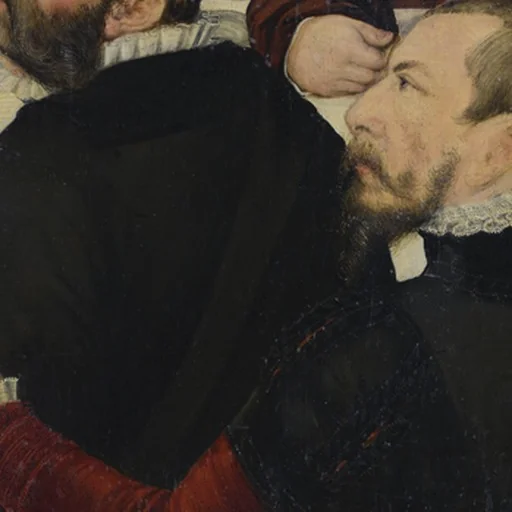
Artist
Lucas Cranach the Younger (German: Lucas Cranach der Jüngere, IPA: ; 4 October 1515 – 25 January 1586) was a German Renaissance painter and portraitist, the son of Lucas Cranach the Elder and brother of Hans Cranach.