Artwork
The River Liri. Italy
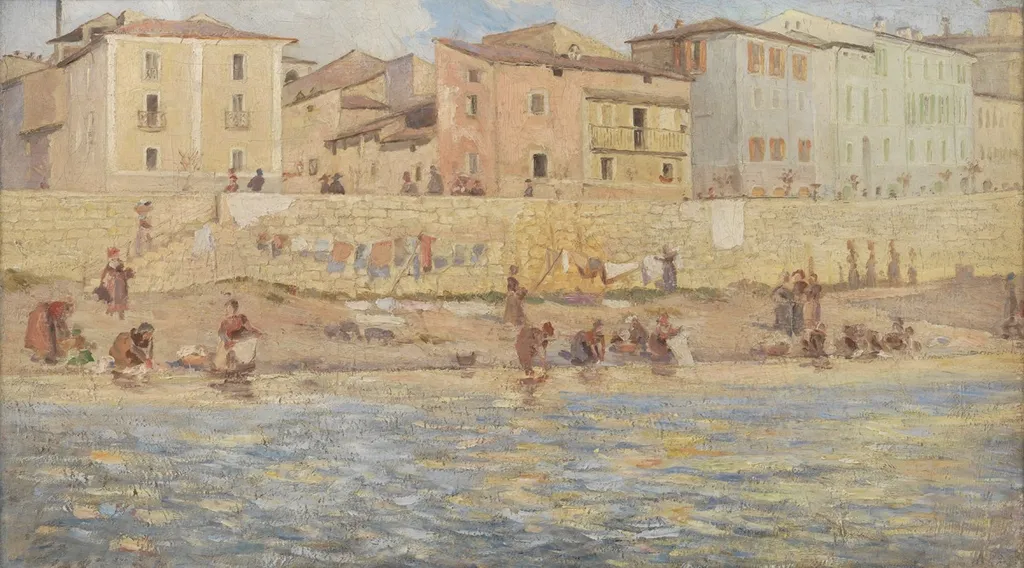
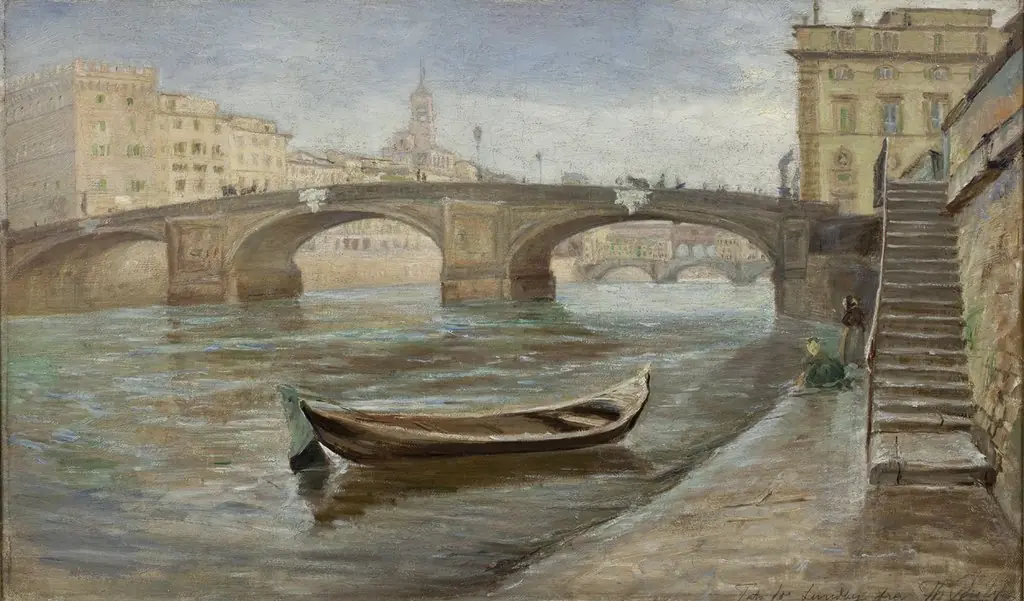
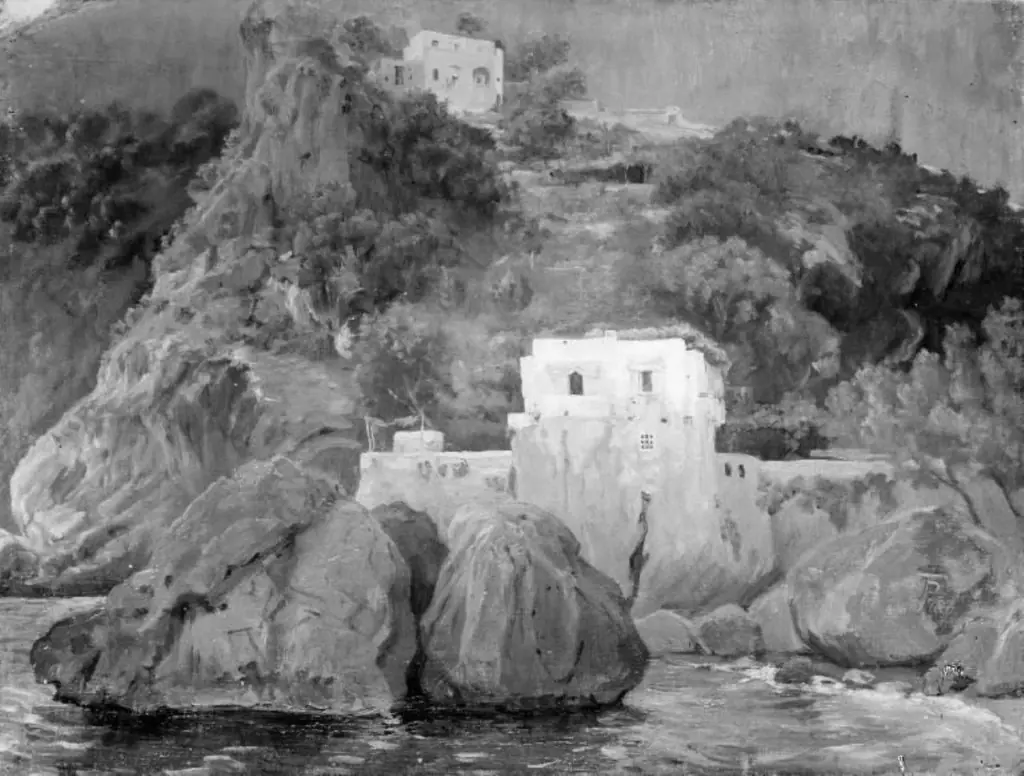
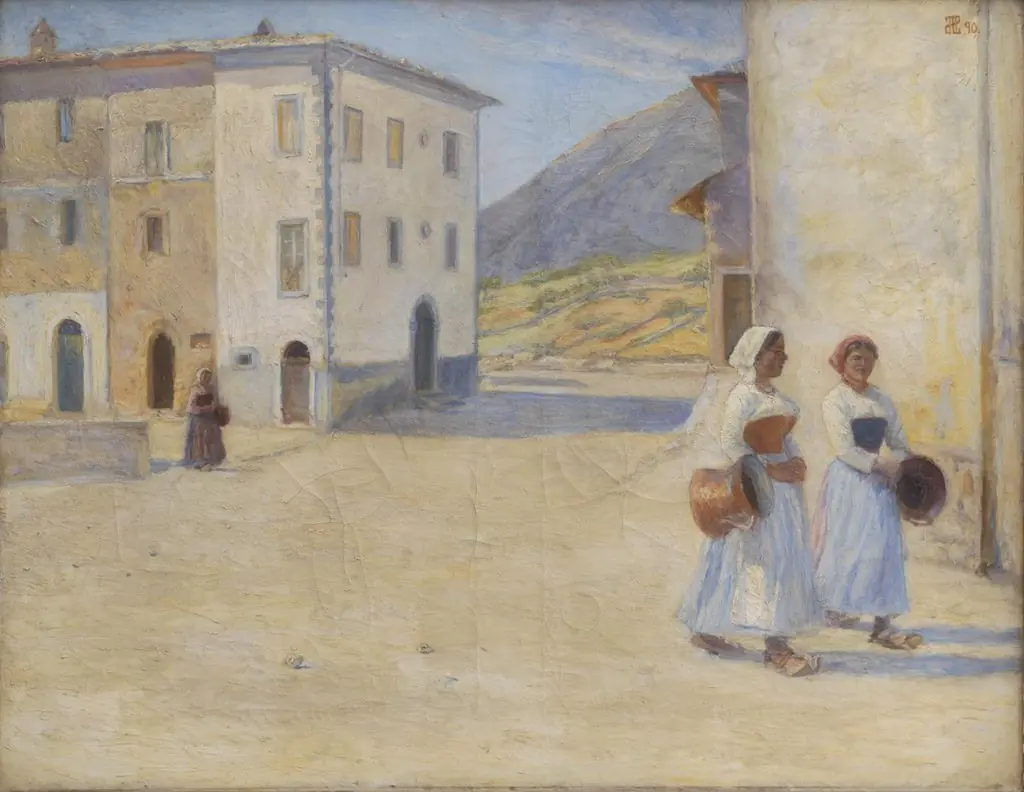
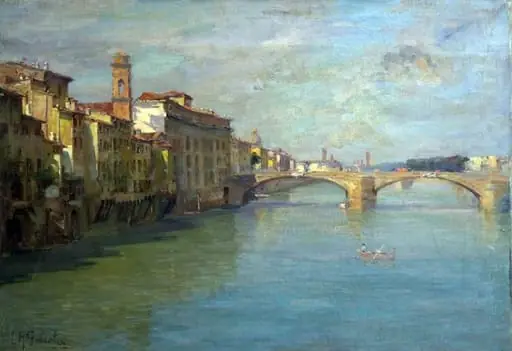
The River Liri. Italy is an oil painting by the Impressionist artist Theodor Philipsen. It dates from 1892 and is held in the collection of the Statens Museum for Kunst. The River Liri.
About this work
Overview
Italy is an 1892 oil painting by Danish artist Theodor Philipsen, capturing a quiet stretch of the Liri River in central Italy.
The River Liri. Italy is an 1892 oil painting by Danish artist Theodor Philipsen, capturing a quiet stretch of the Liri River in central Italy. Executed in the impressionist tradition, the work reflects Philipsen’s interest in natural light and everyday landscapes. It is part of the permanent collection at Statens Museum for Kunst in Copenhagen, where it represents his engagement with southern European scenery during his travels.
Subject & Meaning
The scene portrays a tranquil riverside with distant buildings and small figures, suggesting quiet rural life. The absence of dramatic action emphasizes stillness and observation. Philipsen’s focus on the river’s reflective surface and subtle human presence conveys a contemplative mood, aligning with impressionist ideals of capturing fleeting atmospheric conditions rather than narrative detail.
Technique & Style
Philipsen applied loose, visible brushwork to suggest texture and movement, particularly in the water and foreground vegetation. The palette is restrained, dominated by soft blues, greens, and earth tones, avoiding bold contrasts. Light is rendered through tonal shifts rather than sharp highlights, creating a hazy, atmospheric effect consistent with impressionist methods of observing nature directly.
History & Provenance
Painted during Philipsen’s time in Italy, the work was acquired by the Danish national collection shortly after its completion. It remained in institutional hands, never entering private markets, and has been regularly exhibited in Denmark as an example of Nordic impressionism. Its preservation reflects its significance in documenting Danish artists’ engagement with Mediterranean landscapes in the late 19th century.
Context
Philipsen was among the first Danish painters to adopt impressionist techniques after exposure to French art in the 1880s. His Italian works, including this one, reflect a broader trend of Northern European artists traveling south to study light and landscape. Unlike many contemporaries, he avoided grand historical themes, favoring intimate, unidealized views of rural environments.
Legacy
The River Liri. Italy exemplifies Philipsen’s quiet contribution to Danish impressionism, distinguishing him from more dramatic or urban-focused peers. While not widely known outside Scandinavia, the painting remains a key reference for understanding how impressionist principles were adapted to Nordic sensibilities and non-urban subjects in the late 1800s.
Artist & collection
Artist
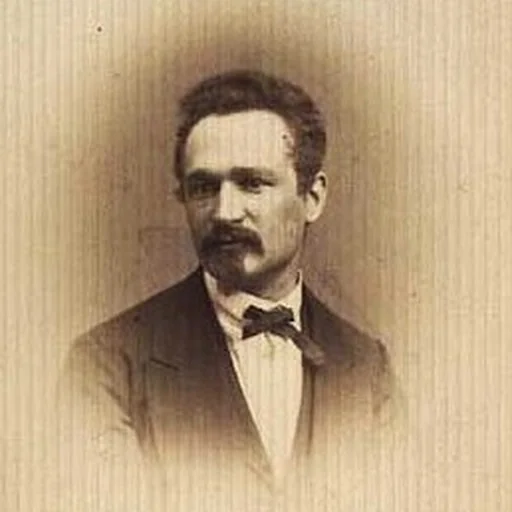
Theodor Esbern Philipsen (10 June 1840 – 3 March 1920) was a Danish painter of Jewish ancestry, known for landscapes and animal portraits. He also did small figures in wax and clay.