Artwork
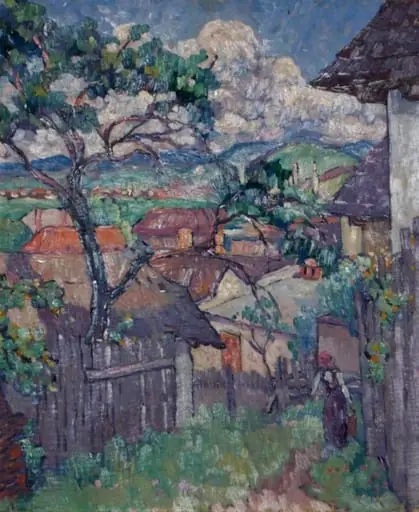
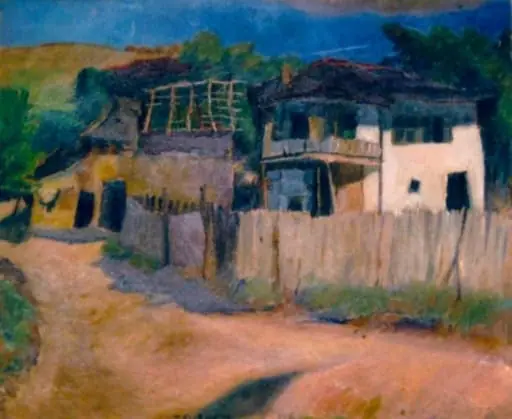
Casă țărănească din Curtea de Argeș
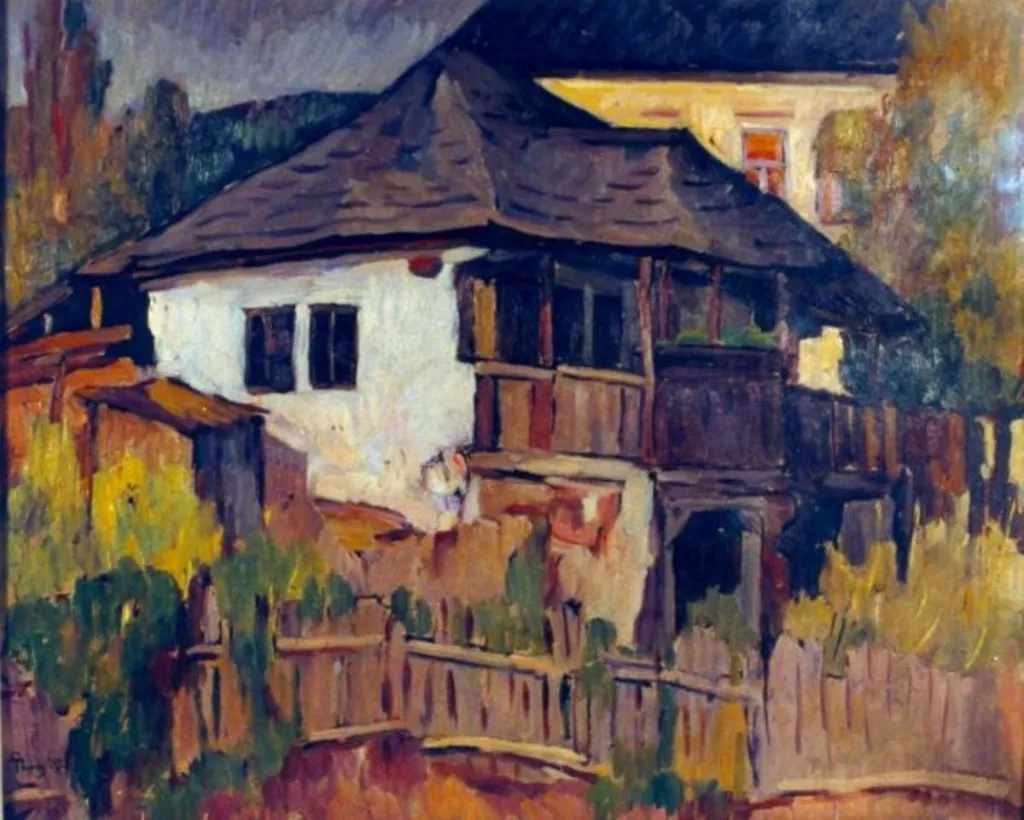
Casă țărănească din Curtea de Argeș is an unspecified painting by Ion Theodorescu-Sion. It dates from 1922 and is held in the collection of the Cotroceni National Museum.
About this work
Overview
The scene is rendered with deliberate simplicity, emphasizing the quiet dignity of peasant architecture in the Romanian countryside.
Painted in 1922 by Ion Theodorescu-Sion, this work captures a rural dwelling in Curtea de Argeș during a period when the artist turned away from modernist experimentation toward a more rooted, folk-inspired aesthetic. The scene is rendered with deliberate simplicity, emphasizing the quiet dignity of peasant architecture in the Romanian countryside. It belongs to the Museum of Ethnography’s collection, reflecting its cultural rather than purely artistic significance.
Subject & Meaning
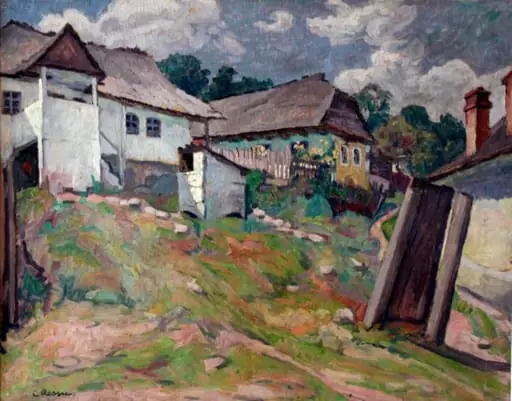
The painting portrays a modest peasant home, its white walls and dark timber framing typical of regional construction. A secondary structure, partially visible behind, suggests a larger estate or communal building, hinting at social hierarchy within the rural landscape. Autumn trees frame the scene, grounding the house in a seasonal rhythm. The composition avoids idealization, presenting domestic life as unembellished and enduring.
Technique & Style
Theodorescu-Sion employed impasto to build the surfaces of walls, roof, and trees, applying paint thickly with visible, tactile strokes. This technique lends physical weight to the architecture and natural elements, reinforcing their solidity. The palette is restrained—ochres, whites, and deep browns—enhancing the sense of earthbound realism. Brushwork is deliberate, not decorative, aligning with the subject’s functional character.
History & Provenance
Created shortly after Theodorescu-Sion’s transition from avant-garde experimentation to traditionalist themes, the painting emerged from his deepening engagement with rural Romanian identity. It entered the Museum of Ethnography’s holdings early in its history, likely chosen for its documentation of vernacular architecture. Its preservation there underscores its role as a record of material culture as much as a work of art.
Context
In early 20th-century Romania, artists and intellectuals sought to define a national identity through rural traditions. Theodorescu-Sion’s focus on peasant dwellings responded to this movement, countering urban modernization with images of enduring rural life. Curtea de Argeș, historically significant as a former princely seat, lent symbolic weight to such depictions, linking folk architecture to national heritage.
Legacy
The painting remains a reference point in discussions of Romanian art’s engagement with folk culture. While not widely exhibited outside specialized institutions, its presence in the Museum of Ethnography affirms its value as a visual archive. It exemplifies how art was used to preserve and interpret everyday life during a period of rapid social change.
Artist & collection
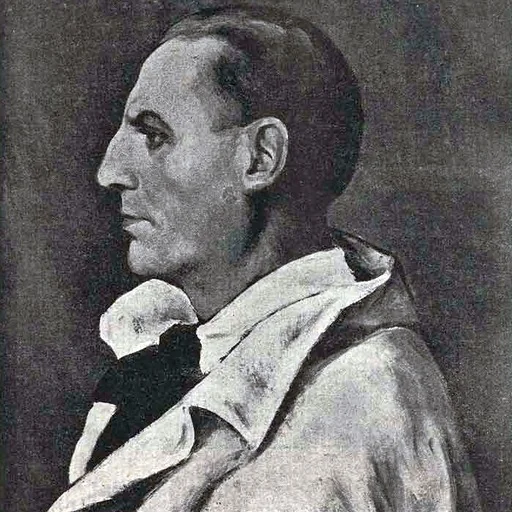
Artist
Ion Theodorescu-Sion (Romanian pronunciation: ; also known as Ioan Theodorescu-Sion or Teodorescu-Sion; January 2, 1882 – March 31, 1939) was a Romanian painter and draftsman, known for his contributions to modern art…