Artwork
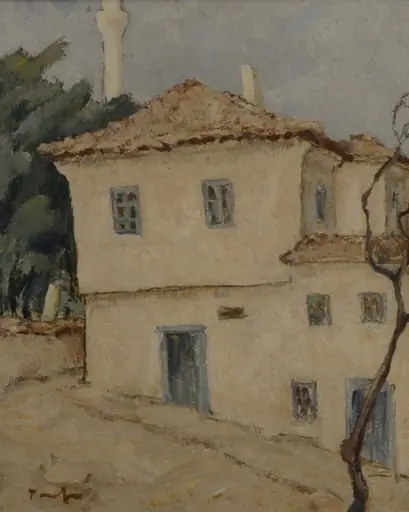
Casa dascălului
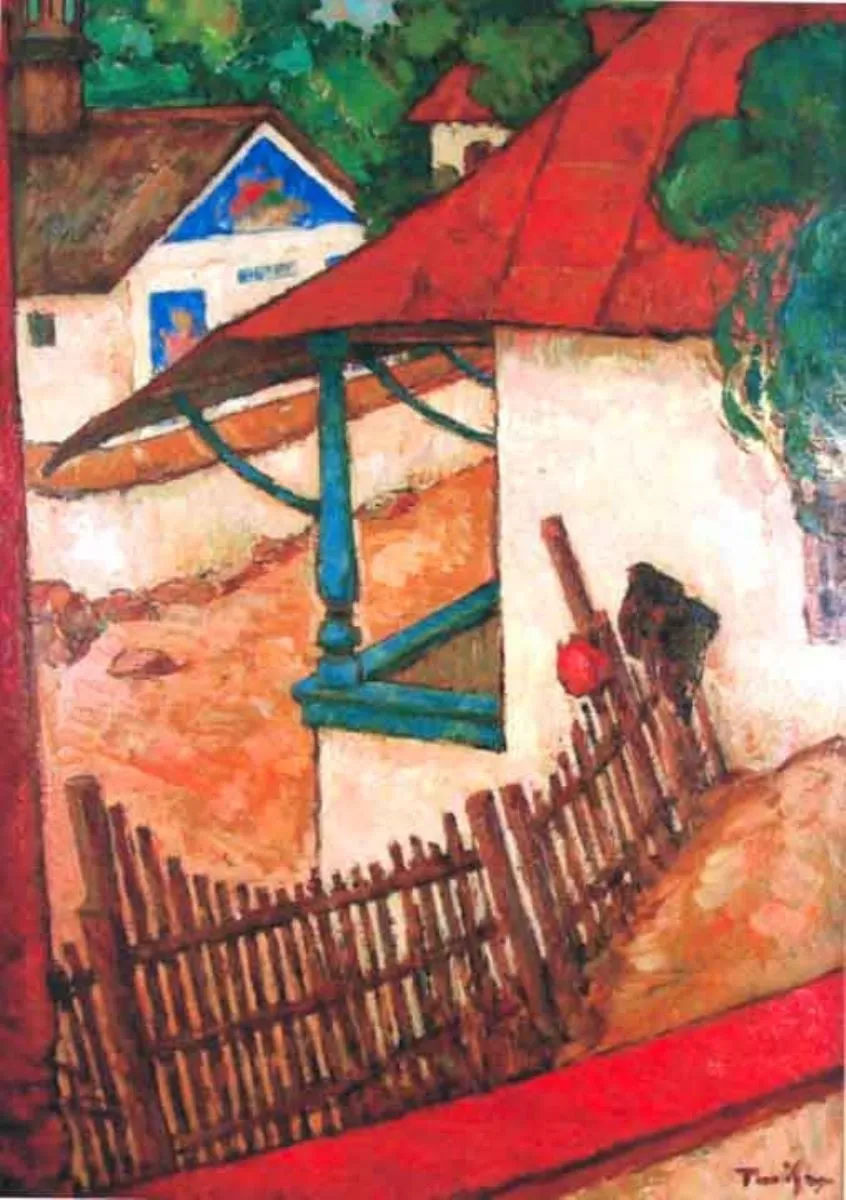
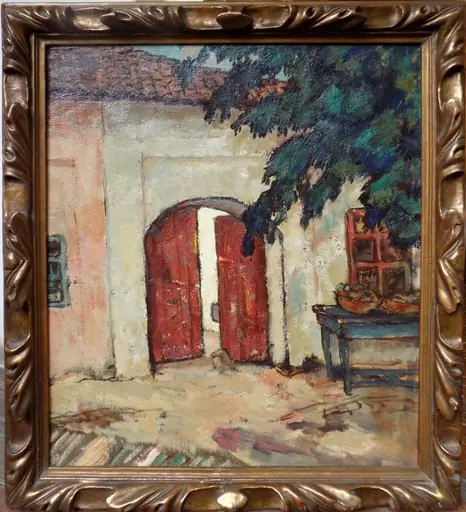
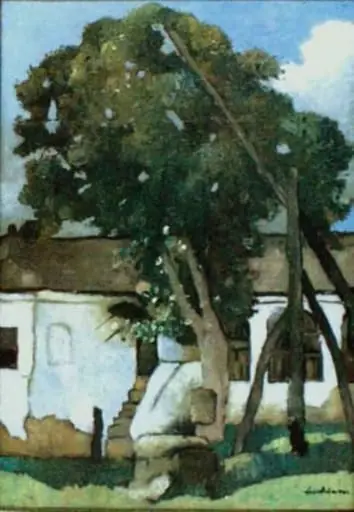
Casa dascălului is an unspecified painting by Nicolae Tonitza. It dates from 1926 and is held in the collection of the Ion Ionescu-Quintus Prahova County Art Museum.
About this work
Overview
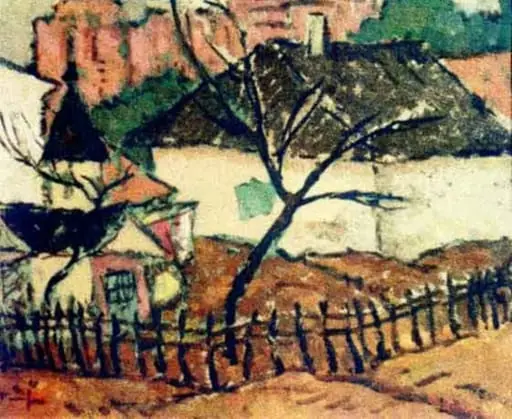
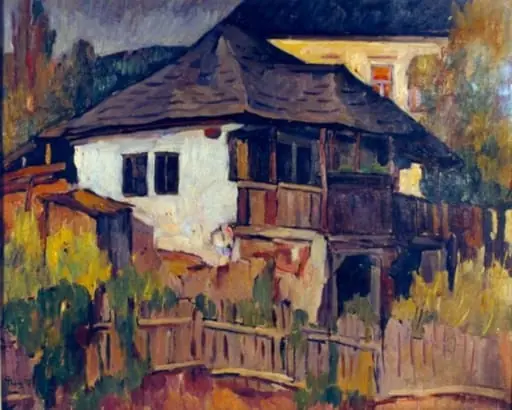
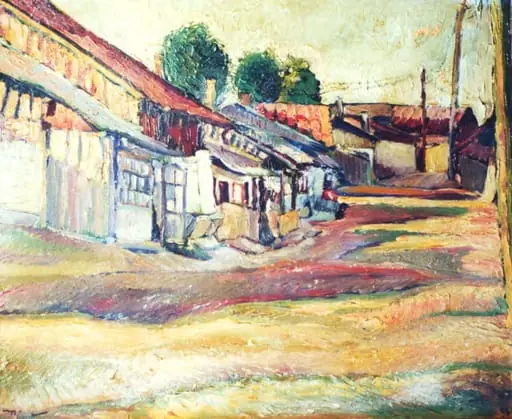
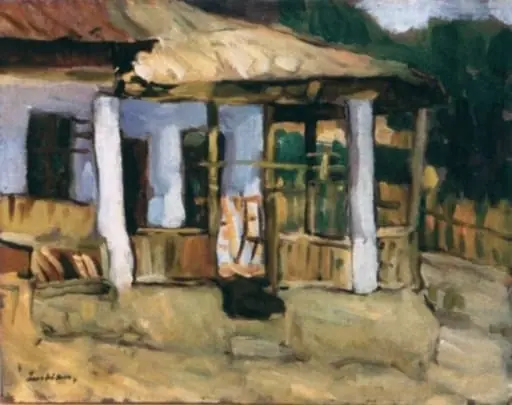
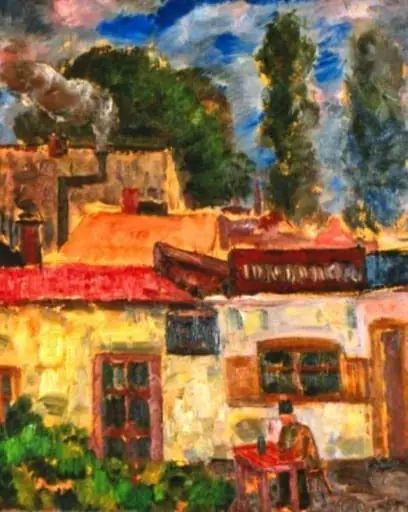
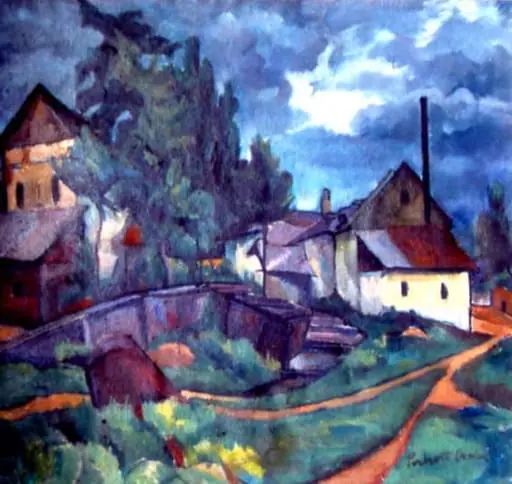
Casa dascălului, painted by Nicolae Tonitza in 1926, is a quiet rural scene rendered in oil on canvas. The work captures a modest dwelling with a red-tiled roof and whitewashed walls, framed by a wooden fence and surrounded by trees. It is part of the collection at the Museum of Ethnography in Bucharest, where it reflects Tonitza’s interest in everyday Romanian life during the interwar period.
Subject & Meaning
The painting centers on a teacher’s house, suggesting the quiet dignity of rural education in early 20th-century Romania. The structure is neither grand nor ornate, yet its placement and attention to detail imply respect for the role of the schoolmaster in village life. The absence of human figures emphasizes solitude and the enduring presence of the home as a cultural anchor.
Technique & Style
Tonitza employs muted yet deliberate color contrasts—red roof against white walls, blue window trim against green foliage—to structure the composition.
Tonitza employs muted yet deliberate color contrasts—red roof against white walls, blue window trim against green foliage—to structure the composition. Brushwork is soft but intentional, blending atmospheric perspective with subtle tonal shifts. The spatial depth is achieved not through linear perspective but through layered hues and the rhythmic placement of vertical elements like trees and fence posts.
History & Provenance
Created in 1926, the painting entered the Museum of Ethnography’s collection shortly after its completion. It was likely acquired as part of a broader effort to document vernacular architecture and rural social structures. Its preservation in an ethnographic institution, rather than a fine arts museum, underscores its documentary value alongside its aesthetic qualities.
Context
In the 1920s, Romanian artists increasingly turned to local themes as national identity took shape after territorial expansion. Tonitza, influenced by Post-Impressionism and Romanian folk traditions, sought to portray ordinary life with emotional resonance. Casa dascălului fits within this movement, offering a contemplative view of rural stability amid rapid modernization.
Legacy
The painting remains a quiet reference point in Romanian art for its restrained realism and empathetic portrayal of rural spaces. While not widely exhibited, it continues to inform scholarly discussions on how interwar artists balanced aesthetic innovation with social observation. Its presence in an ethnographic context reinforces its role as both art and cultural record.
Artist & collection
Artist
Nicolae Tonitza painted quiet still lifes and village scenes, often showing colorful vegetables on a table or blooming flowers in simple pots.
Museum
Ion Ionescu-Quintus Prahova County Art Museum
Continue through works from the same source collection.