Artwork
Șipotul
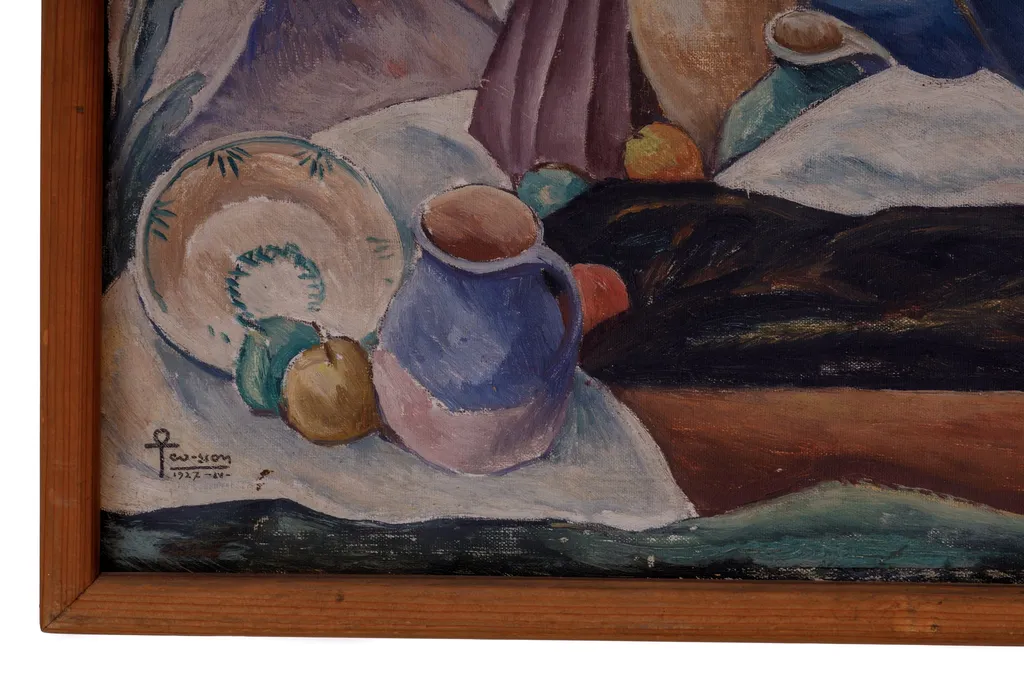
Șipotul is a print by Ion Theodorescu-Sion. It dates from 1850 and is held in the collection of the Moldova National Museum Complex.
About this work
Overview
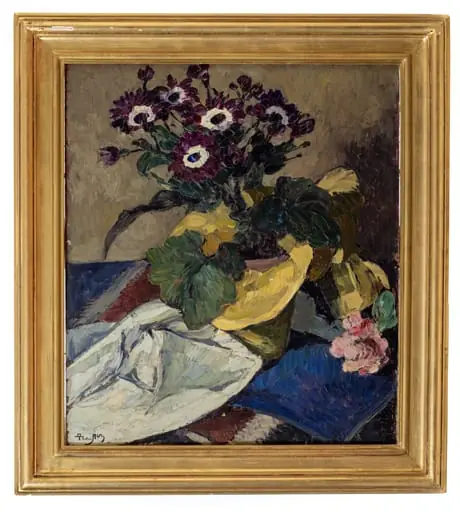
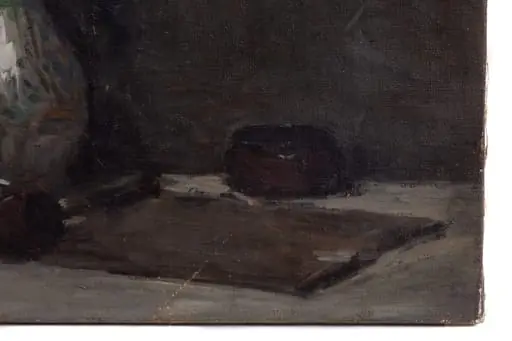
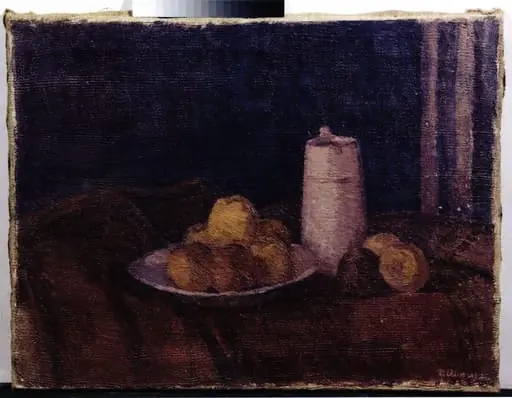
It captures a modest still life arranged on a tabletop, featuring everyday items like a woven basket, a ceramic jug, a single fruit, and a folded cloth.
Created around 1850, Șipotul is an early painting by Romanian artist Ion Theodorescu-Sion. It captures a modest still life arranged on a tabletop, featuring everyday items like a woven basket, a ceramic jug, a single fruit, and a folded cloth. The work reflects the artist’s initial engagement with academic training before his later experiments with modern styles. Its quiet composition and restrained palette suggest a transitional phase in his artistic development.
Subject & Meaning
The scene presents ordinary domestic objects—basket, jug, fruit, and cloth—arranged without narrative or symbolism. Subtle hints in the background, such as seashells and pale fabric, imply a coastal setting, though the focus remains on the still life. The absence of dramatic gesture or emotional intensity suggests an interest in quiet observation rather than storytelling, aligning with a realist sensibility grounded in the material world.
Technique & Style
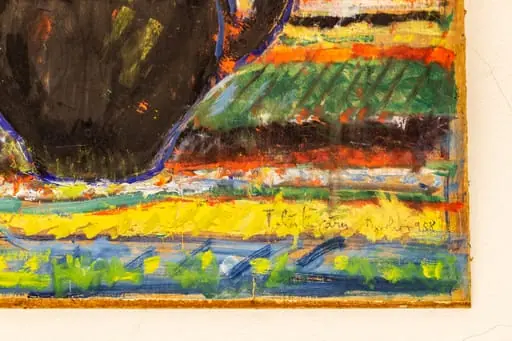
Theodorescu-Sion employs loose, unrefined brushwork and flat areas of color, with minimal modeling to define form. Outlines are swift and deliberate, giving structure to the objects without heavy shading. The jug’s blue-and-pink glaze and the basket’s woven texture are rendered with simplicity, avoiding ornamental detail. The overall approach is direct and unadorned, anticipating later modernist tendencies toward simplification and expressive economy.
History & Provenance
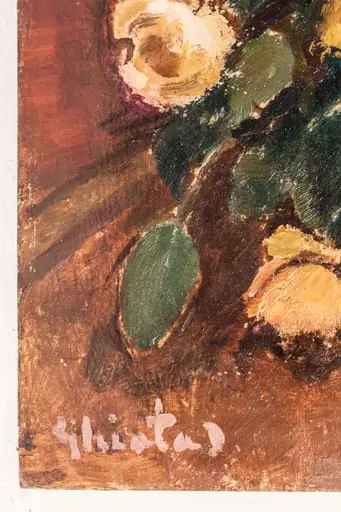
The painting dates from the early phase of Theodorescu-Sion’s career, before his exposure to European modern movements. Its modest scale and subject suggest it was likely a personal study rather than a commissioned work. The barely visible signature indicates a private, unassuming intent. While its early ownership is undocumented, it is now held in a collection that emphasizes Romanian artistic development in the 19th century.
Context
In mid-19th century Romania, academic art dominated institutional training, but artists like Theodorescu-Sion began absorbing emerging European trends. Șipotul reflects this crosscurrent: its realism aligns with local traditions, while its loose handling and color choices hint at nascent interest in French Impressionism. The work exists at the threshold between conventional still life and the experimental approaches that would define his later years.
Legacy
Though not widely exhibited, Șipotul serves as an early indicator of Theodorescu-Sion’s evolving visual language. It reveals his capacity to distill ordinary subjects into formal compositions, a skill that would later inform his engagement with Post-Impressionism and Symbolism. The painting remains a quiet testament to the gradual shift in Romanian art from academic rigidity toward personal, modern expression.
Artist & collection
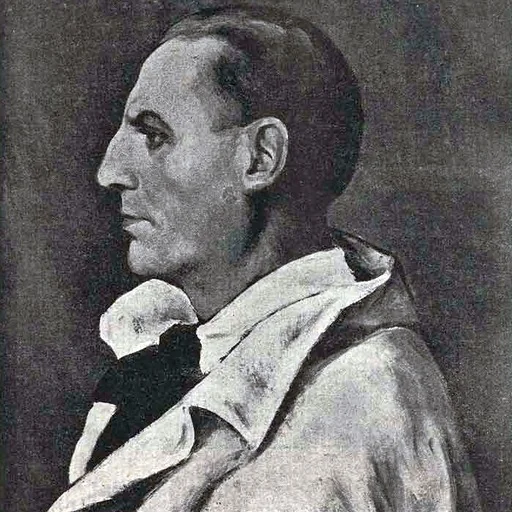
Artist
Ion Theodorescu-Sion (Romanian pronunciation: ; also known as Ioan Theodorescu-Sion or Teodorescu-Sion; January 2, 1882 – March 31, 1939) was a Romanian painter and draftsman, known for his contributions to modern art…