Artwork
Fye Bridge, Norwich
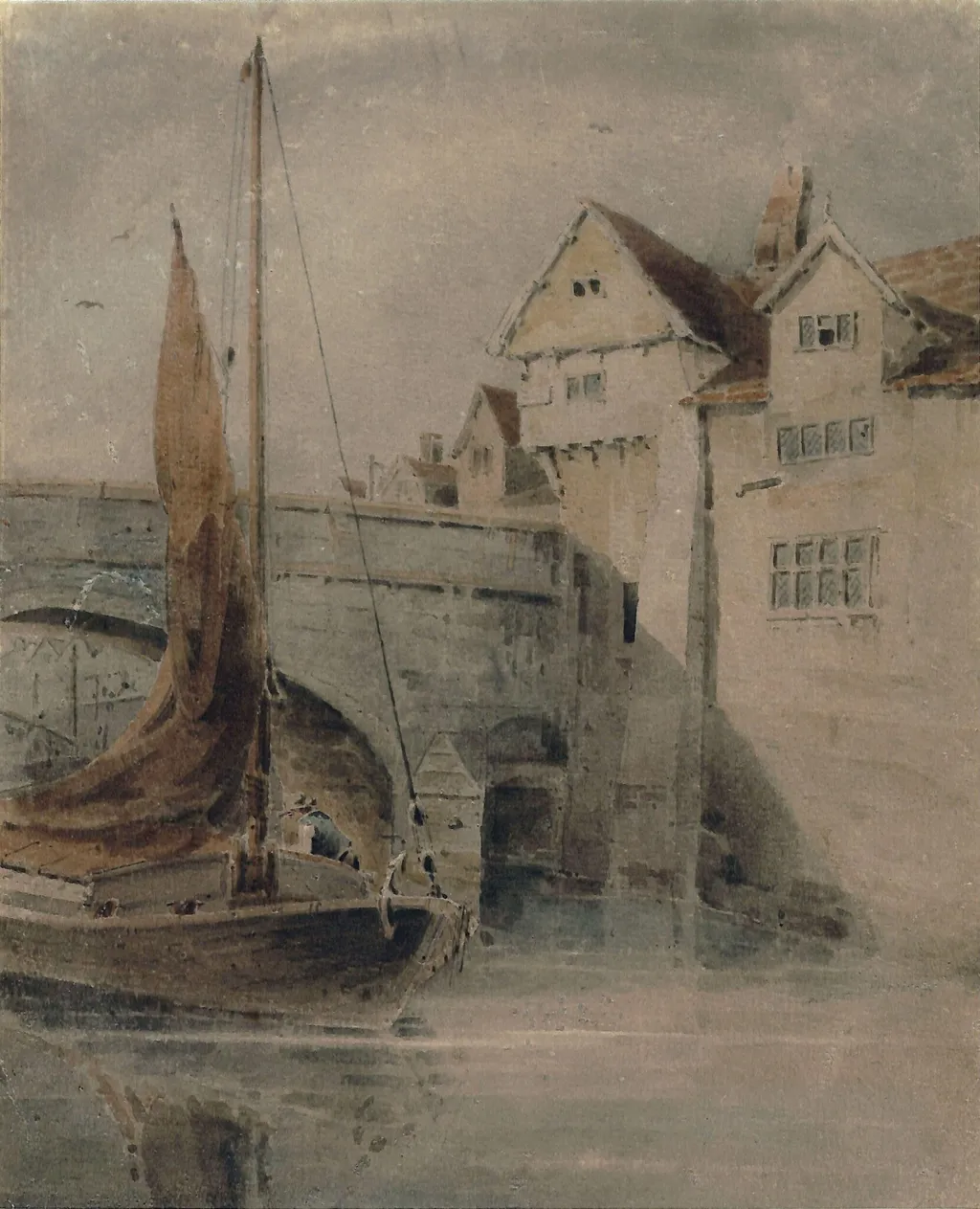
Fye Bridge, Norwich is a watercolor work on paper by the British Romanticist artist Thirtle. It dates from 1800 and is held in the collection of the Victoria and Albert Museum.
About this work
Overview
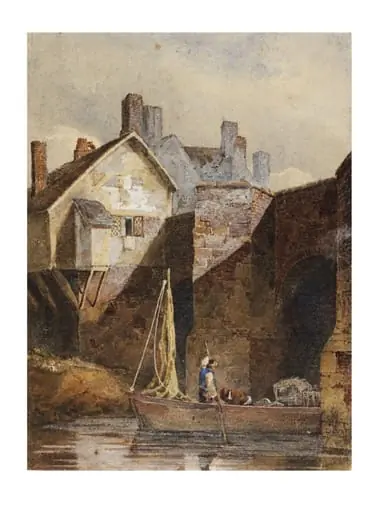
Fye Bridge, Norwich is a watercolour executed by the artist Thirtle around the year 1800. The work measures the stone bridge spanning a waterway in Norwich, with a narrow vessel navigating beneath its pointed arch. It is part of the collection of the Victoria and Albert Museum in London.
Subject & Meaning
The composition captures a quiet urban scene: a stone bridge flanked by modest buildings, their windows and roofs rendered in subdued tones. A slender boat with a dark sail passes under the arch, emphasizing the everyday traffic of the river and the still atmosphere of a cloudy day.
Technique & Style
Thirtle employs a restrained palette of greys and browns for the architecture, while the boat appears in lighter hues, creating a subtle contrast. The watercolour wash is soft and diffuse, lending a gentle illumination that underscores the calm, almost contemplative mood of the scene.
History & Provenance
Created at the turn of the 19th century, the painting entered the Victoria and Albert Museum’s holdings, where it remains on display. Its provenance beyond the museum’s acquisition is not recorded in the available documentation.
Own this work as a print
Artist & collection
Artist
An English watercolorist active around Norwich in the early 1800s, Thirtle painted the city’s bridges and quays with quiet precision.