Artwork
Margate
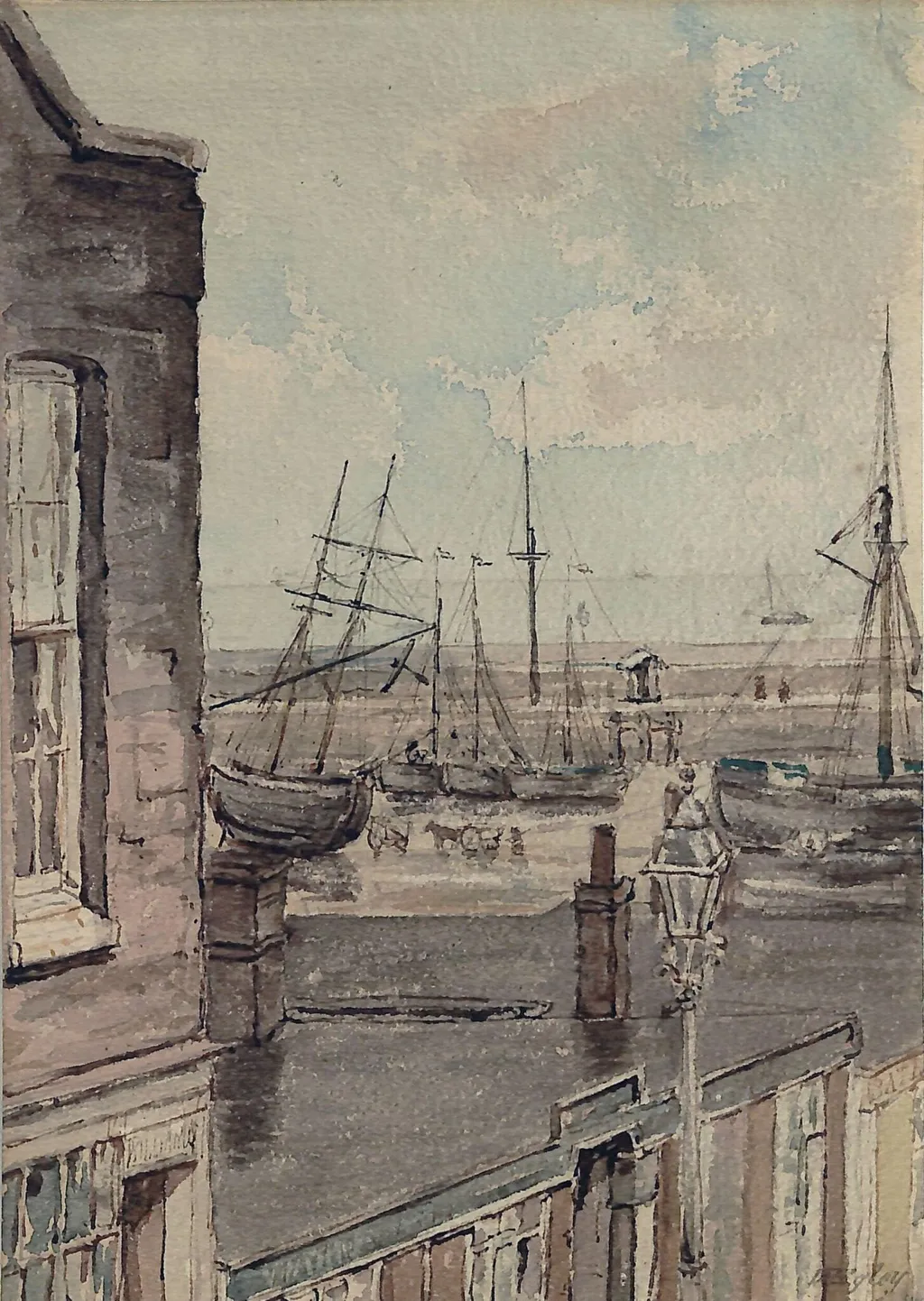
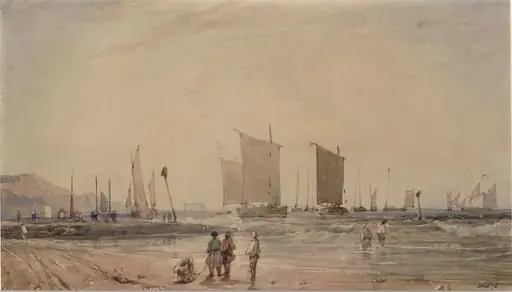
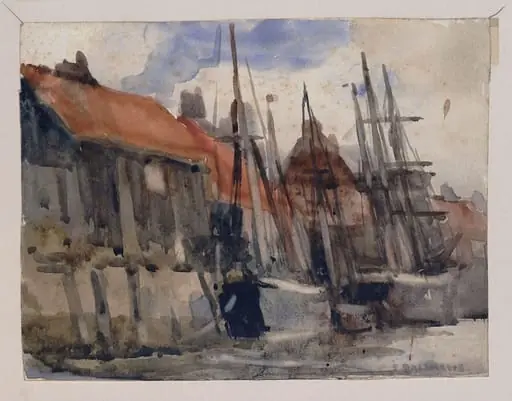
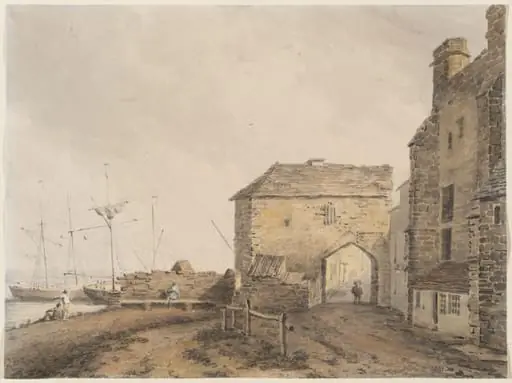
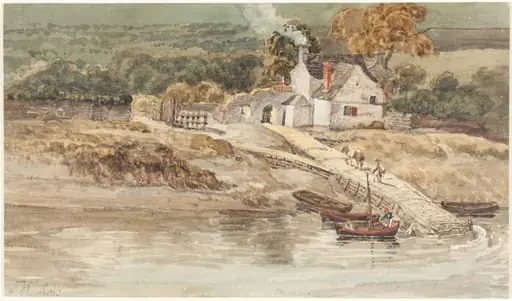
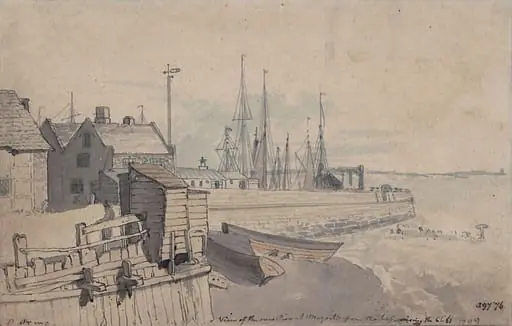
Margate is a watercolor work on paper by the Romanticist artist William Egley. It dates from 1826 and is held in the collection of the Victoria and Albert Museum.
About this work
Overview
Its modest scale and restrained palette convey a calm, observational tone typical of early‑nineteenth‑century topographical painting.
William Egley’s 1826 watercolour titled *Margate* records a tranquil view of the English seaside resort. The signed work, dated to the month of its completion, presents a modest composition of shoreline architecture, a streetlamp, and anchored vessels beneath a pale sky. Its modest scale and restrained palette convey a calm, observational tone typical of early‑nineteenth‑century topographical painting.
Subject & Meaning
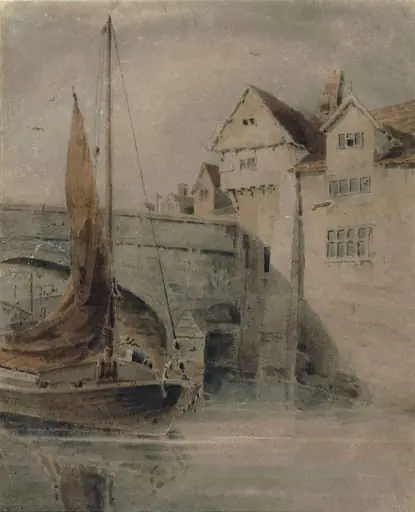
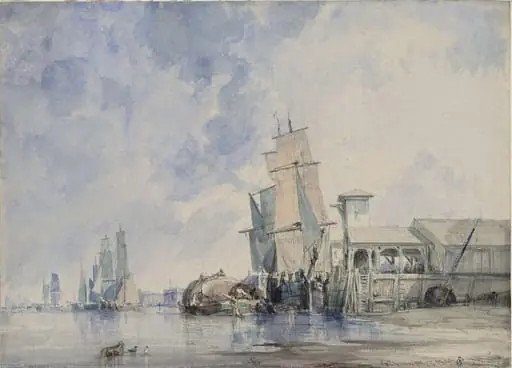
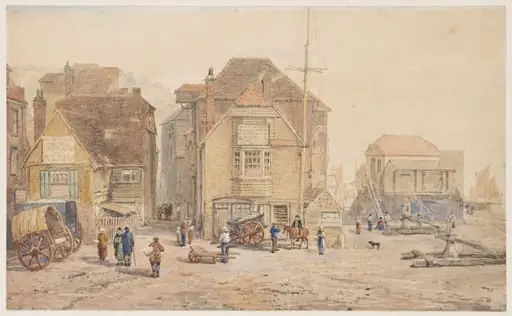
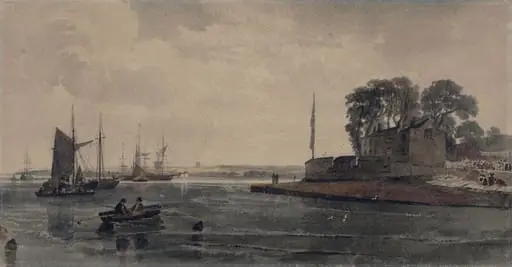
The scene captures a stretch of Margate’s waterfront, foregrounded by modest buildings whose windows and a solitary lamppost suggest a quiet street. Beyond, small boats lie moored with sails furled, indicating a moment of repose rather than bustling trade. The composition emphasizes everyday serenity, inviting contemplation of the town’s ordinary rhythm rather than dramatic narrative.
Technique & Style
Executed in transparent watercolour, Egley employs soft washes and delicate brushwork to render sky, sea, and architecture. Light, airy tones dominate the atmosphere, while subtle gradations suggest the fleeting quality of cloud and water. The restrained handling of pigment creates a gentle focus on fine details—windows, lamp post, and hulls—without overwhelming the viewer.
History & Provenance
Signed and dated by Egley in 1826, the work reflects his practice of documenting British locales for a growing market of travel literature and souvenir collectors. While specific ownership records are limited, the painting has been cited in studies of early Romantic topography, illustrating Egley’s role in popularizing coastal scenes during the period.
Own this work as a print
Artist & collection