Artwork
Untitled
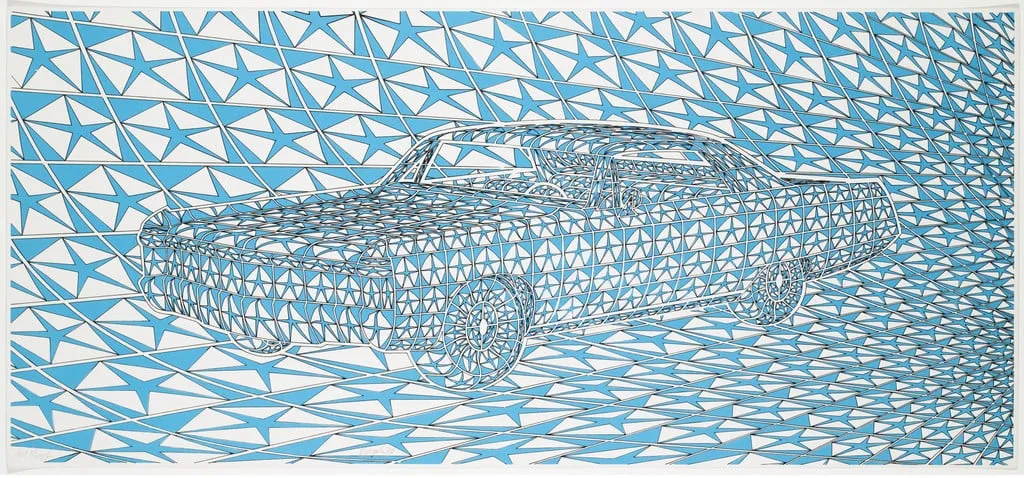
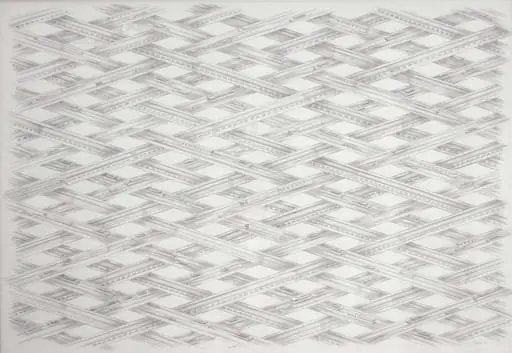
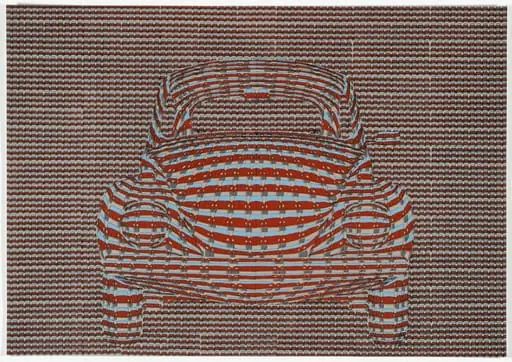
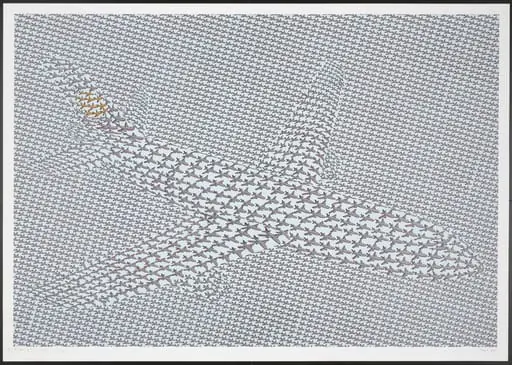
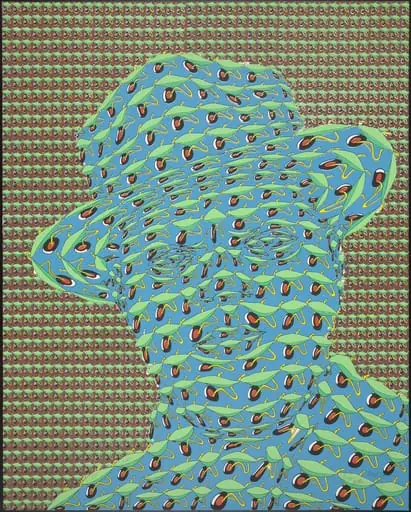
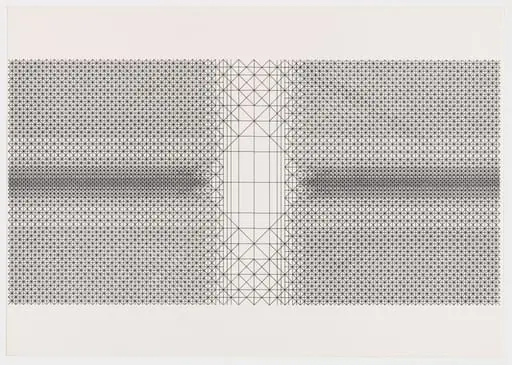
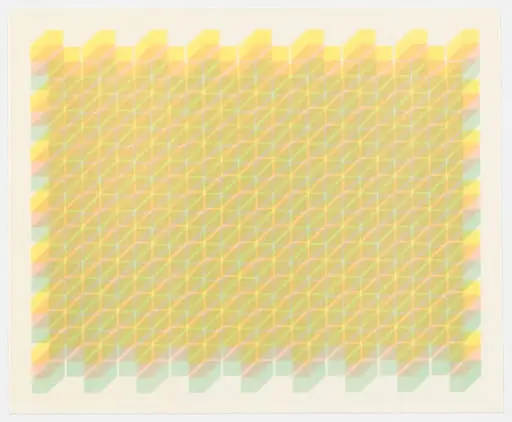
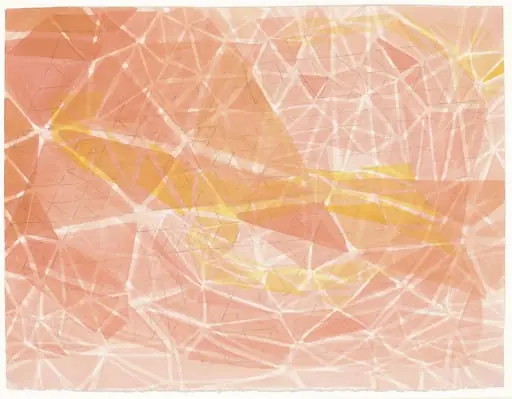
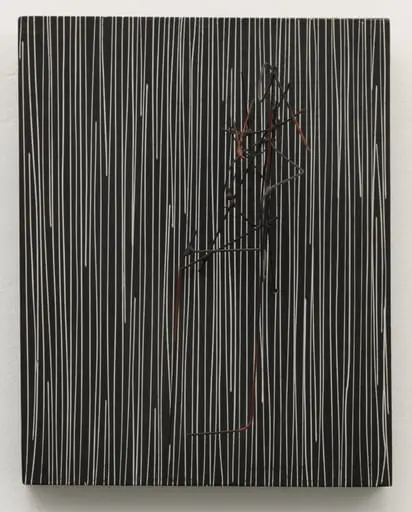
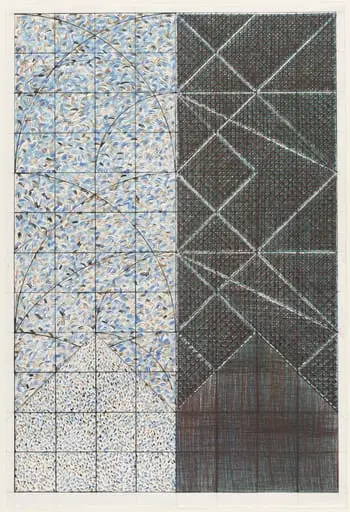
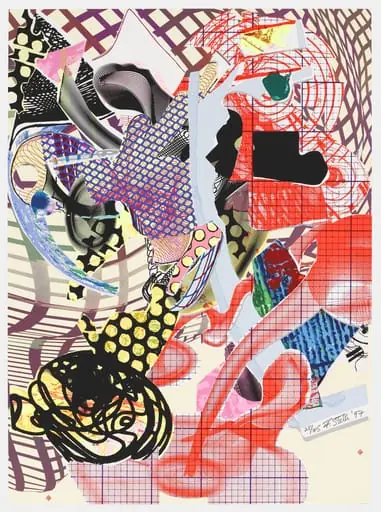
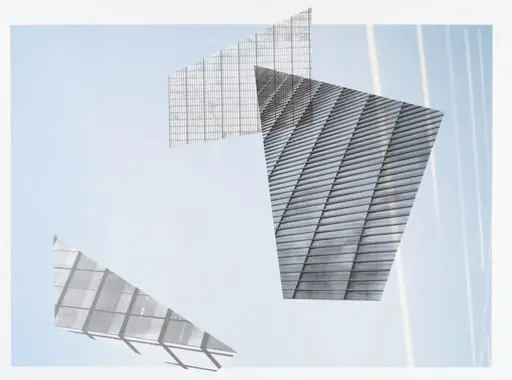
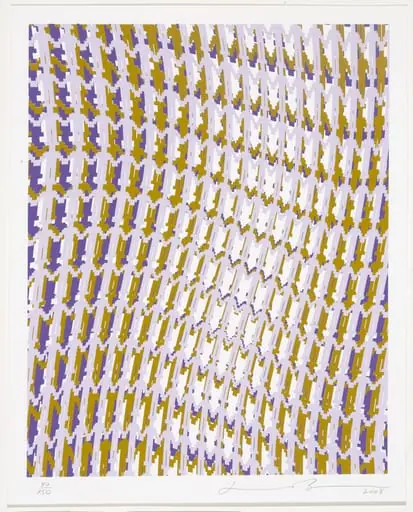
Untitled is an ink print by Thomas Bayrle. It dates from 1970 and is held in the collection of the Museum of Modern Art.
About this work
Overview
The work is not a painting but a layered stencil print, emphasizing process over spontaneity and reflecting the mechanized aesthetics of postwar Germany.
Thomas Bayrle created this 1970 screenprint as part of his broader investigation into industrial imagery and mechanical repetition. Working within the framework of Pop art, he employed printmaking techniques to examine how mass production shapes visual culture. The work is not a painting but a layered stencil print, emphasizing process over spontaneity and reflecting the mechanized aesthetics of postwar Germany.
Subject & Meaning
The central motif is a car, rendered not as a singular object but as a composite of repeated outlines. These overlapping forms suggest both the ubiquity of automobiles in modern society and their erosion into visual noise. Surrounding the vehicle are abstract, arrow-like or star-shaped patterns that pulse across the surface, evoking systems of control, movement, and industrial rhythm. The image becomes a metaphor for the individual lost within mechanical repetition.
Technique & Style
Bayrle used screenprinting to build the image through multiple stencil layers, each adding a tone or shape. The car emerges from dense, intersecting lines that create a sense of transparency and ghosting, as if the vehicle is dissolving into its environment. The background’s rhythmic blue motifs are applied with precision, contrasting the chaotic density of the car’s contours. This method highlights the mechanical nature of reproduction, aligning the technique with its subject.
History & Provenance
Made in 1970, this screenprint belongs to a series Bayrle produced during a period of intense experimentation with print media. It reflects his engagement with the German economic miracle and the rise of consumer culture. While specific exhibition history is not widely documented, the work aligns with his broader output from the late 1960s and early 1970s, when he increasingly turned to print to critique industrial society.
Context
In postwar Germany, rapid industrialization and mass media transformed daily life. Bayrle, influenced by American Pop art and European avant-garde movements, responded by reimagining everyday objects through repetition. His work stood apart from pure celebration of consumerism, instead revealing the psychological weight of mechanical uniformity. This print engages with the visual language of advertising and propaganda, subverting it through layered complexity.
Legacy
Bayrle’s use of repetition and mechanical imagery influenced later generations of artists exploring systems, data, and digital overload. His screenprints from this era remain significant for their quiet critique of industrial society, predating digital aesthetics by decades. The work’s layered, algorithmic quality anticipates contemporary concerns with visibility, surveillance, and the fragmentation of identity in mediated environments.
Artist & collection
Artist
Thomas Bayrle (born 7 November 1937) is a German sculptor, painter, graphic artist, and video artist. He is known for being a pop artist.