Artwork
The Dawn of Love
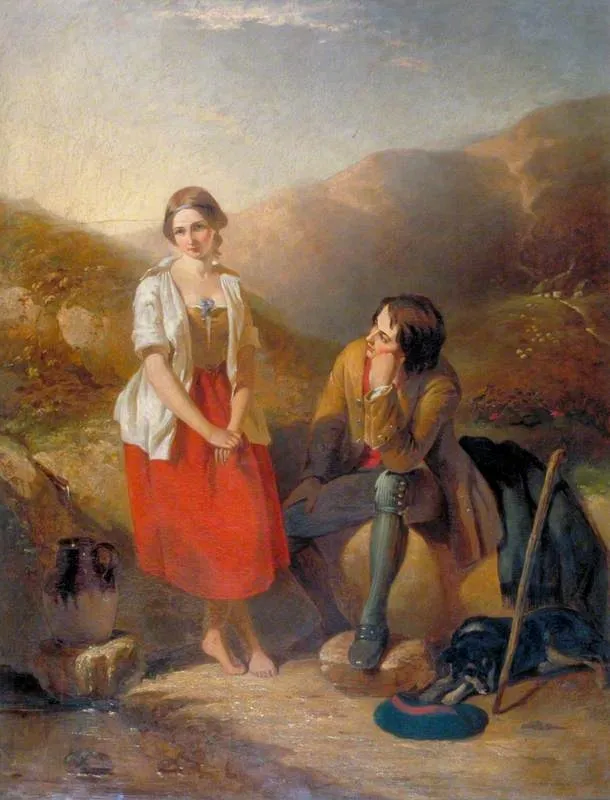
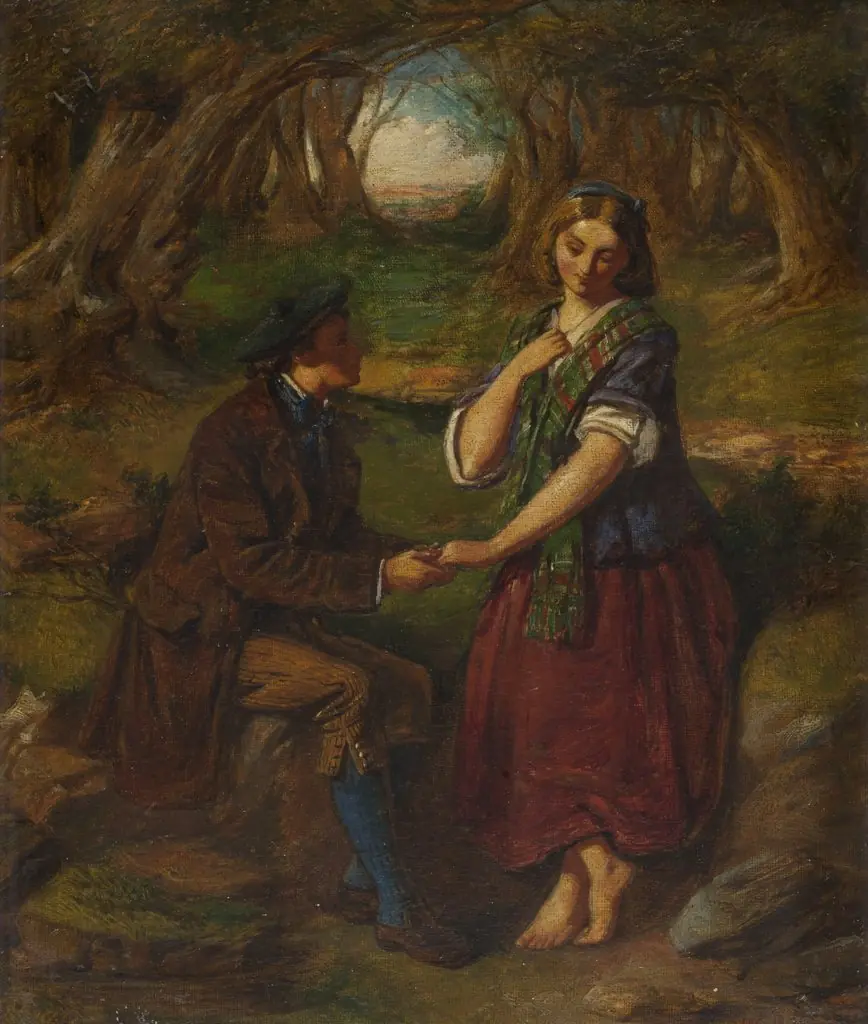
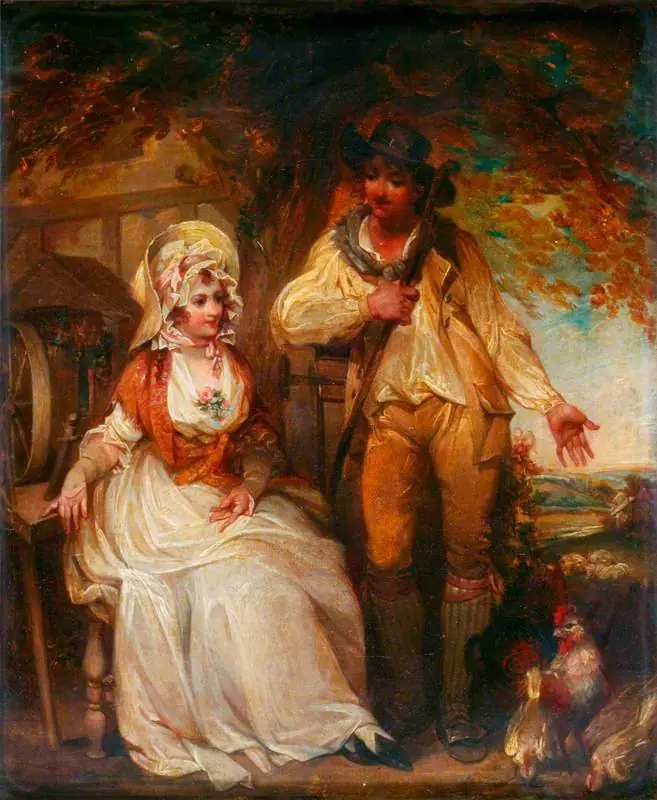
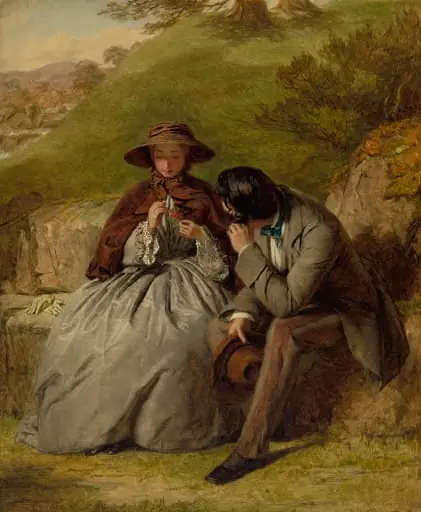
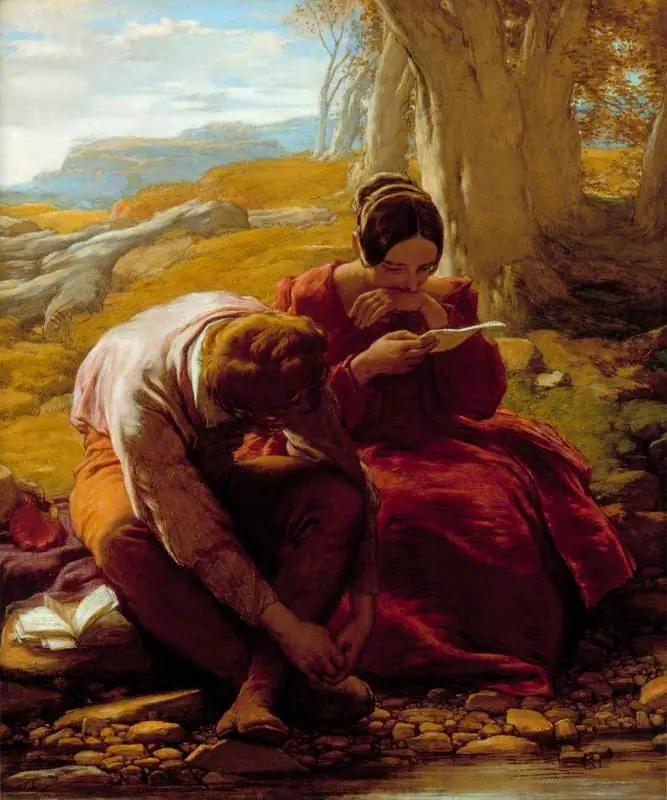
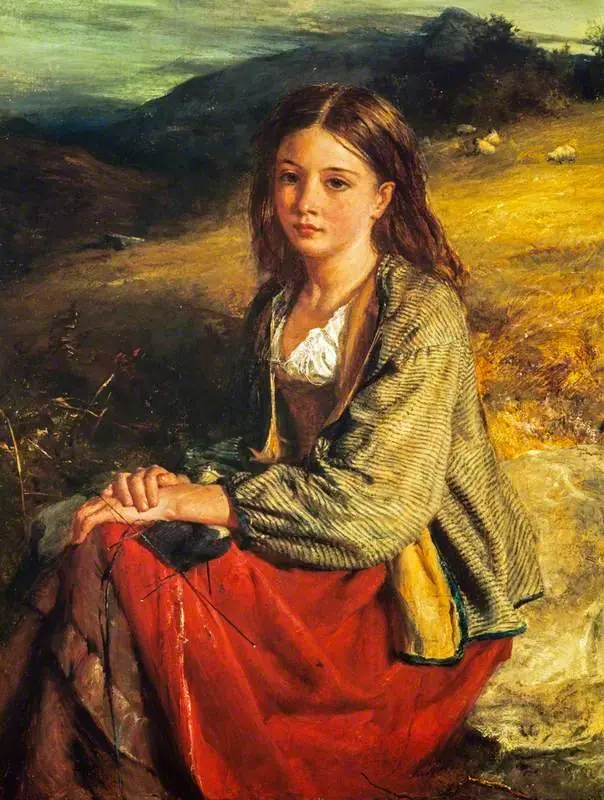
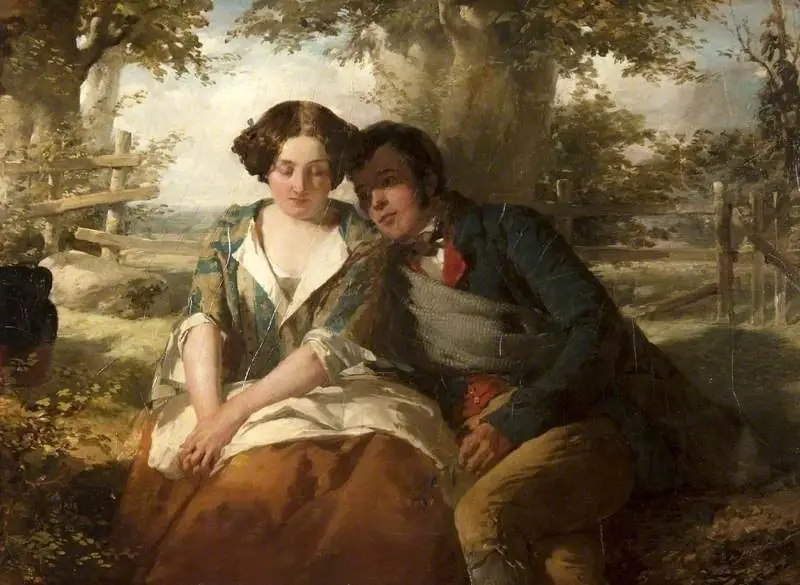
The Dawn of Love is an oil painting by the British Romanticist artist Thomas Brooks. It dates from 1846 and is held in the collection of the Victoria and Albert Museum.
About this work
Overview
Painted in 1846 by Thomas Brooks, The Dawn of Love is an oil-on-canvas work depicting a quiet rural moment between two figures.
Painted in 1846 by Thomas Brooks, The Dawn of Love is an oil-on-canvas work depicting a quiet rural moment between two figures. It resides in the collection of the Victoria and Albert Museum. The scene unfolds in early morning light, with soft tones and gentle shadows that suggest a pause in daily life. Brooks, known for domestic and pastoral subjects, captures a moment of stillness rather than narrative action.
Subject & Meaning
A young woman stands barefoot on the left, hands clasped, dressed in a white blouse and red skirt. To her right, a man sits on a rock, head resting on his hand, dressed in a yellow jacket and green trousers. A dog rests at his feet, and a walking stick leans nearby. The composition implies a moment of shared contemplation, possibly after a walk or before beginning the day. No overt drama or dialogue is present—meaning emerges from quiet presence.
Technique & Style
Brooks employs warm, muted hues and diffused lighting to evoke a sense of calm. The brushwork is smooth, with subtle transitions between light and shadow, particularly in the fabric of the figures’ clothing and the distant hills. The background is rendered with loose, atmospheric strokes, while the foreground figures are more defined, drawing focus to their stillness. The style aligns with mid-19th-century British genre painting, prioritizing mood over detail.
History & Provenance
The painting was completed in 1846 and entered the Victoria and Albert Museum’s collection in the 19th century. Its provenance before acquisition is not well documented, but it was likely exhibited in regional or national exhibitions during Brooks’s lifetime. It has remained in the museum’s care since, without significant alteration or restoration, preserving its original tonal qualities.
Context
In the 1840s, British art saw a rise in genre scenes depicting ordinary rural life, often infused with moral or sentimental undertones. Brooks’s work fits within this trend, reflecting contemporary interest in domestic tranquility and nature. Unlike grand historical or mythological subjects, this painting finds significance in the unremarkable—a quiet moment between two people, grounded in the everyday rhythms of country living.
Legacy
Though not widely known today, The Dawn of Love exemplifies the quiet realism favored by mid-Victorian genre painters. It contributes to the broader understanding of how artists of the period sought dignity in ordinary moments. The painting remains a representative example of Brooks’s output and the aesthetic values of his time, valued for its restraint and emotional subtlety rather than dramatic impact.
Artist & collection

Artist
Thomas Brooks shaped Victorian America’s idea of home comforts. He carved rosewood and brass armchairs like the one in the collection around 1847, their leather seats worn in by decades of family life. In 1846 he also…