Artwork
The Captive
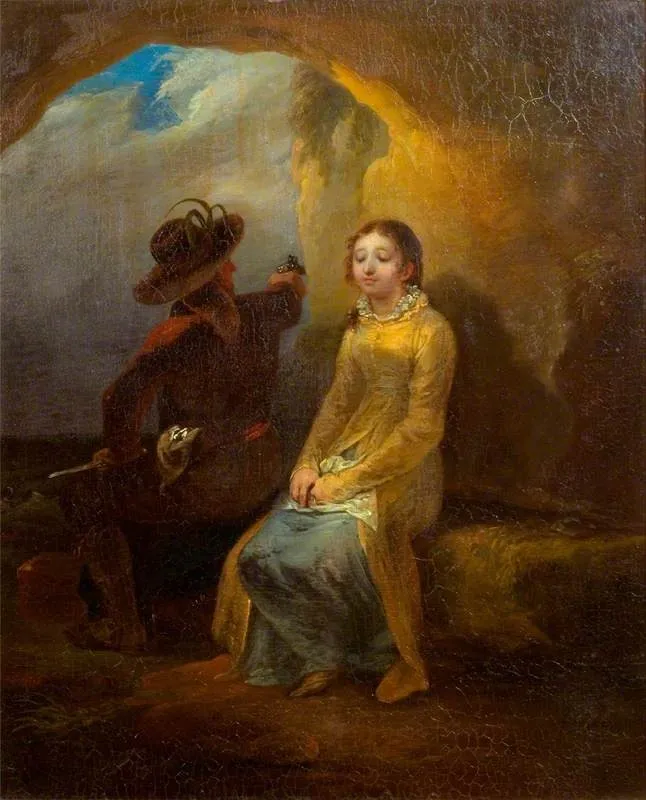
The Captive is an oil painting by Johann Georg Volmar. It dates from 1810 and is held in the collection of the Victoria and Albert Museum.
About this work
Overview
The work presents a quiet, intimate moment between two figures, rendered with restrained emotion and muted lighting.
The Captive is an oil painting attributed to Johann Georg Volmar, dated around 1810. It is part of the collection at the Victoria and Albert Museum in London. The work presents a quiet, intimate moment between two figures, rendered with restrained emotion and muted lighting. Its composition centers on a seated woman and a standing man, their interaction suggesting a narrative of restraint or coercion, though the exact story remains unconfirmed.
Subject & Meaning
The painting portrays a young woman in a yellow dress, seated on a rock, her hands clasped and gaze lowered, conveying vulnerability. A man in a brown coat stands before her, one hand on her shoulder, the other holding a sword. His face is obscured, and his posture is ambiguous—neither overtly threatening nor clearly reassuring. The scene evokes tension between power and submission, possibly drawn from literary or theatrical sources of the period, though no specific narrative has been identified.
Technique & Style
Volmar employs a somber palette dominated by earth tones and deep shadows, with a single shaft of light illuminating the figures. The woman’s dress provides a subtle contrast, drawing attention to her form without disrupting the mood. Brushwork is controlled and precise, favoring soft transitions over dramatic contrasts. The background recedes into near-obscurity, focusing attention on the psychological dynamic between the two figures rather than their surroundings.
History & Provenance
The painting entered the Victoria and Albert Museum’s collection in the 19th century, though its earlier ownership is undocumented. It was likely acquired as part of a broader effort to preserve works of European Romantic and narrative painting. No exhibition records or contemporary reviews from Volmar’s lifetime have been traced, and the artist’s oeuvre remains largely obscure, with few other works securely attributed to him.
Context
Created during the early 19th century, the painting reflects the Romantic era’s fascination with emotional intensity and dramatic storytelling. While not aligned with major artistic movements, it shares affinities with genre scenes that explored personal crisis or moral ambiguity. The subdued lighting and psychological focus echo contemporaneous works by German and Swiss painters who favored introspective narratives over grand historical themes.
Legacy
The Captive remains a minor but evocative example of early 19th-century narrative painting. Its quiet tension and unresolved emotion have drawn occasional scholarly attention, particularly in studies of gender and power in Romantic visual culture. Though not widely reproduced or exhibited, it continues to serve as a case study in the subtle depiction of psychological dynamics within small-scale oil paintings of the period.
Artist & collection

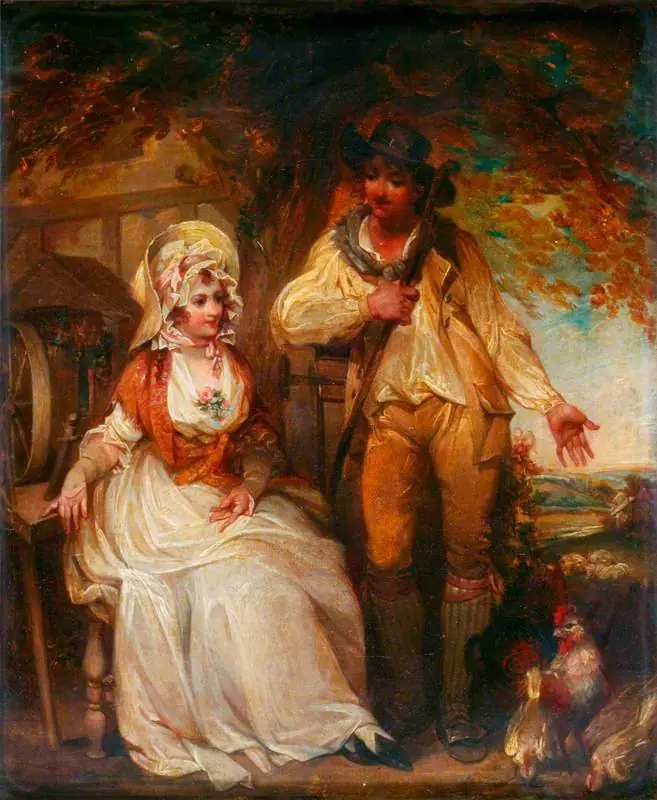 Courtship
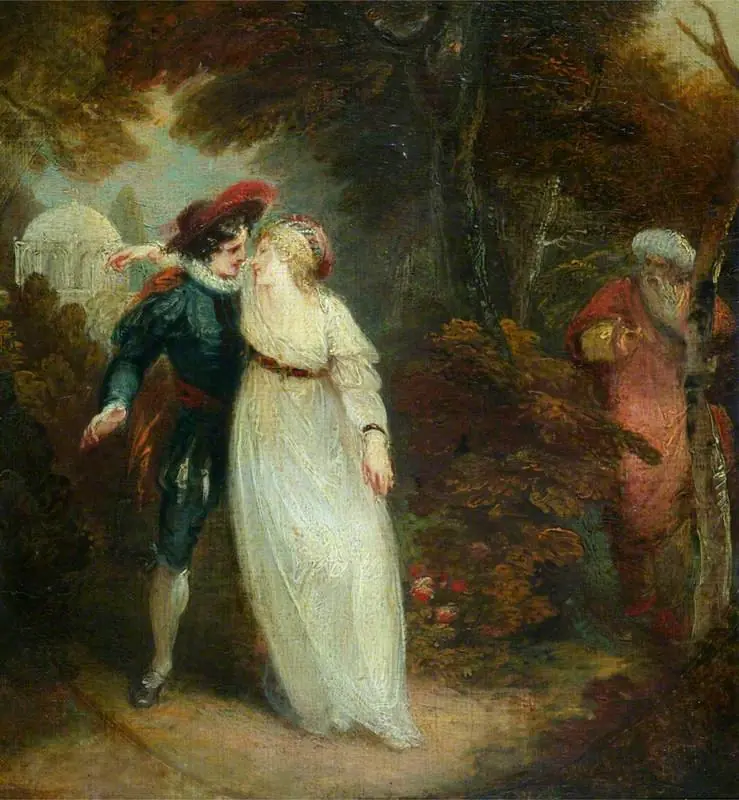 Zoraida, Discovered by Her Father, Agimorato, in the Arms of Rui Pérez de Viedma (from Cervantes' 'Don Quixote', Part I, Chapter 14)
 The Dawn of Love
 Macready as Werner
 Par une tendre chansonette...
 Scenă galantă
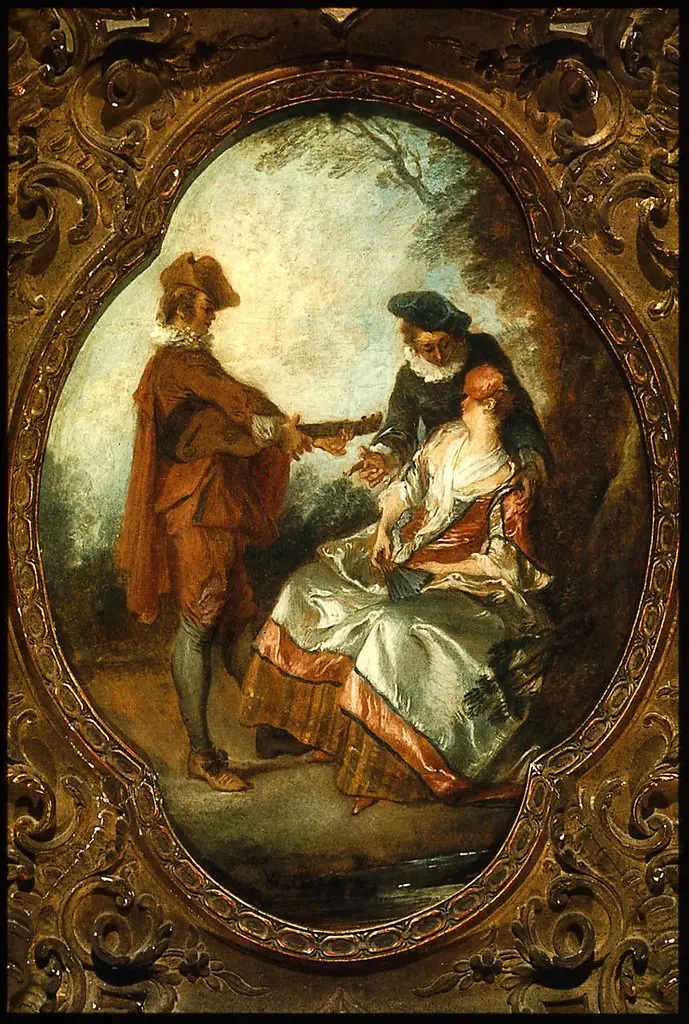 The Serenade
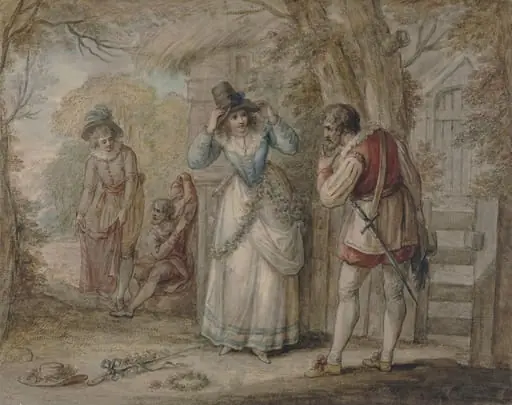 Florizel and Autolycus changing garments
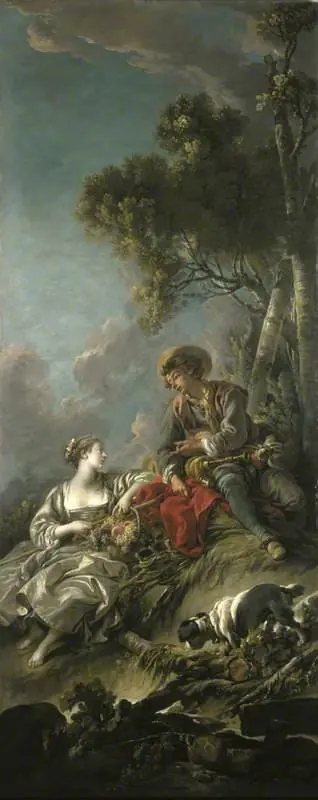 A Pastoral Scene ('L'Aimable Pastorale')
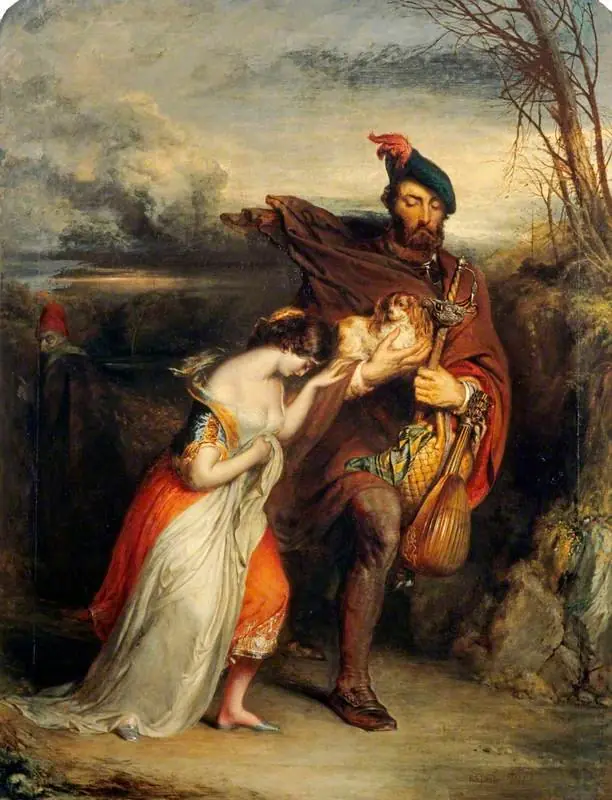 The Gow Chrom Reluctantly Conducting the Glee Maiden to a Place of Safety (from Scott's 'The Fair Maid of Perth')
 First Love
 Cart Horses at a Drinking Trough