Artwork
Landscape, the Seat of Mr. Featherstonhaugh in the Distance
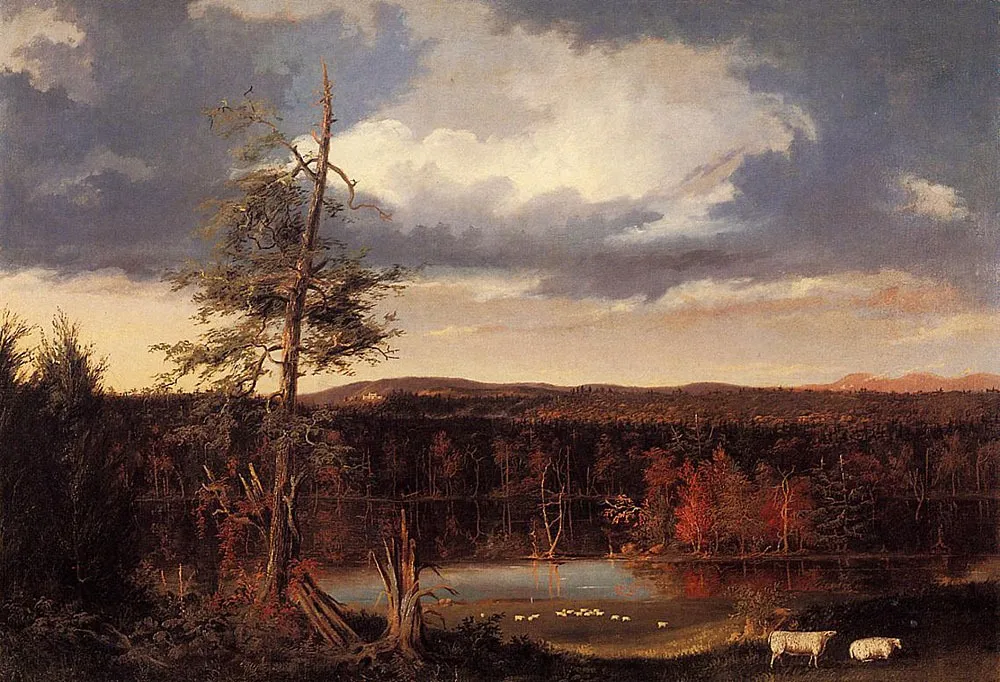
Landscape, the Seat of Mr. Featherstonhaugh in the Distance is an oil painting by Thomas Cole. It dates from 1826 and is held in the collection of the Philadelphia Museum of Art.
About this work
Overview
The painting presents a composed view of nature and human habitation, emphasizing harmony rather than conflict.
Painted in 1826 by Thomas Cole, this oil on canvas work captures a quiet rural scene in upstate New York. It belongs to the early phase of the Hudson River School, a movement Cole helped establish. The painting presents a composed view of nature and human habitation, emphasizing harmony rather than conflict. Its calm tone and careful composition reflect Cole’s interest in landscape as a vessel for contemplation.
Subject & Meaning
The painting centers on the distant estate of George Featherstonhaugh, a British geologist and landowner, nestled gently into the hills. Rather than glorifying ownership, Cole frames the house as a modest presence within a vast natural setting. The grazing sheep and still lake suggest a peaceful coexistence between human activity and the environment, hinting at an idealized, pre-industrial balance.
Technique & Style
Cole employed layered glazing to achieve subtle shifts in light and atmosphere, enhancing the sense of depth. The foreground lake mirrors the sky with soft precision, while the distant house is rendered in muted tones to recede visually. Trees and grasses are detailed with careful brushwork, yet the overall effect remains atmospheric. His technique prioritizes mood over topographical accuracy, aligning with Romantic ideals of nature’s emotional resonance.
History & Provenance
Commissioned by George Featherstonhaugh himself, the painting was completed during Cole’s early career, shortly after his move to the United States. It remained in the Featherstonhaugh family for decades before entering public collections. Its survival as a personal commission offers insight into how American landowners of the time viewed their estates—as symbols of refinement within nature, not dominion over it.
Context
Created during a period of rapid infrastructure expansion, the painting quietly responds to the tension between rural life and industrial progress. While later works by Cole would more explicitly critique development, here the message is implicit: the estate exists not as an intrusion, but as a gentle footnote in a larger, enduring landscape. This reflects broader cultural anxieties about change in the young republic.
Legacy
This early work helped define the Hudson River School’s visual language—serene, detailed, and reverent toward nature. Though less overtly symbolic than Cole’s later allegories, it established a template for American landscape painting that emphasized tranquility and spatial depth. Its influence extended to subsequent generations who sought to capture the American wilderness with both precision and poetic sensitivity.
Artist & collection
Artist
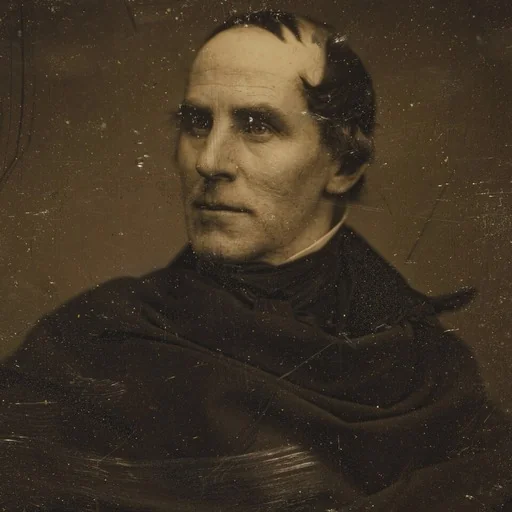
Thomas Cole (February 1, 1801 – February 11, 1848) was an Anglo-American artist who founded the Hudson River School art movement.

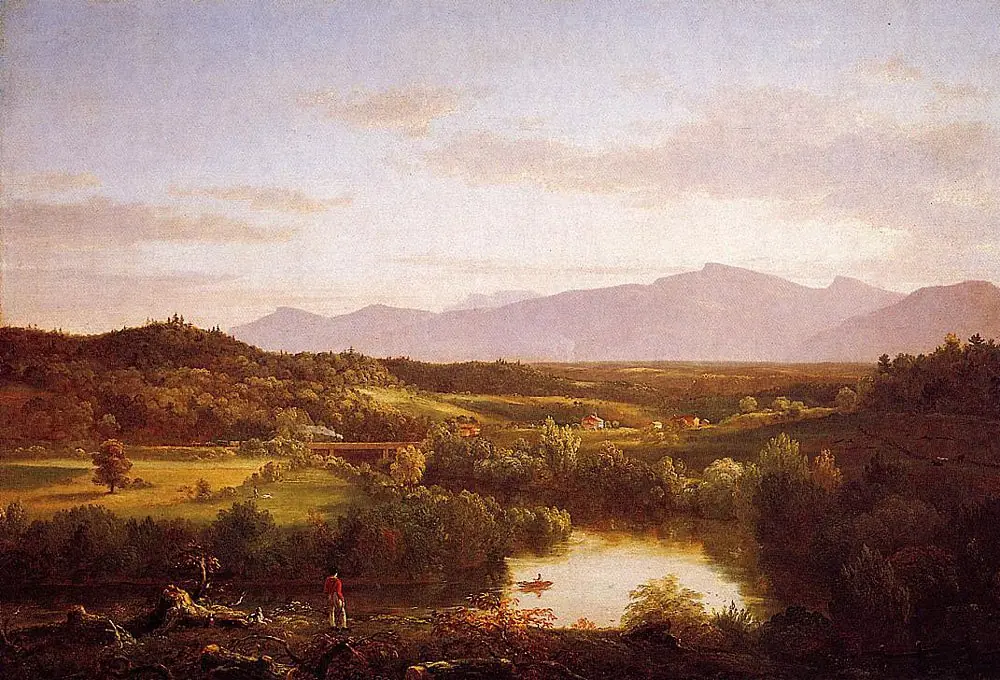 River in the Catskills
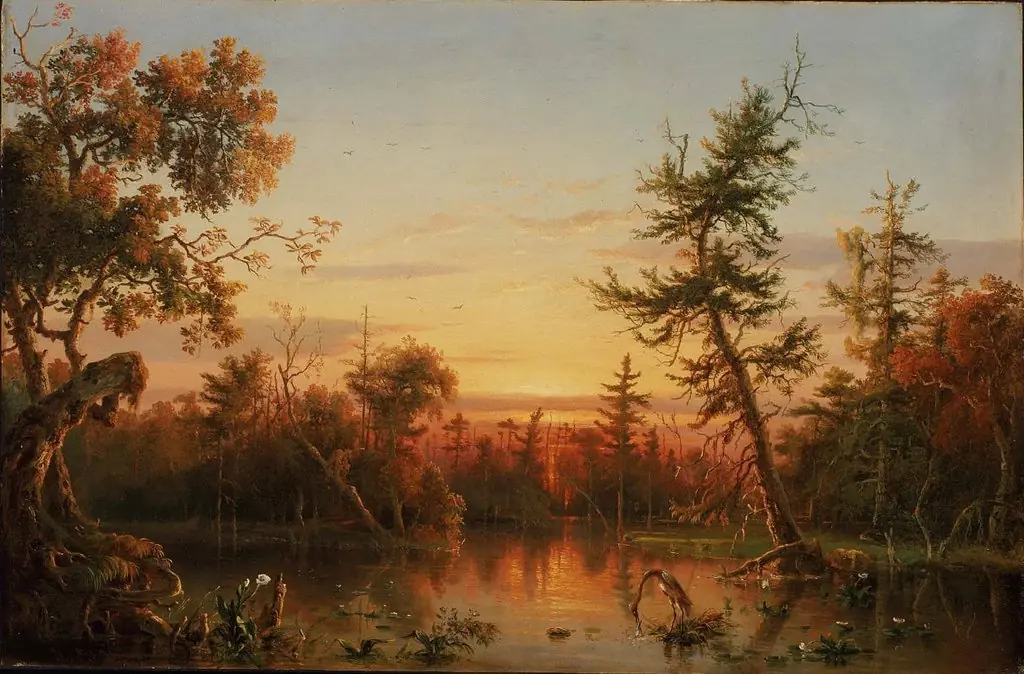 View, Dismal Swamp, North Carolina
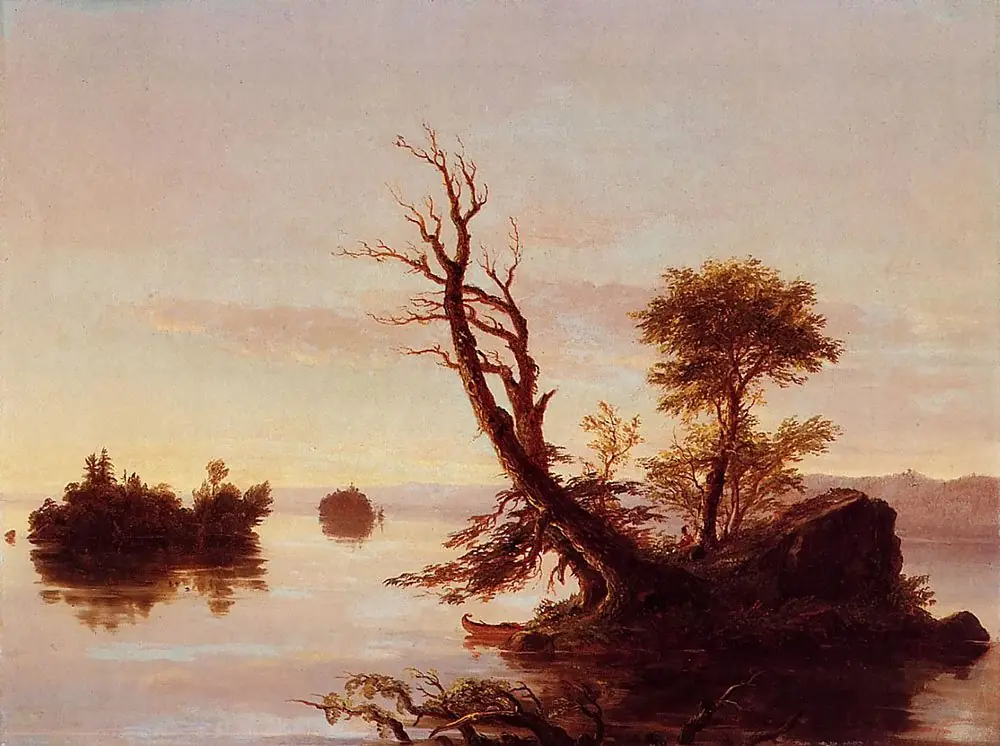 American Lake Scene
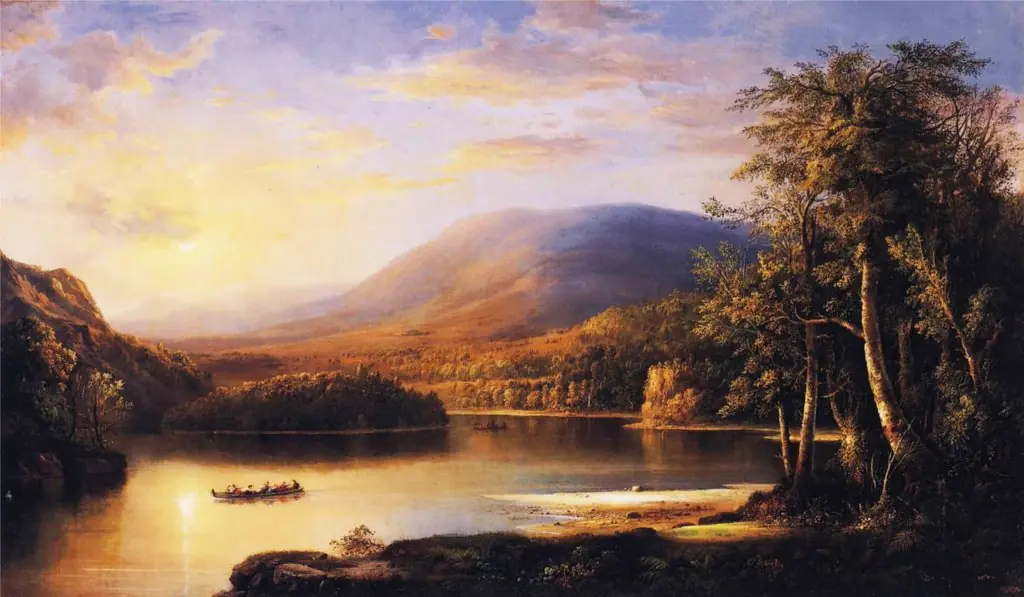 Ellen's Isle
 Mist Rising at Sunset in the Catskills
 Pădure
 Spring Landscape
 Landscape with Cows Watering in a Stream
 Sidney Plains with the Union of the Susquehanna and Unadilla Rivers
 Landscape
 View in the neighborhood of Oranienbaum
 Lago di Nemi