Artwork
Hester Tradescant and her Stepson, John
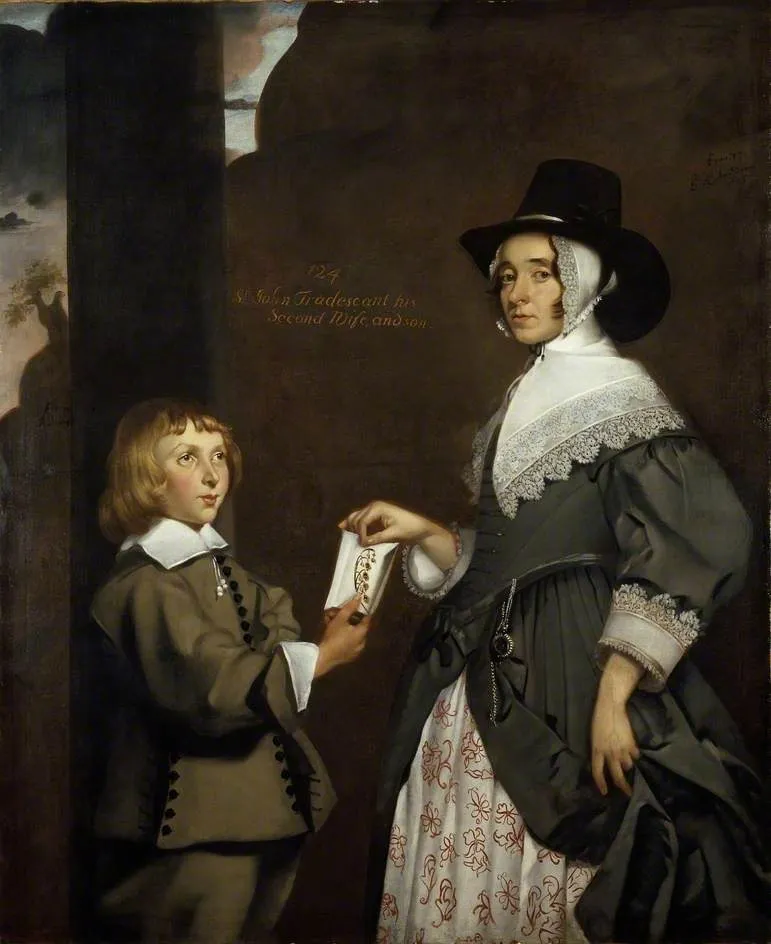
Hester Tradescant and her Stepson, John is an oil painting by the Dutch Golden Age artist Thomas de Critz. It dates from 1645 and is held in the collection of the Ashmolean Museum.
About this work
Overview
Painted in 1645 by Thomas de Critz, this oil portrait captures Hester Tradescant and her stepson John in a composed, intimate setting.
Painted in 1645 by Thomas de Critz, this oil portrait captures Hester Tradescant and her stepson John in a composed, intimate setting. De Critz, an English artist of Flemish descent, was known for his courtly commissions and decorative work. The painting belongs to the Ashmolean Museum’s collection and reflects the quiet dignity of domestic portraiture in mid-17th-century England, distinct from the grandeur of royal imagery.
Subject & Meaning
The figures—Hester, seated, and John, standing beside her—appear in a moment of stillness, their gaze directed outward, engaging the viewer. Hester holds a small object, possibly a document or token, suggesting a role tied to record-keeping or familial duty. The pairing implies a domestic bond, likely emphasizing lineage and continuity within the Tradescant family, known for their botanical and curatorial interests.
Technique & Style
De Critz employs a restrained palette dominated by dark tones, with subtle contrasts in the white collars and headwear to draw attention to the figures’ faces and hands. The fabric of Hester’s dress is rendered with delicate floral detailing, while the boy’s jacket shows precise buttonwork. The background, softly modeled but indistinct, isolates the subjects without distracting detail, emphasizing their presence through careful lighting and texture.
History & Provenance
Thomas de Critz, son of a Flemish court painter, inherited his father’s position as a painter to the English royal household. He was involved in restoring works for Charles I and contributed to major decorative schemes, including Wilton House’s ceiling. The portrait of Hester and John entered the Ashmolean Museum’s collection through the Tradescant family’s legacy, linking it to their broader cultural contributions in natural history and collecting.
Context
Created during the Interregnum, this portrait reflects a shift in English art away from overt royal symbolism toward private, familial representation. While the Dutch Golden Age influenced English portraiture in its attention to detail and domestic scenes, de Critz’s work remains rooted in English aristocratic conventions. The Tradescants’ prominence as collectors situates this image within a network of intellectual and material culture beyond the court.
Legacy
The portrait endures as a quiet testament to the role of women and step-relations in early modern English households. It preserves the visual identity of Hester Tradescant, whose contributions to her husband’s collection have often been overlooked. As one of the few surviving portraits of non-royal women from this period, it offers insight into the social and domestic values of a learned, mercantile class in post-Reformation England.
Artist & collection
Artist
Thomas De Critz or Decritz (1 July 1607 – 22 October 1653) was an English painter.

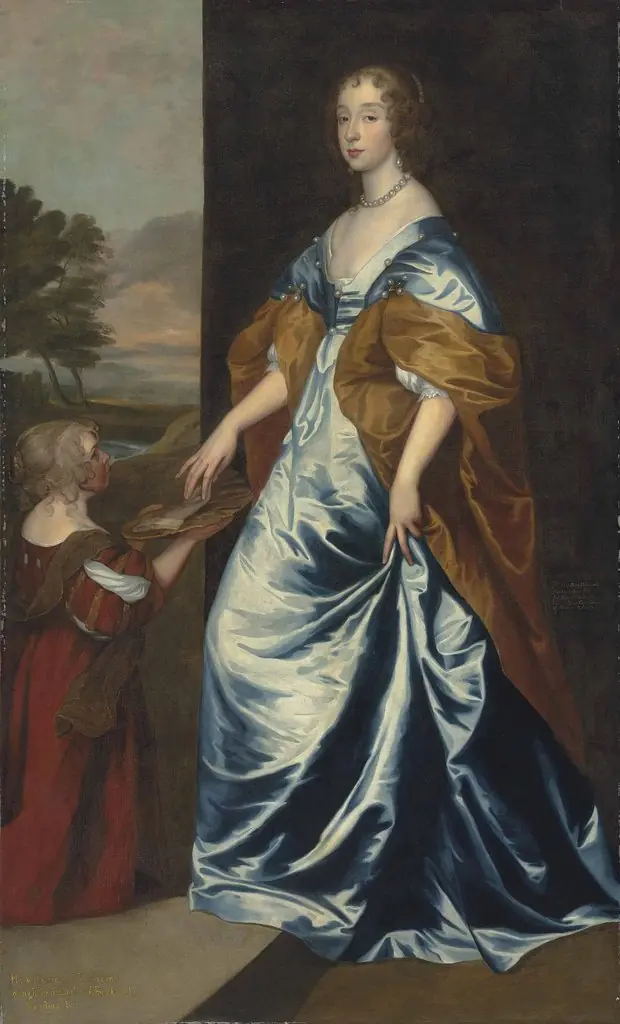 Duchess of Lennox and Richmond (1622–1685) with her lady’s maid, the dwarf, Anne Shepherd
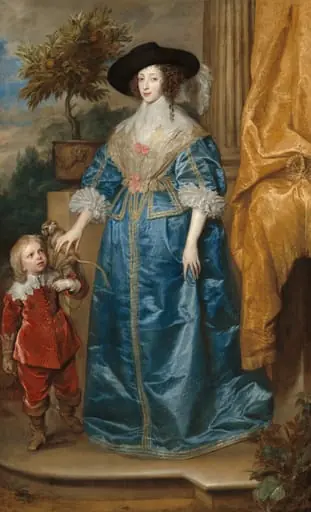 Queen Henrietta Maria with Sir Jeffrey Hudson
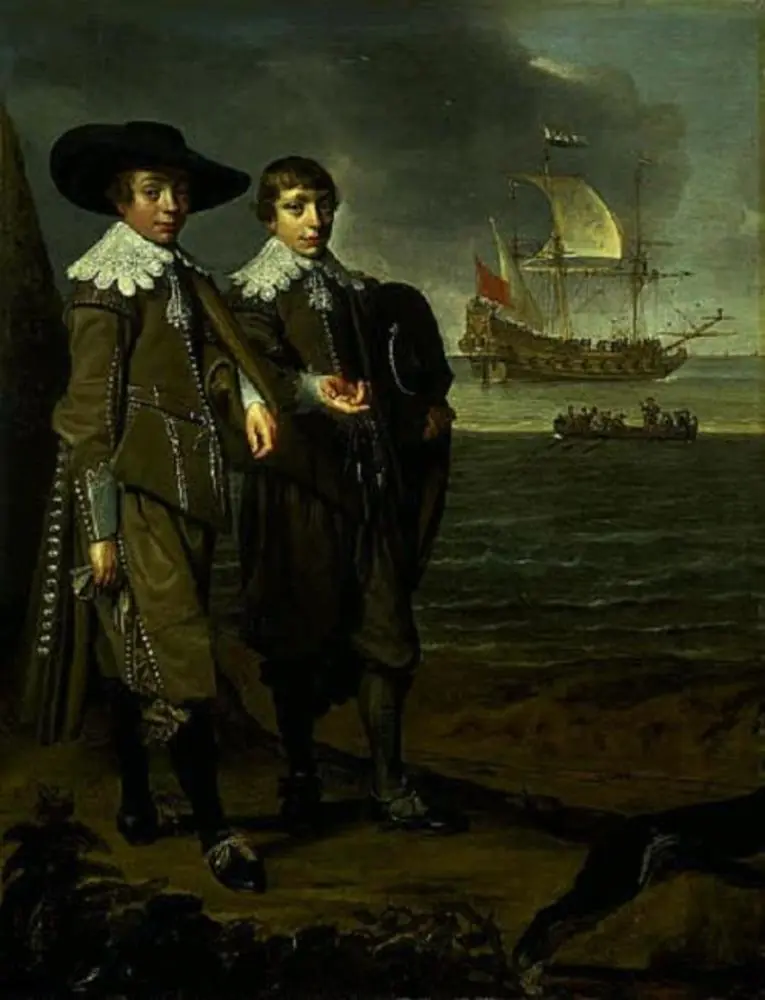 A Dutch Family Group (Portrait of Two Boys)
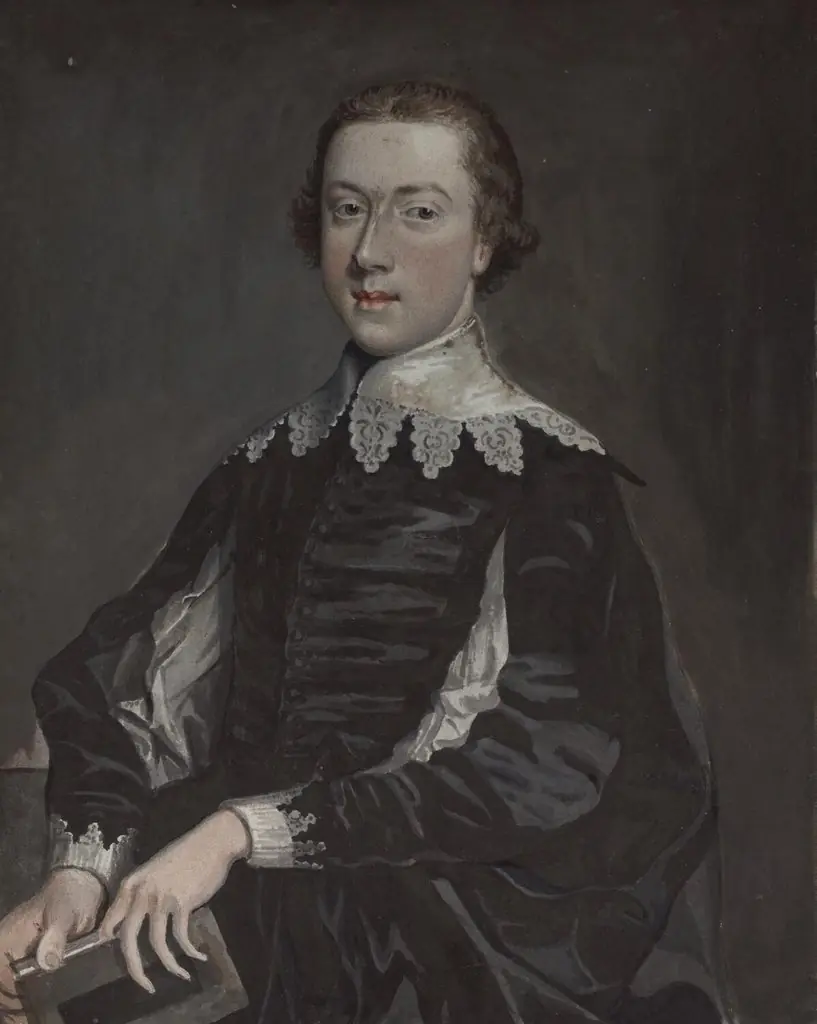 Thomas Pennant
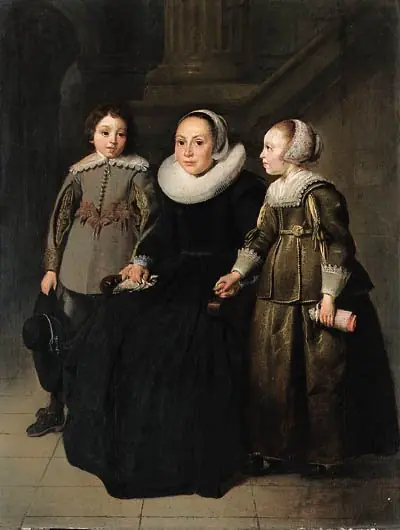 Portrait of a seated woman and two children
 Elizabeth (1727–1782), Wife of Thomas Nickleson
 William II, Prince of Orange, and his Bride, Mary Stuart
 Franks Children with Bird