Artwork
Commerce and Agriculture Bringing Wealth to Detroit
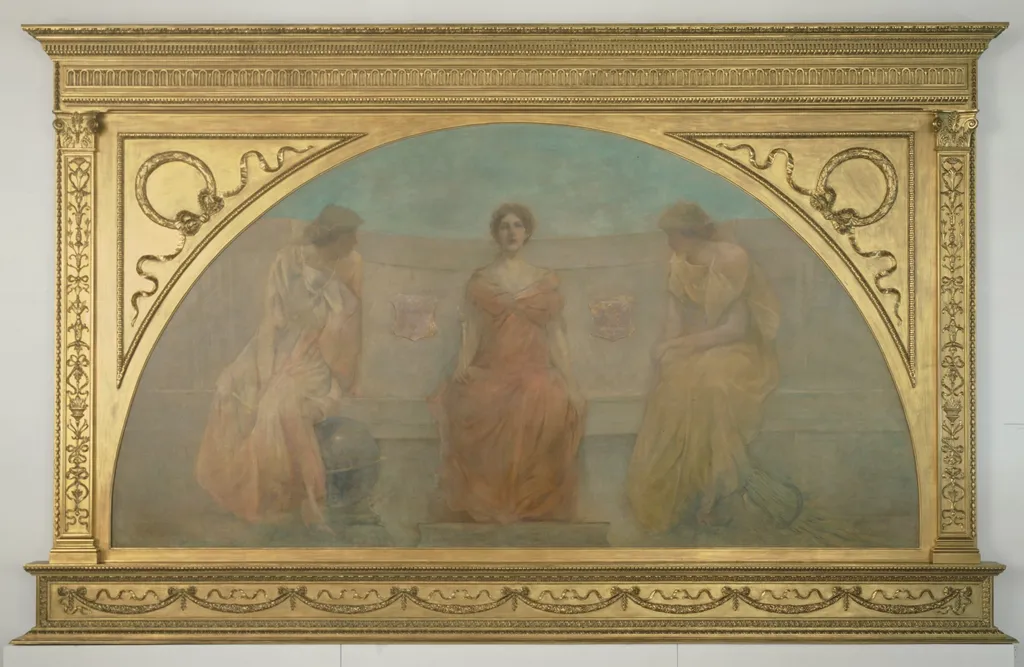
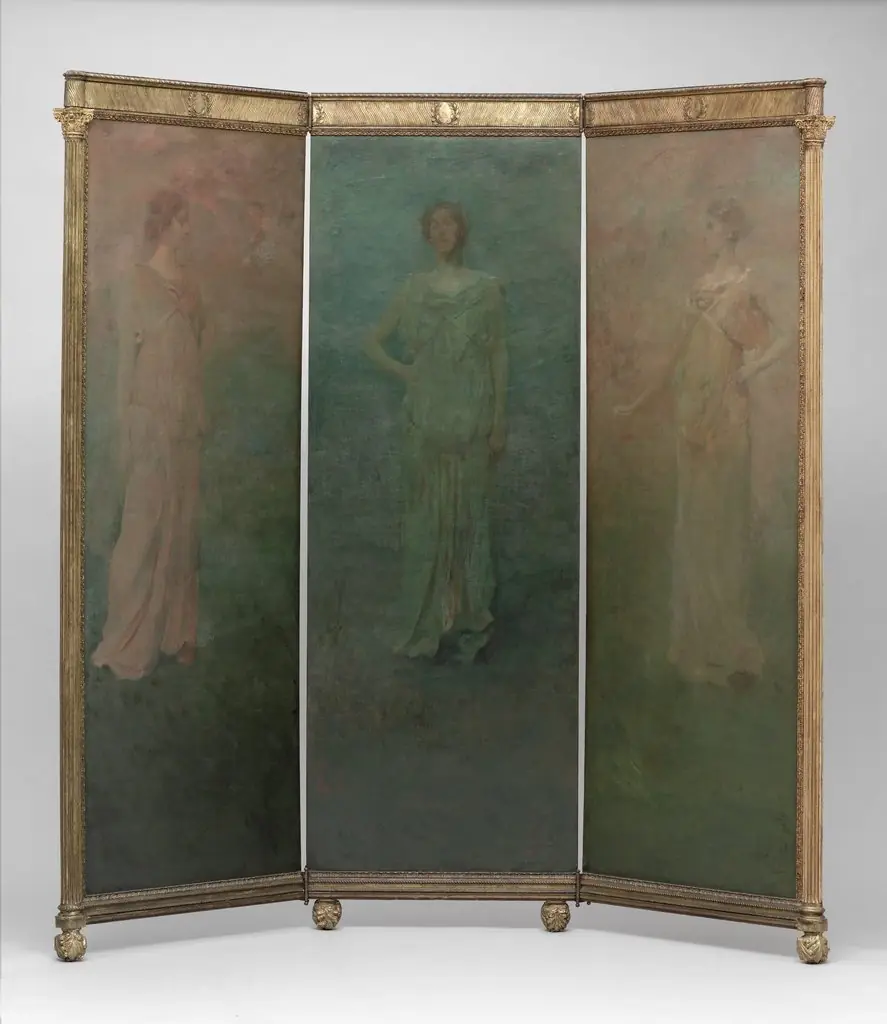
Commerce and Agriculture Bringing Wealth to Detroit is an oil painting by the American Impressionist artist Thomas Dewing. It dates from 1900 and is held in the collection of the Detroit Institute of Arts.
About this work
Overview
It presents allegorical figures in a restrained, atmospheric setting, aligning with the aesthetic ideals of American Impressionism.
Painted in 1900 by Thomas Dewing, this oil on canvas work was commissioned to honor Detroit’s economic foundations. It presents allegorical figures in a restrained, atmospheric setting, aligning with the aesthetic ideals of American Impressionism. Dewing, trained in Paris and associated with the Ten American Painters, favored quiet compositions over dramatic narratives, emphasizing mood and refined form over overt symbolism.
Subject & Meaning
Three women, dressed in classical robes, represent Commerce, Agriculture, and the abstract notion of Wealth. The globe in the left figure’s hand suggests global trade, the ornate box implies stored value or craftsmanship, and the sheaf of wheat signifies agricultural abundance. Positioned before a neutral wall and open sky, they embody serene, timeless forces rather than specific individuals, evoking civic pride through symbolic stillness.
Technique & Style
Dewing employed soft, blended brushwork and a muted palette to achieve subtle tonal transitions, characteristic of his mature style. The figures are rendered with delicate modeling, their drapery flowing in quiet rhythms. Light falls evenly across the scene, minimizing shadows and enhancing the ethereal quality. The composition is balanced and intimate, prioritizing harmony over narrative action.
History & Provenance
Commissioned for a public building in Detroit, the painting was part of a broader early 20th-century effort to visually articulate civic identity. It remained in municipal collections for decades before being transferred to a public museum. Its original frame, gilded with serpentine and foliate motifs, was designed to complement its classical theme and has been preserved with the work.
Context
Created during a period of rapid industrial growth in Detroit, the painting reflects a cultural desire to link economic progress with classical ideals. Dewing’s approach contrasted with more overtly patriotic or realistic civic art of the time, instead favoring poetic abstraction. His association with the Aesthetic Movement and his wife Maria Oakey Dewing’s artistic practice further situates the work within a circle devoted to refined, contemplative art.
Legacy
Though less widely known than his contemporaries, Dewing’s work influenced later American painters seeking to merge European academic training with domestic themes. This painting exemplifies a quiet, symbolic mode of civic portraiture that prioritized elegance over spectacle. It remains a key example of how American artists reinterpreted classical allegory to reflect modern urban identity without resorting to literalism.
Artist & collection
Artist
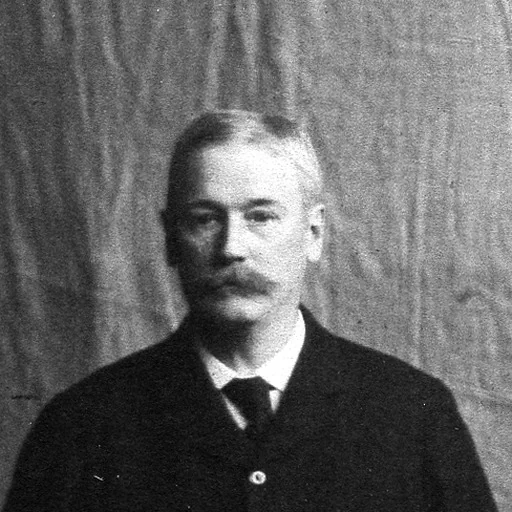
Thomas Wilmer Dewing (May 4, 1851 – November 5, 1938) was an American painter working at the turn of the 20th century.

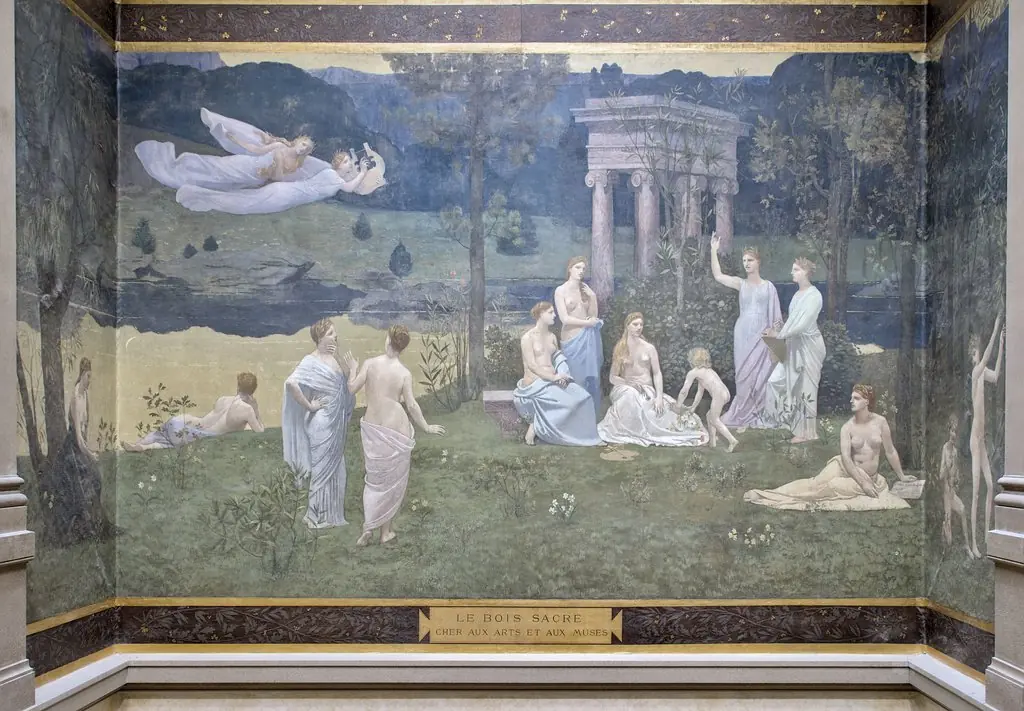 Le Bois sacré cher aux arts et aux Muses
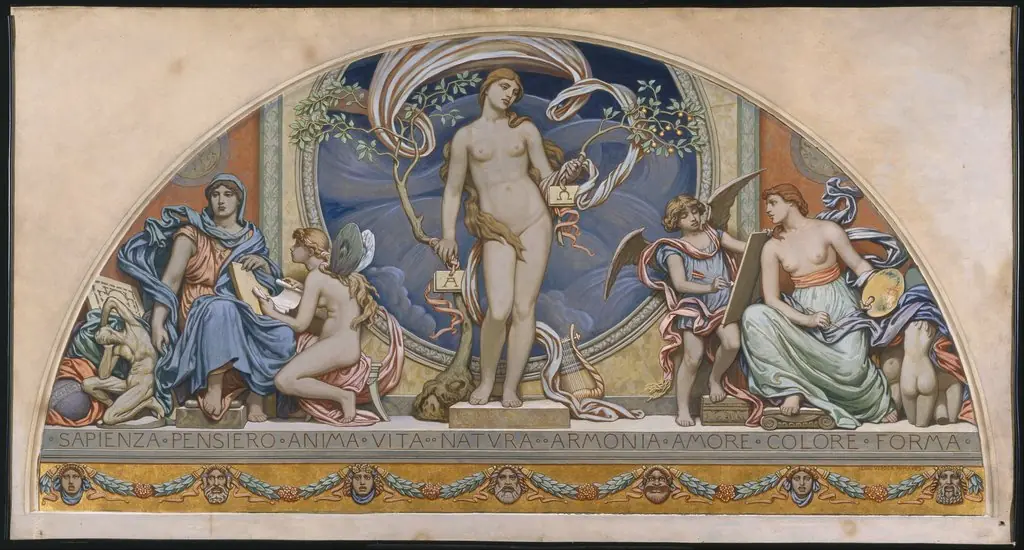 Rome Representative of the Arts
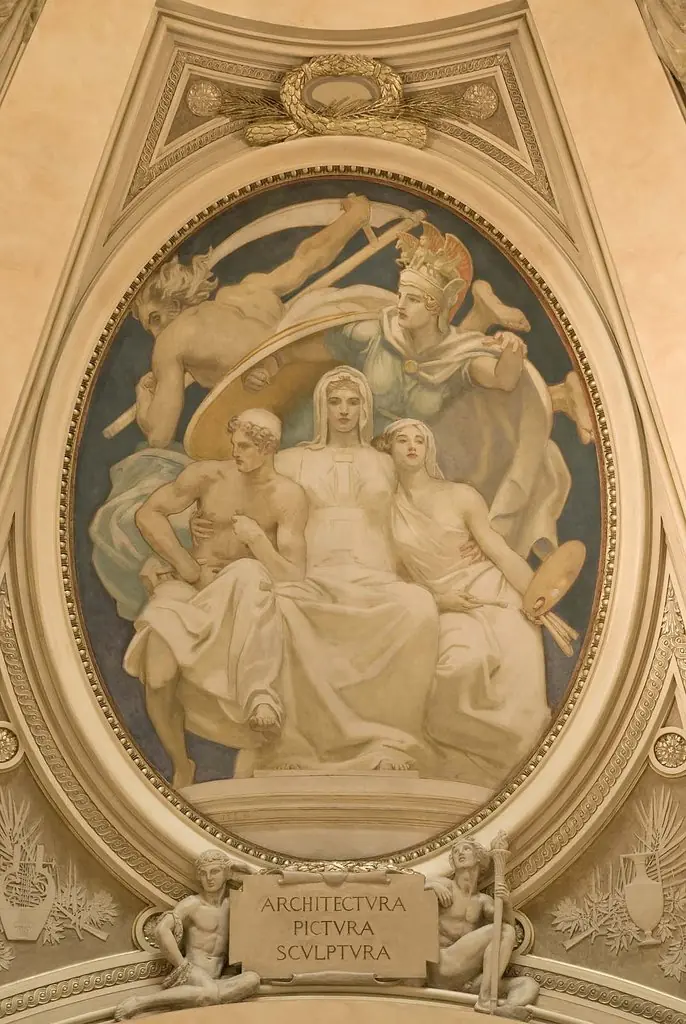 Architecture, Painting and Sculpture Protected by Athena from the Ravages of Time
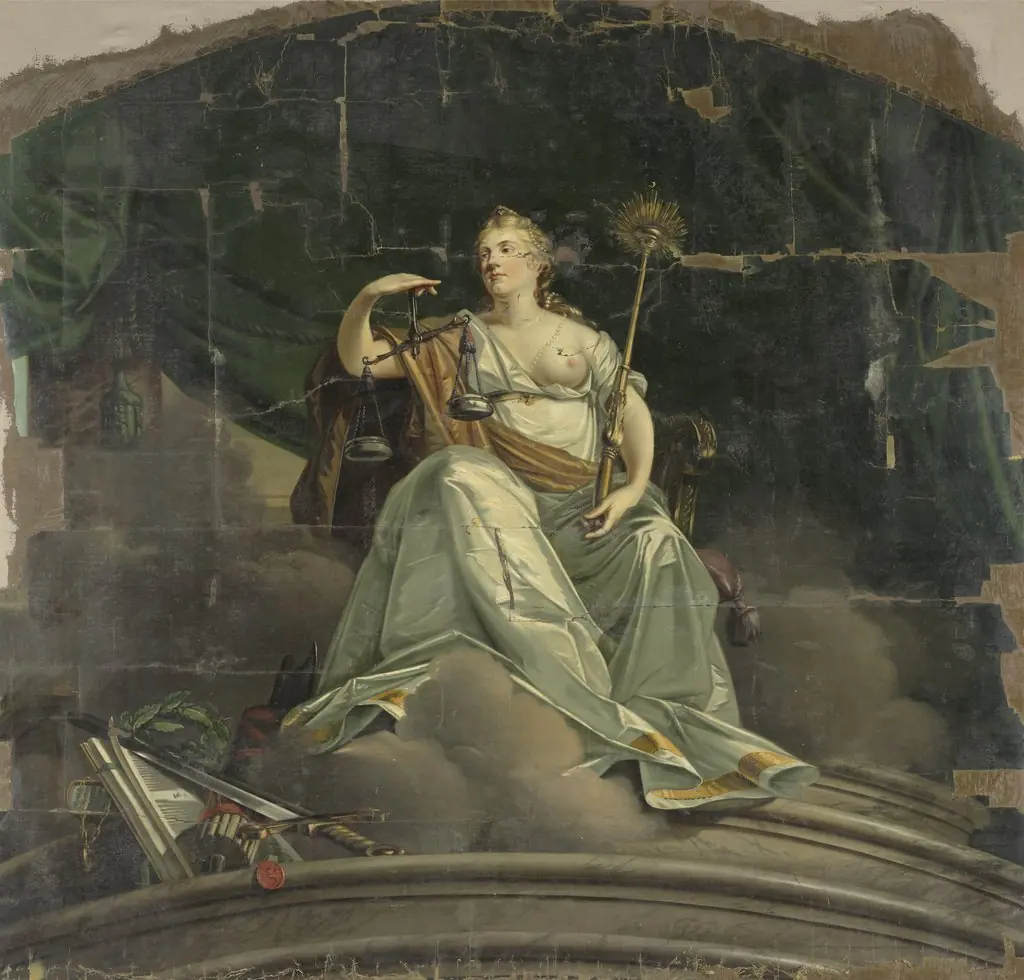 Justice
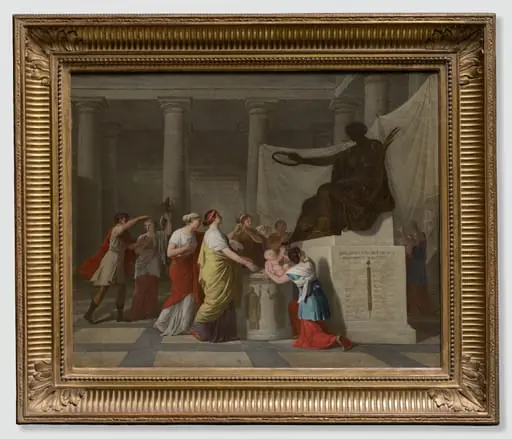 Le Dévouement des Citoyennes de Paris (The Dedication of the Citizens of Paris)
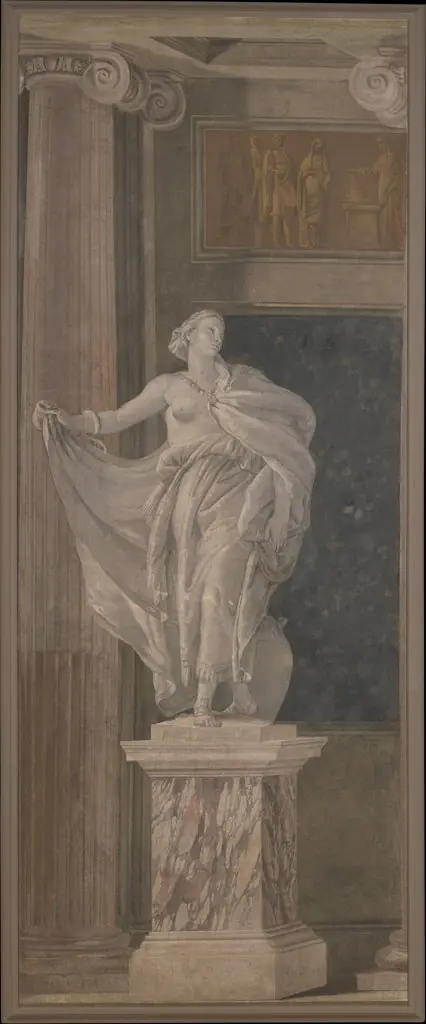 Metaphysics
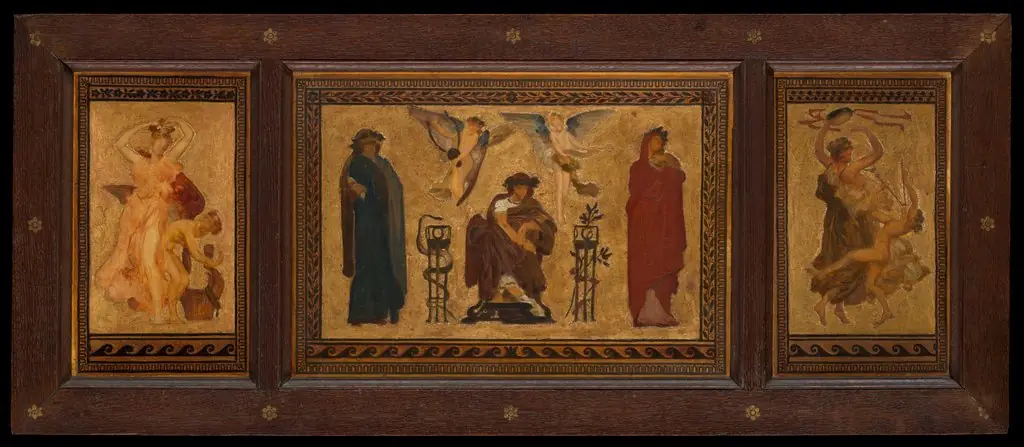 Study for the Ceiling of the Marquand Music Room
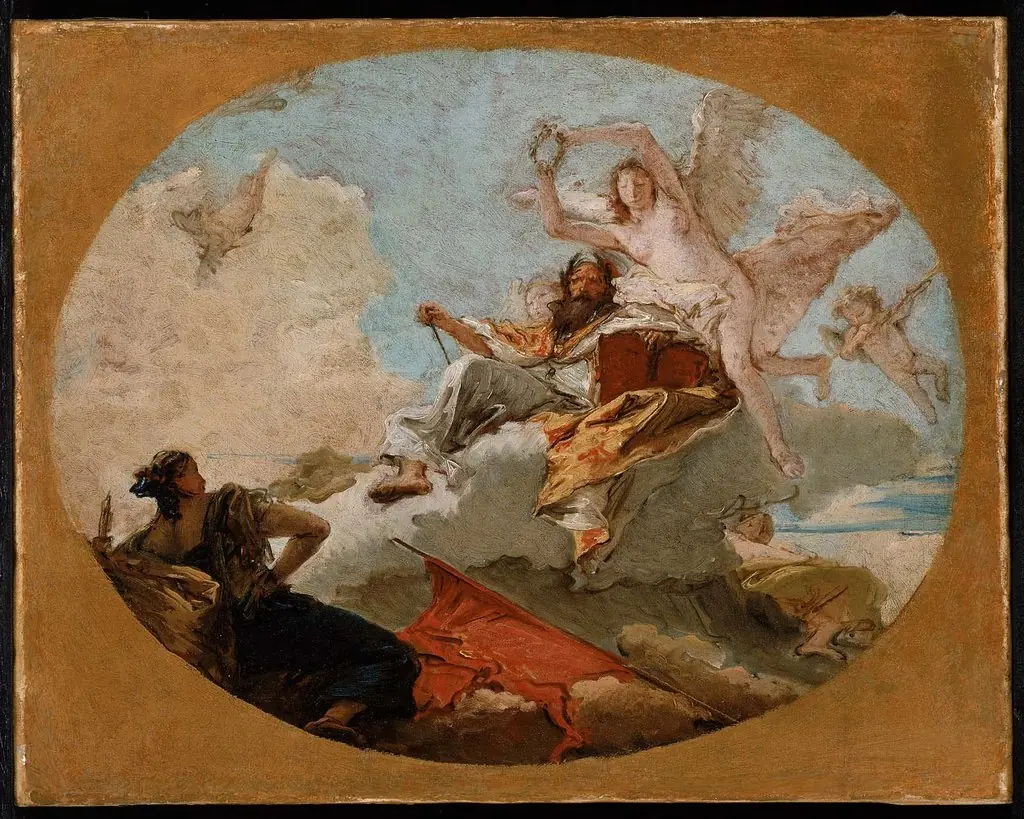 The Crowning of Merit
 Study for a Lunette
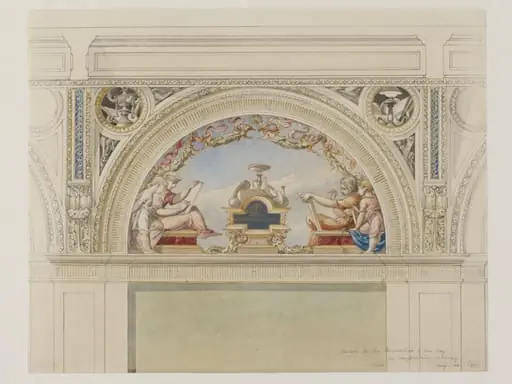 Design for decorative lunette: 'Model Drawing'
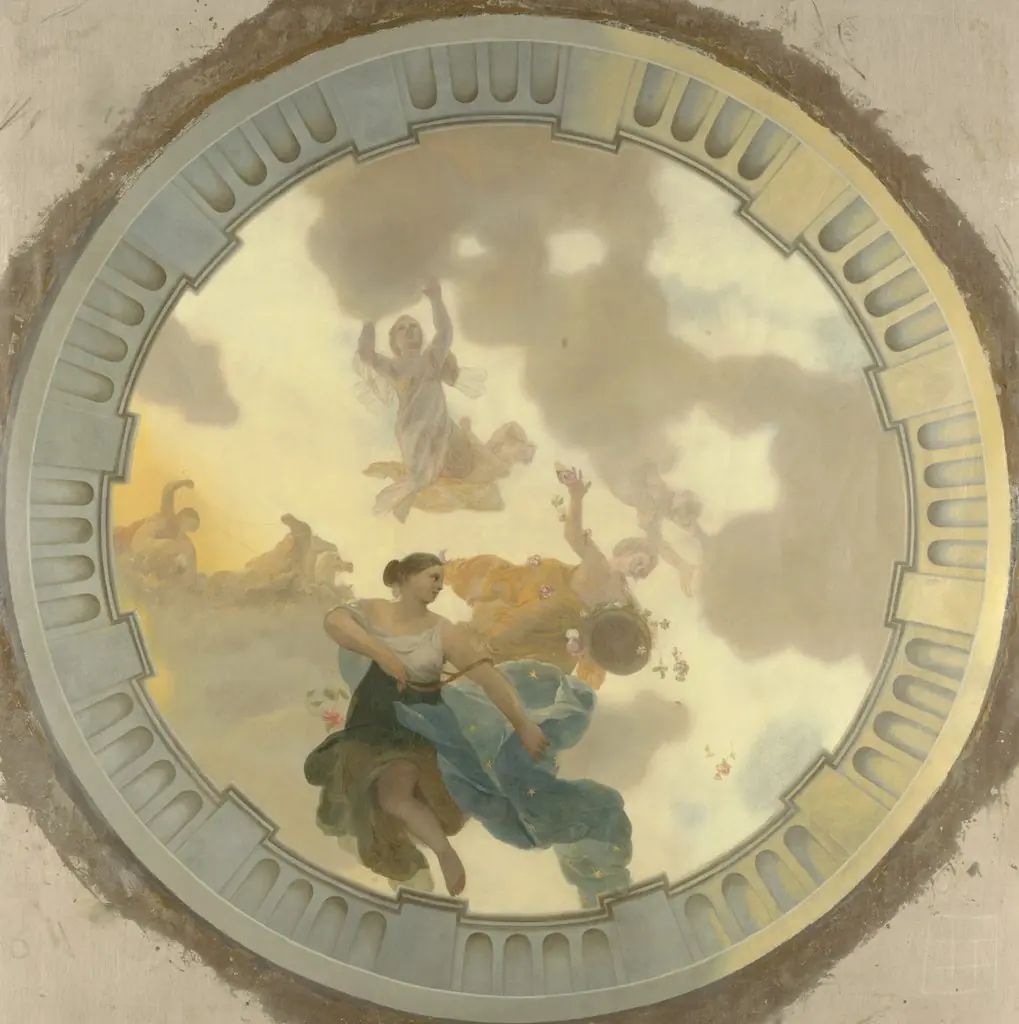 Onderdeel (middendeel) van een plafondschildering met als hoofdvoorstelling Diana en haar gezellinnen
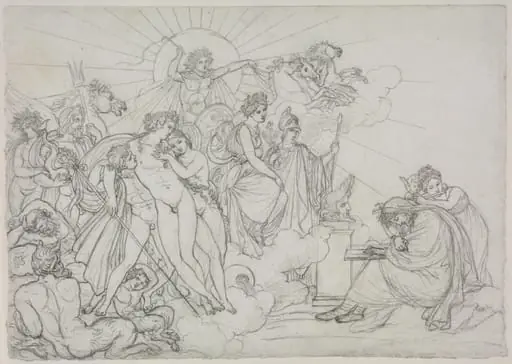 Invocation to the Divinities who preside over Agriculture from Virgil's "Georgics"