Artwork
Lake and Mountains
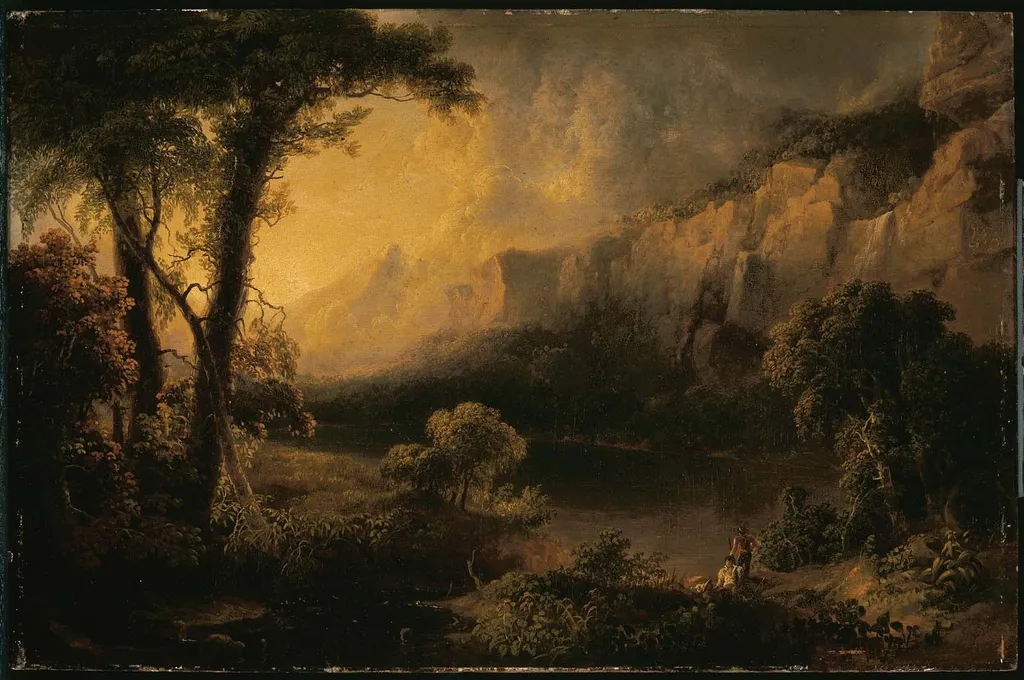
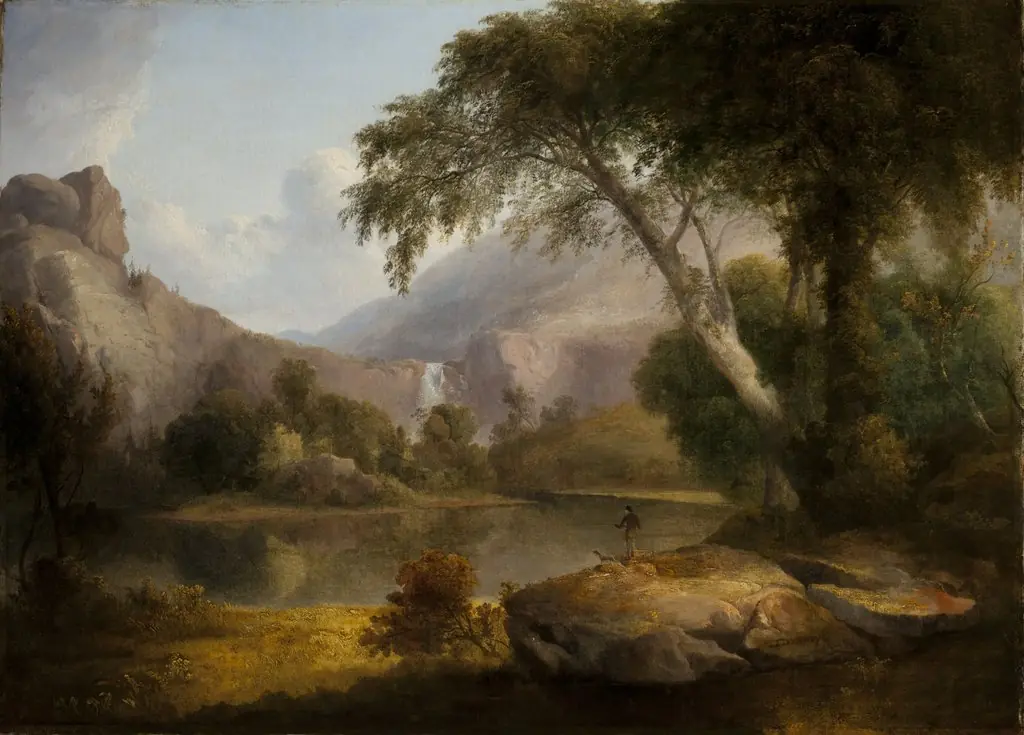
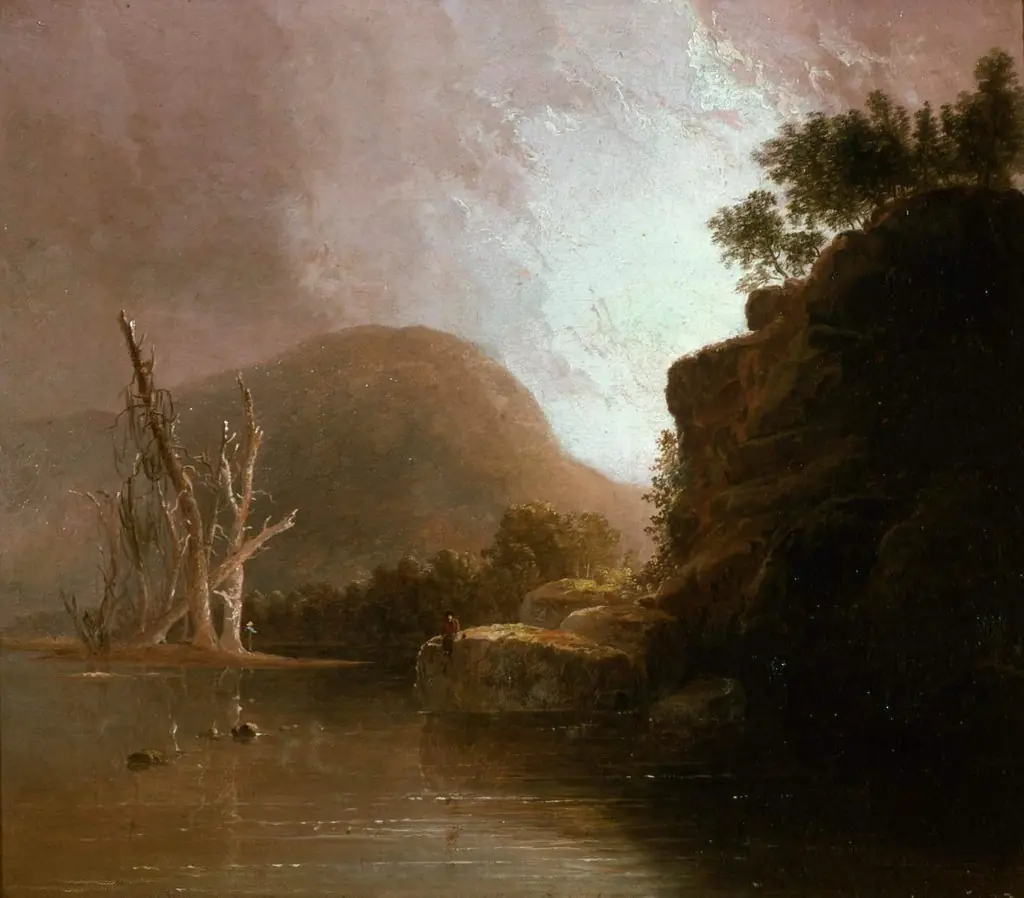
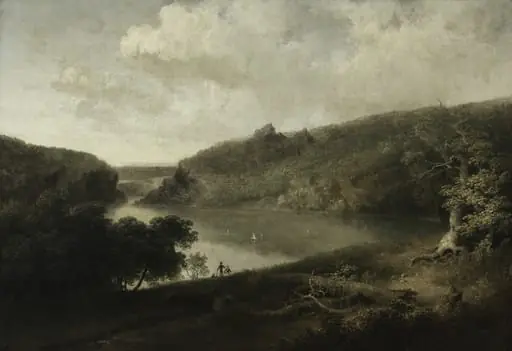
Lake and Mountains is an unspecified painting by Thomas Doughty. It dates from 1834 and is held in the collection of the Museum of Fine Arts Boston.
About this work
Overview
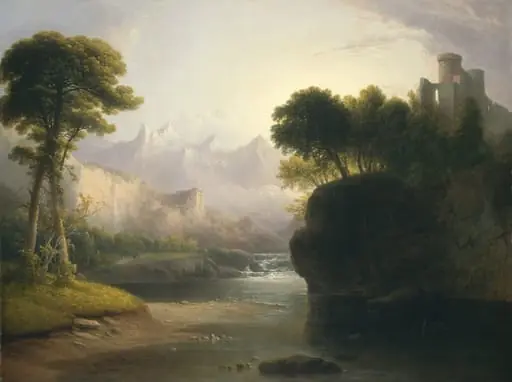
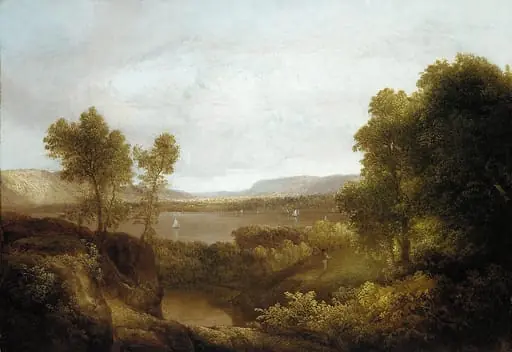
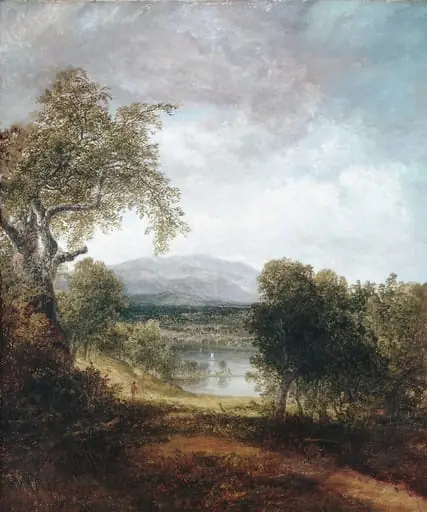
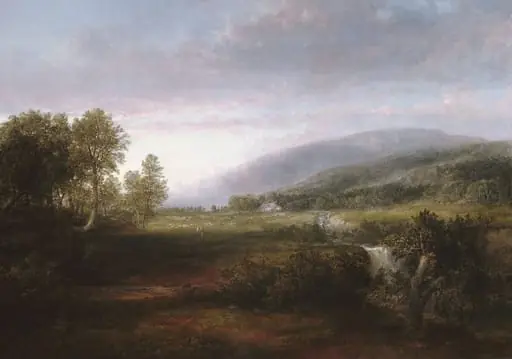
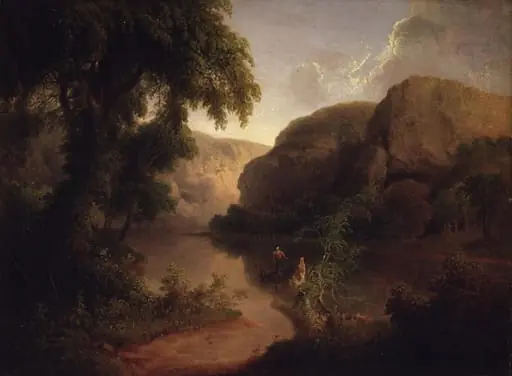
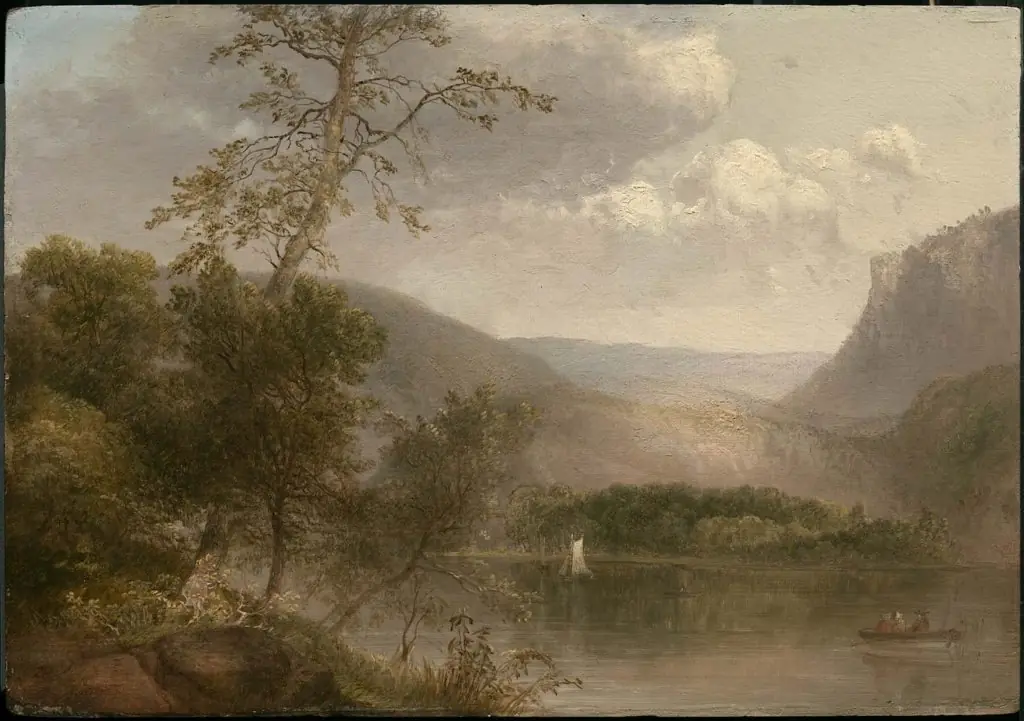
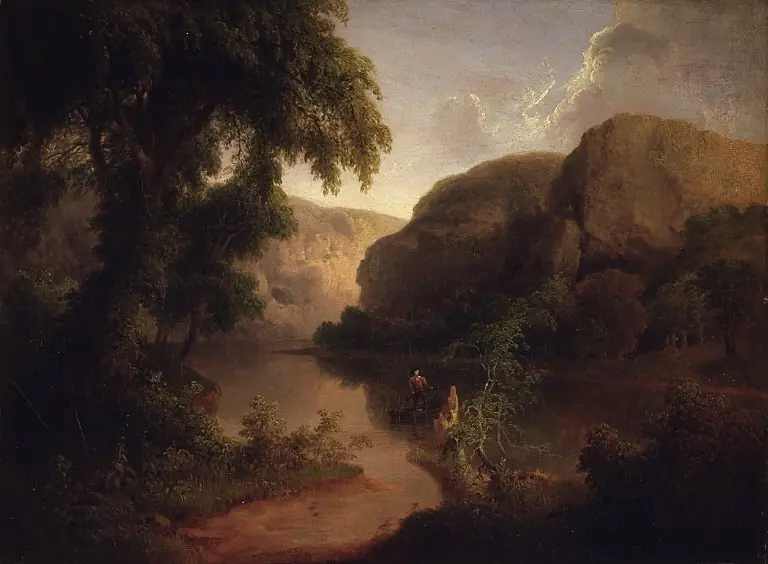
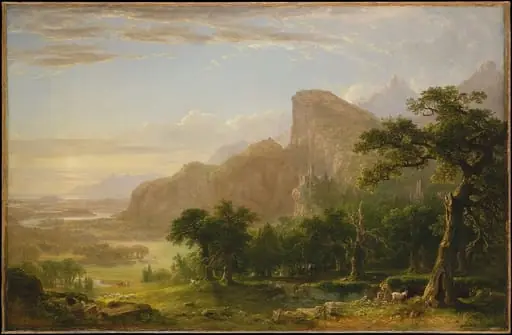
Painted around 1834 by Thomas Doughty, this landscape captures a quiet stretch of American wilderness. The composition centers on a still lake reflecting the sky and surrounding hills, with dense trees framing the foreground and distant peaks receding into the haze. The work exemplifies early 19th-century American landscape painting, emphasizing natural serenity over dramatic intervention.
Subject & Meaning
The scene presents an unpopulated, untouched environment, evoking contemplation rather than narrative. The absence of human figures reinforces a sense of solitude and reverence for nature. The interplay of light and shadow suggests a fleeting moment—perhaps dawn or dusk—inviting the viewer to pause and absorb the quiet grandeur of the American countryside.
Technique & Style
Distant mountains are rendered with blurred edges and muted hues to suggest atmospheric perspective, while foreground foliage shows careful, textured brushwork.
Doughty employs subtle gradations of tone to model form, using soft transitions between light and shadow rather than stark contrasts. Distant mountains are rendered with blurred edges and muted hues to suggest atmospheric perspective, while foreground foliage shows careful, textured brushwork. The handling of light follows the principles of chiaroscuro, enhancing spatial depth without theatricality.
History & Provenance
The painting entered the collection of the Museum of Fine Arts, Boston, in the early 20th century. It was likely acquired as part of a broader effort to document the development of American landscape art. Its provenance traces back to private collections in the Northeast, reflecting its early reception among patrons interested in regional scenery.
Context
Created during the rise of the Hudson River School, this work aligns with a cultural movement that celebrated the American wilderness as spiritually significant. Though Doughty was not formally part of the group, his focus on tranquil, luminous landscapes resonated with their ideals. The painting reflects a growing national identity tied to untamed natural beauty.
Legacy
Doughty’s work, including this painting, helped establish landscape painting as a respected genre in the United States. While less widely known today than contemporaries like Cole or Bierstadt, his emphasis on quiet observation influenced later artists seeking to convey mood through subtle naturalism rather than grandeur.
Artist & collection