Artwork
Cowboy Singing
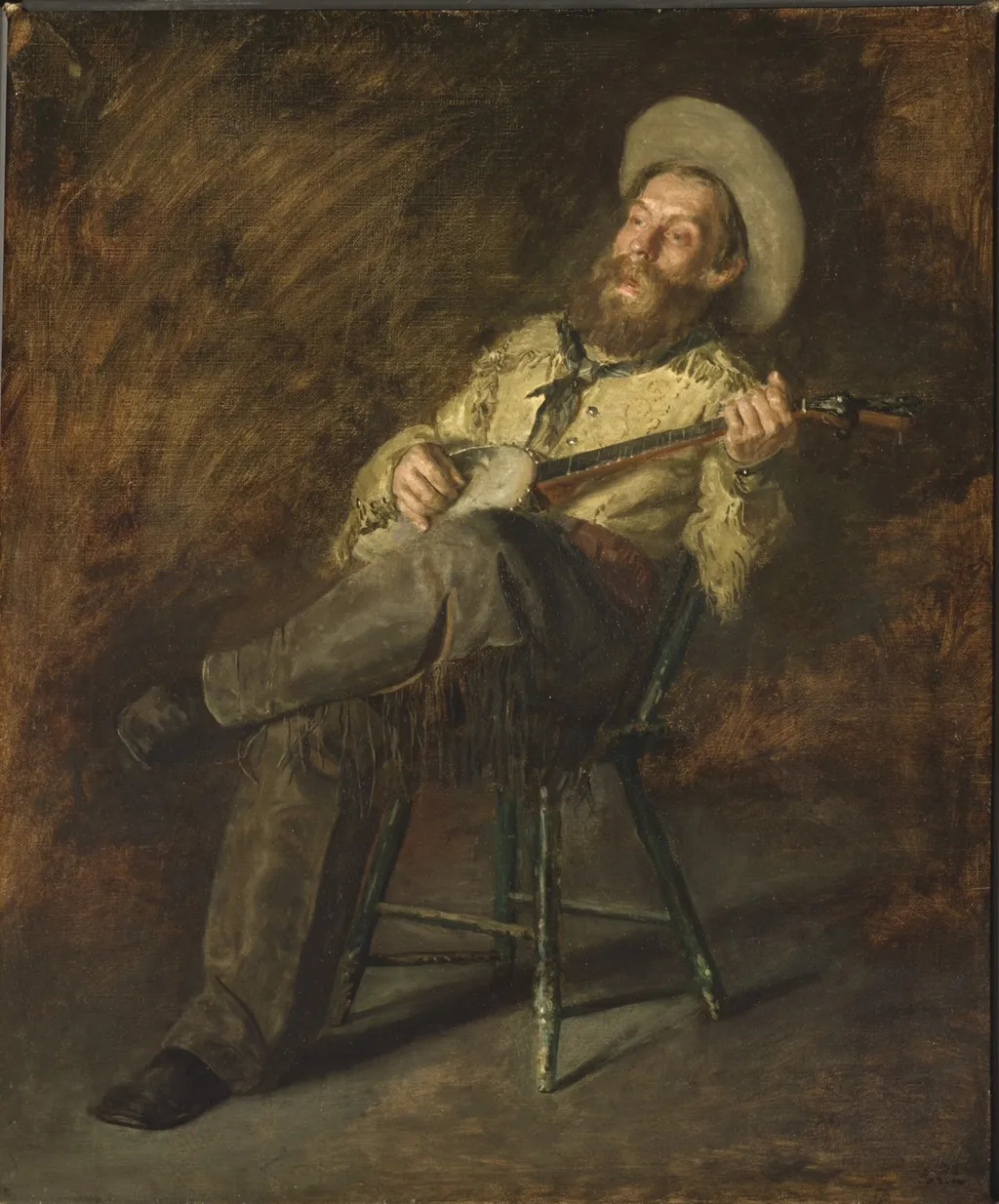
Cowboy Singing is an unspecified painting by the American Impressionist artist Thomas Eakins. It dates from 1896 and is held in the collection of the Denver Art Museum.
About this work
Overview
Though best known for his precise depictions of Philadelphia’s medical and athletic scenes, this work shifts focus to a solitary figure in a Western costume.
Thomas Eakins painted *Cowboy Singing* in 1896, during a phase of his career where his realism subtly absorbed elements of American Impressionism. Though best known for his precise depictions of Philadelphia’s medical and athletic scenes, this work shifts focus to a solitary figure in a Western costume. The painting reflects Eakins’ enduring commitment to direct observation, even as he explored new subjects outside his usual urban milieu.
Subject & Meaning
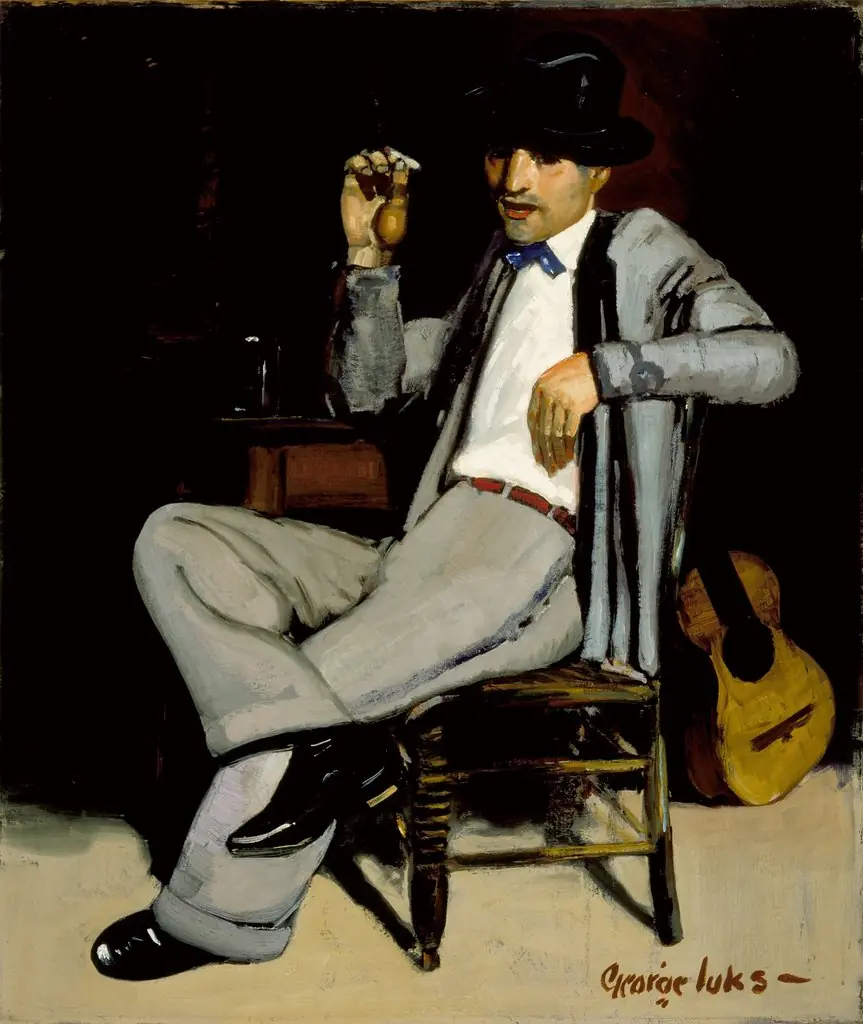
The subject is a man dressed as a cowboy, seated and playing a banjo with quiet focus. His relaxed posture and downcast gaze suggest introspection rather than performance. The costume, while stereotypical, is rendered without irony or romanticism, grounding the figure in a moment of personal stillness. Eakins avoids narrative spectacle, instead emphasizing solitude and the quiet rhythm of music as a private act.
Technique & Style
Eakins applied paint with controlled, visible brushwork, particularly in the shadowed background, which is textured and uneven. The figure’s clothing—fringed shirt, boots, hat—is rendered with careful attention to fabric and light, consistent with his lifelong dedication to anatomical and textual accuracy. The dark, indistinct setting isolates the subject, directing focus to his expression and the subtle tension between costume and demeanor.
History & Provenance
Created in 1896, *Cowboy Singing* remained in private hands until entering the Denver Art Museum’s collection. Its provenance reflects Eakins’ diminished public profile in later years, as his uncompromising realism fell out of favor with prevailing tastes. The painting’s presence in Denver underscores its resonance beyond Eakins’ Philadelphia base, suggesting broader cultural interest in American identity during the closing decades of the 19th century.
Context
In the 1890s, images of the American West proliferated in popular culture, often idealized. Eakins’ portrayal diverges from these tropes, offering a subdued, unembellished figure rather than a heroic frontiersman. His choice to depict a cowboy in a moment of quiet musicality aligns with his broader interest in ordinary human behavior, even when the subject appears exotic. The work reflects a quiet resistance to mythmaking in favor of observed truth.
Legacy
Though not among Eakins’ most widely exhibited works, *Cowboy Singing* illustrates his consistent refusal to romanticize his subjects. Its inclusion in major collections affirms its value as a nuanced study of identity and solitude. The painting contributes to a broader understanding of Eakins’ late career, revealing his willingness to engage with evolving American themes while maintaining his commitment to realism and psychological depth.
Own this work as a print
Artist & collection
Artist
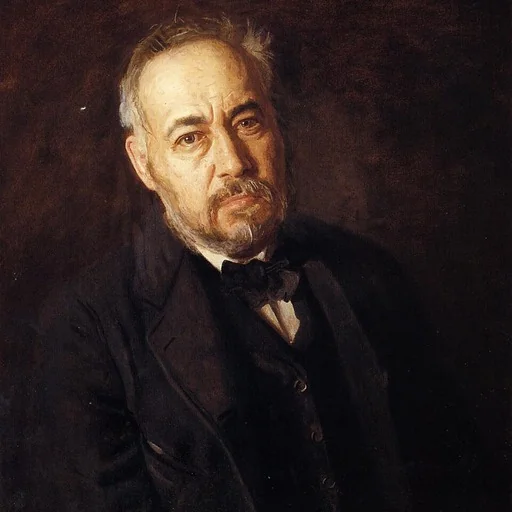
Thomas Cowperthwait Eakins (; July 25, 1844 – June 25, 1916) was an American realist painter, photographer, sculptor, and fine arts educator.