Artwork
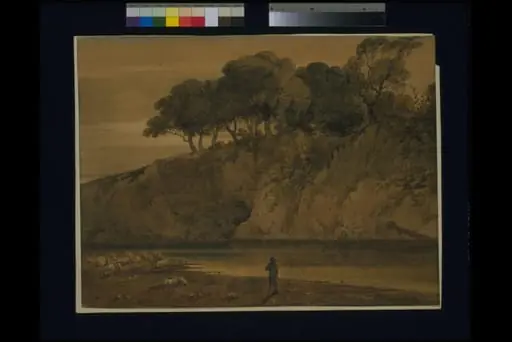
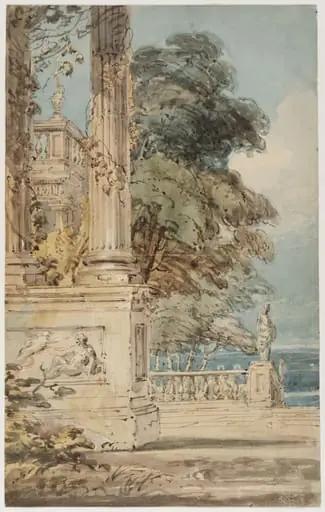
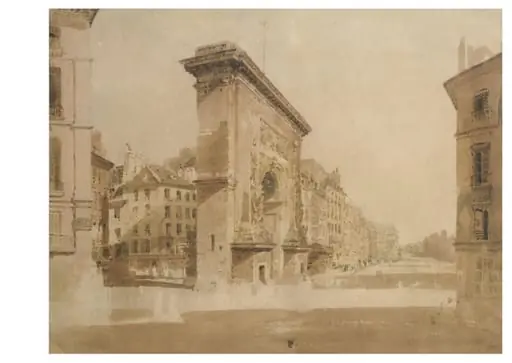
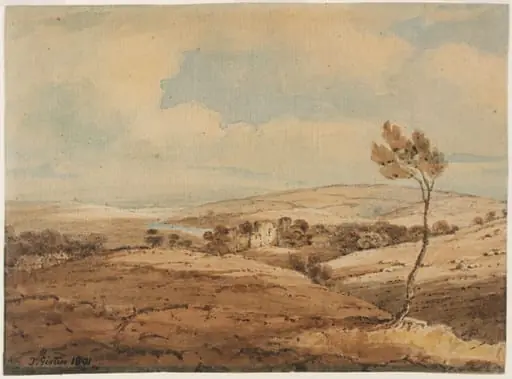
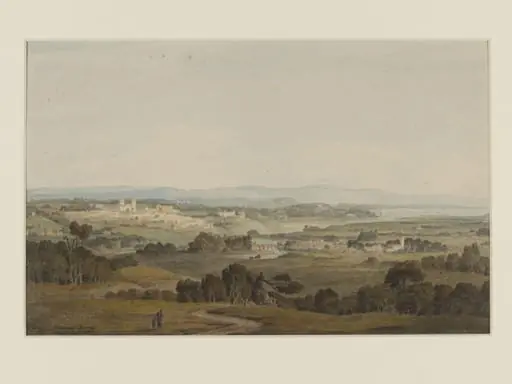
A Selection of Twenty of the Most Picturesque Views in Paris: View from Palace Terrace at St. Germain-en-Laye, the Aqueduct of Marli seen in the Distance
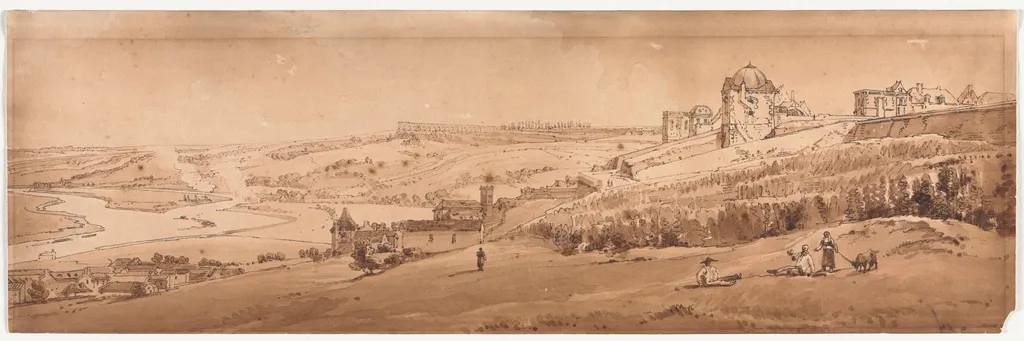
A Selection of Twenty of the Most Picturesque Views in Paris: View from Palace Terrace at St. Germain-en-Laye, the Aqueduct of Marli seen in the Distance is a print by the Romanticist artist Girtin. It dates from 1802 and is held in the collection of the Cleveland Museum of Art.
About this work
Overview
Created in 1802 by British artist Thomas Girtin, this watercolor is part of a series documenting views around Paris.
Created in 1802 by British artist Thomas Girtin, this watercolor is part of a series documenting views around Paris. Though Girtin never traveled to France, he relied on published engravings and sketches to reconstruct the landscape. The work exemplifies his skill in using watercolor to evoke atmosphere rather than precise detail, contributing to the medium’s growing credibility in the early 19th century.
Subject & Meaning
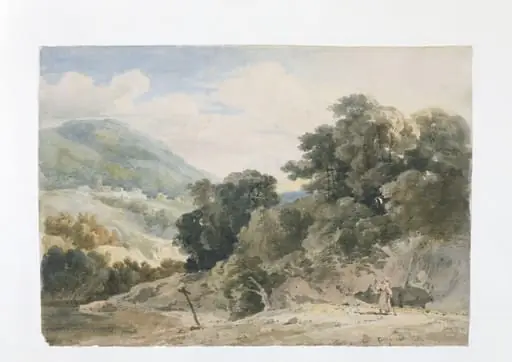
The scene captures a distant vista from the terrace of the Château de St. Germain-en-Laye, looking toward the Aqueduct of Marly, a 17th-century engineering feat. The composition emphasizes quiet solitude: figures are sparse, the river winds gently through open land, and architectural elements recede into haze. The absence of human activity and the soft focus suggest contemplation, aligning with emerging Romantic sensibilities toward nature and memory.
Technique & Style
Girtin employed translucent watercolor washes to create a hazy, atmospheric effect, avoiding sharp outlines or saturated hues. The distant aqueduct and dome are rendered with minimal detail, relying on tonal gradations to suggest depth. The muted palette and blurred edges mimic the optical softness of distance, a technique that distinguished his work from more topographical contemporaries and anticipated Turner’s later luminous landscapes.
History & Provenance
The print was produced as part of a published series commissioned for British audiences interested in French scenery after the Napoleonic Wars. It entered the collection of The Cleveland Museum of Art in the 20th century, where it remains as a rare example of Girtin’s topographical work. Its survival reflects the growing institutional interest in watercolor as a serious artistic medium during the Victorian era.
Context
In early 19th-century Britain, interest in continental landscapes surged despite political tensions with France. Girtin’s series catered to this curiosity, translating foreign sites into familiar aesthetic terms. His approach—emphasizing mood over accuracy—reflected broader shifts in visual culture, where nature and light became vehicles for emotional resonance rather than mere documentation.
Legacy
Girtin’s use of watercolor to convey atmosphere influenced a generation of artists, including J.M.W. Turner. His ability to suggest vastness and stillness with minimal brushwork helped redefine the medium’s expressive potential. Though little known today, his work laid groundwork for the lyrical landscapes that would dominate British art in the decades following his early death.
Artist & collection
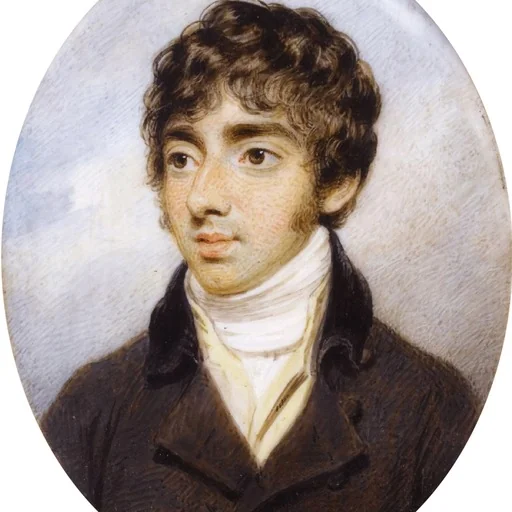
Artist
Thomas Girtin (18 February 1775 – 9 November 1802) was an English watercolourist and etcher. A friend and rival of J. M. W. Turner, Girtin played a key role in establishing watercolour as a reputable art form.