Artwork
Flower Piece
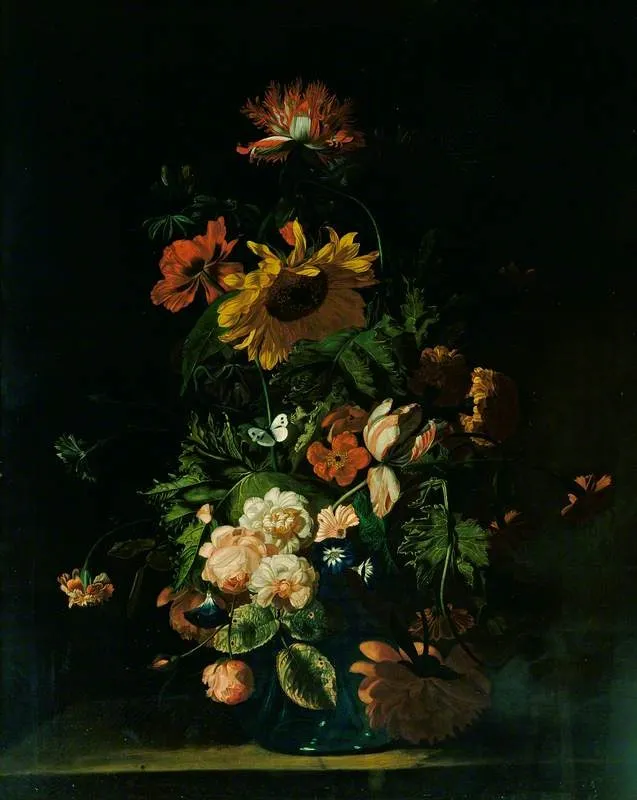
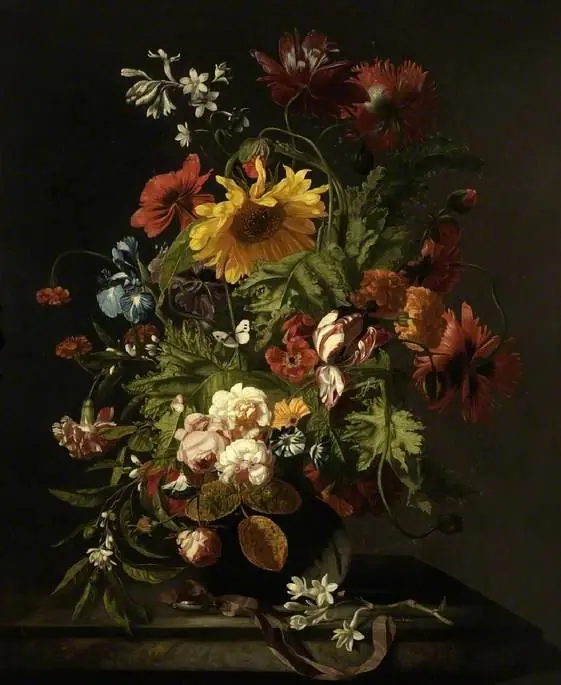
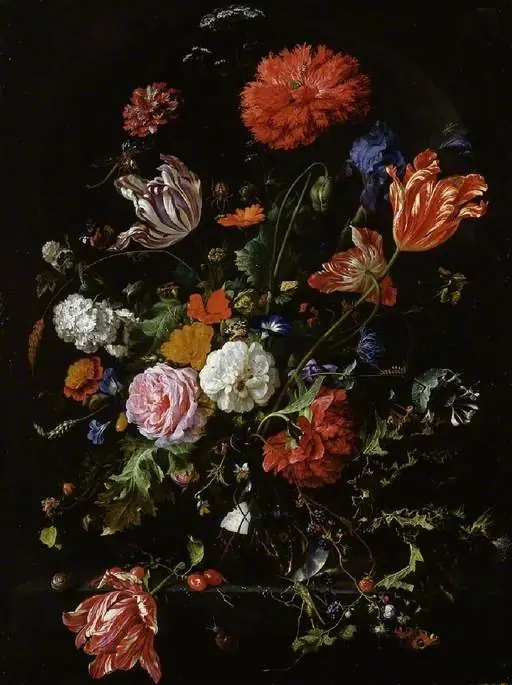
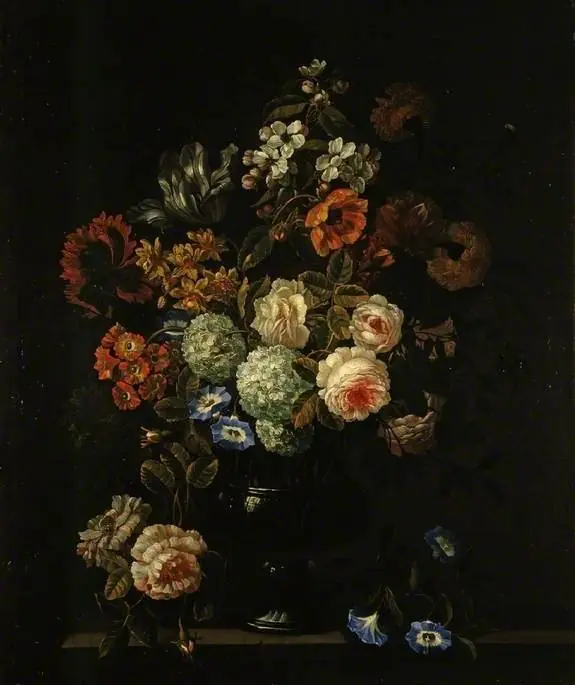
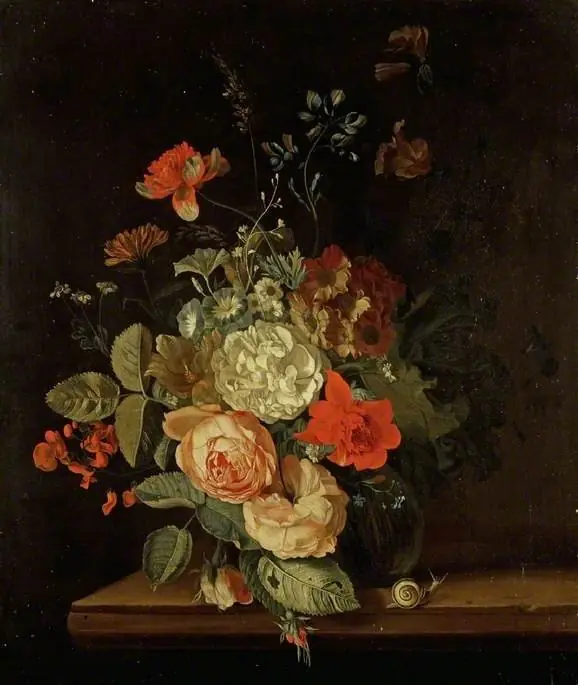
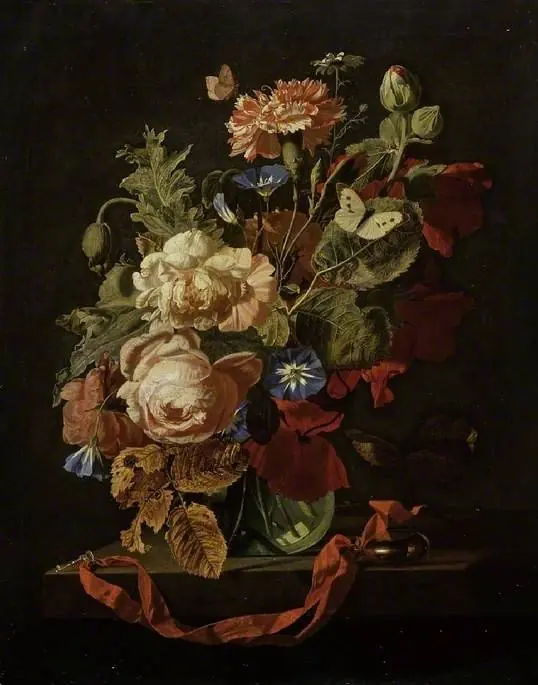
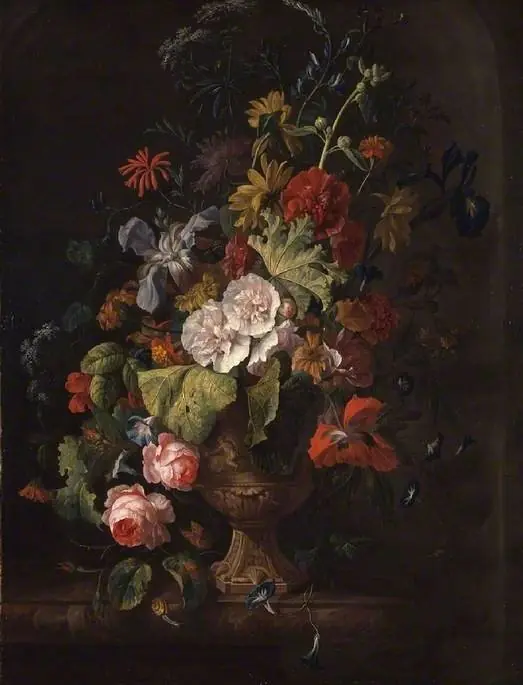
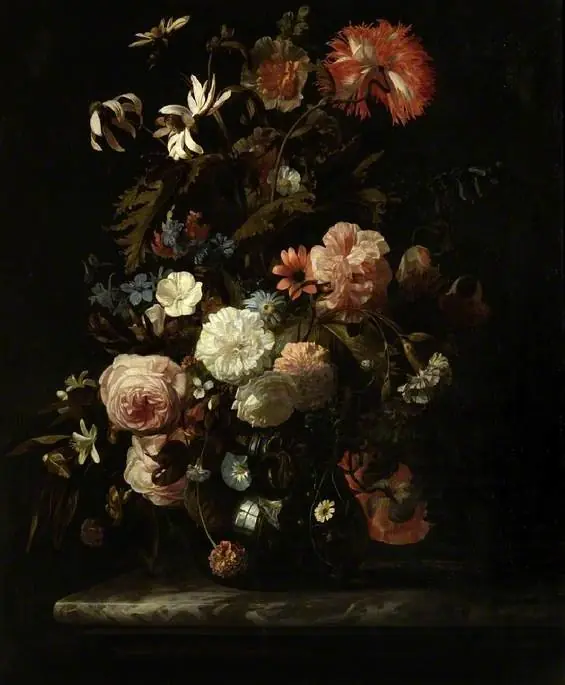
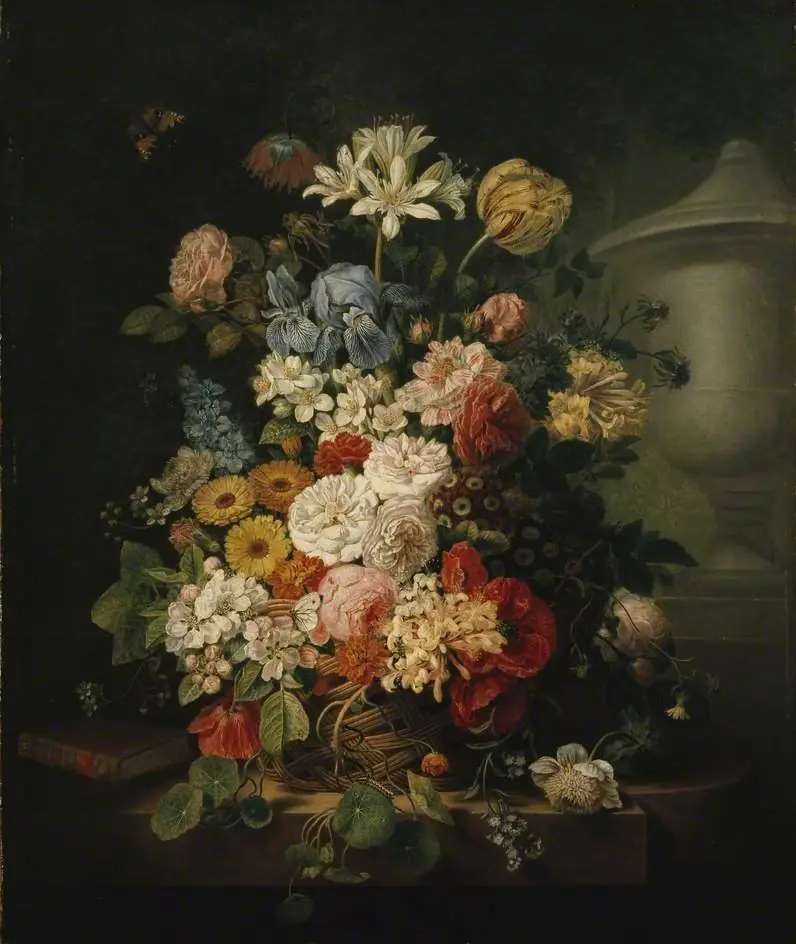
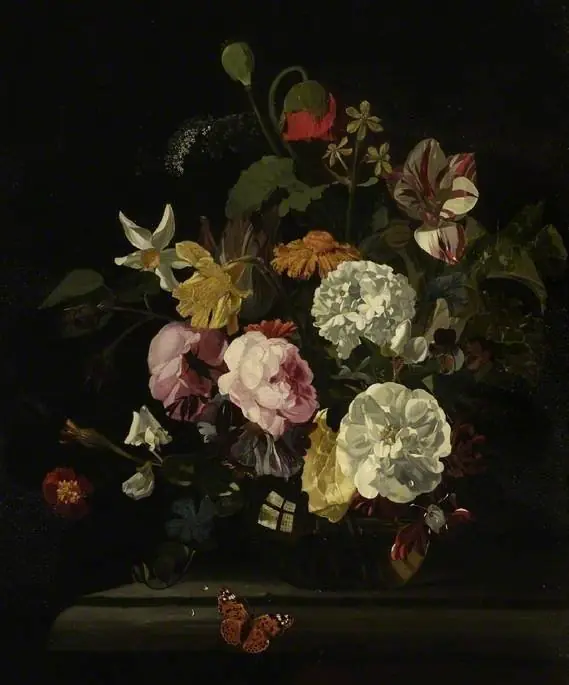
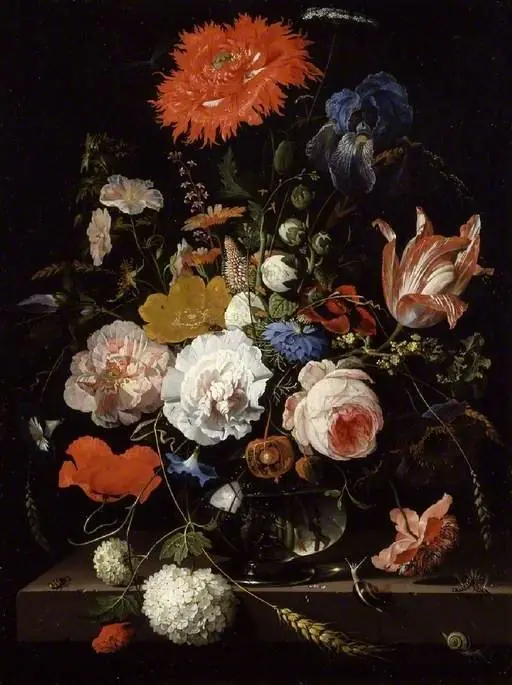
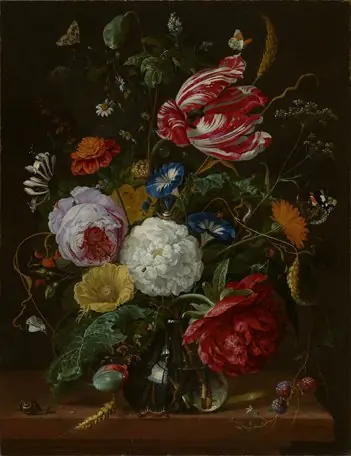
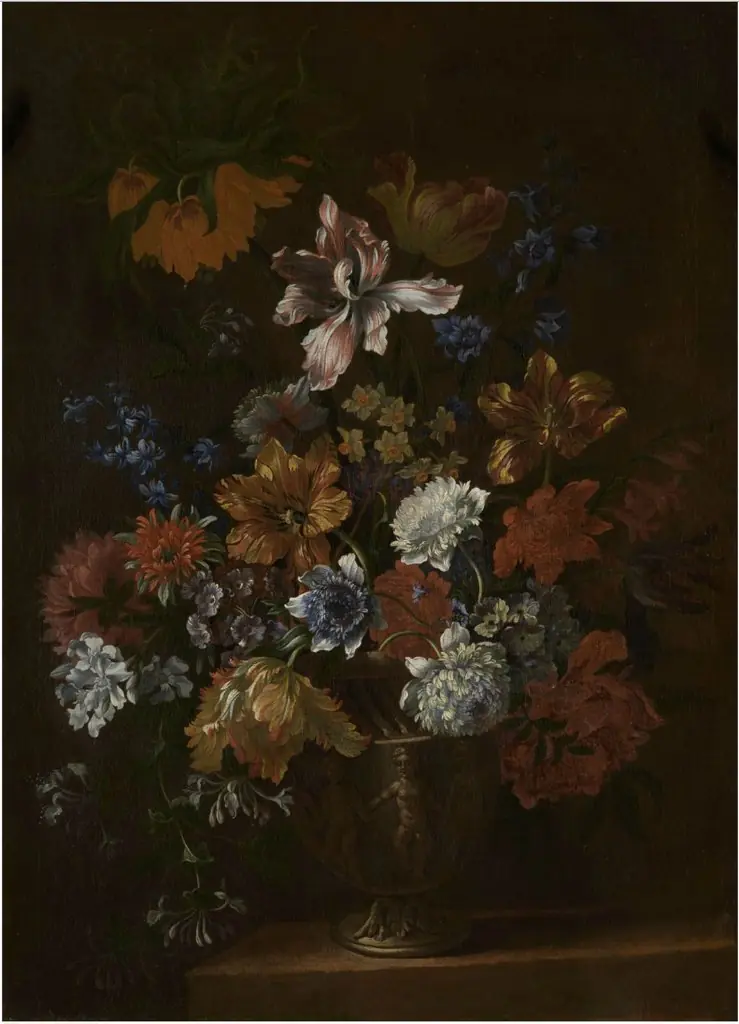
Flower Piece is an oil painting by the Realist artist Thomas Green. It is held in the collection of the Victoria and Albert Museum.
About this work
Overview
The painting is part of the Victoria and Albert Museum’s collection, where it stands as an uncommon example of Green’s engagement with painting.
Thomas Green, primarily recognized for his work as a sculptor and mason in the early 1700s, produced this oil painting in 1853, marking a later shift toward still-life composition. Created in Camberwell, the work reflects the 19th-century Realist tendency to portray everyday objects with observational precision. The painting is part of the Victoria and Albert Museum’s collection, where it stands as an uncommon example of Green’s engagement with painting.
Subject & Meaning
The composition centers on a blue ceramic vase holding an informal arrangement of seasonal blooms—pinks, yellows, and oranges—rendered without symbolic or decorative intent. Flowers are shown in varied stages of openness, some drooping, others tilted, suggesting transient natural life. The absence of human figures or narrative elements reinforces the Realist focus on the quiet dignity of ordinary, unidealized nature.
Technique & Style
Green employed chiaroscuro to model the petals and leaves with subtle gradations of light and shadow, enhancing three-dimensionality. The dark background isolates the bouquet, drawing attention to texture and form. Petals are rendered with fine brushwork, capturing delicate edges and internal veins, while the vase’s glaze is suggested through soft reflections rather than overt highlights, avoiding theatricality.
History & Provenance
The painting entered the Victoria and Albert Museum’s holdings after Green’s death, likely through private acquisition or bequest. Its provenance is not extensively documented, but its presence in the museum reflects late 19th-century interest in preserving works by artists who crossed disciplinary boundaries. No major exhibitions or public records detail its early ownership.
Context
In mid-19th-century Britain, Realism gained traction as artists turned from idealized history painting toward everyday subjects. Though Green had no formal training in painting, his background in three-dimensional craft may have informed his attention to volume and surface. This work aligns with broader trends in still-life painting, where botanical accuracy replaced allegory.
Legacy
Green’s *Flower Piece* remains a rare testament to his late artistic exploration beyond sculpture. It does not appear to have influenced contemporaries directly, but it contributes to the understanding of how artisans of the previous century engaged with emerging visual movements. The painting is studied today as an example of cross-medium practice in Victorian art.
Artist & collection

Artist
Thomas Green of Camberwell (c. 1659–1730) was a British sculptor and master mason who was prominent during the first quarter of the 18th century.