Artwork
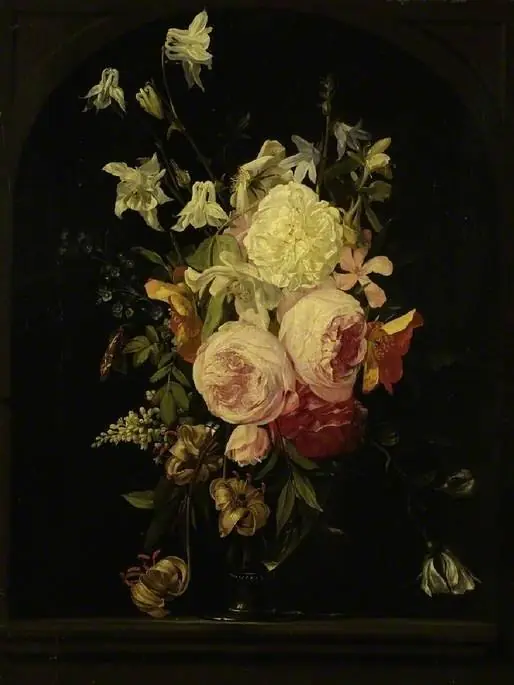
A vase of flowers
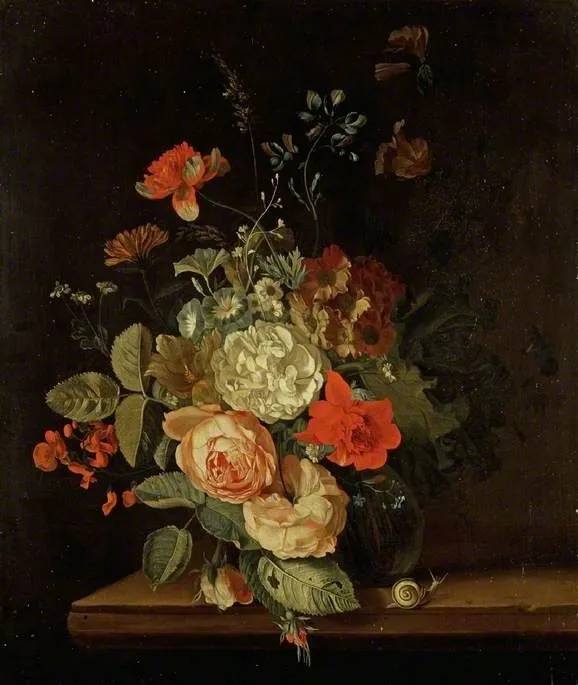
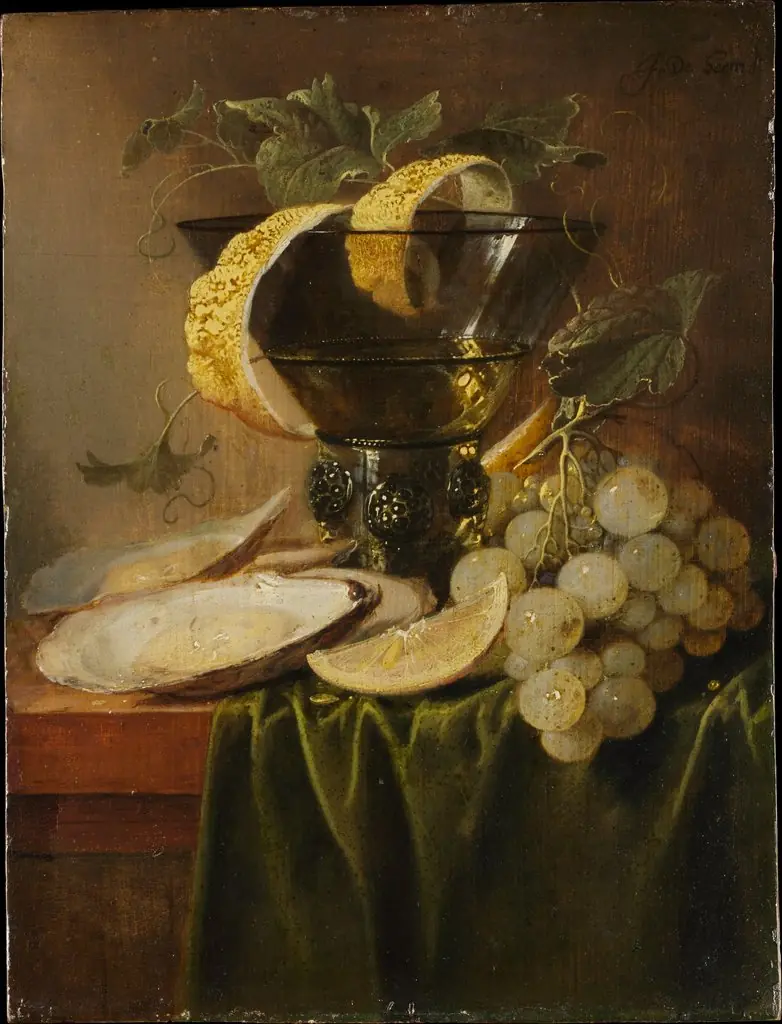
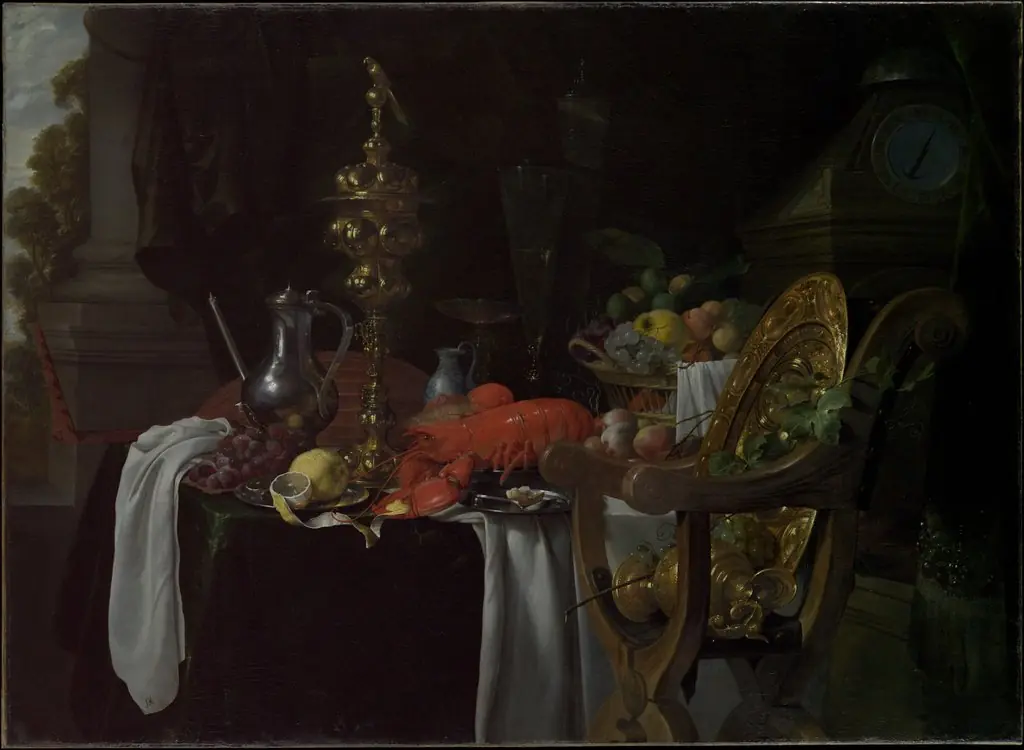
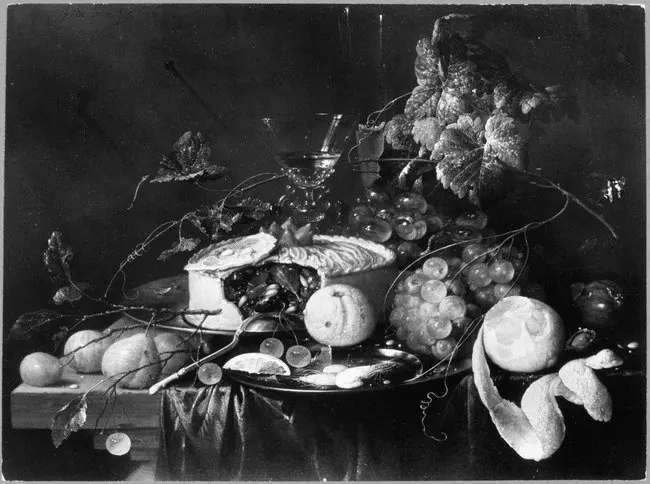
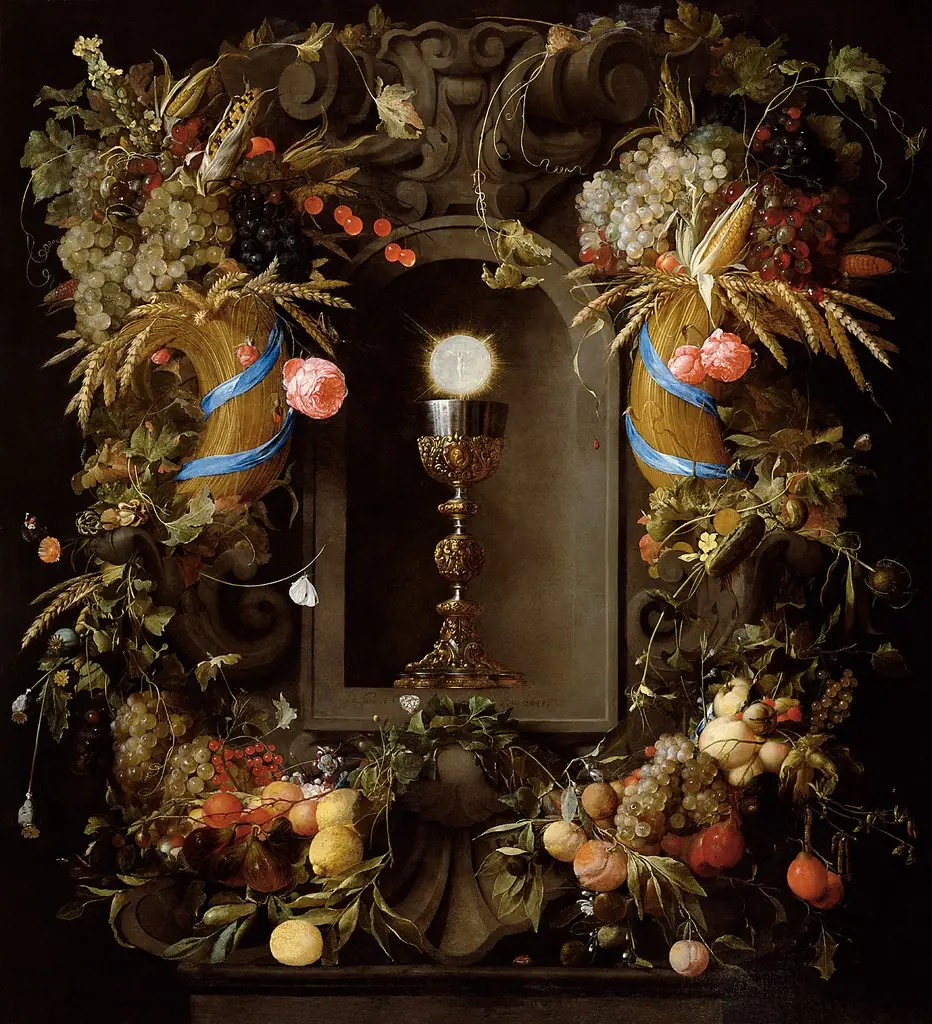
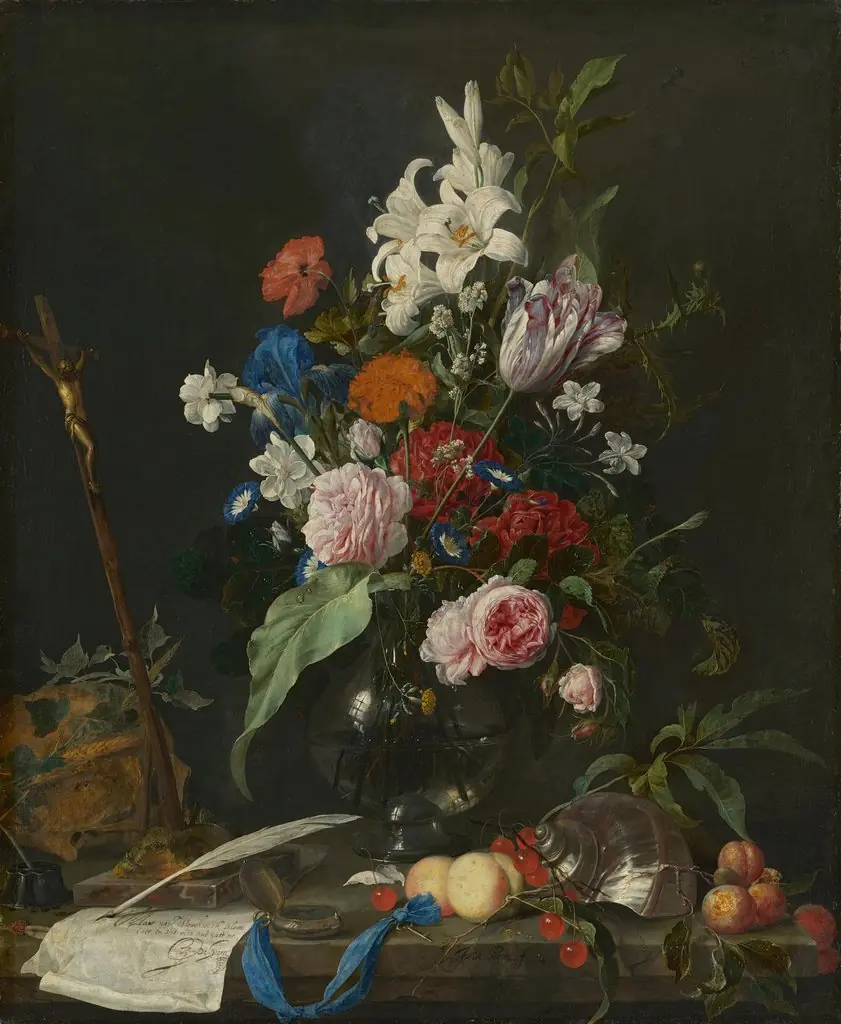
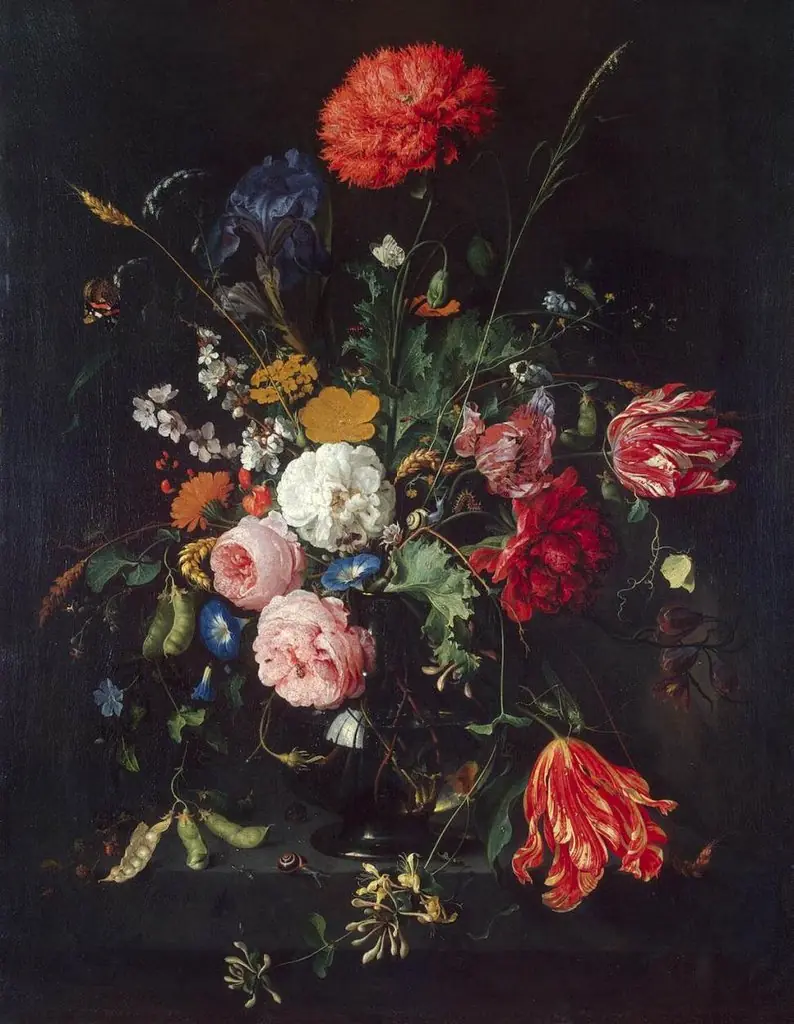
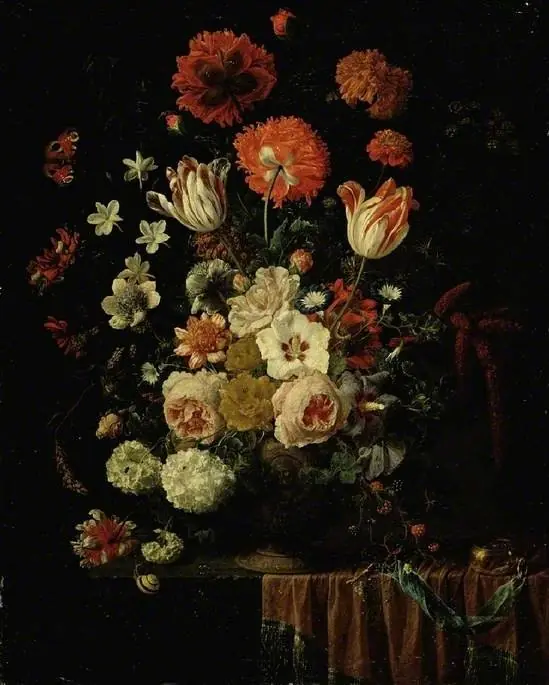
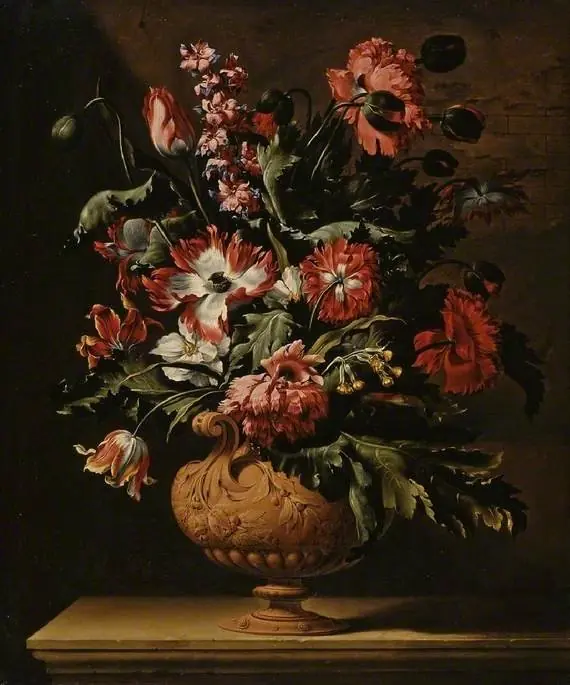
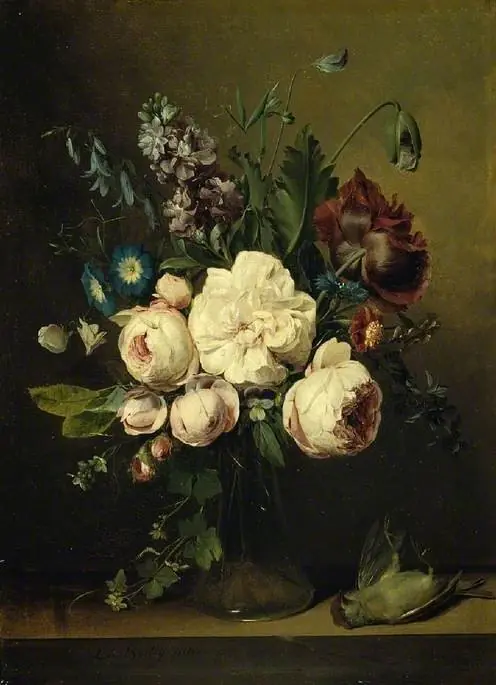
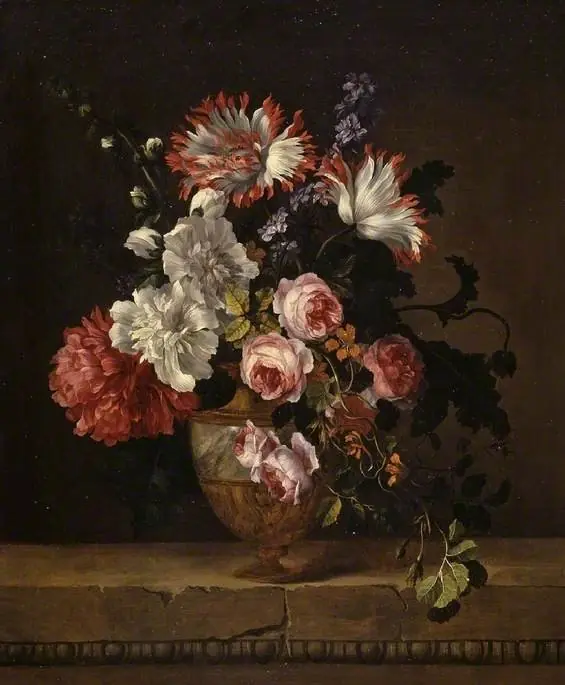
A vase of flowers is an oil painting by the Dutch Golden Age artist Jan Davidsz. de Heem. It dates from 1650 and is held in the collection of the Fitzwilliam Museum.
About this work
Overview
Van Oosterwijck’s precision in capturing botanical detail and the play of light marks this as a characteristic example of Dutch Golden Age floral painting.
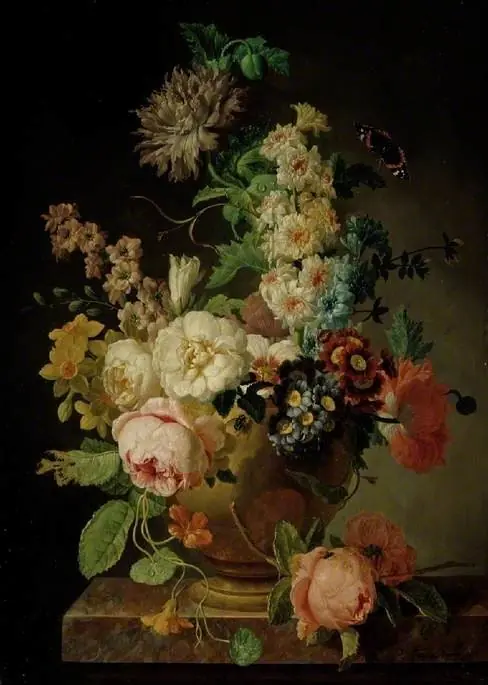
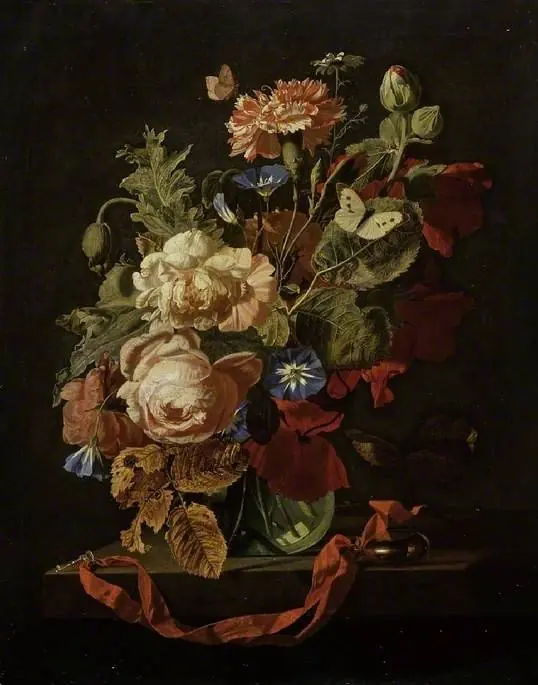
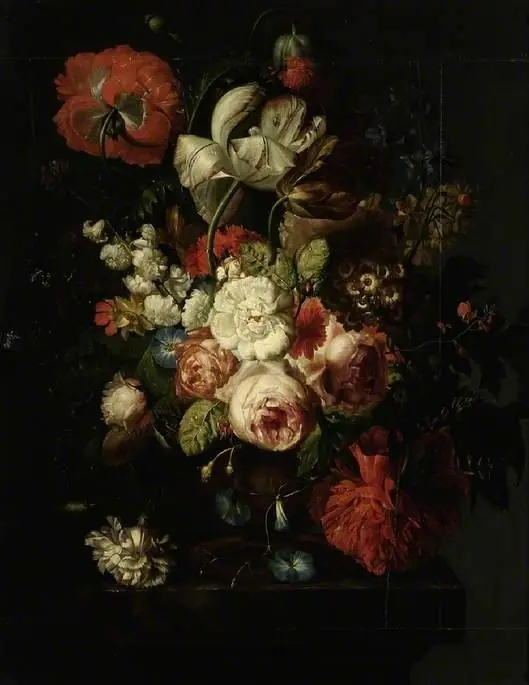
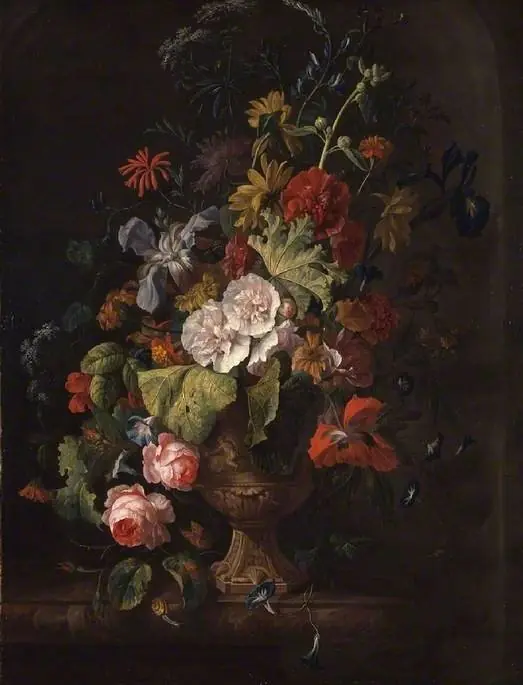
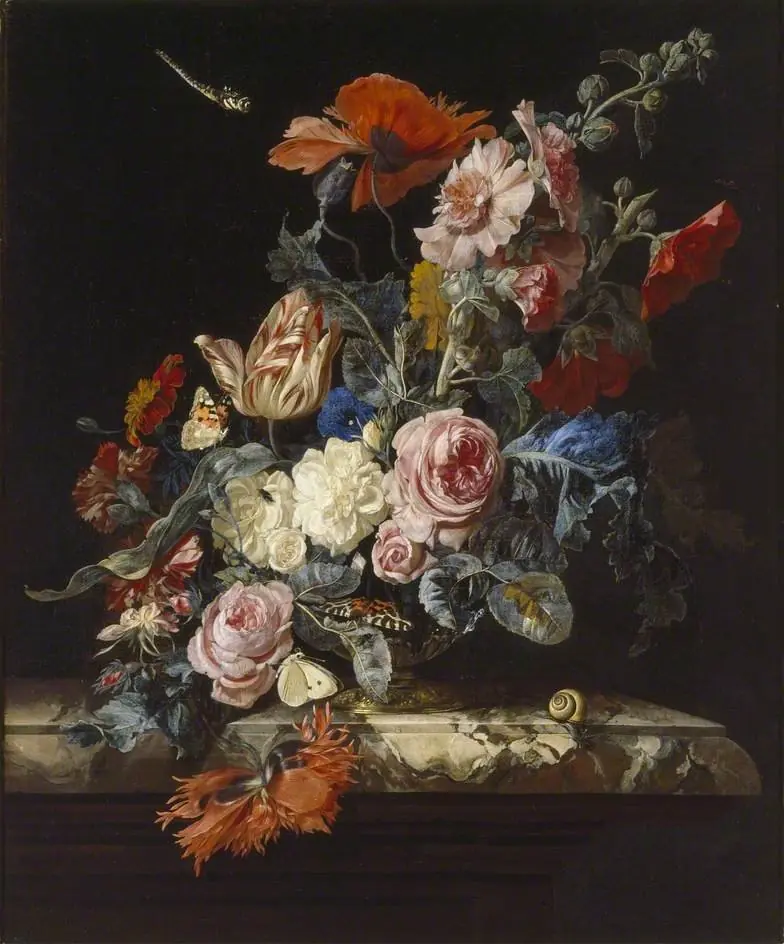
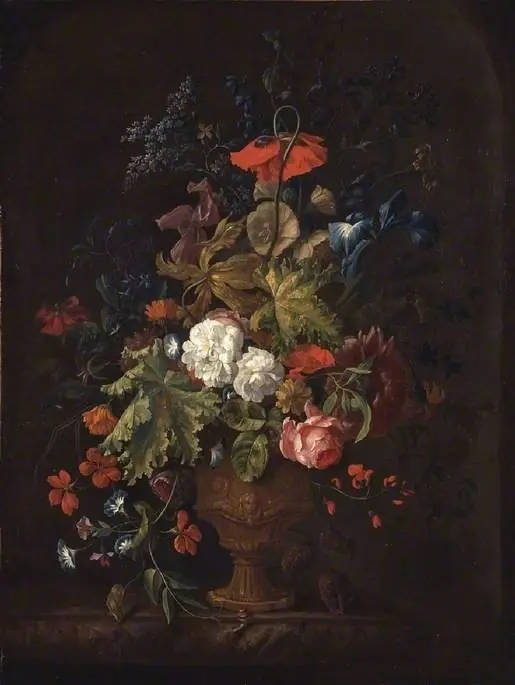
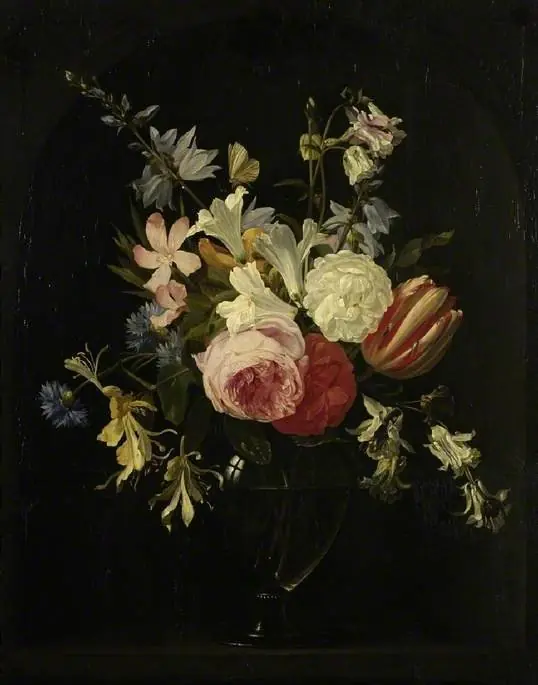
Painted around 1650, this oil-on-canvas still life by Maria van Oosterwijck presents a modest wooden shelf supporting a vase of flowers against a deep, shadowed backdrop. The composition avoids ornate decoration, focusing instead on the quiet arrangement of blooms and foliage. Van Oosterwijck’s precision in capturing botanical detail and the play of light marks this as a characteristic example of Dutch Golden Age floral painting.
Subject & Meaning
The bouquet includes white lilies, pink roses, orange tulips, and small buds, arranged with naturalistic irregularity. Each flower carries traditional symbolic weight—lilies for purity, tulips for transience—reflecting the period’s moralizing view of beauty and decay. The inclusion of wilting petals and overhanging stems subtly underscores the fleeting nature of life, a common theme in vanitas-inspired still lifes.
Technique & Style
Van Oosterwijck employed fine brushwork to render the delicate textures of petals, dewdrops, and leaves with remarkable clarity. She used chiaroscuro to heighten the three-dimensionality of the blooms, with light striking the upper surfaces while shadows deepen the recesses. The dark background isolates the flowers, intensifying their chromatic richness and directing focus to their tactile qualities.
History & Provenance
The painting entered the collection of the Fitzwilliam Museum in Cambridge, where it remains today. While its early ownership is undocumented, its style and technique align with van Oosterwijck’s known works from the 1650s, a period when she gained recognition in Amsterdam and beyond for her botanical precision and technical command of oil paint.
Context
In mid-17th-century Holland, still-life painting flourished as a genre that combined scientific observation with moral reflection. Van Oosterwijck, one of the few prominent female artists of the era, contributed to this tradition by elevating floral subjects beyond decoration. Her work resonated with collectors who valued both aesthetic beauty and symbolic depth in domestic interiors.
Legacy
Van Oosterwijck’s meticulous approach influenced later still-life painters and helped establish floral painting as a respected field within Dutch art. Her ability to convey both botanical accuracy and quiet symbolism ensured her work remained in demand during her lifetime and continues to be studied for its technical finesse and cultural resonance.
Artist & collection
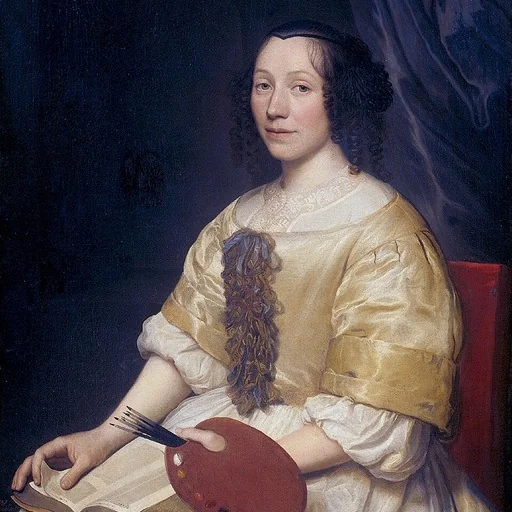
Artist
Maria van Oosterwijck (1630–1693), also spelled Oosterwyck, was a Dutch Golden Age painter, specialising in richly detailed flower paintings and other still lifes.