Artwork
Vase of flowers
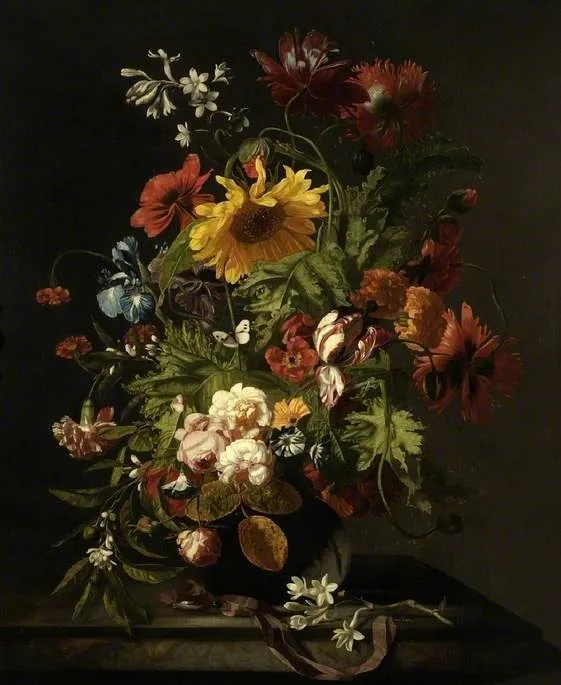
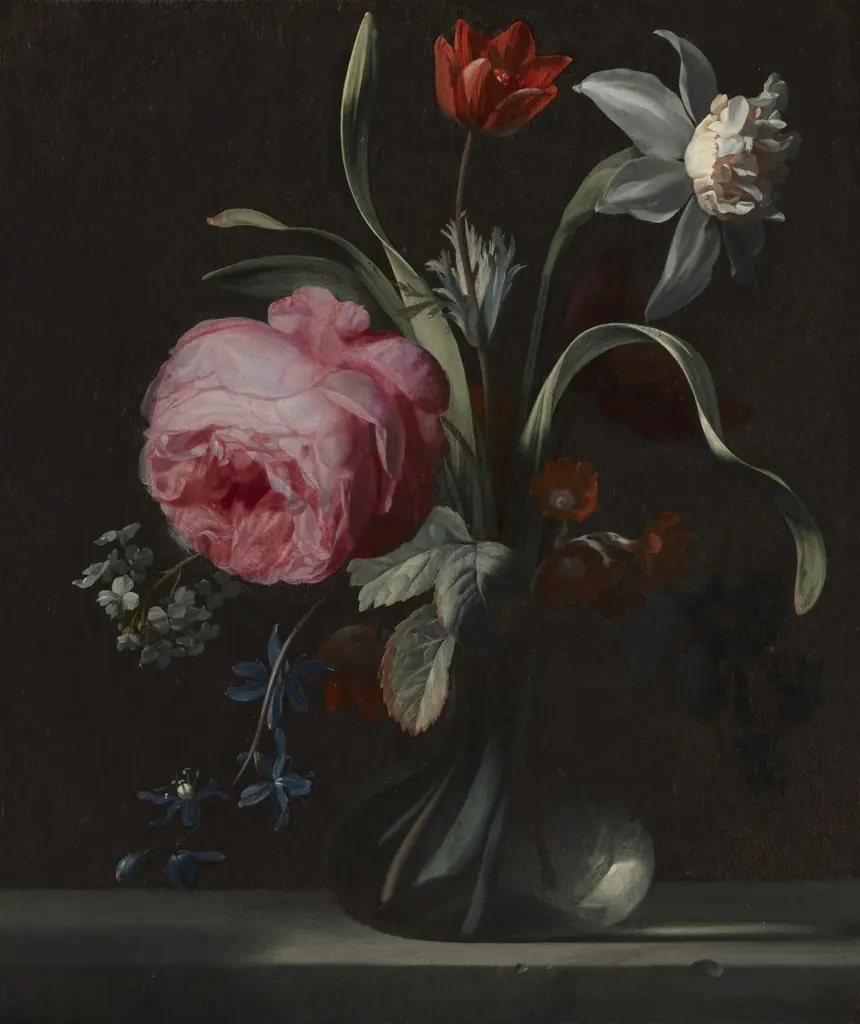
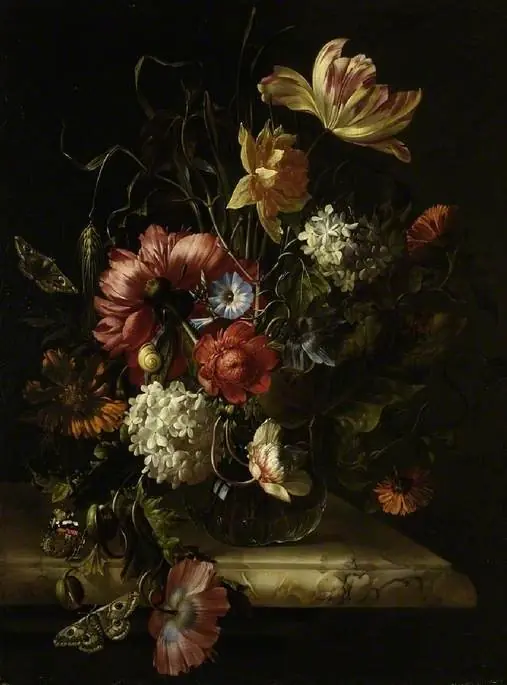
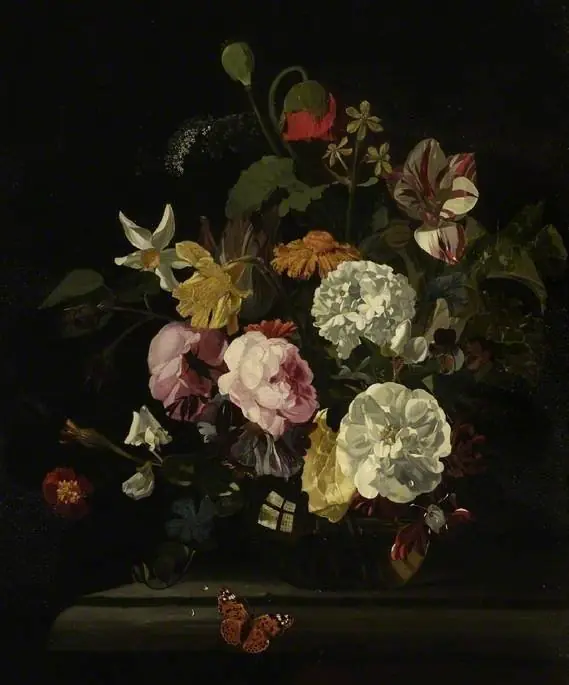
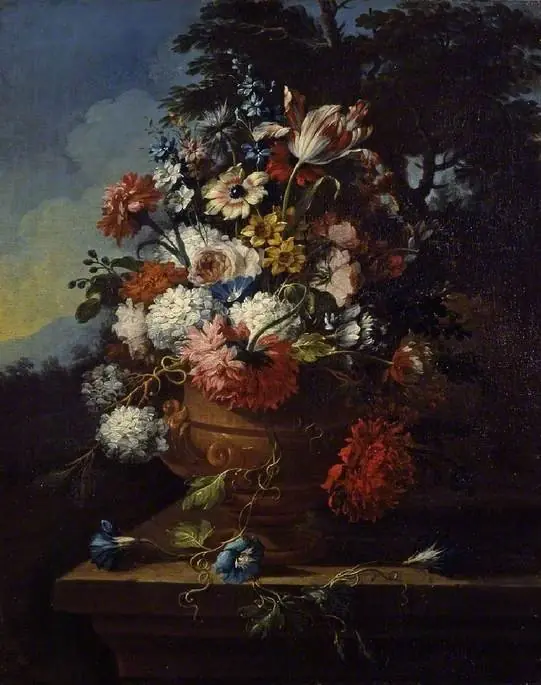
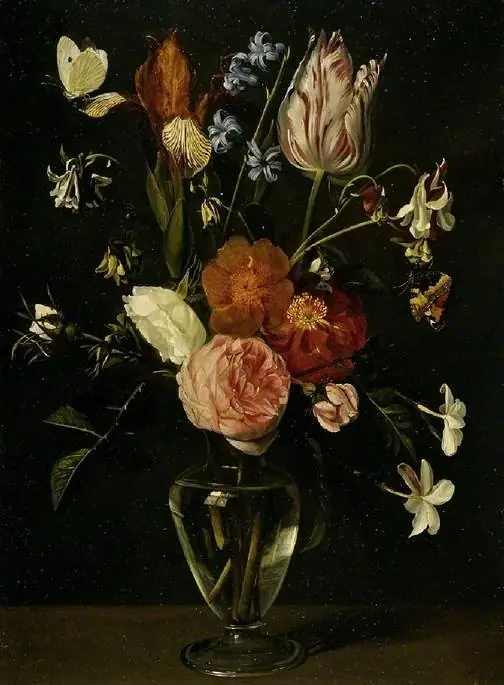
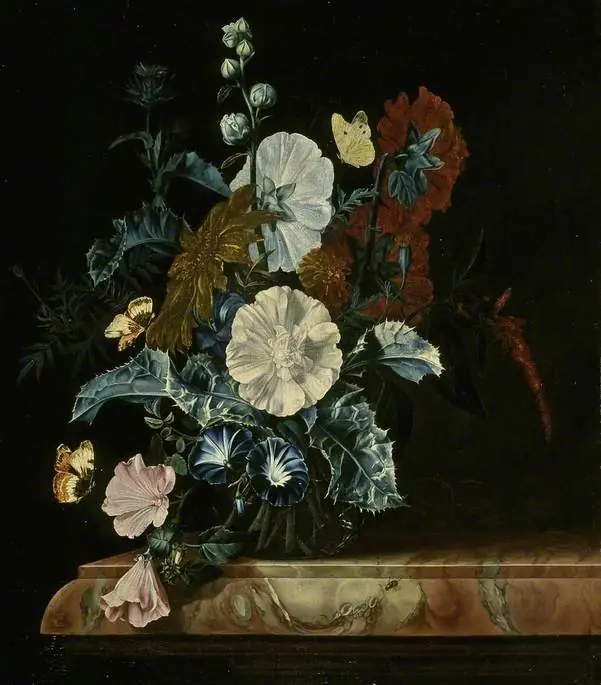
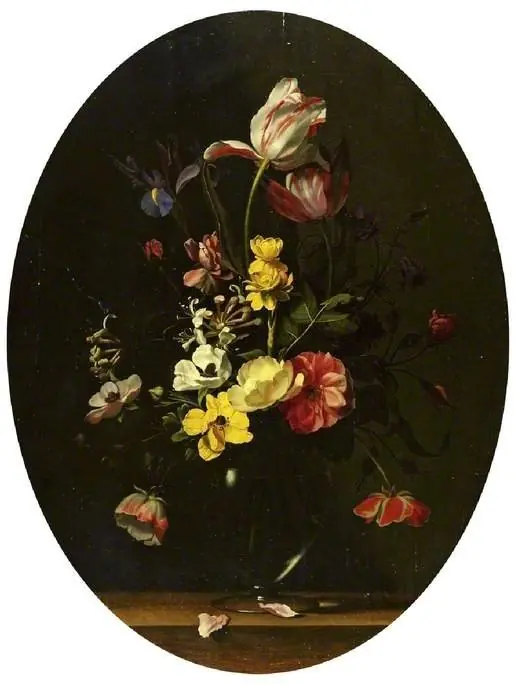
Vase of flowers is an oil painting by the Dutch Golden Age artist Simon Pietersz Verelst. It dates from 1696 and is held in the collection of the Fitzwilliam Museum.
About this work
Overview
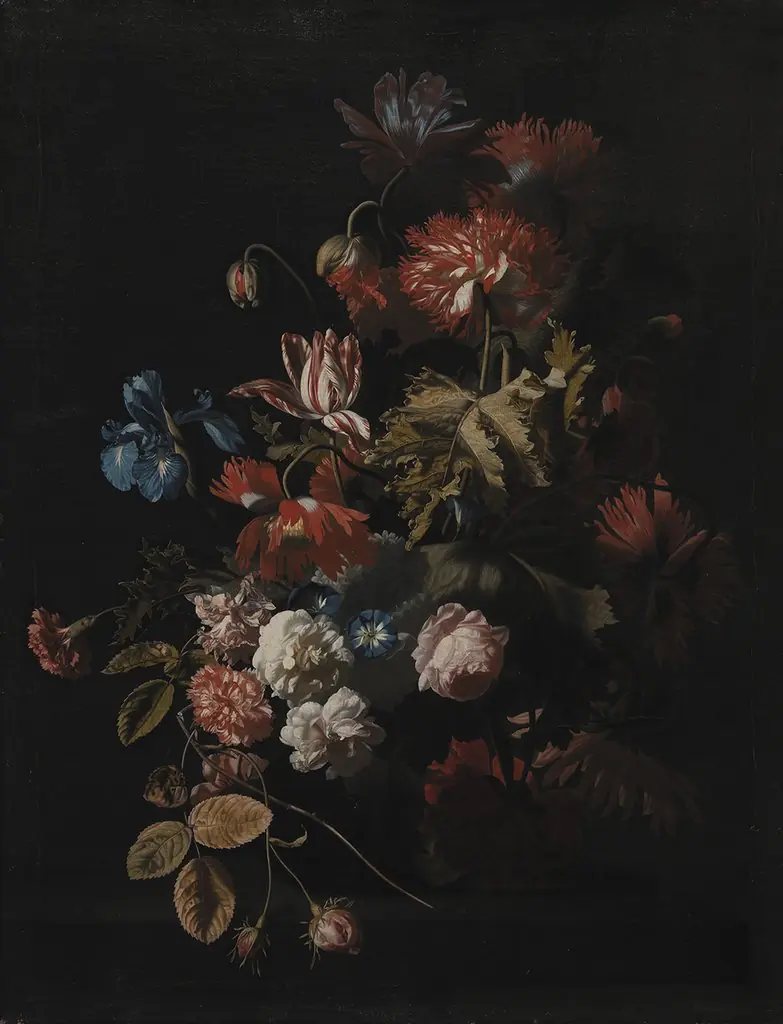
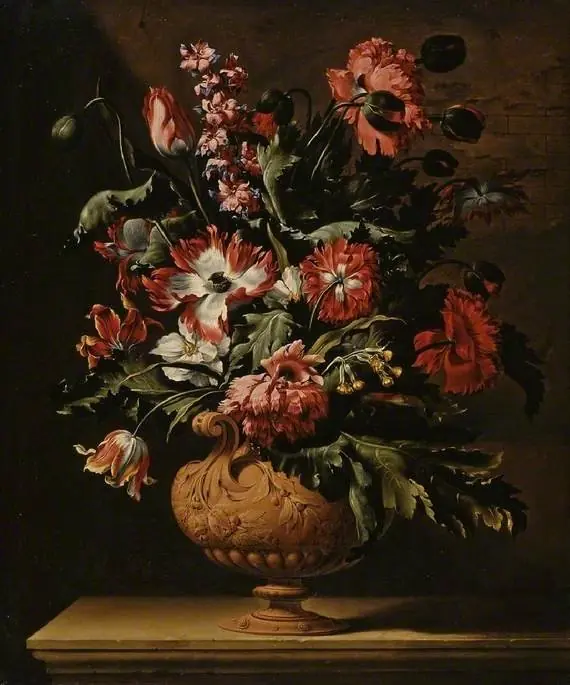
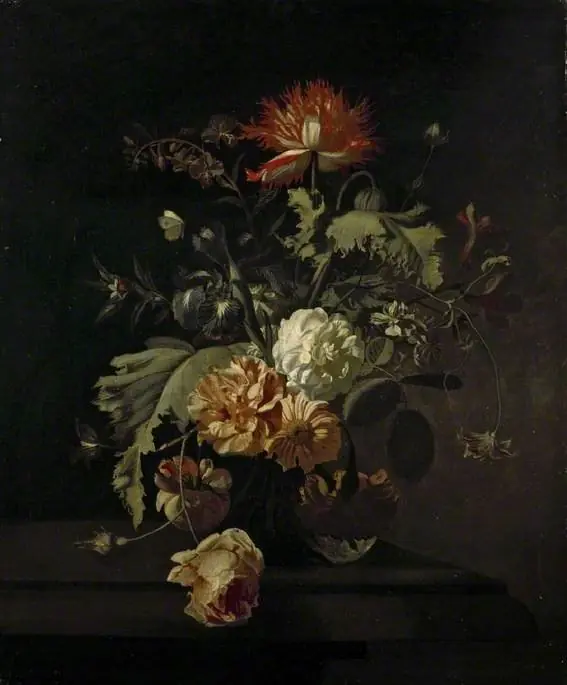
Painted in 1696 by Simon Pietersz Verelst, this oil on canvas still life presents a lush arrangement of seasonal blooms in a ceramic vase.
Painted in 1696 by Simon Pietersz Verelst, this oil on canvas still life presents a lush arrangement of seasonal blooms in a ceramic vase. Verelst, active in England and the Netherlands, was known for his careful observation of botanical forms. The work exemplifies the Dutch tradition of floral painting, where natural detail and compositional balance were valued over symbolism. It is now part of the Fitzwilliam Museum’s collection in Cambridge.
Subject & Meaning
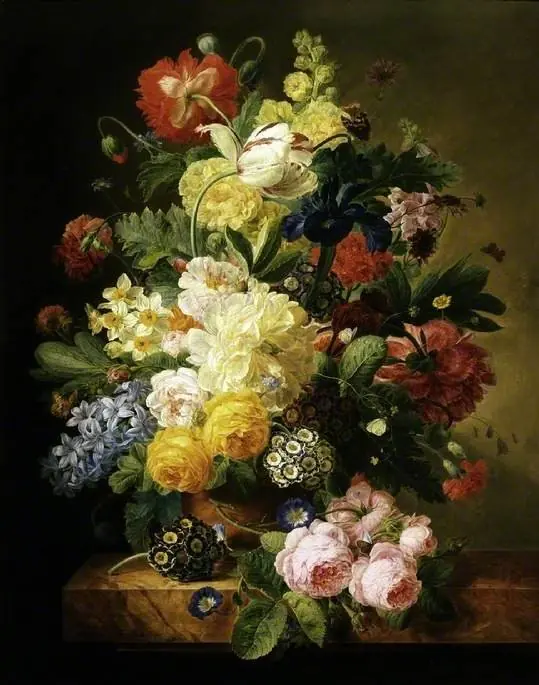
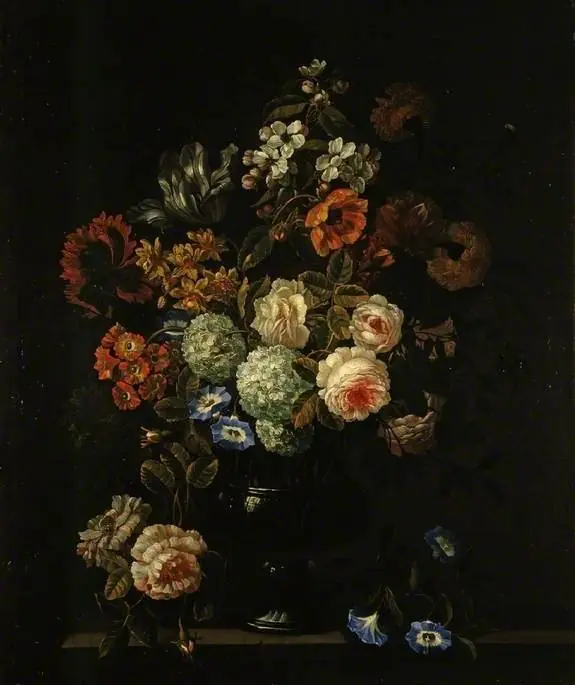
The painting features a diverse array of flowers—including sunflowers, poppies, and smaller white blossoms—arranged with naturalistic spontaneity. Some petals and leaves spill beyond the vase, suggesting transience. While not overtly allegorical, the composition reflects 17th-century Dutch fascination with the fleeting nature of beauty and the cultivated abundance of the natural world, common themes in still life of the period.
Technique & Style
Verelst employed fine brushwork to render individual petals, stems, and dewdrops with precision. A dark, unmodulated background enhances the vibrancy of the blooms, while subtle chiaroscuro models each form, lending volume and depth. The loose, asymmetrical arrangement avoids rigidity, creating a sense of organic growth. Textures vary—from the velvety poppy petals to the glossy sunflower center—demonstrating keen attention to material qualities.
History & Provenance
Created in the final years of Verelst’s career, the painting entered the Fitzwilliam Museum’s collection in the 19th century. Its provenance before that is not fully documented, though it likely passed through private English or Dutch collections. The work’s survival in good condition reflects its continued appreciation among collectors of Dutch Golden Age still lifes during the 18th and 19th centuries.
Context
In late 17th-century Holland, floral still lifes were popular among urban elites who valued horticultural innovation and scientific curiosity. Botanical accuracy was prized, often informed by emerging botanical studies. Verelst, trained in the Netherlands but working in London, bridged Dutch and English artistic traditions, contributing to a transnational style that emphasized realism and refined technique over narrative.
Legacy
Verelst’s *Vase of flowers* stands as a representative example of late Dutch still life painting, where technical mastery and quiet observation replaced earlier symbolic intensity. Though less celebrated than contemporaries like Rachel Ruysch, his work contributed to the enduring appeal of botanical realism. The painting remains a reference for studies of 17th-century floral depiction and the evolution of still life as an independent genre.
Artist & collection
Artist
Simon Pietersz Verelst (1644–c. 1710-1717) was an Anglo-Dutch painter. He is known for outstanding flower and fruit still life paintings.