Artwork
The Spirit of the Vale of Neath - Night
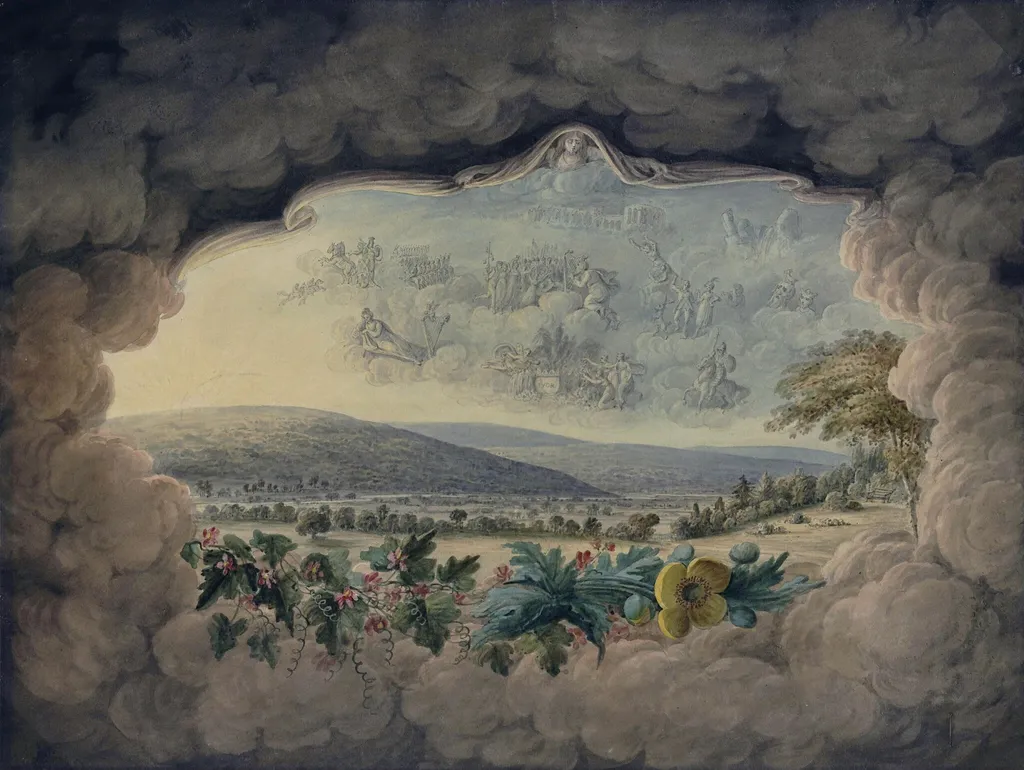
The Spirit of the Vale of Neath - Night is a watercolor work on paper by the British Romanticist artist Thomas Hornor. It dates from 1818 and is held in the collection of the Victoria and Albert Museum.
About this work
Overview
Its quiet nocturnal atmosphere reflects Hornor’s interest in natural light and topographical detail, typical of early 19th-century landscape studies.
Thomas Hornor’s 1818 watercolour, *The Spirit of the Vale of Neath - Night*, is one of two companion studies capturing the same Welsh valley under contrasting daylight conditions. Executed in pencil and watercolour, it measures 41.2 by 54.6 centimetres and was conceived as a preparatory piece for a larger panoramic project. Its quiet nocturnal atmosphere reflects Hornor’s interest in natural light and topographical detail, typical of early 19th-century landscape studies.
Subject & Meaning
The painting depicts the Vale of Neath at night, with a silvery moon illuminating a winding river, dense foliage, and distant hills. The scene conveys stillness rather than drama, emphasizing the subtle interplay of shadow and luminance. No human figures appear; the focus rests on nature’s quiet presence. The title suggests a poetic, almost spiritual connection to the land, aligning with Romantic ideals that valued nature as a source of contemplation and emotional resonance.
Technique & Style
Hornor employed delicate watercolour washes over pencil underdrawing to achieve subtle gradations of tone. Cool blues and muted greens dominate, with the moon’s glow rendered through reserved paper and faint glazes. The clouds are suggested with soft, fluid strokes, implying movement without sharp definition. The technique avoids theatrical contrast, favoring atmospheric nuance — a hallmark of topographical watercolours intended for study rather than public display.
History & Provenance
Created in 1818, the work was part of a series of studies for a planned panorama of the Vale of Neath, a project Hornor pursued with scientific and artistic precision. It remained in private hands until its sale at Christie’s in 1988, where it was offered alongside other English drawings and watercolours. Its survival as a standalone piece reflects its value as a document of early Romantic landscape practice, though it was never intended for public exhibition.
Context
Hornor’s work emerged during a period when topographical art merged with Romantic sensibilities. While panoramas were popular public spectacles, preparatory studies like this one were private tools for capturing light and form. The Vale of Neath, known for its industrial activity, was here rendered as an untouched, serene space — a deliberate counterpoint to contemporary urbanization and a reflection of Romantic retreat into nature.
Legacy
Though not widely exhibited, the painting contributes to understanding how Romantic-era artists approached landscape as both observation and meditation. Hornor’s method — precise yet evocative — influenced later watercolourists who valued atmospheric effect over narrative. Today, it stands as a quiet example of how natural scenes were studied, not just depicted, in early 19th-century Britain.
Artist & collection

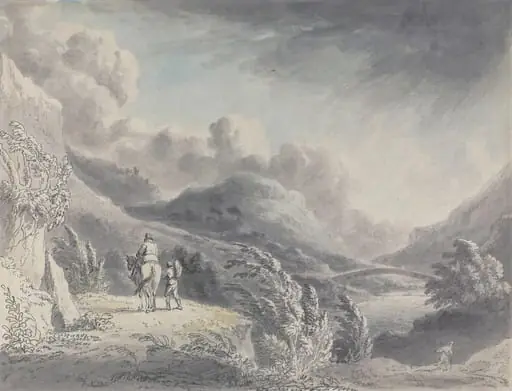 Travellers on a Road Near Pont-y-Pridd, Wales
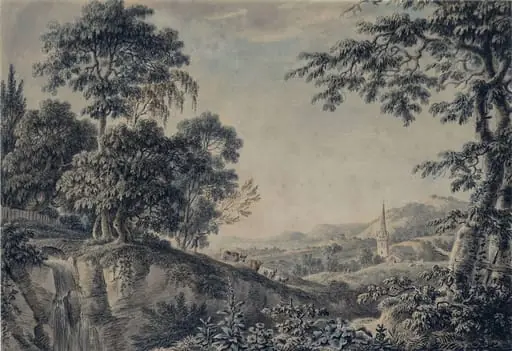 Landscape with church and cattle
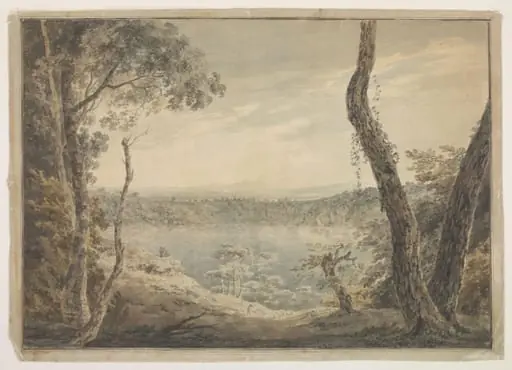 Untitled
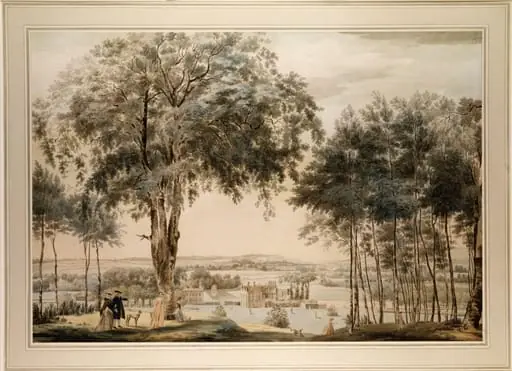 Purley Hall, Berkshire
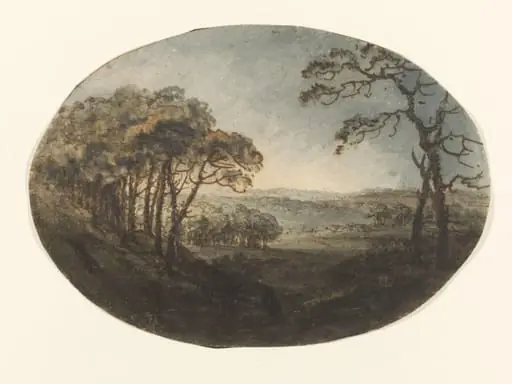 Untitled
 An Extensive River Landscape
 The Round Temple
 Extensive Landscape with Clouds
 Road through the Woods near Kresselbach
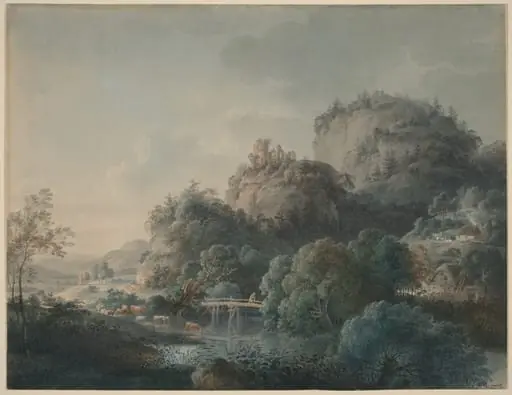 The Ruins of the Monastery of Oybin in the Zittau Mountains
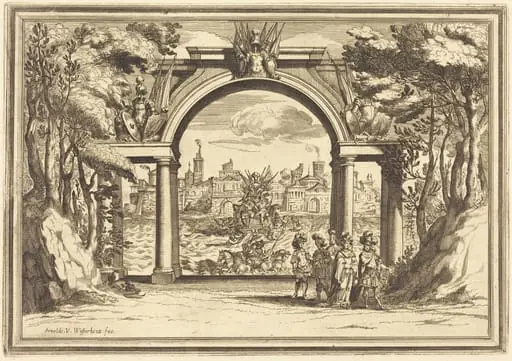 Il Greco in Troia: Plate 1
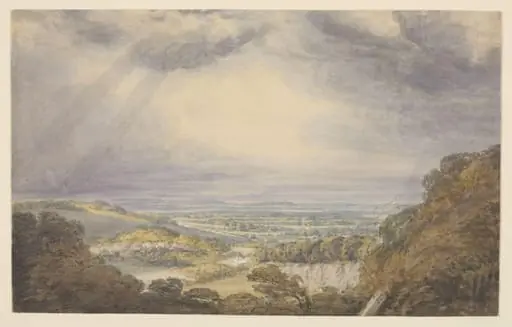 Bridgnorth