Artwork
Il Greco in Troia: Plate 1
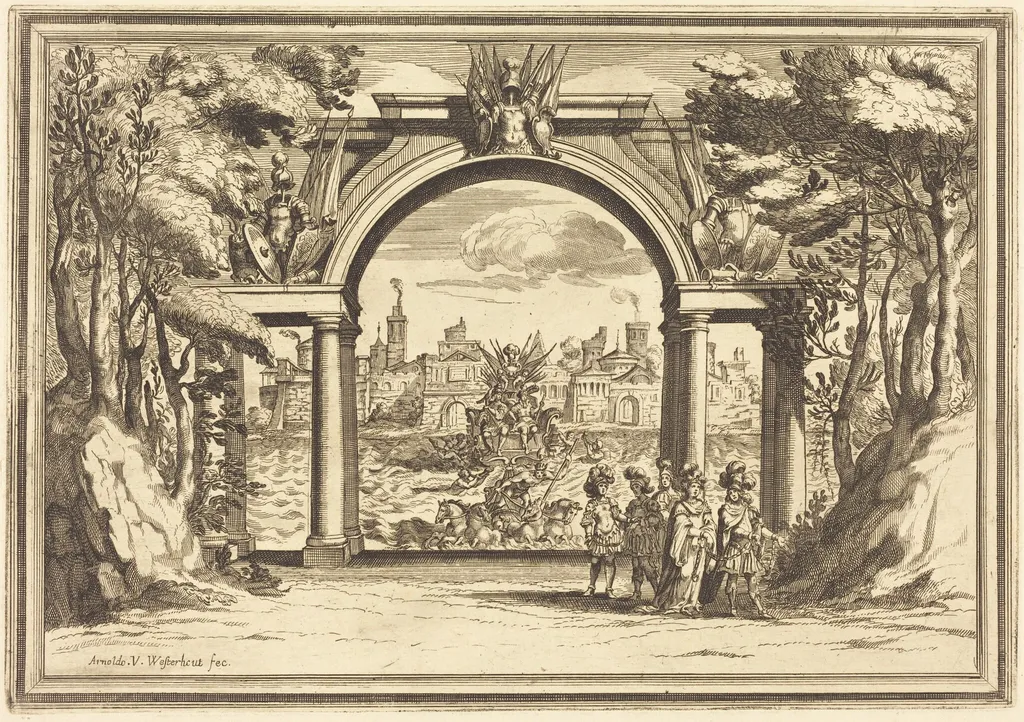
Il Greco in Troia: Plate 1 is an ink print by the Baroque artist Arnold von Westerhout. It dates from 1688 and is held in the collection of the National Gallery of Art.
About this work
Overview
Il Greco in Troia: Plate 1 is an etching and engraving on laid paper, produced in 1688 by Arnold von Westerhout.
Il Greco in Troia: Plate 1 is an etching and engraving on laid paper, produced in 1688 by Arnold von Westerhout. This print is a restrike, indicating it was pulled from the original plate after the initial edition. The work belongs to a series illustrating episodes from the Trojan War, rendered with precise line work and careful tonal modulation typical of late 17th-century Northern European printmaking.
Subject & Meaning
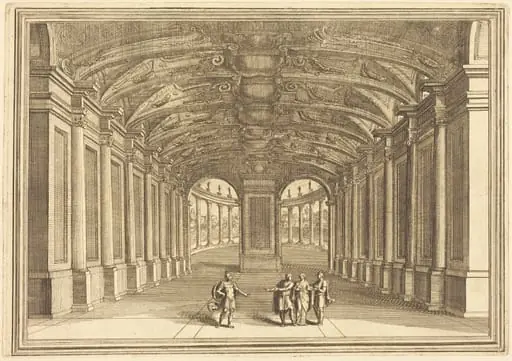
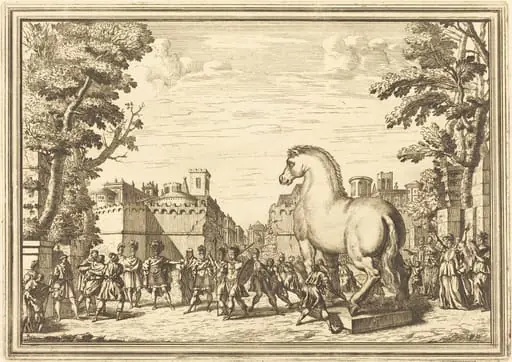
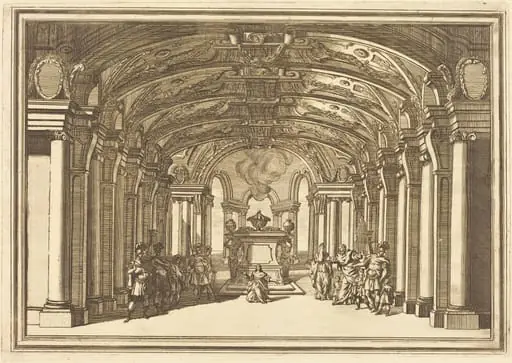
The scene depicts a moment from the Trojan War, centered on a monumental archway crowned by a winged figure, likely a personification of victory or divine presence. Below, a group of figures in classical garb gather in the foreground, their postures suggesting ritual or deliberation. The architectural setting and symbolic imagery evoke the mythic gravity of Troy’s fall, aligning with contemporary scholarly interest in classical narratives as moral or political allegories.
Technique & Style
Westerhout employed fine etched lines and engraved details to render texture and depth, particularly in the stonework of the arch and the folds of garments. Shading is achieved through cross-hatching and controlled ink density, enhancing the illusion of volume. The composition is tightly structured, with the arch serving as a visual anchor that directs attention toward the clustered figures, balancing symmetry with narrative tension.
History & Provenance
The original plate was cut in 1688, and this impression is a later restrike, likely made in the 18th century. Such restrikes were common when demand for illustrated classical themes persisted beyond the first print run. The work entered institutional collections in the 19th or early 20th century, preserved for its technical merit and as part of a broader European tradition of mythological print cycles.
Context
Westerhout’s work emerged during a period when Northern European artists revived classical subjects through printmaking, often commissioned by collectors or used in academic settings. The emphasis on architectural grandeur and mythological narrative reflects the influence of Italian Renaissance and Baroque models, filtered through Dutch and Flemish engraving traditions that prized precision and historical authenticity.
Legacy
Though not widely known today, Westerhout’s plates contributed to the dissemination of classical themes in early modern visual culture. His technique influenced later printmakers working in historical and allegorical genres. Surviving impressions like this one remain valuable for understanding how mythological narratives were visually codified and circulated among educated audiences in the late 17th and early 18th centuries.
Artist & collection


 The Pharisees Complain to Our Lord
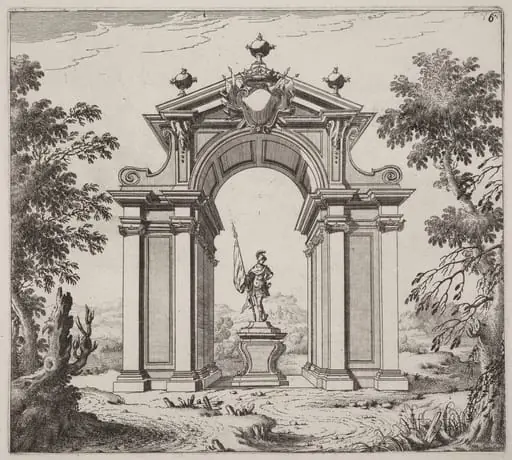 Triumphal Arch in a Landscape
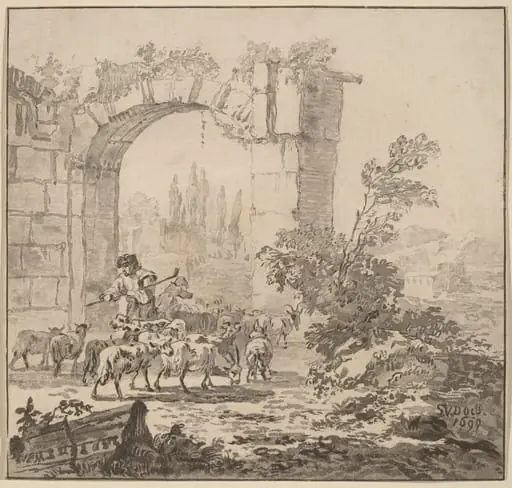 Flock of Goats
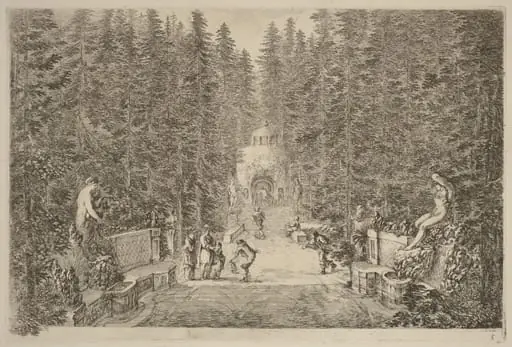 The Water Spray
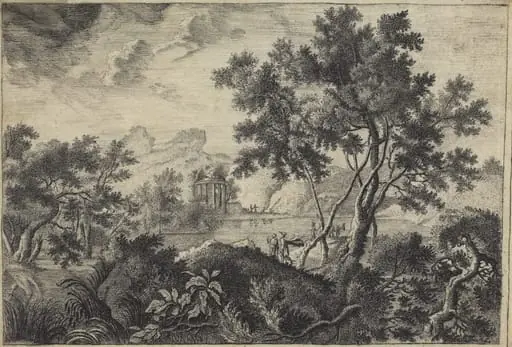 Classical Landscape with a Tempietto
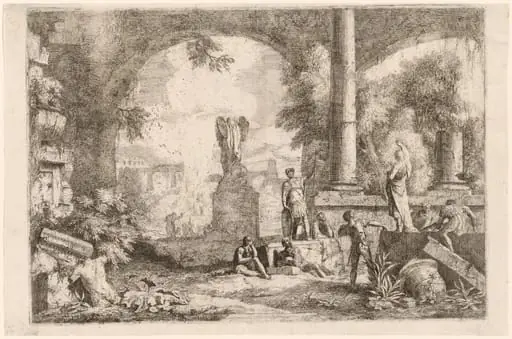 Capriccio of Antique Ruins with Men Gazing at a Classical Orator
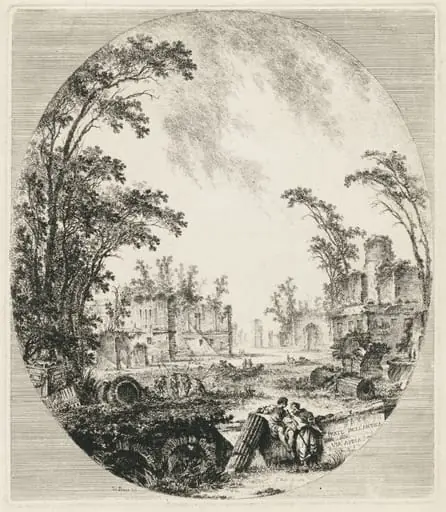 Parte dell'antica via Appia (Section of the Old Appian Way)
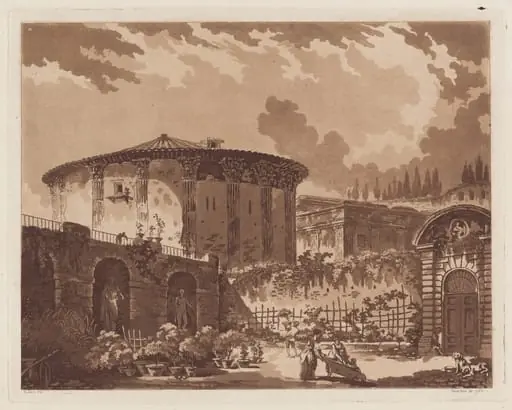 View in the Garden of a Roman Villa, with the Temple of Hercules Victor and the Temple of Portunus
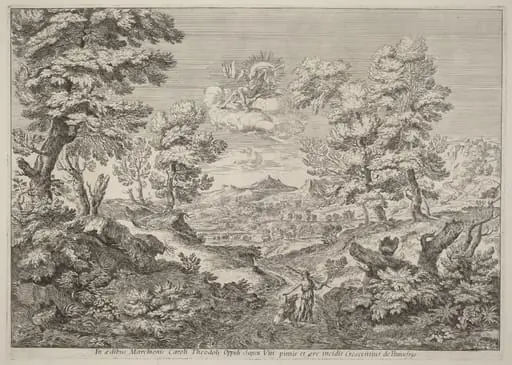 Apollo and a Nymph Leading a Lion
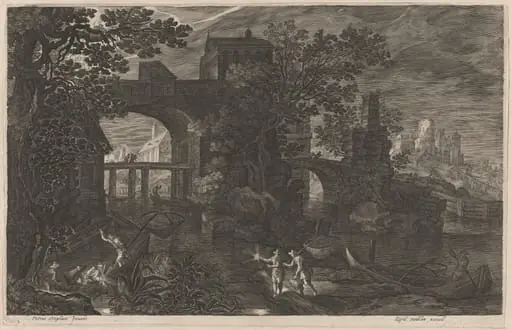 Night Fishing near Fortified Bridges
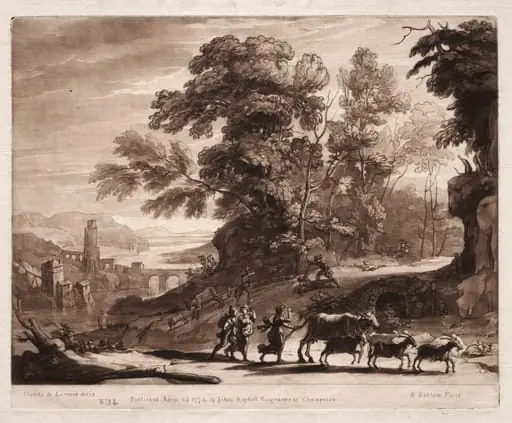 Liber Veritatis: No. 34, Peasants with Cattle attacked by Bandits