Artwork
The Ruins of the Monastery of Oybin in the Zittau Mountains
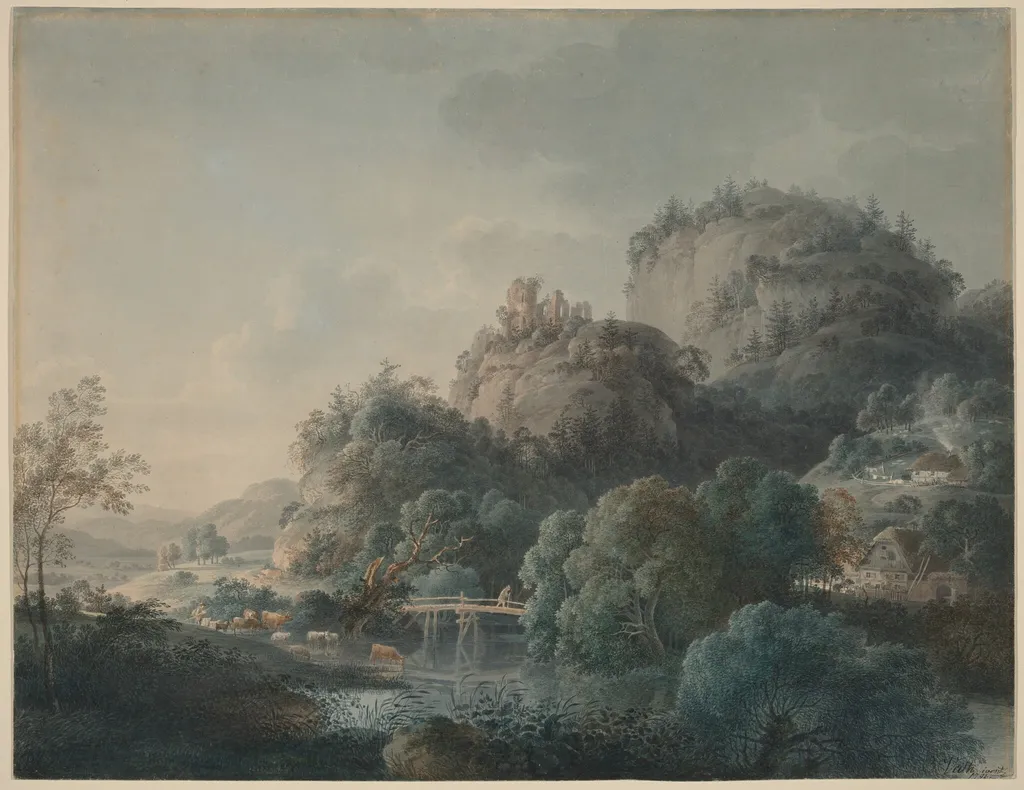
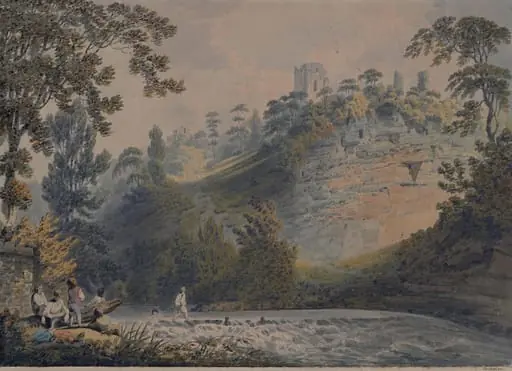
The Ruins of the Monastery of Oybin in the Zittau Mountains is an ink drawing by the Romanticist artist Philipp Veith. It dates from 1792 and is held in the collection of the National Gallery of Art.
About this work
Overview
Philipp Veith’s 1792 drawing portrays the ruined monastery atop a rocky hill in the Zittau Mountains. Executed on wove paper, the work combines watercolor, gouache, pen, and black ink over a graphite underdrawing, presenting a tranquil landscape that balances natural and architectural elements.
Subject & Meaning
The composition centers on a modest stream bisecting the scene, its banks lined with trees and shrubs. A narrow bridge arches over the water, guiding the eye toward the distant ruins, which suggest the passage of time and the quiet endurance of history within a serene natural setting.
Technique & Style
Veith employs a layered approach: a graphite sketch establishes form, while watercolor and gouache provide muted, atmospheric washes. Pen and black ink delineate details such as the bridge and foliage, creating a delicate contrast that enhances the work’s soft, dreamlike quality characteristic of late‑18th‑century Romantic landscape drawing.
History & Provenance
Created in 1792, the drawing reflects the period’s growing interest in picturesque ruins and the German Romantic fascination with sublime scenery. Its provenance traces back to private collections before entering the museum’s holdings, where it remains a representative example of Veith’s topographical studies of the Saxon border region.
Own this work as a print
Artist & collection


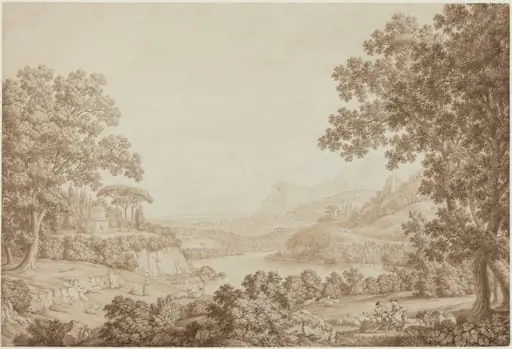 Arcadian Landscape with a Mausoleum
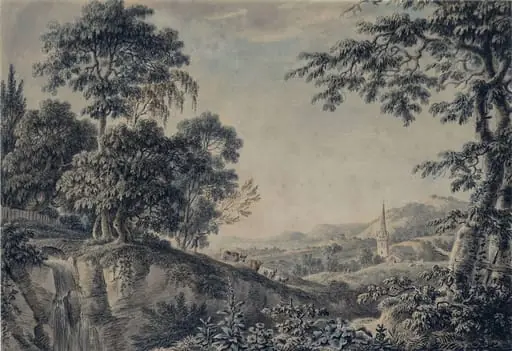 Landscape with church and cattle
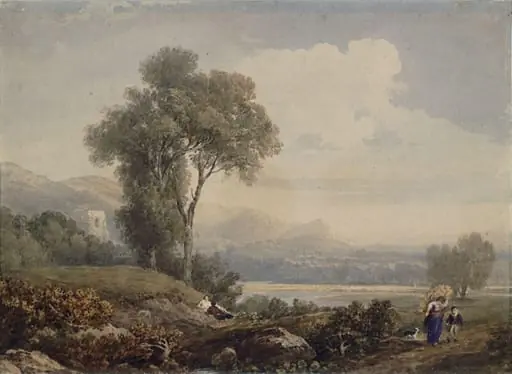 Landscape
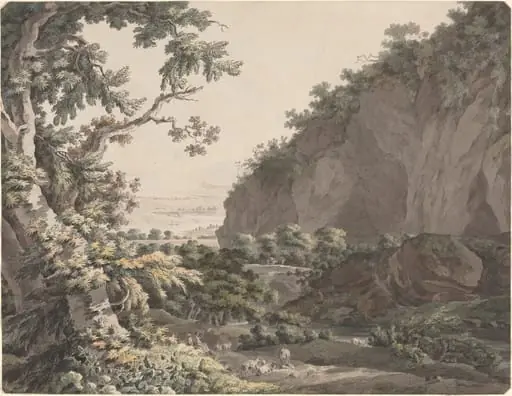 A Wooded Valley with Rocky Cliffs
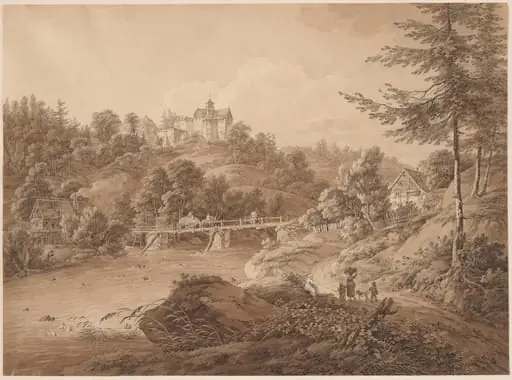 Rauenstein Castle Seen from the River's Edge
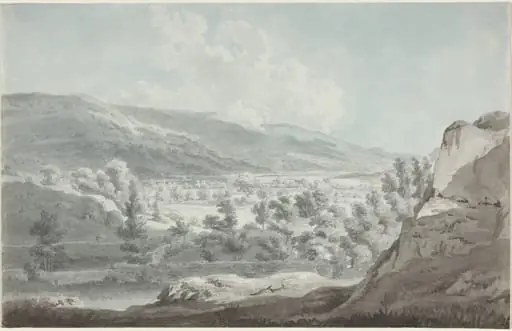 The Head of Ullswater
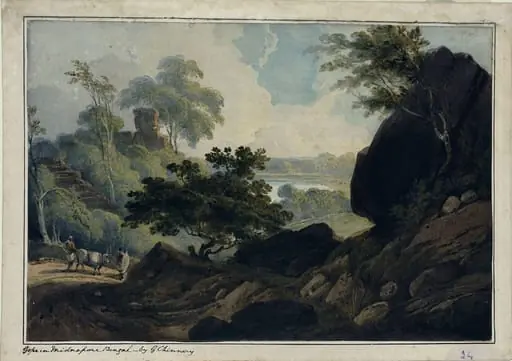 Near Midnapore, Bengal
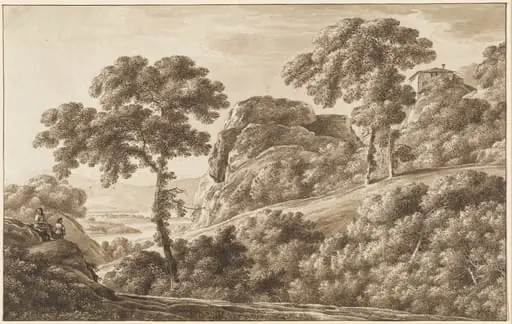 The Isar with Boulders on the Isarhohe
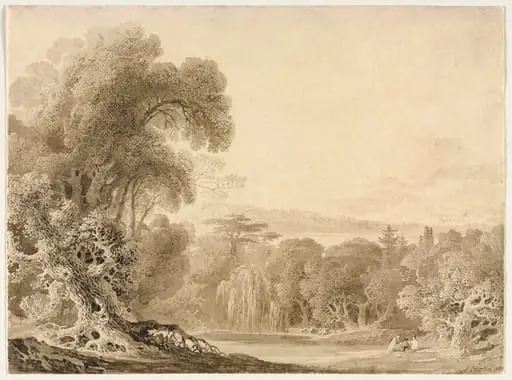 Figures Seated by a Lake in a Wooded Landscape
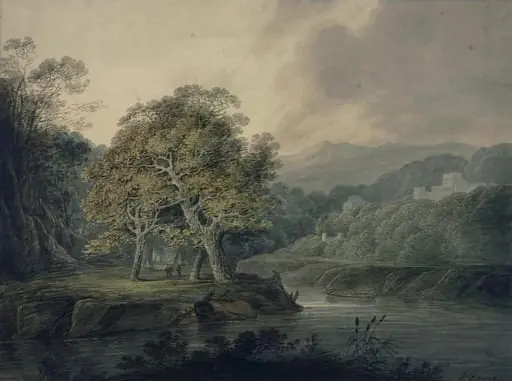 Landscape with river and mountains
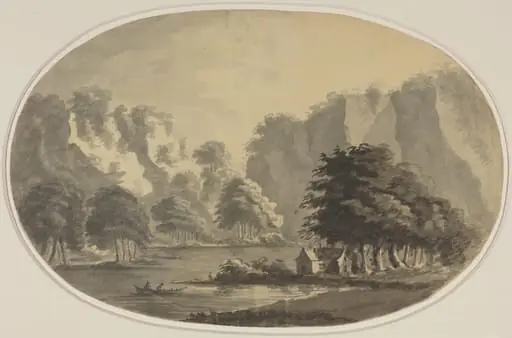 View of Ullswater
 River Scene