Artwork
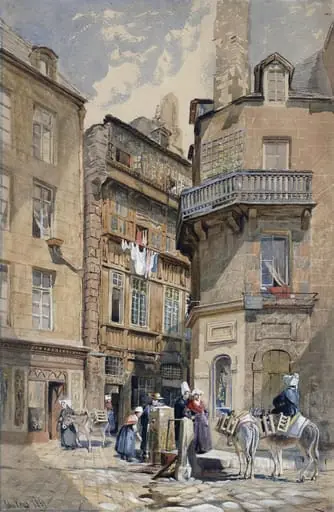
The High Street in Edinburgh, showing John Knox's house
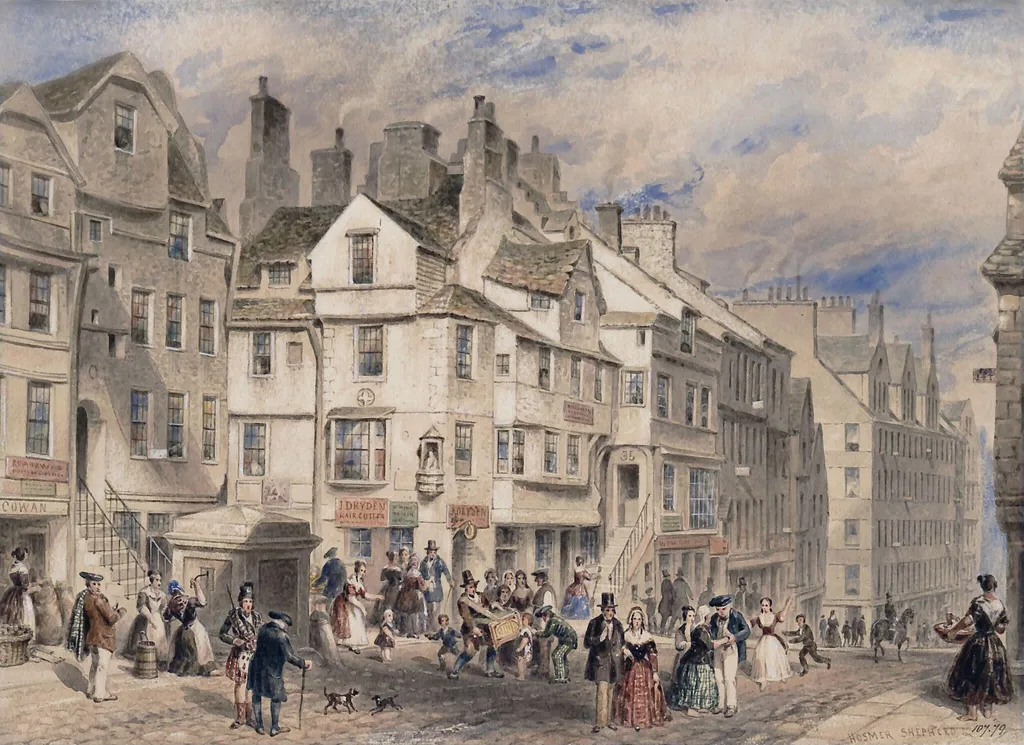
The High Street in Edinburgh, showing John Knox's house is a watercolor work on paper by the British Romanticist artist Thomas Shepherd. It dates from 1817 and is held in the collection of the Victoria and Albert Museum.
About this work
Overview
Signed by the hand of the painter, the work serves as a quiet record of the city’s commercial and social fabric during a period of transition.
This watercolour captures a bustling stretch of Edinburgh’s High Street in the early 19th century, centered on the building traditionally associated with John Knox. The artist rendered the scene with delicate brushwork, emphasizing architectural detail and the rhythms of urban life. Signed by the hand of the painter, the work serves as a quiet record of the city’s commercial and social fabric during a period of transition.
Subject & Meaning
The painting presents a slice of ordinary urban existence rather than a grand historical moment. Shops with hand-painted signs—hairdresser, cobbler—hint at the street’s economic activity, while figures in period attire move through the space with unremarkable purpose. The inclusion of Knox’s house anchors the scene in local identity, but the focus remains on the lived experience of the street, not its religious or political associations.
Technique & Style
Executed in transparent watercolour, the work relies on subtle washes to suggest texture and atmosphere. Light filters unevenly across stone facades and cobblestones, creating soft contrasts that lend the scene a quiet luminosity. Details like umbrellas, bags, and window displays are rendered with precision but without theatricality, reflecting a preference for observed reality over idealized composition.
History & Provenance
The painting’s origin is tied to Edinburgh’s artistic circles of the 1820s–1840s, a time when local topographical views gained popularity among residents and visitors. Though its early ownership is unrecorded, its survival suggests it was valued as a personal memento or civic document. The signature confirms the artist’s intent to authenticate the scene, aligning with contemporary practices among amateur and professional watercolourists.
Context
During the Romantic era, artists increasingly turned from grand narratives to intimate depictions of daily life. This work aligns with that shift, capturing Edinburgh’s urban pulse without romanticizing it. The city’s growth and rising middle class fueled demand for such images, which served both as records and as affirmations of local pride amid rapid social change.
Legacy
Though not widely exhibited or reproduced, the painting contributes to a broader archive of Scottish urban observation. It preserves details of architecture, dress, and commerce that might otherwise have been lost, offering later viewers a tangible connection to the rhythms of 19th-century Edinburgh. Its quiet realism continues to inform historical understanding of the city’s street life.
Artist & collection
Artist
Thomas Shepherd painted quiet, detailed street scenes in watercolor, mostly of early-19th-century Edinburgh.

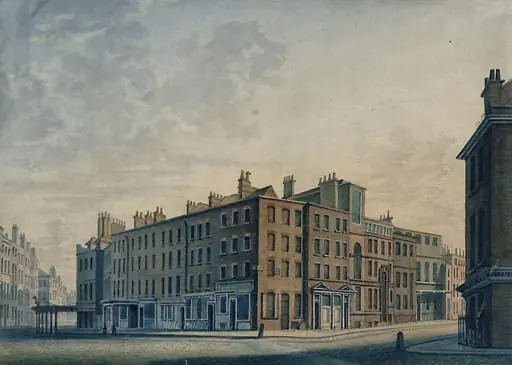 Bow Street
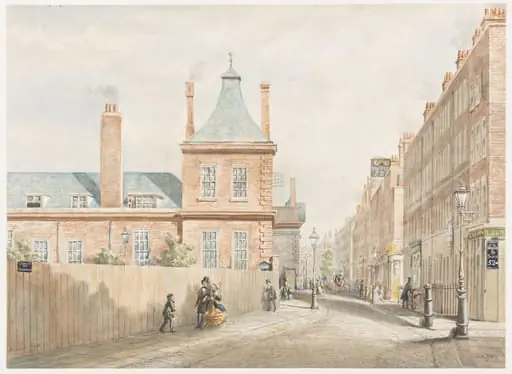 West View of Old Montague House
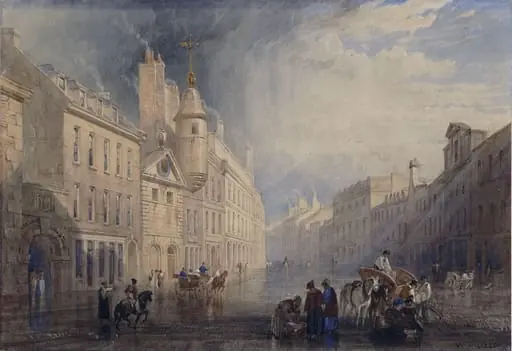 Broad Street, Aberdeen
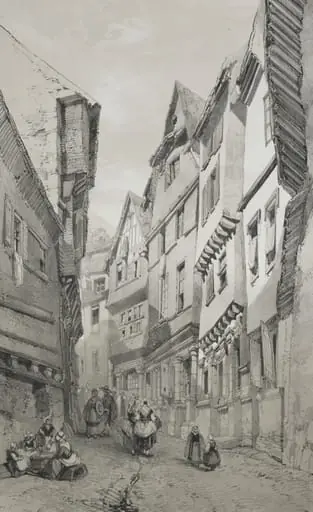 Voyages pittoresques et romantiques dans l'ancienne France. Bretagne: Morlaix
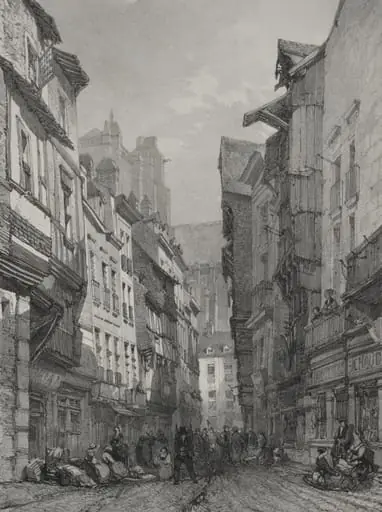 Voyages pittoresques et romantiques dans l'ancienne France. Bretagne: Grande rue vieille à Nantes
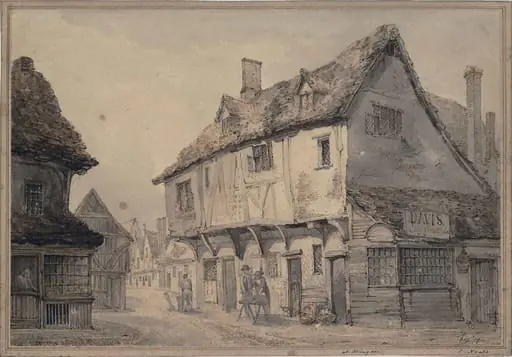 Old Houses at Abingdon, Berkshire
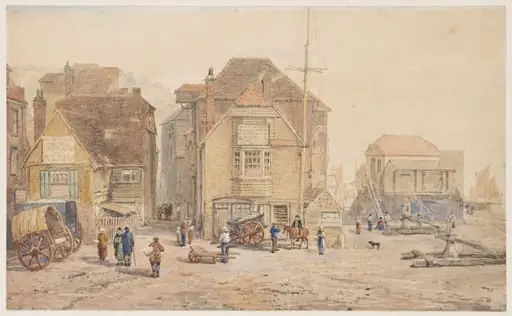 The old fishmarket at Hastings
 Street Scene, St Malo