Artwork
Village Choir
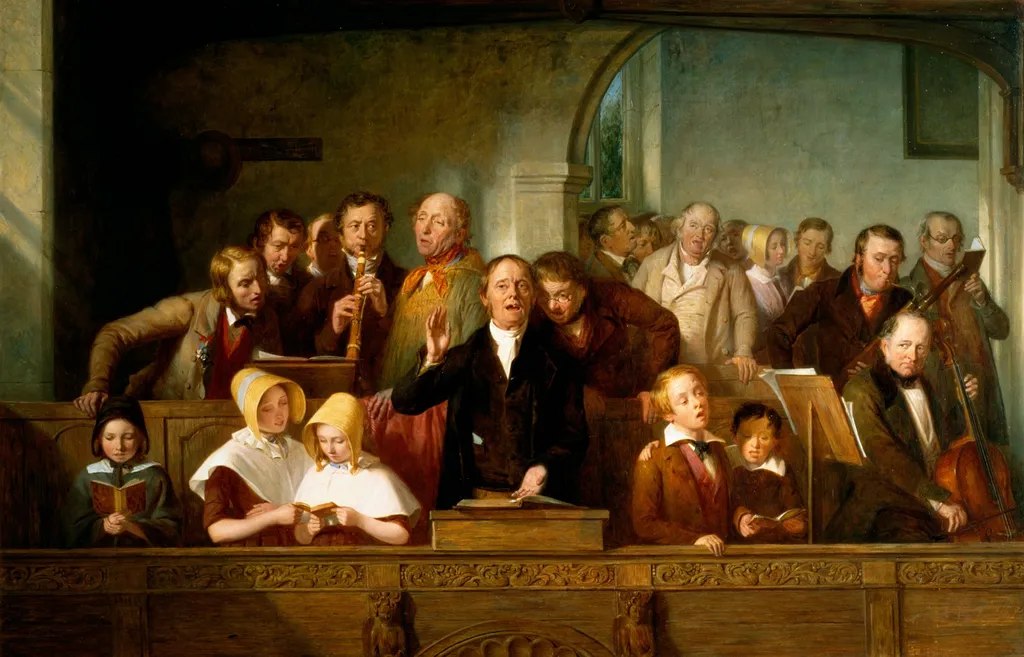
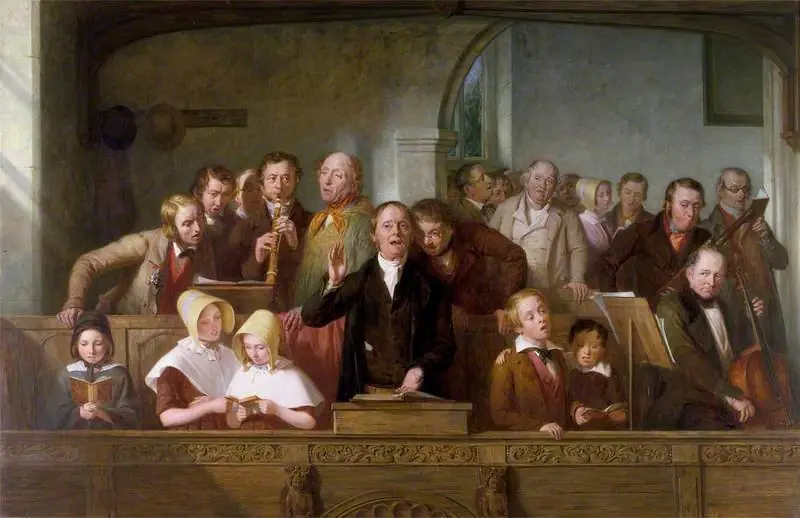
Village Choir is an oil painting by the Realist artist Thomas Webster. It dates from 1847 and is held in the collection of the Victoria and Albert Museum.
About this work
Overview
Executed in the Realist tradition, the work avoids idealization, instead focusing on ordinary people engaged in a familiar ritual.
Thomas Webster’s 1847 oil painting *Village Choir* presents a quiet moment of communal music-making in a rural English church. Executed in the Realist tradition, the work avoids idealization, instead focusing on ordinary people engaged in a familiar ritual. Webster, a British artist associated with the Cranbrook colony in Kent, frequently depicted domestic and village scenes with careful attention to detail and social nuance.
Subject & Meaning
The painting shows a group of villagers singing together in a modest church interior, led by a man at a podium. Their varied clothing suggests different social standings, yet their shared activity unites them. The scene conveys dignity in everyday ritual, emphasizing collective participation over individual expression. The absence of grandeur or spectacle underscores the value placed on local, unpretentious traditions.
Technique & Style
Webster employed fine brushwork to render textures of fabric, wood, and skin with quiet precision. Light enters through a single window, casting soft shadows that define the space without dramatic contrast. Figures are arranged in a loose arc, guiding the viewer’s eye toward the choir leader. The palette is muted but warm, reinforcing the intimacy of the setting and the sincerity of the moment.
History & Provenance
Painted in 1847, *Village Choir* emerged during a period when British genre painting gained popularity among middle-class collectors. Webster, a regular exhibitor at the Royal Academy, often drew inspiration from his time in Cranbrook, where he observed rural life firsthand. The painting’s early reception reflected contemporary interest in moral and social themes rendered through domestic scenes.
Context
In mid-19th century England, the rise of nonconformist chapels and village choirs reflected broader cultural shifts toward community-based religious practice. Webster’s work aligns with a growing artistic interest in documenting rural life amid industrialization. Unlike romanticized depictions of the countryside, his scenes present unvarnished, authentic moments of daily existence.
Legacy
Though less widely known today than some of his contemporaries, Webster’s focus on unadorned community life influenced later genre painters who sought to capture ordinary English life with empathy. *Village Choir* remains a quiet testament to the cultural significance of local music-making and the dignity of collective ritual in pre-industrial communities.
Own this work as a print
Artist & collection
Artist
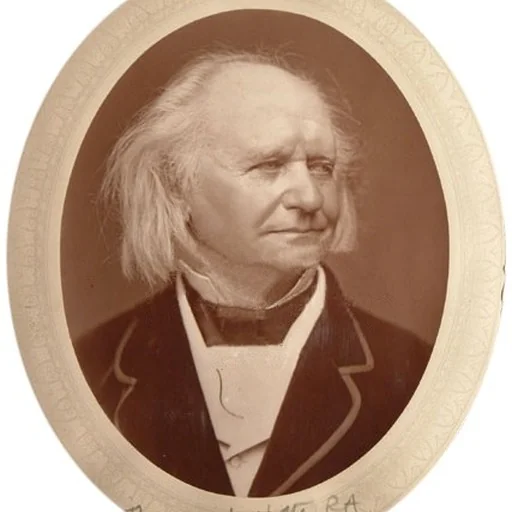
Thomas Webster (10 March 1800 – 23 September 1886), was a British painter of genre scenes of school and village life, many of which became popular through prints. He lived for many years at the artists' colony at Cranbrook in Kent.

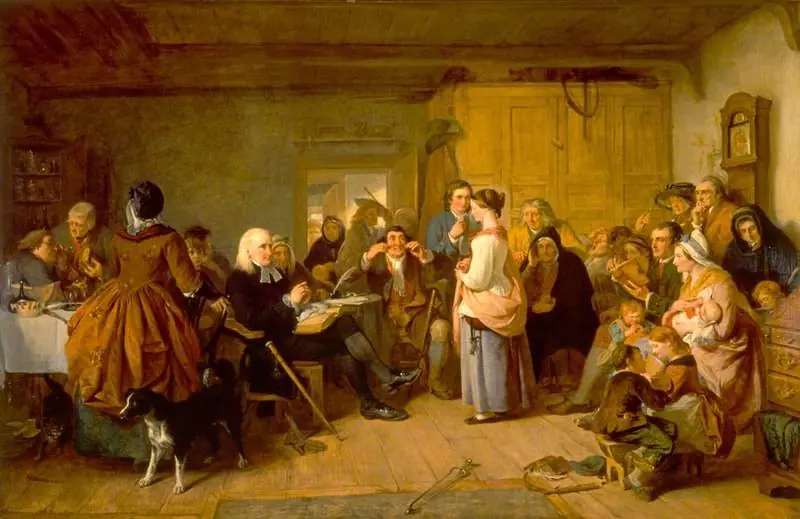 Presbyterian Catechising
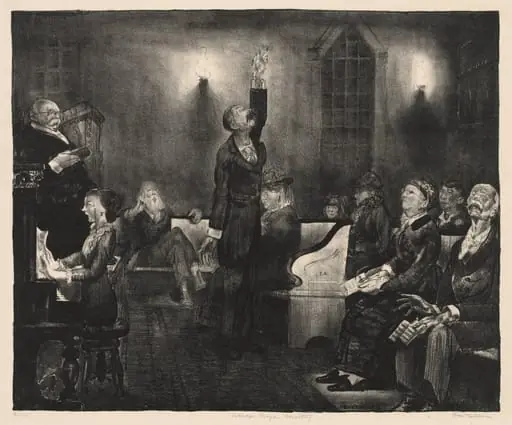 Prayer Meeting, Second Stone
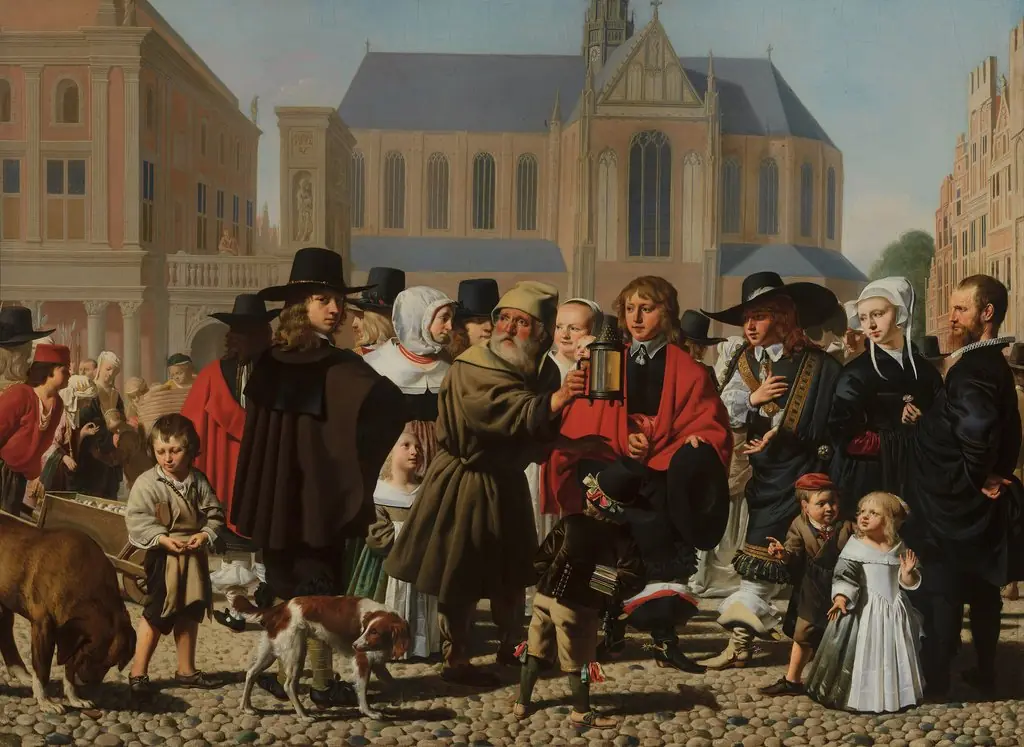 Allegorical portrait of the Steyn family as scene of Diogenes
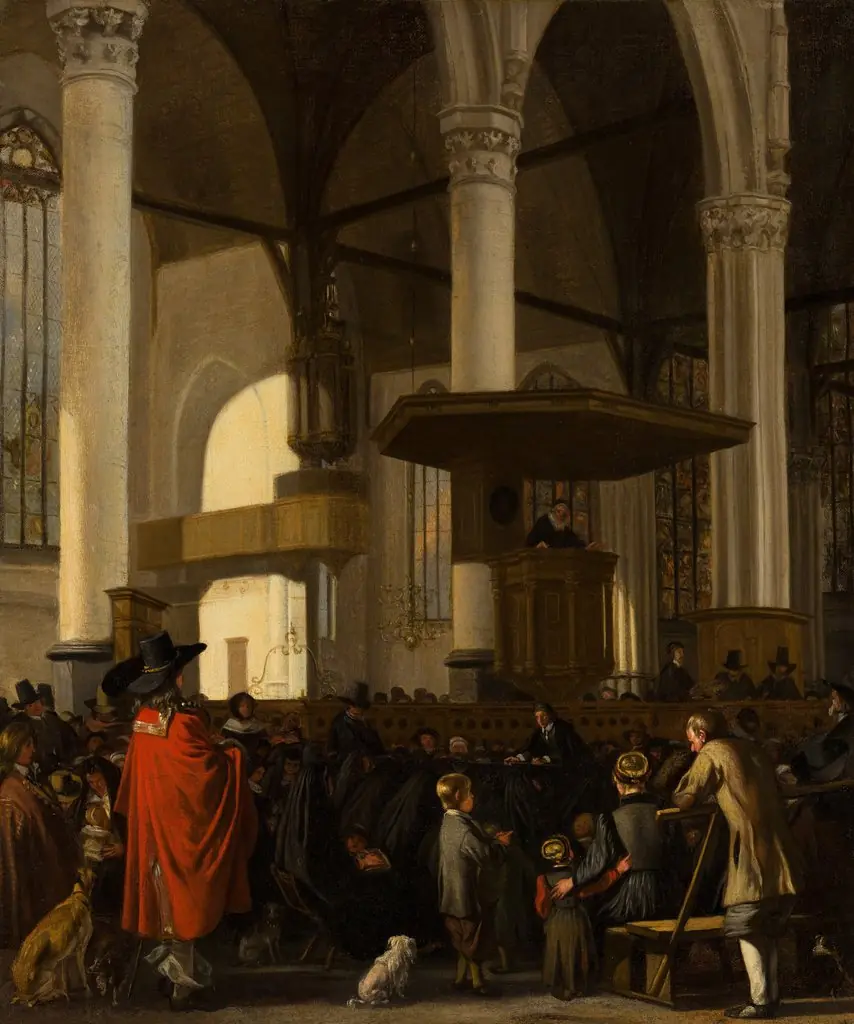 The Oude Kerk in Amsterdam during a Service
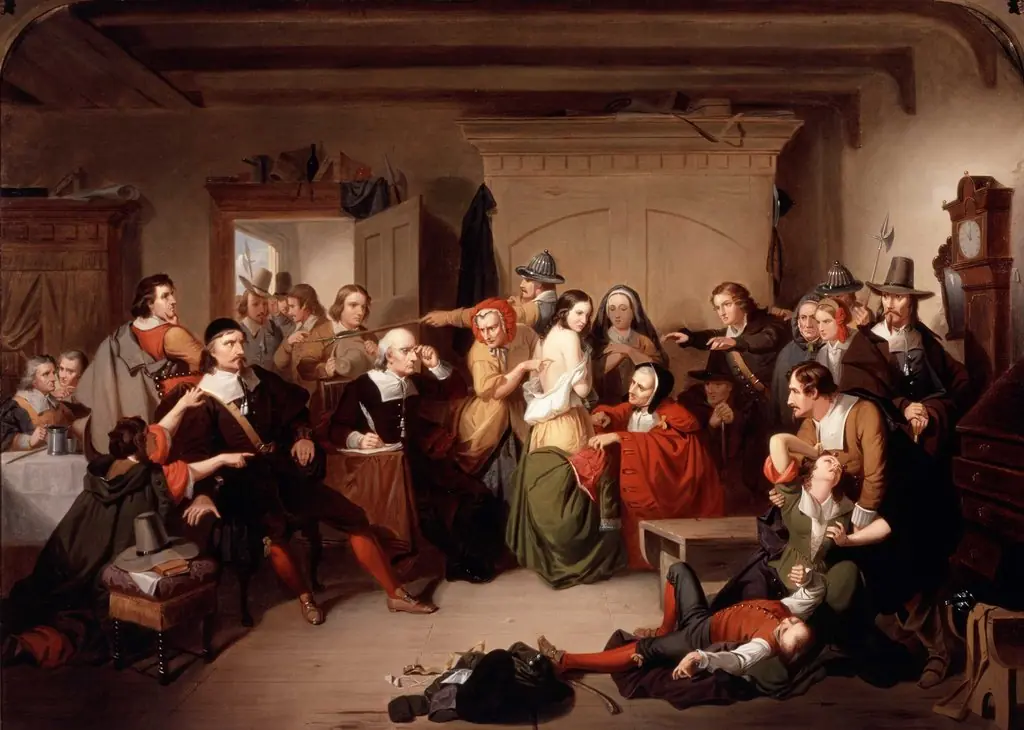 The Examination of a Witch
 Henry, Susanne: Sonntäglicher Vortrag
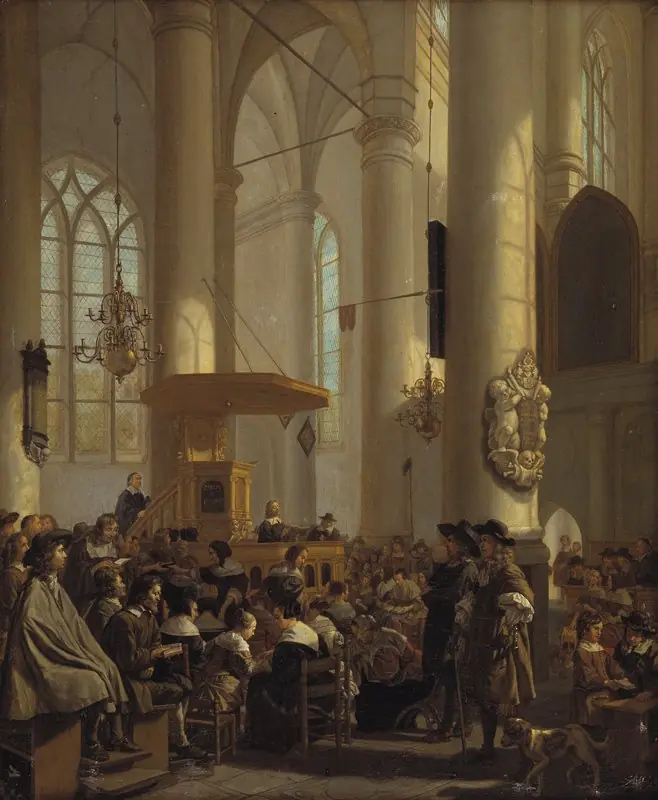 Interior of a Dutch Church
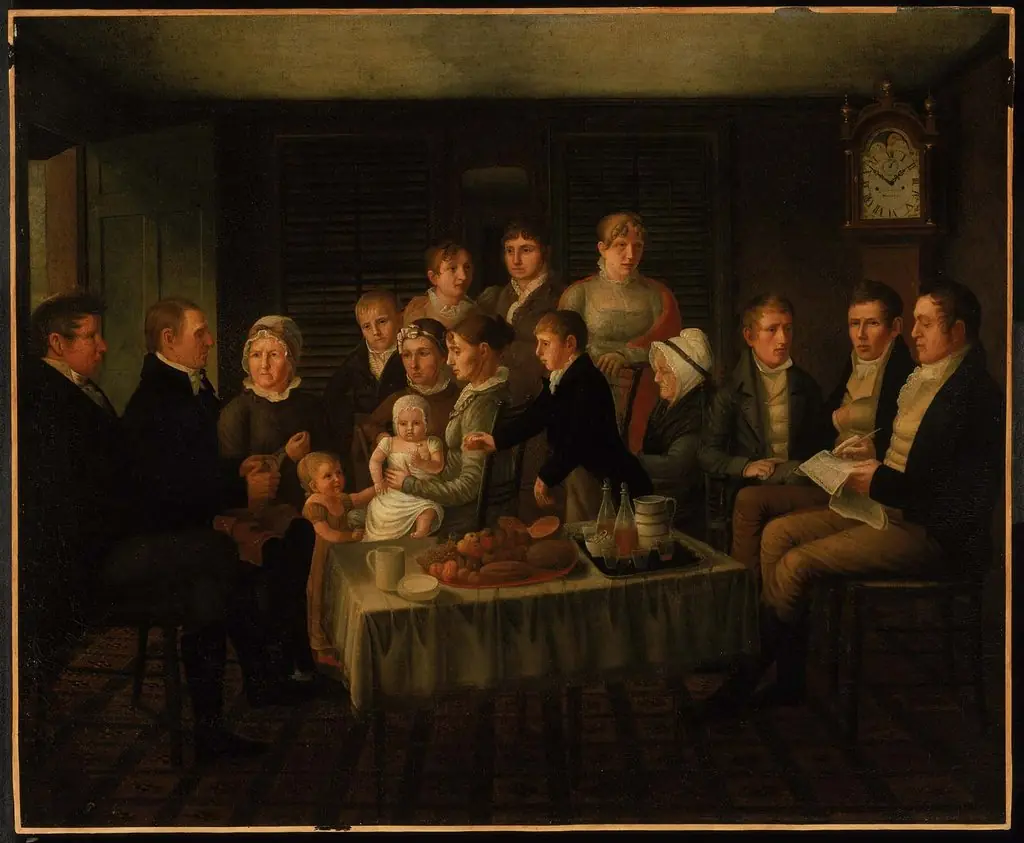 The Peckham-Sawyer Family
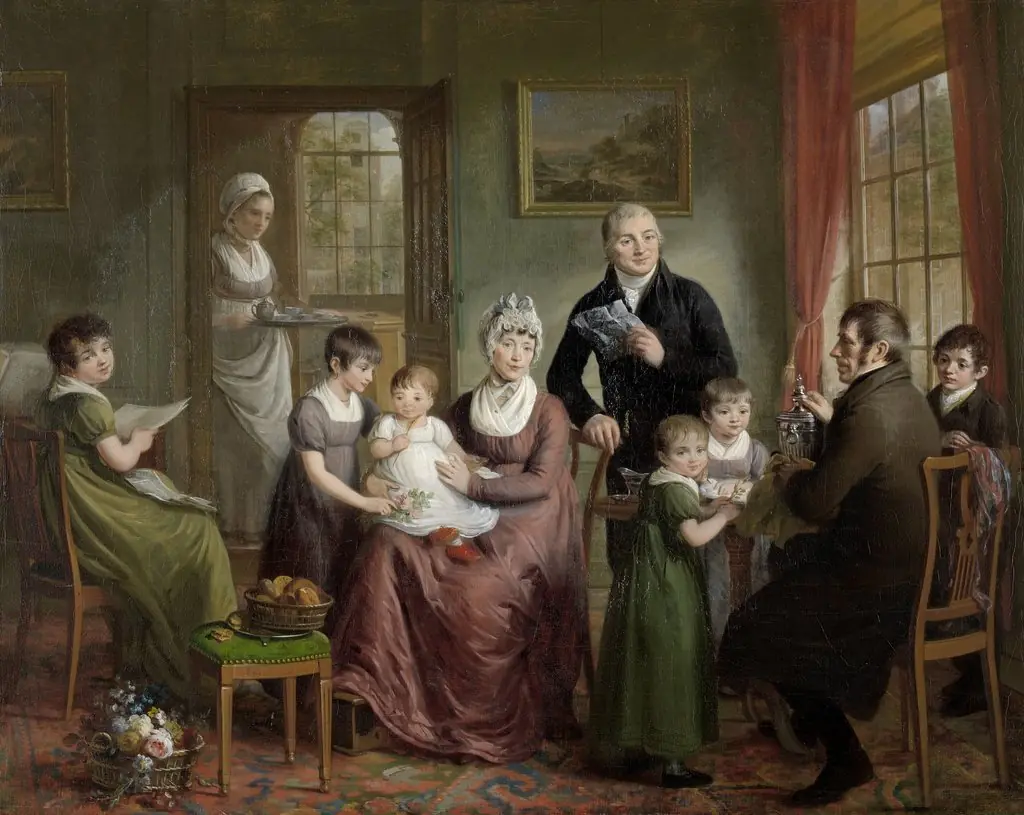 Portrait of the Family of Adrianus Bonebakker with Dirk L. Bennewitz