Artwork
Maisema
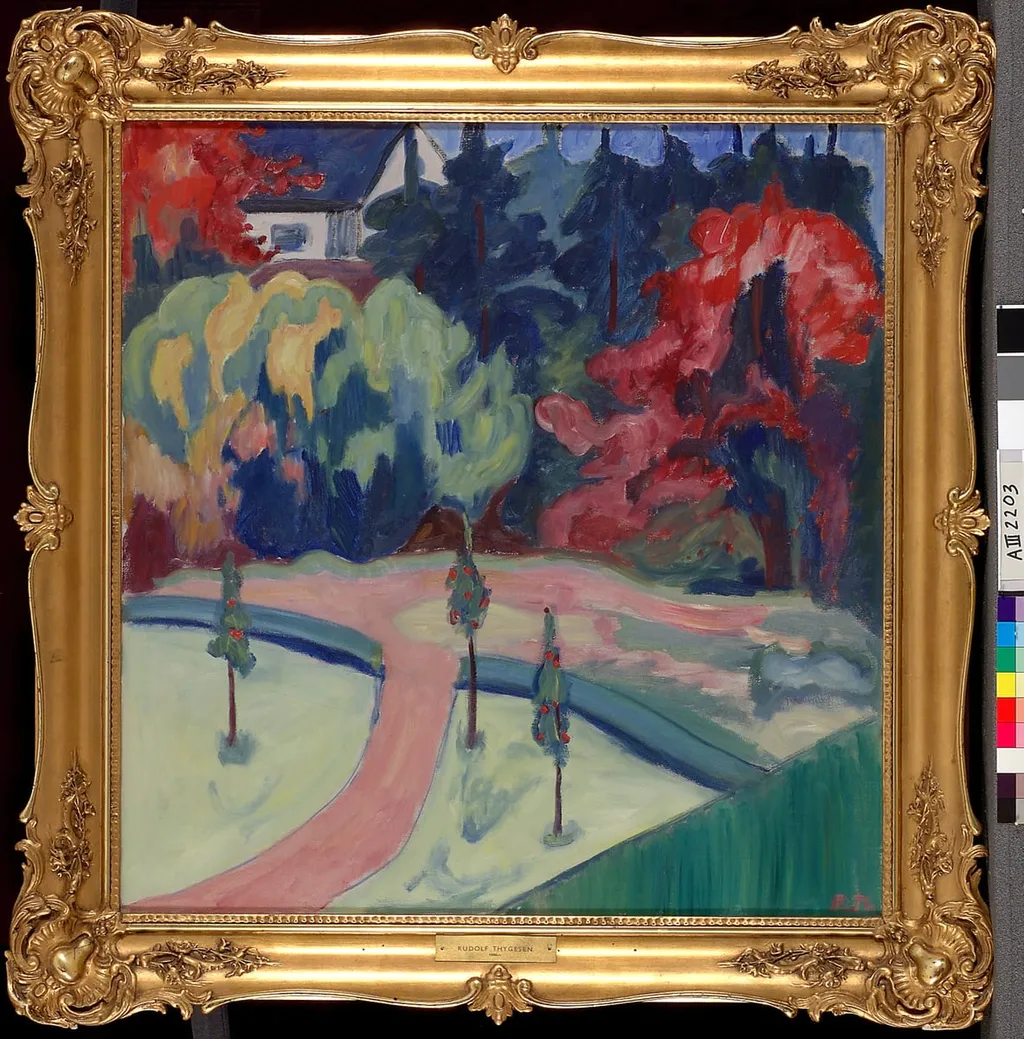
Maisema is an unspecified painting by Rudolf Thygesen. It is held in the collection of the Finnish National Gallery. This painting depicts a winding road cutting through a wintry forest, rendered with vigorous, thickly applied paint.
About this work
Overview
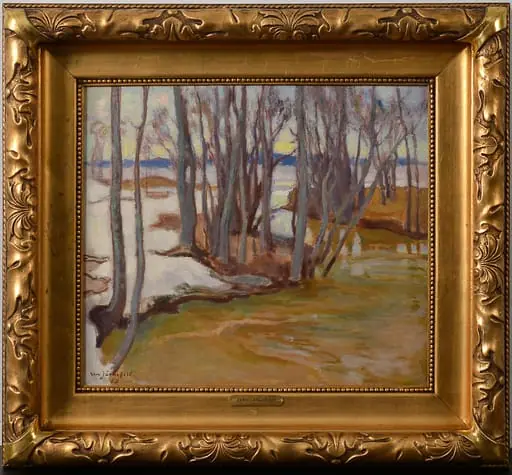
This painting depicts a winding road cutting through a wintry forest, rendered with vigorous, thickly applied paint. The landscape is not realistically portrayed but transformed through bold, tactile brushwork. Snow takes on unexpected hues of pale pink and green, while the sky is a deep, saturated blue. The effect is immersive, emphasizing texture and emotional tone over topographical accuracy.
Subject & Meaning
The scene evokes solitude and quiet endurance, with color choices amplifying an otherworldly, dreamlike atmosphere rather than literal representation.
The road suggests movement or journey, framed by dense trees laden with red berries that contrast sharply against the cool snow. A distant building with a white roof hints at human presence, yet remains isolated and small within the vastness of nature. The scene evokes solitude and quiet endurance, with color choices amplifying an otherworldly, dreamlike atmosphere rather than literal representation.
Technique & Style
The artist employs impasto to build the surface of the painting, applying paint in heavy, deliberate strokes that create physical texture. This method gives the snow, branches, and sky a tactile presence, as if the landscape could be felt as much as seen. Color is used expressively rather than naturally—pink and green snow defy realism to heighten emotional resonance.
History & Provenance
The work’s origin and ownership history are not documented in the provided details. Its title, 'Maisema,' suggests a Finnish or Nordic connection, possibly indicating regional inspiration. Without further archival records, its creation date and early reception remain unspecified, though the style aligns with early 20th-century expressive tendencies in Northern European art.
Context
Created during a period when many artists moved away from strict realism, this work reflects a broader trend of using color and texture to convey inner experience. The use of unnatural hues in snow and sky parallels developments in Expressionism and Fauvism, where emotional truth superseded optical accuracy. The Finnish landscape may have served as a personal, symbolic setting rather than a topographical record.
Legacy
Though not widely known in mainstream art history, the painting contributes to a quieter lineage of Nordic modernism that prioritizes mood and materiality. Its emphasis on impasto and emotional color continues to resonate with artists exploring the physicality of paint as a vehicle for subjective experience, particularly in landscape traditions that favor atmosphere over detail.
Artist & collection
Artist
This Finnish painter’s small, sunlit landscapes feel like stepping into a quiet morning.