Artwork
The Adoration of the Magi
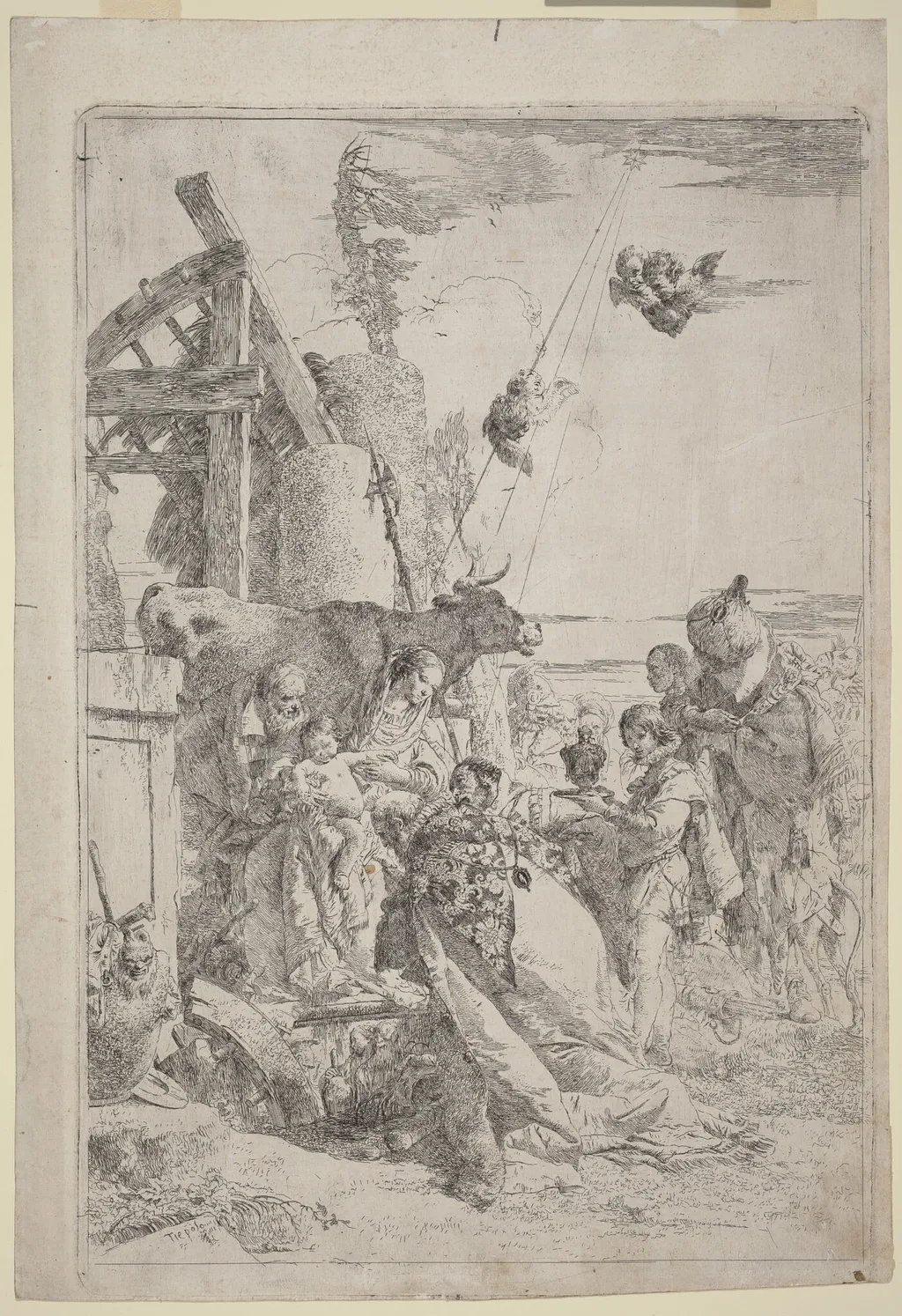
The Adoration of the Magi is an ink print by the Baroque artist Giovanni Battista Tiepolo. It dates from 1740 and is held in the collection of the National Gallery of Art.
About this work
Overview
Created around 1740, this etching by Giovanni Battista Tiepolo depicts a moment from the biblical Adoration of the Magi. As part of his broader printmaking practice, Tiepolo used the medium to explore narrative and movement with fluid line work. The composition captures a crowded, energetic scene, characteristic of his approach to both painting and printmaking during the mid-18th century.
Subject & Meaning
The scene centers on a figure standing atop a wooden structure resembling a cross, surrounded by a group of onlookers.
The scene centers on a figure standing atop a wooden structure resembling a cross, surrounded by a group of onlookers. Though not a conventional representation of the Magi’s worship, the image evokes themes of reverence and hierarchy. The upward gaze of the figures and the elevated position of the central figure suggest a moment of spiritual recognition, possibly referencing a symbolic or allegorical interpretation of devotion.
Technique & Style
Tiepolo employed rapid, expressive etching lines to convey motion and emotional intensity. The sketchy, loose quality of the lines avoids rigid definition, instead suggesting the flutter of garments and the turbulence of the sky. Birds in flight and uneven cloud forms add to the sense of spontaneity, aligning with Rococo’s preference for dynamic composition over formal symmetry.
History & Provenance
This etching emerged during Tiepolo’s active years as a printmaker, a period when he produced numerous works for private collectors and artistic circles. While the exact early ownership is undocumented, it reflects his broader engagement with printmaking alongside his large-scale frescoes in Venice, Würzburg, and Madrid, where his style influenced European decorative arts.
Context
In the mid-18th century, etching was increasingly used by painters to circulate their compositions beyond frescoes and canvases. Tiepolo’s work fits within a Venetian tradition that valued expressive line and theatricality. His prints responded to both religious iconography and the era’s taste for lively, emotionally charged imagery, bridging Baroque drama with Rococo fluidity.
Legacy
Tiepolo’s etchings, including this one, helped redefine printmaking as a vehicle for artistic expression rather than mere reproduction. His loose, energetic technique influenced later generations of draftsmen and printmakers who valued spontaneity and narrative vitality. The work remains a testament to his ability to translate grand compositional ideas into intimate, linear forms.
Artist & collection

Artist
Giovanni Battista Tiepolo, also known as Giambattista Tiepolo, was an Italian painter and printmaker from the Republic of Venice who painted in the Rococo style, considered an important member of the 18th-century Venetian school.


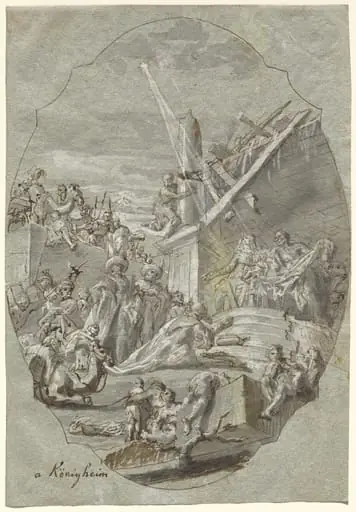 The Adoration of the Magi
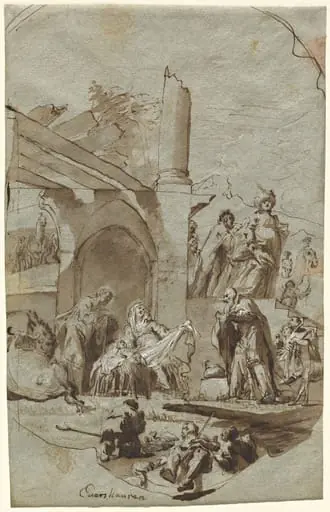 The Adoration of the Magi
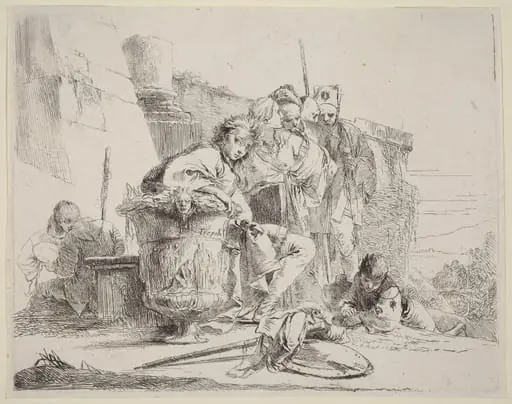 Seated Youth Leaning Against an Urn
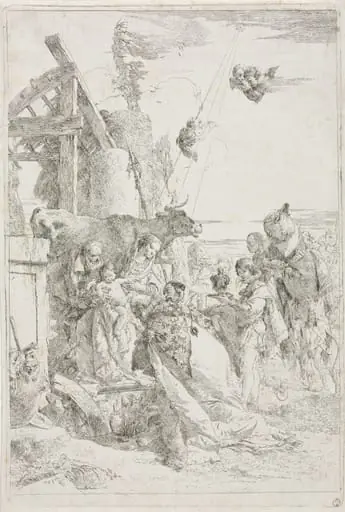 Adoration of the Magi
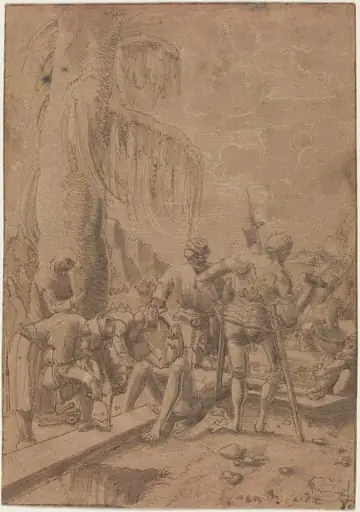 Christ Nailed to the Cross
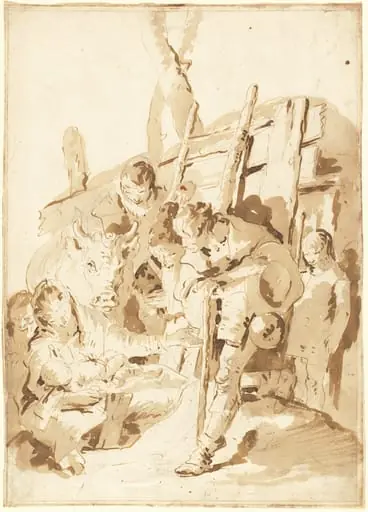 The Adoration of the Shepherds
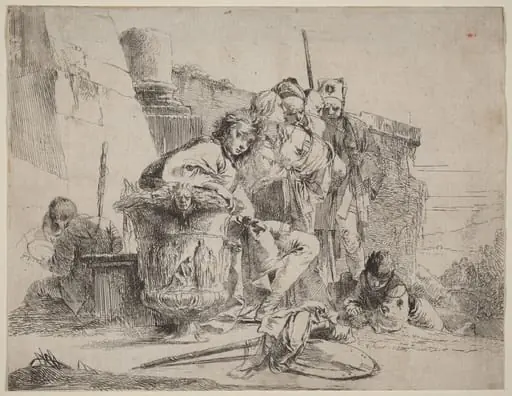 Seated Youth Leaning against an Urn
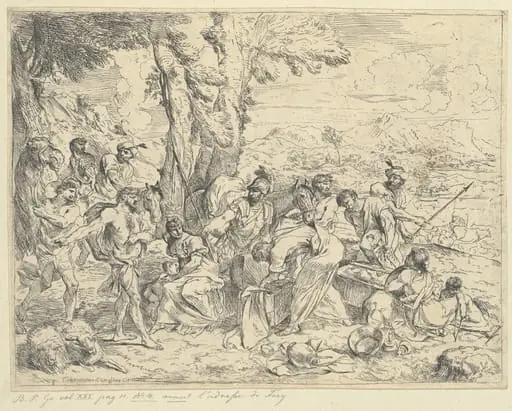 Rachel Concealing Laban's Idols
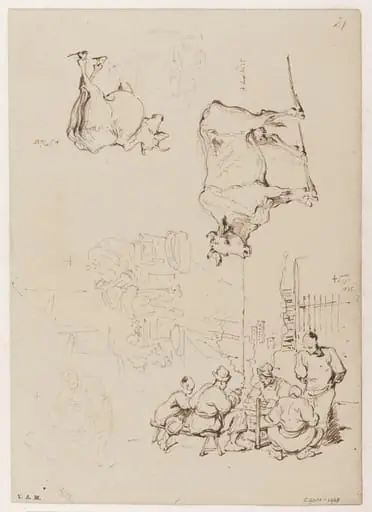 Figures eating at a food stall
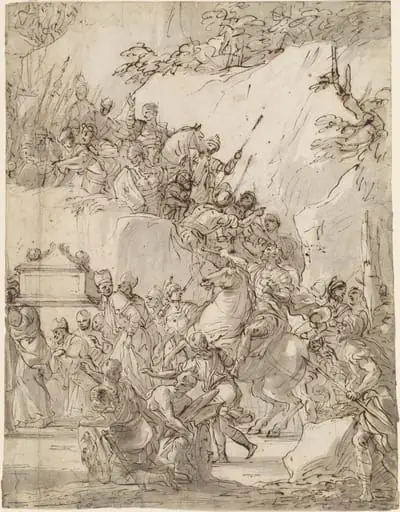 The Transport of the Ark of the Covenant
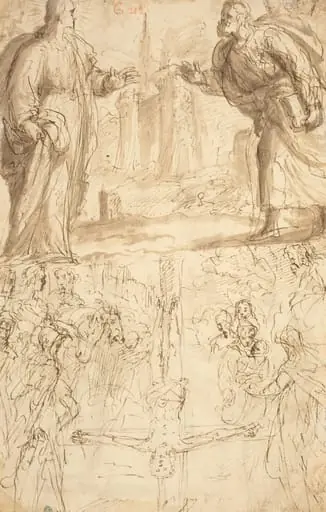 Crucifixion of Saint Peter
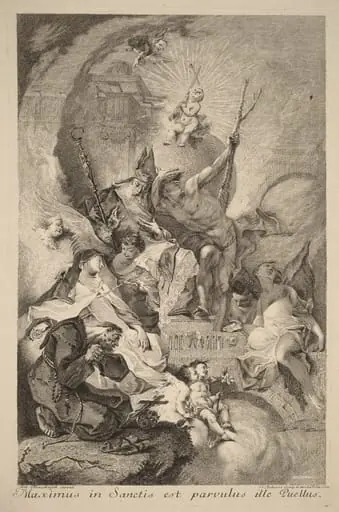 Four Saints