Artwork
Four Saints
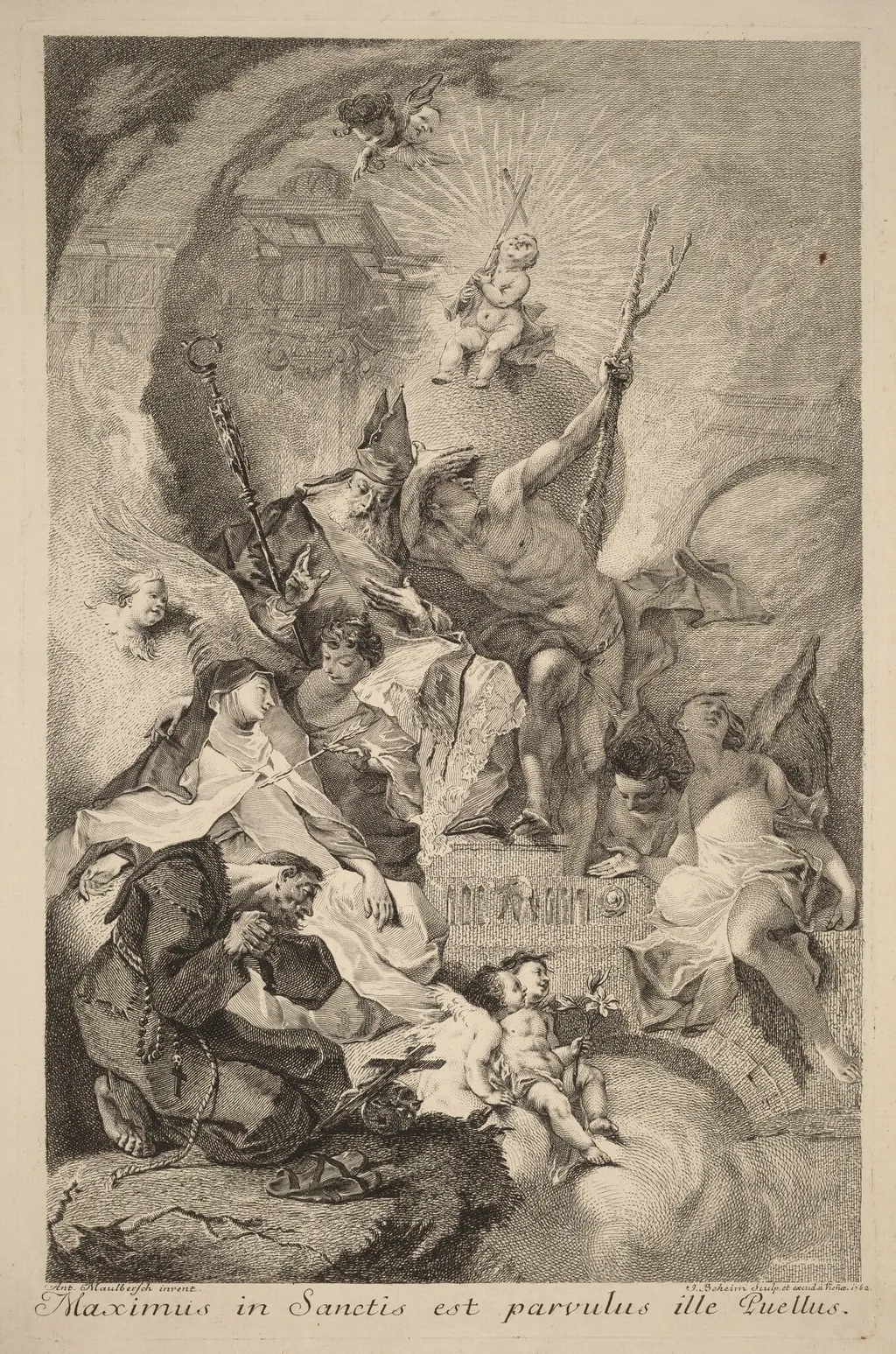
Four Saints is an ink print by the Romanticist artist Johann Beheim. It dates from 1762 and is held in the collection of the National Gallery of Art.
About this work
Overview
Four Saints is a print created by Johann Beheim in 1762. Executed as an etching and engraving on laid paper, the work measures a modest size typical of 18th‑century devotional prints. It is part of the collection of the National Gallery of Art in Washington, where it is displayed among other religious graphic works.
Subject & Meaning
The Latin inscription below reinforces a religious narrative, likely identifying the figures as canonized individuals.
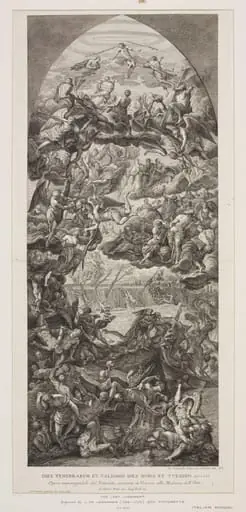
The composition presents four robed figures kneeling on a rugged terrain, each surrounded by celestial beings. One figure cradles an infant, another bears a cross, while a winged presence gestures upward. Angelic hands seem to float toward the saints, suggesting intercession and divine guidance. The Latin inscription below reinforces a religious narrative, likely identifying the figures as canonized individuals.
Technique & Style
Beheim combined etching’s fluid lines with the sharper incisions of engraving to achieve a contrast of light and shadow. The laid‑paper surface accentuates the swirling, dramatic contours that define the rocky ground and the ethereal clouds. The interplay of delicate hatching and bold cross‑hatching creates a sense of movement and spiritual intensity characteristic of late Baroque printmaking.
History & Provenance
The print was produced in the mid‑18th century, a period when devotional images were widely circulated for private contemplation. After its creation, Four Saints entered the European market and eventually was acquired by the National Gallery of Art. The museum’s records indicate it arrived as part of a larger collection of German prints donated in the early 20th century.
Artist & collection


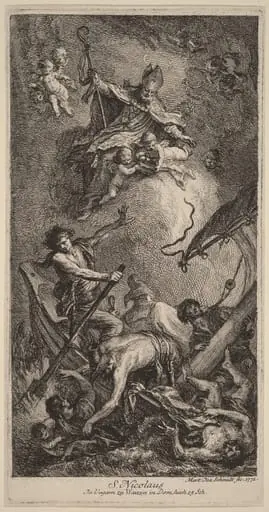 Saint Nicholas Rescuing Sailors
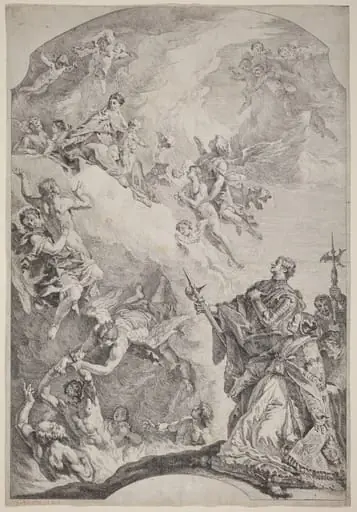 Saint Gregoire I Delivering Souls from Purgatory
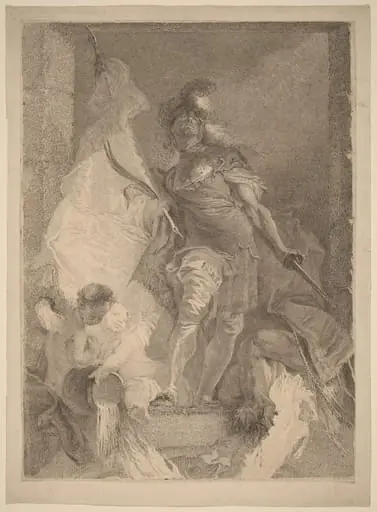 Saint Florian
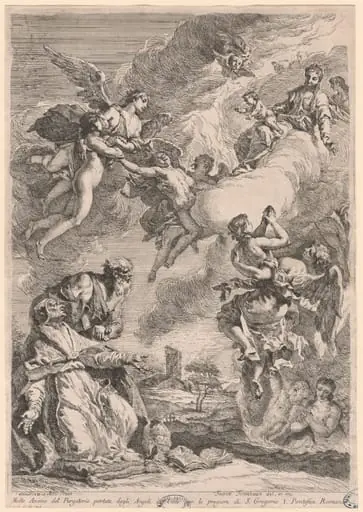 Pope Gregory the Great and Saint Vitale Interceding for the Souls in Purgatory
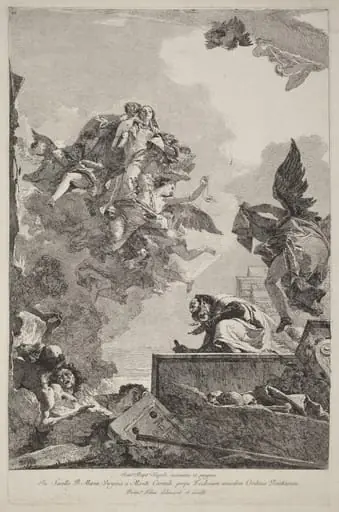 The Madonna del Carmelo Appearing to Saint Simon Stock
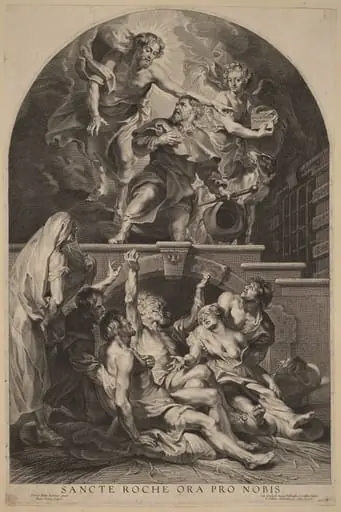 Jesus Christ Appearing to Saint Roch
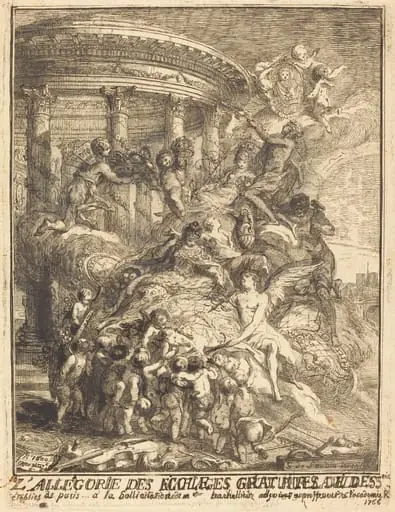 Allégorie des Ecoles gratuites du dessein (Allegory of the Free Drawing Schools)
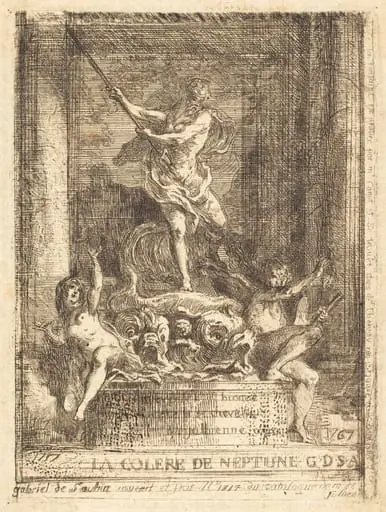 La Colère de Neptune (The Wrath of Neptune)
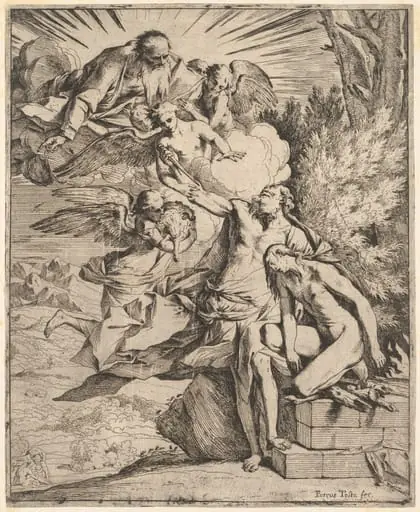 The Sacrifice of Abraham
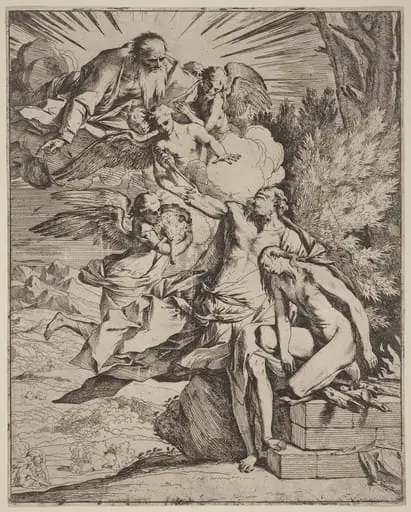 The Sacrifice of Abraham
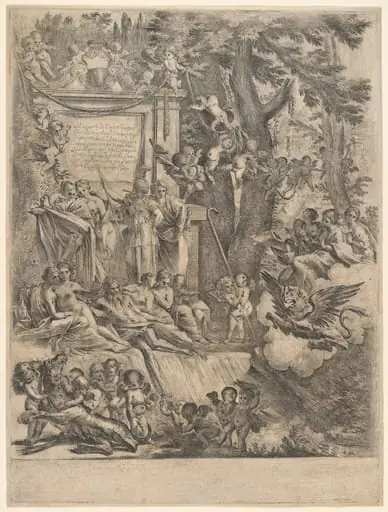 Allegory in Honor of the Arrival of Cardinal Franciotti as Bishop of Lucca
 The Last Judgment