Artwork
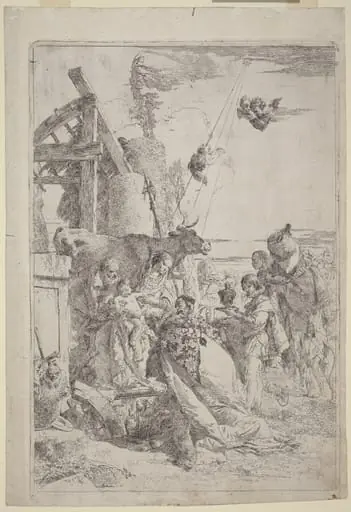
The Adoration of the Magi
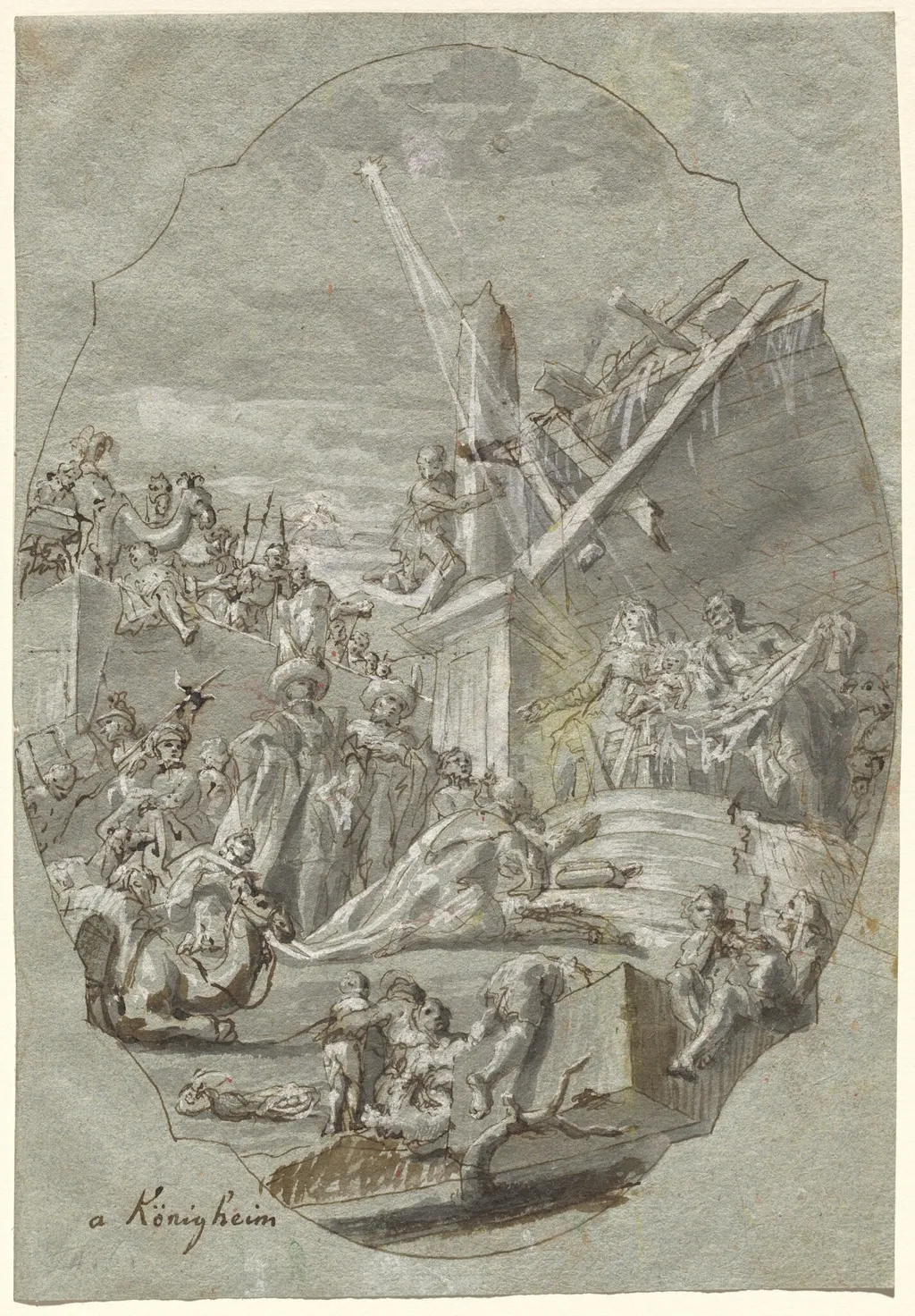
The Adoration of the Magi is an ink drawing by the Romanticist artist Georg Anton Urlaub. It dates from 1756 and is held in the collection of the National Gallery of Art.
About this work
Overview
Created in 1756 by Georg Anton Urlaub, this drawing portrays the biblical moment when the Magi offer gifts to the infant Jesus. Executed in pen and brown ink with washes of brown and gray, it is enhanced with white gouache and yellow chalk on blue laid paper. Traces of graphite underdrawing and pricking marks suggest it was a preparatory study, possibly for a larger commissioned work.
Subject & Meaning
The scene depicts the traditional moment of the Magi’s homage to the Christ child, a common theme in Christian art symbolizing the recognition of Christ’s divine kingship by the Gentile world. The figures are arranged with hierarchical clarity, emphasizing reverence and ritual, while the inclusion of exotic attire and gifts underscores the universality of the event.
Technique & Style
Urlaub employed precise pen lines to define forms, layered with subtle washes to model volume and shadow. White gouache highlights luminous areas like faces and fabrics, while yellow chalk adds warmth to halos and garments. The blue paper provides a mid-tone ground, allowing the ink and chalk to resonate with quiet contrast, reflecting a refined, courtly draftsmanship.
History & Provenance
Urlaub, active in Lower Franconia, served the prince-bishops of Würzburg and produced religious works for local churches. This drawing likely originated as a design for an altarpiece or fresco in a Würzburg ecclesiastical setting. Its survival suggests it was valued as a finished work in its own right, possibly retained in the artist’s studio or the bishop’s collection.
Context
In mid-18th century Franconia, religious imagery remained central to artistic patronage despite growing secular trends elsewhere. Urlaub’s work reflects the enduring influence of Baroque devotional aesthetics, blending detailed observation with traditional iconography, tailored to the tastes of ecclesiastical patrons who favored clarity and solemnity.
Legacy
Though Urlaub is not widely known beyond regional art history, this drawing exemplifies the craftsmanship of provincial Baroque draftsmen who translated grand religious narratives into intimate, finely executed studies. It stands as a testament to the continued importance of preparatory drawing in ecclesiastical art production during the late Baroque period.
Artist & collection
Artist
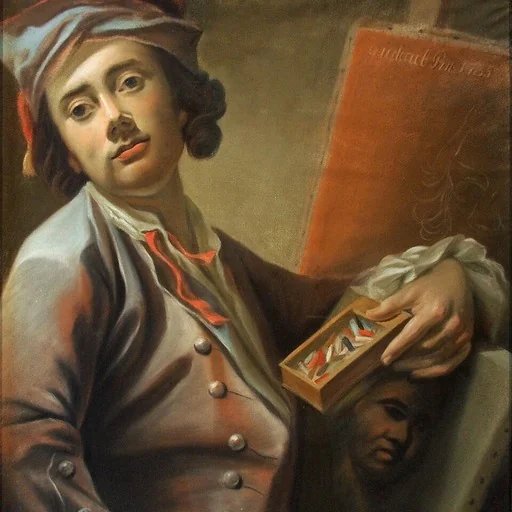
Georg Anton Urlaub (20 June 1713 – 20 February 1759) was a Baroque painter from Franconia.

 The Adoration of the Magi
 Worshippers at a Street Shrine
 Christ Nailed to the Cross
 The Transport of the Ark of the Covenant
 Esther before Ahasuerus
 The Last Judgment
 The Parting of Saints Peter and Paul
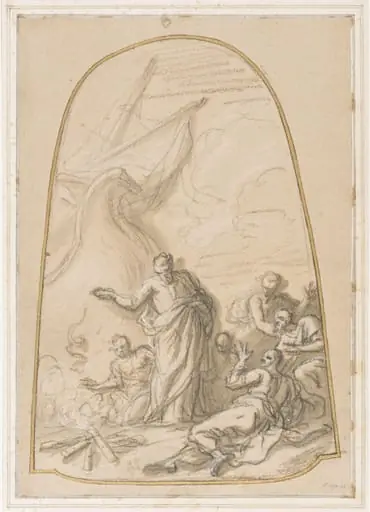 St Paul Shipwrecked on the Island of Malta
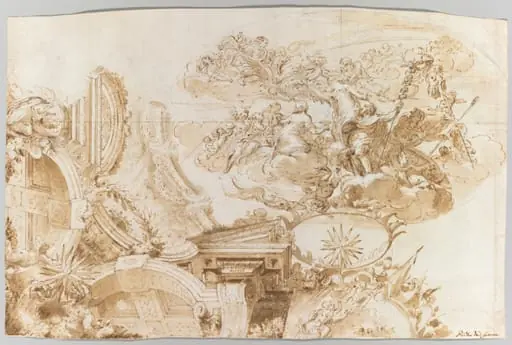 The Apotheosis of Romulus: Design for a Ceiling
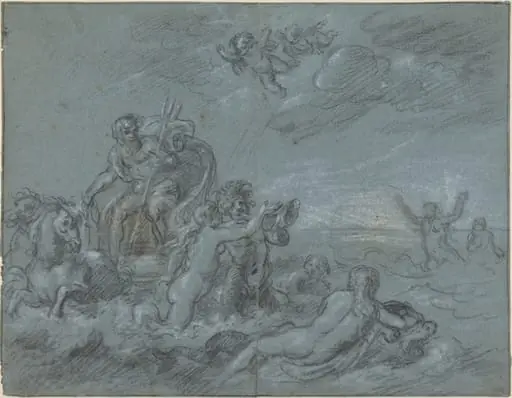 The Triumph of Neptune
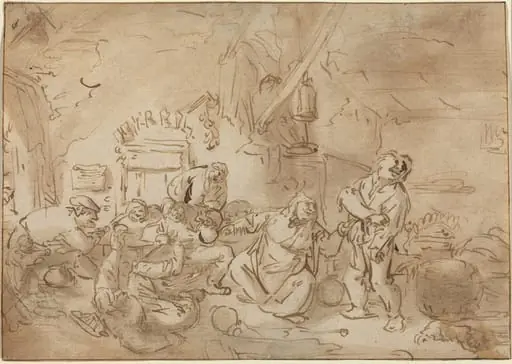 Brawl in an Inn