Artwork
Punchinello's Farewell to Venice
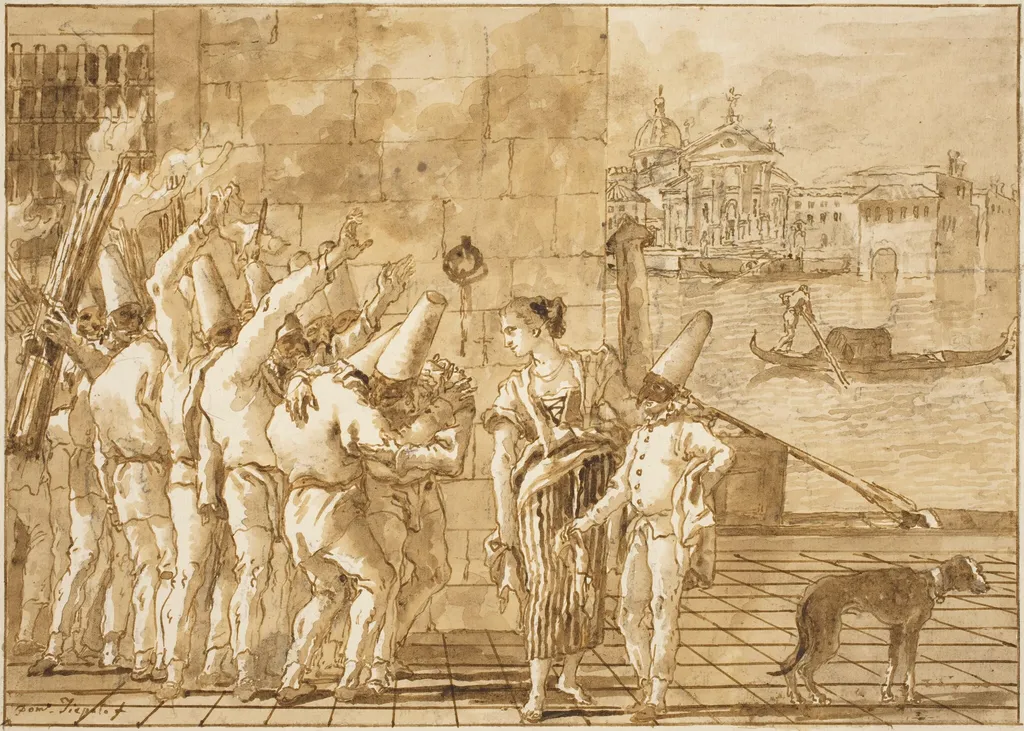
Punchinello's Farewell to Venice is an ink drawing by the Romanticist artist Giovanni Domenico Tiepolo. It dates from 1800 and is held in the collection of the National Gallery of Art.
About this work
Overview
Created in 1800, this drawing by Giovanni Domenico Tiepolo is executed in pen and brown ink with wash over charcoal on laid paper.
Created in 1800, this drawing by Giovanni Domenico Tiepolo is executed in pen and brown ink with wash over charcoal on laid paper. It belongs to the final phase of his artistic output, following decades of work as a painter and printmaker. The piece reflects his continued engagement with theatrical imagery and Venetian cultural motifs, distinct from the grander style of his father, Giovanni Battista Tiepolo, under whom he was trained.
Subject & Meaning
The drawing portrays Punchinello, a stock character from the Commedia dell'arte, in a moment of departure from Venice. Dressed in his traditional costume, the figure stands alone, evoking a quiet sense of loss or transition. The scene may symbolize the waning of traditional Venetian entertainments amid political and social change, subtly reflecting the city’s diminished cultural prominence at the turn of the 19th century.
Technique & Style
Tiepolo employed charcoal for initial outlines, then refined the composition with pen and brown ink, adding subtle washes to model form and depth. The loose, expressive lines convey movement and emotion without elaborate detail. The paper’s texture enhances the drawing’s intimacy, and the restrained palette emphasizes the figure’s solitude, aligning with his late style’s increased focus on psychological nuance over theatrical spectacle.
History & Provenance
The drawing was made during Tiepolo’s later years, after his return to Venice from Würzburg, where he had worked for over a decade. It remained in private hands until entering a public collection in the 20th century. Its survival reflects its status as a personal, introspective work rather than a commissioned piece, offering insight into the artist’s private reflections on his native city.
Context
In 1800, Venice was under Austrian rule, its once-dominant cultural institutions in decline. The Commedia dell'arte, once central to Venetian life, was fading from public stages. Tiepolo’s focus on Punchinello—a figure associated with popular theater—suggests a nostalgic engagement with a vanishing world, contrasting with the political upheavals reshaping Italy during the Napoleonic era.
Legacy
This drawing stands as one of Tiepolo’s most personal late works, illustrating his shift from large-scale frescoes to intimate, emotionally resonant scenes. It influenced later artists interested in the intersection of theater and social commentary. Its preservation offers a rare glimpse into the quiet, reflective side of an artist who spent his career navigating the shadow of his father’s fame.
Artist & collection
Artist
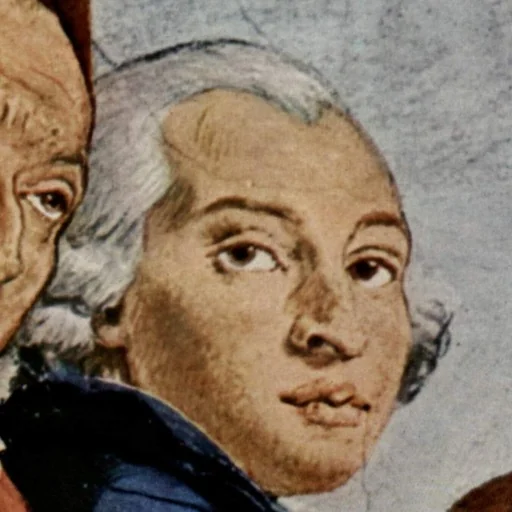
Giovanni Domenico Tiepolo (August 30, 1727 – March 3, 1804) was an Italian painter and printmaker in etching. He was the son of artist Giovanni Battista Tiepolo and elder brother of Lorenzo Baldissera Tiepolo.

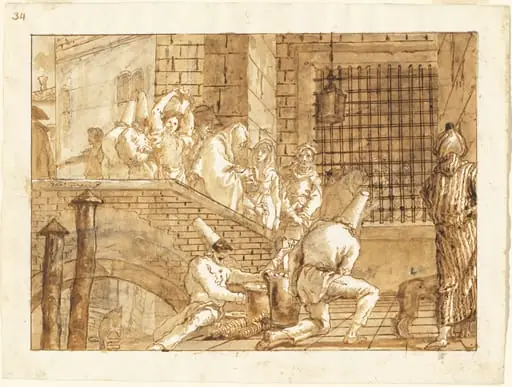 The Prison Visit
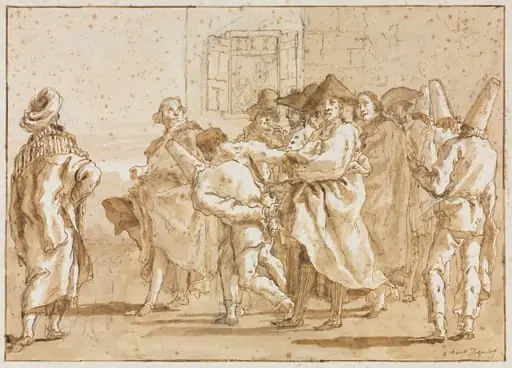 Punchinello Arrested
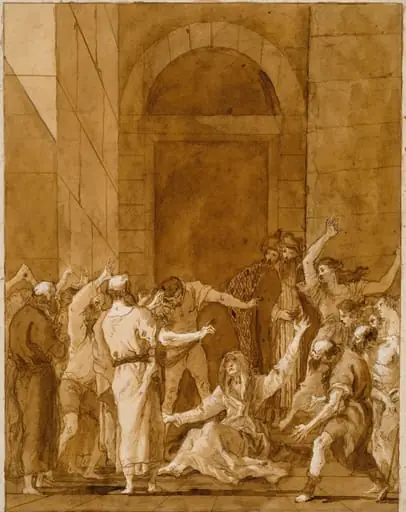 The Raising of Tabitha
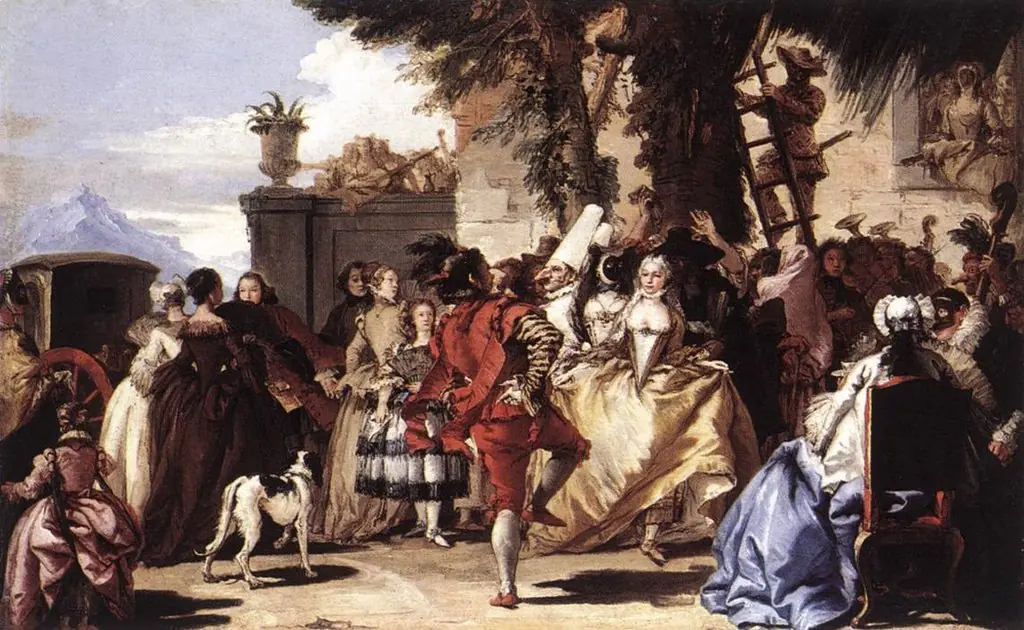
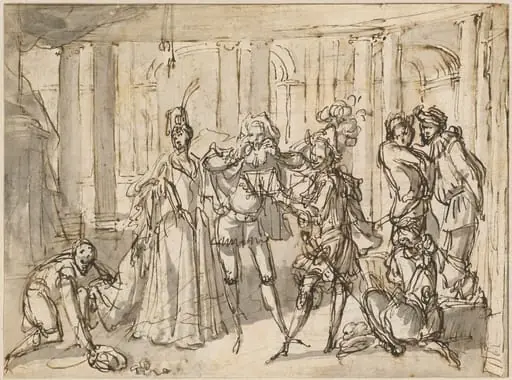 A Performance by the Commedia dell'Arte
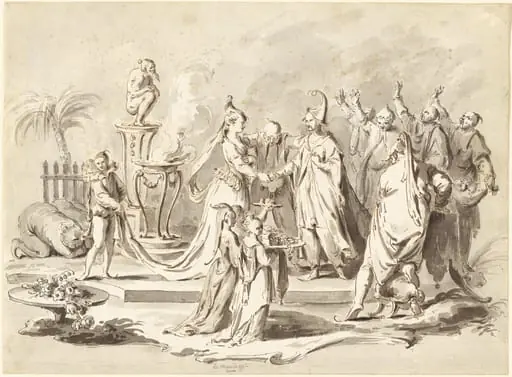 The Marriage of Europe and China
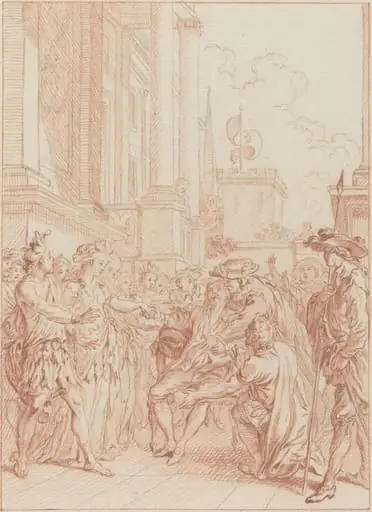 Quoi donc, les vrais Chrétiens auraient tant de vertu
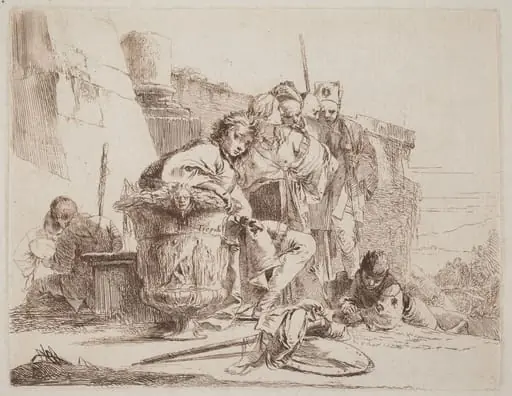 Seated Youth Leaning against an Urn
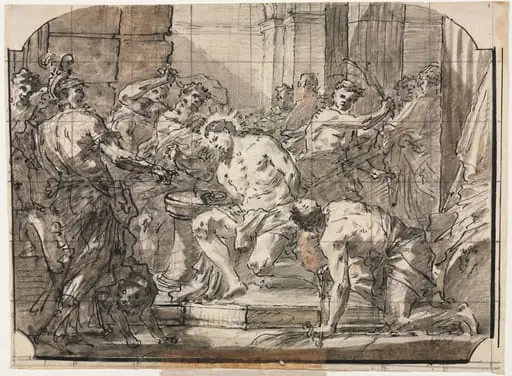 Flagellation of Christ
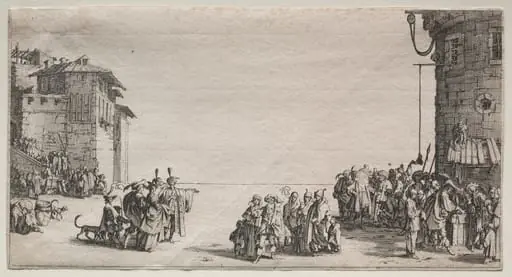 The Slave Market
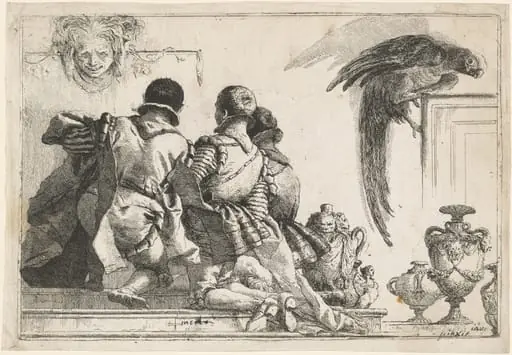 Kneeling Pages, a Mask, and a Parrot
 The Scene with the Tall Baguenodière
 Standing Woman and Seated Men before an Obelisk