Artwork
A Performance by the Commedia dell'Arte
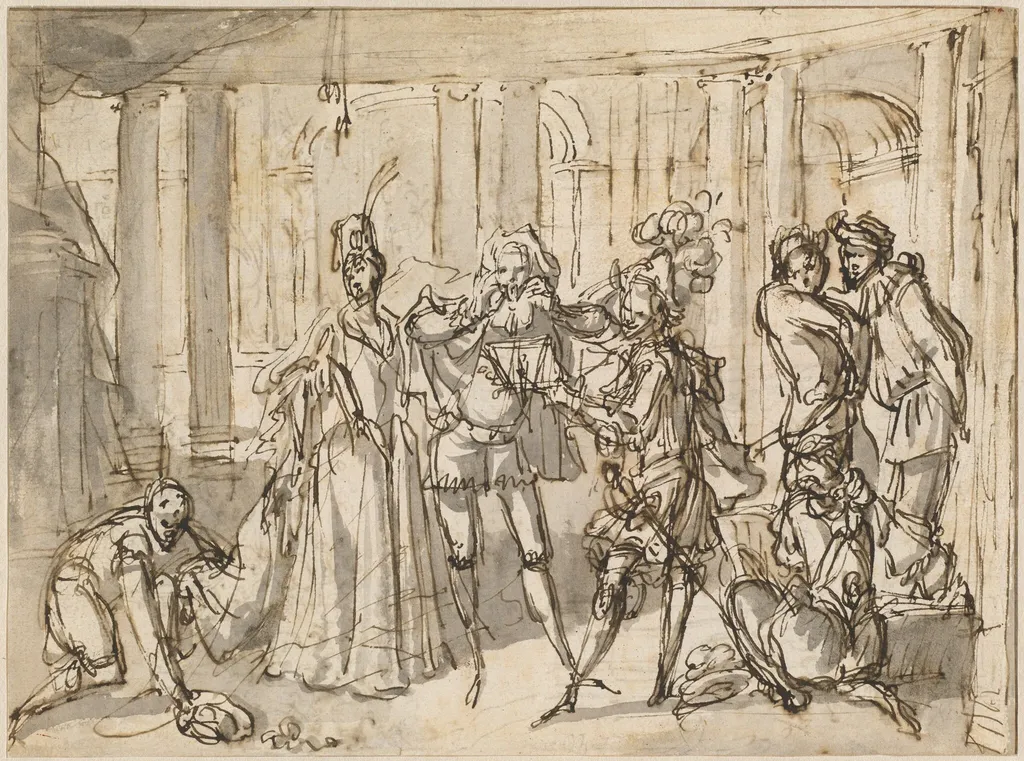
A Performance by the Commedia dell'Arte is an ink drawing by the Baroque artist Claude Gillot. It dates from 1710 and is held in the collection of the National Gallery of Art.
About this work
Overview
Created around 1710, this drawing by Claude Gillot captures a moment from a Commedia dell'Arte performance using pen, brown ink, and gray wash on laid paper.
Created around 1710, this drawing by Claude Gillot captures a moment from a Commedia dell'Arte performance using pen, brown ink, and gray wash on laid paper. As a French artist known for theatrical subjects, Gillot employed rapid, expressive lines to record live stage action. The work is not a polished composition but a spontaneous study, reflecting his interest in capturing movement and character through minimal means.
Subject & Meaning
The scene portrays five figures from the Italian Commedia dell'Arte tradition, each embodying a stock role: a spear-wielding soldier, a drummer, a dancer, and a small figure on the ground holding a mask. The mask, placed prominently at the foreground, suggests themes of performance, identity, and the artificiality of theatrical roles. The arrangement implies an interlude between scenes, emphasizing the ephemeral nature of live theater.
Technique & Style
Gillot used fluid pen strokes and diluted gray wash to suggest form and shadow without detailed rendering. The figures are defined by loose, energetic lines that convey motion and gesture, while the background columns and curtain are sketched with minimal detail. The absence of finish and the emphasis on immediacy reflect a working method focused on observation rather than completion, typical of preparatory studies for larger works.
History & Provenance
The drawing originates from Gillot’s active period in early 18th-century Paris, where he documented popular entertainments. Though its early ownership is undocumented, it entered institutional collections in the modern era as part of broader efforts to preserve drawings from the French Rococo period. Its survival as a sketch underscores its value as a record of performance culture rather than as a finished artwork.
Context
Commedia dell'Arte troupes were widely popular in France during the early 1700s, influencing French theater and visual arts. Gillot, immersed in this milieu, translated its vitality into drawings that bridged folk performance and fine art. His work provided a visual vocabulary later adopted by his pupils, including Watteau, who would refine these themes into more lyrical compositions.
Legacy
Gillot’s sketches of Commedia dell'Arte helped establish a tradition of theatrical drawing in French art. His direct, observational approach influenced a generation of artists who sought to capture the dynamism of everyday performance. Though not widely exhibited in his lifetime, these works later became key references for understanding the visual culture of 18th-century French theater.
Artist & collection
Artist
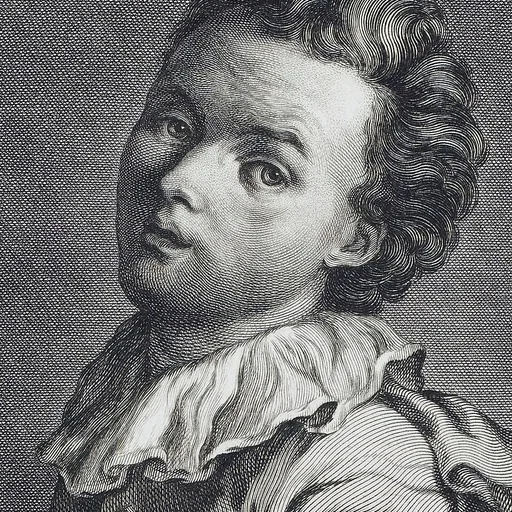
Claude Gillot (April 27, 1673 – May 4, 1722) was a French painter, printmaker, and illustrator, best known as the master of Watteau and Lancret.

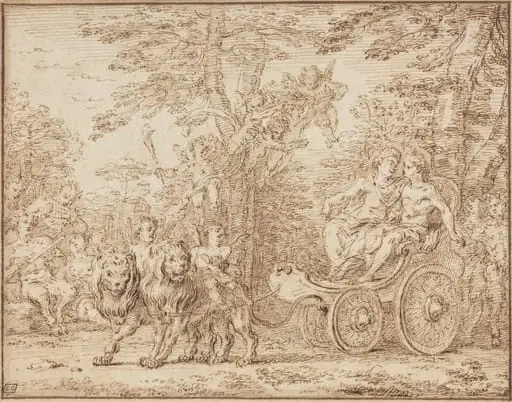 The Triumph of Marriage
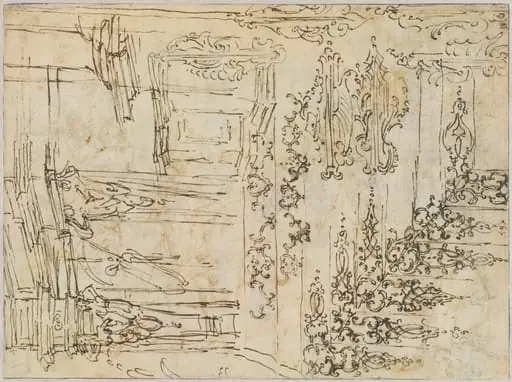 Studies of Ornament and Architecture
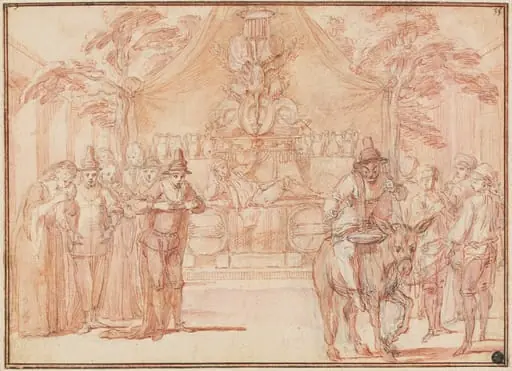 Scene from "The Tomb of Master André"
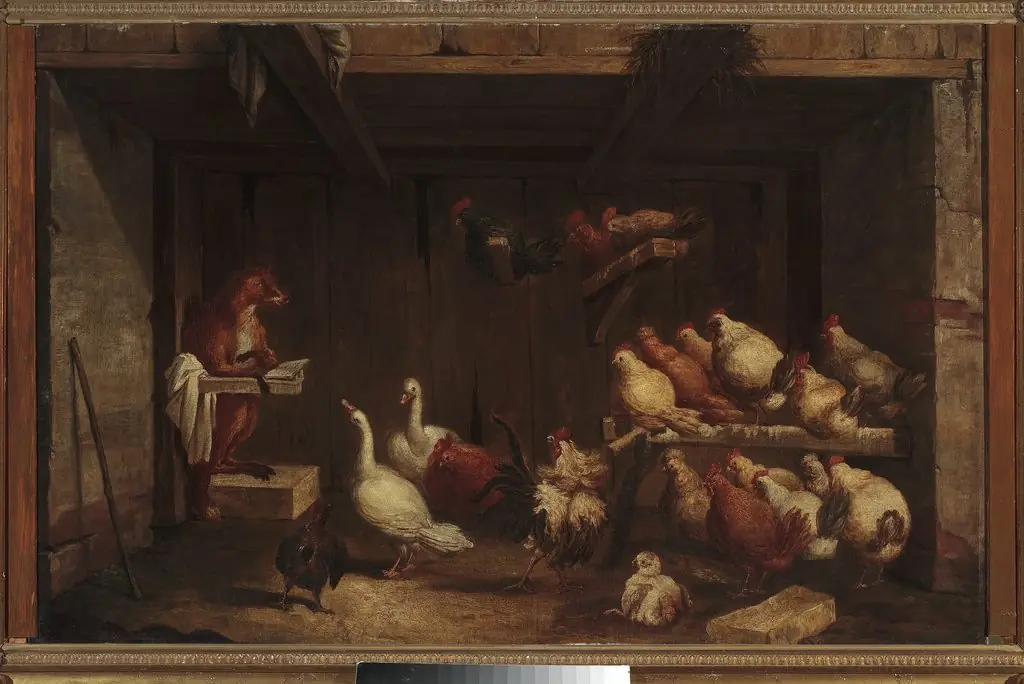 Fox preaching to birds
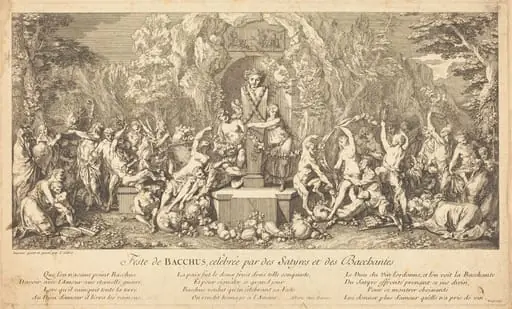 Feste de Bacchus, celebree par des Satyres et des Bacchantes (Feast of Bacchus Celeb rated by Satyrs and Bacchanales)
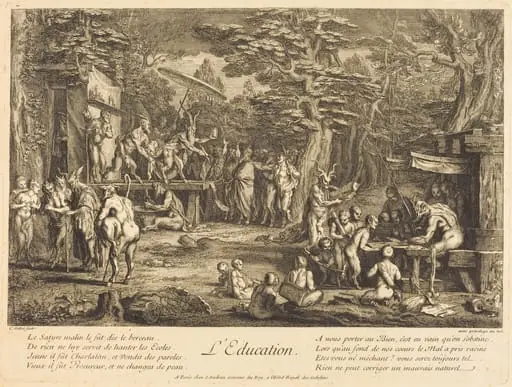 L'Education (Education)
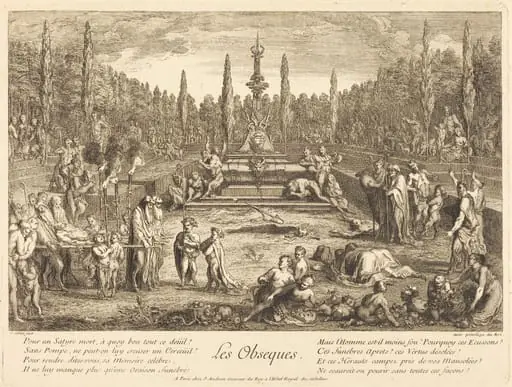 Les Obseques (The Funeral Rites)
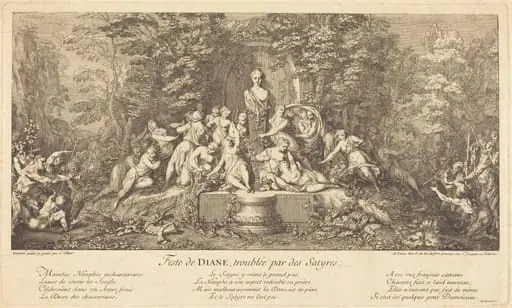 Feste de Diane, Troublee par des Satyres (Feast of Diana Disrupted by Satyrs)
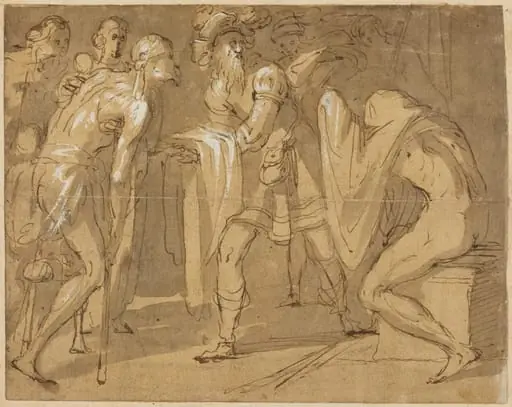 Saint Homobono
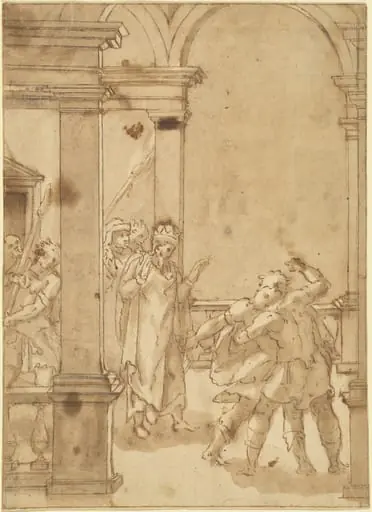 Two Figures Struggling before a King
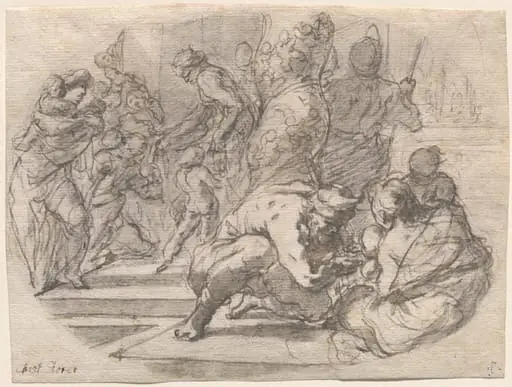 The Generosity of Empress Pulcheria
![The Adoration of the Magi [recto], by Donato Creti](https://artifactworldgallery.com/img/donato-creti--the-adoration-of-the-magi-recto--2cfd5d76b55e821e-w320.webp) The Adoration of the Magi [recto]
The Adoration of the Magi [recto]![Joseph and His Brother in Egypt [verso], by Italian 17th Century](https://artifactworldgallery.com/img/italian-17th-century--joseph-and-his-brother-in-egypt-verso--86cfb4fbb2662a76-w320.webp) Joseph and His Brother in Egypt [verso]
Joseph and His Brother in Egypt [verso]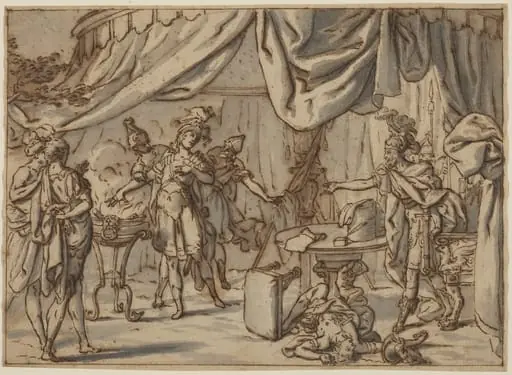 Mucius Scaevola
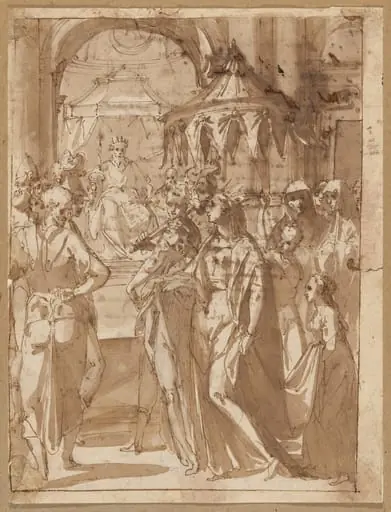 Esther before Ahasuerus
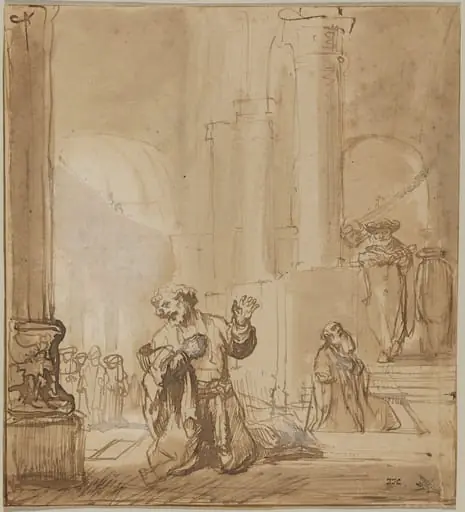 The Parable of the Publican and the Pharisee
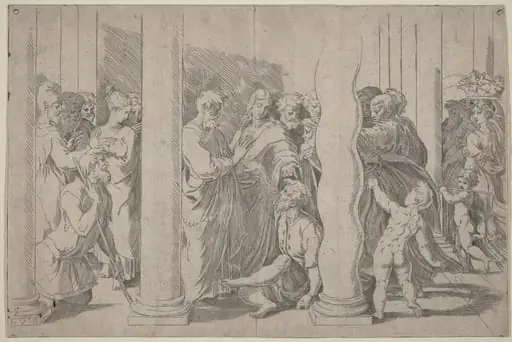 Saints Peter and John Healing the Lame Man at the Golden Gate
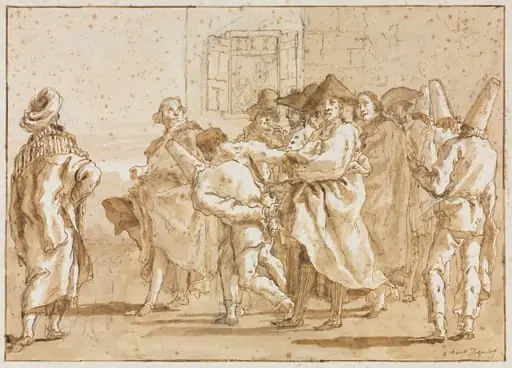 Punchinello Arrested
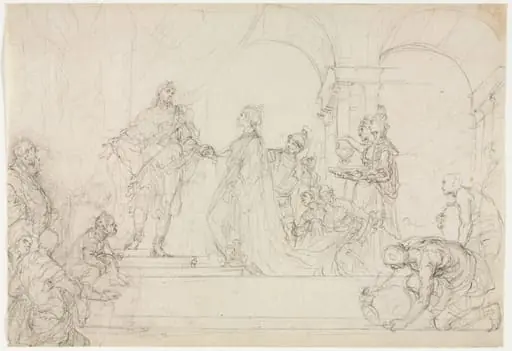 Meeting of Solomon and Queen of Sheba
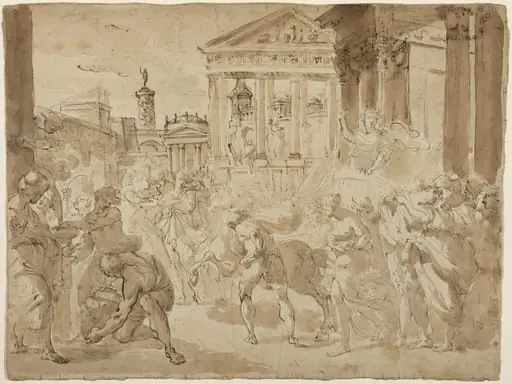 A Triumphal Procession in Ancient Rome