Artwork
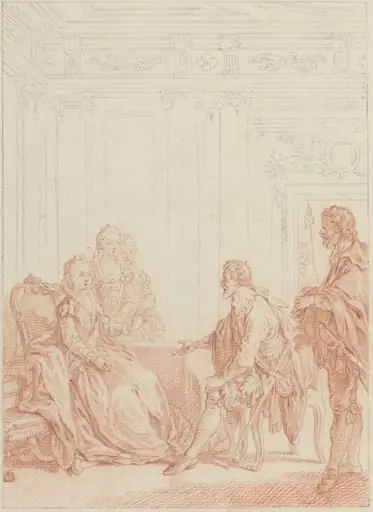
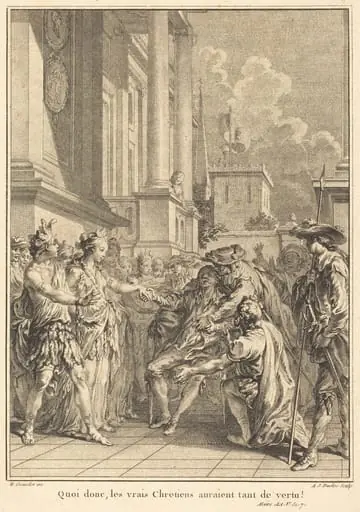
Quoi donc, les vrais Chrétiens auraient tant de vertu
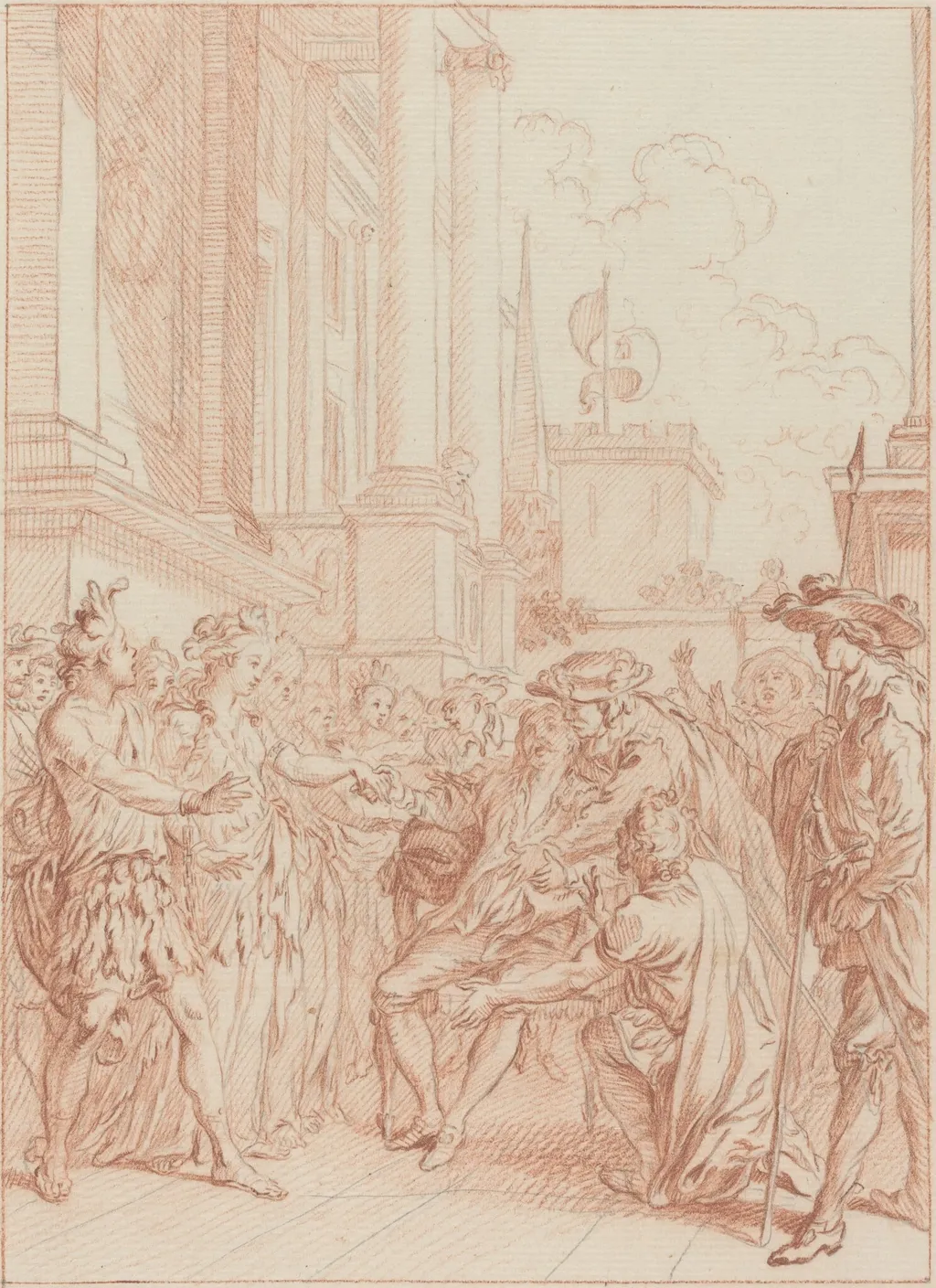
Quoi donc, les vrais Chrétiens auraient tant de vertu is a graphite drawing by the Baroque artist Hubert François Gravelot. It dates from 1736 and is held in the collection of the National Gallery of Art.
About this work
Overview
Quoi donc, les vrais Chrétiens auraient tant de vertu is a 1736 drawing by Hubert-François Gravelot, a French artist who worked primarily as an engraver and book illustrator.
Subject & Meaning
The drawing depicts a lively gathering of people in front of a grand building, with figures engaged in conversation, gesturing, or observing the scene. The characters wear robes and hats, adding to the sense of occasion and drama.
Technique & Style
Gravelot employed red chalk and graphite on laid paper to create the drawing, achieving a sense of depth and texture. The medium allows for nuanced expression and detail, drawing the viewer's eye into the scene.
History & Provenance
Gravelot, born in Paris, moved to London in 1732, where he played a significant role in promoting the Rococo style in British design through his illustrations and engravings.
Artist & collection

Artist
Hubert-François Bourguignon, commonly known as Gravelot (26 March 1699 – 20 April 1773), was a French engraver, a famous book illustrator, designer and drawing-master.

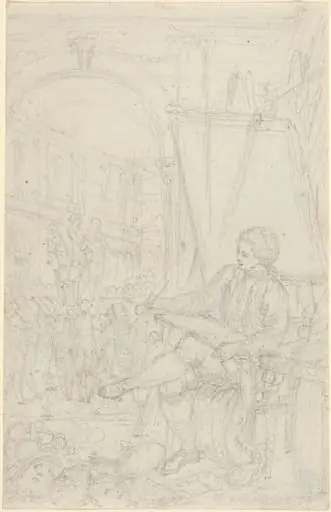 Self-Portrait
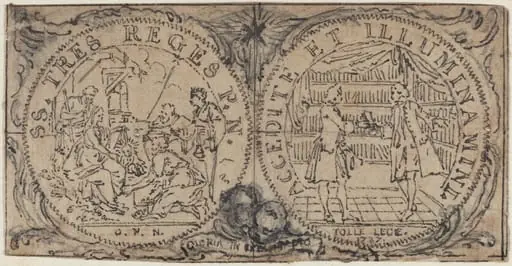 Ornamental Medallions with the Adoration of the Magi and Two Bibliophiles
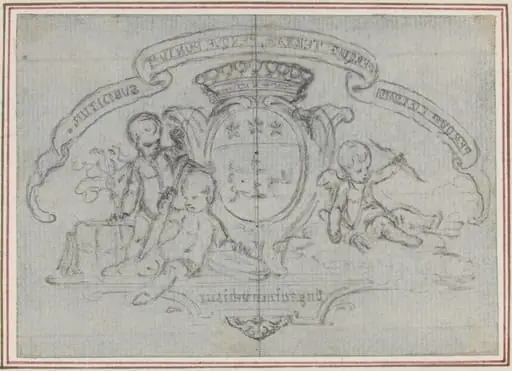 Coat of Arms with Three Putti
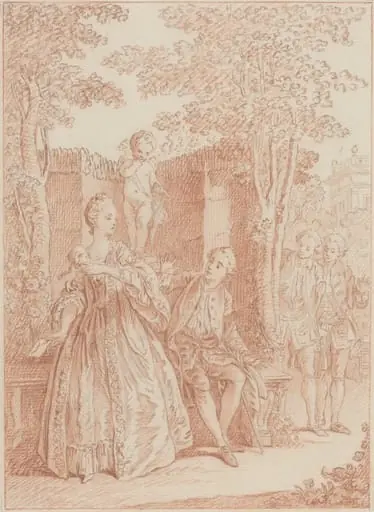 Oui, je la connais Traitre, et je connais ton Coeur
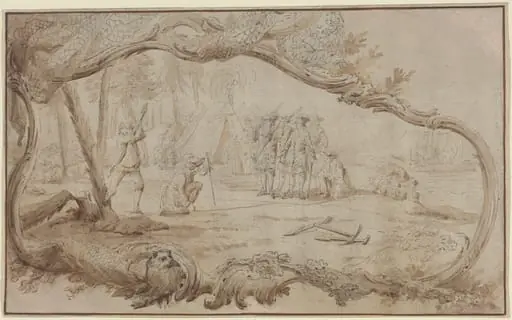 The Landing of the Dutch Expedition Party in New York
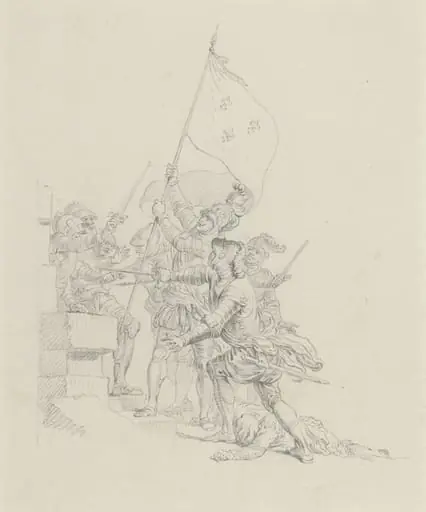 Il monte: il a déjà de ses mains triomphantes...
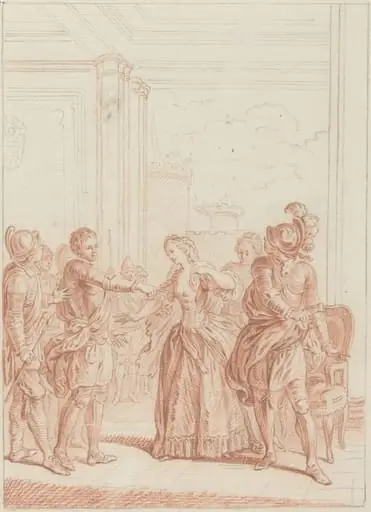 Je suis vengé de toi: l'on te hait, et l'on m'aime
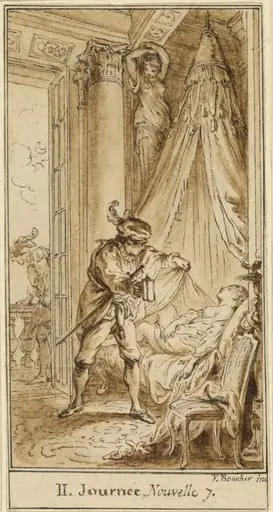 Second Day, Seventh Story: The Duke of Athens Contemplating the Sleeping Princess Alatiel