Artwork
The Holy Family at the Bank of the River
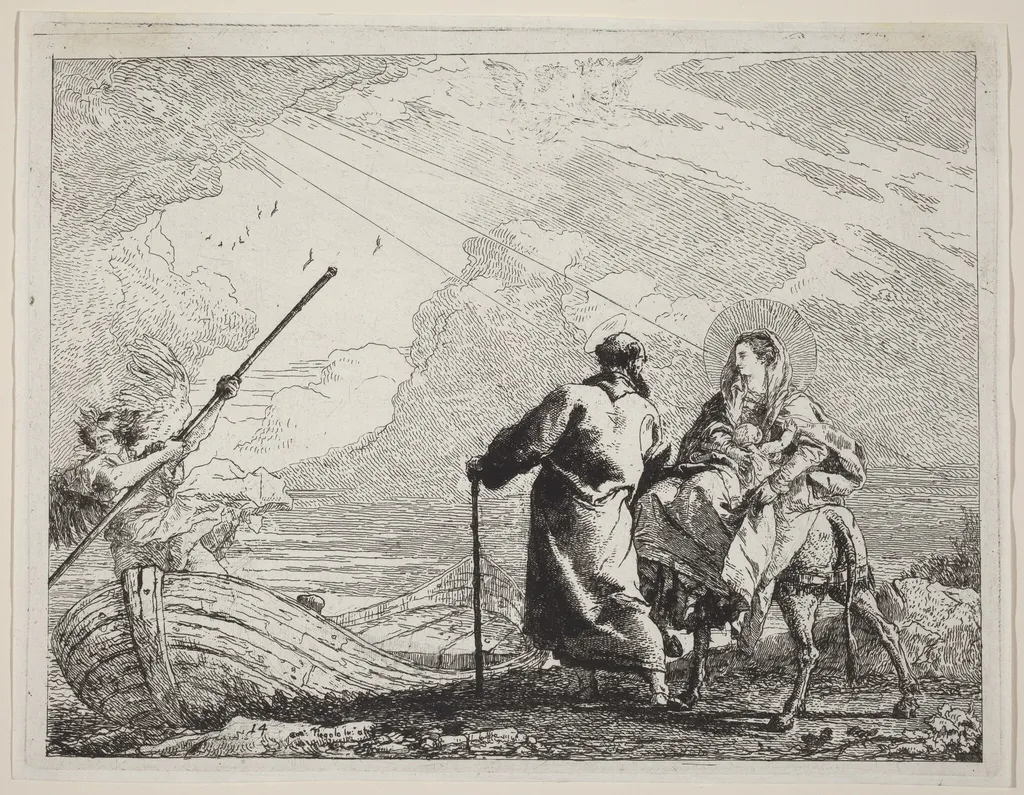
The Holy Family at the Bank of the River is an ink print by the Romanticist artist Giovanni Domenico Tiepolo. It dates from 1753 and is held in the collection of the National Gallery of Art.
About this work
Overview
The Holy Family at the Bank of the River is a 1753 etching by Giovanni Domenico Tiepolo, representing a religious scene in the Italian Rococo style.
Subject & Meaning
The print depicts three key figures from a religious narrative by a river: a staff-bearing figure, a central haloed individual, and a cloaked figure with a bundle, set against turbulent natural elements, suggesting a dramatic religious episode.
Technique & Style
Tiepolo utilized etching to achieve fine lines, crafting a dramatic interplay of light and shadow. The composition's emphasis on expressive lines and contrasting tones is characteristic of Rococo printmaking.
History & Provenance
Created in 1753 by Giovanni Domenico Tiepolo, son of Giovanni Battista Tiepolo and brother of Lorenzo Baldissera Tiepolo, this etching reflects the family's artistic lineage within the Italian Rococo.
Context
As a religious etching, the work aligns with 18th-century Italian artistic tendencies, blending religious themes with the expressive qualities of Rococo aesthetics.
Legacy
While specific impact details are not provided, the etching contributes to the broader legacy of the Tiepolo family's contributions to Rococo art and the evolution of religious imagery in printmaking.
Artist & collection
Artist
Giovanni Domenico Tiepolo (August 30, 1727 – March 3, 1804) was an Italian painter and printmaker in etching. He was the son of artist Giovanni Battista Tiepolo and elder brother of Lorenzo Baldissera Tiepolo.

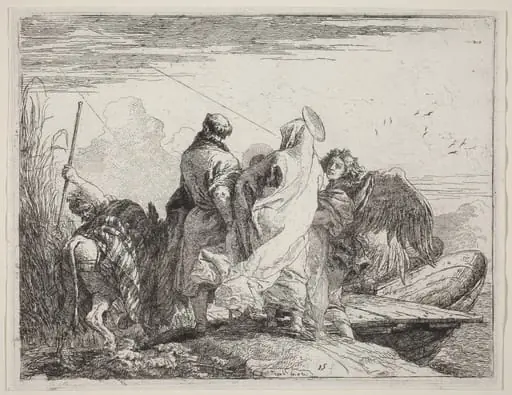 The Holy Family Preparing to Embark
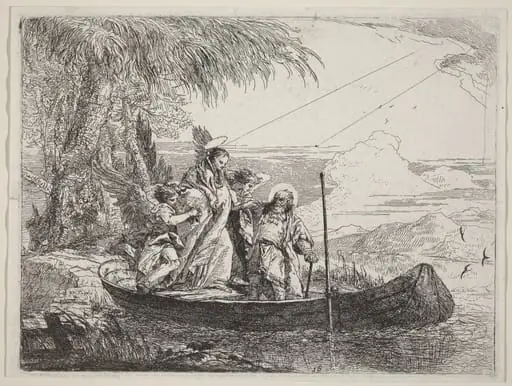 The Madonna, Child, and Angels Entering the Boat
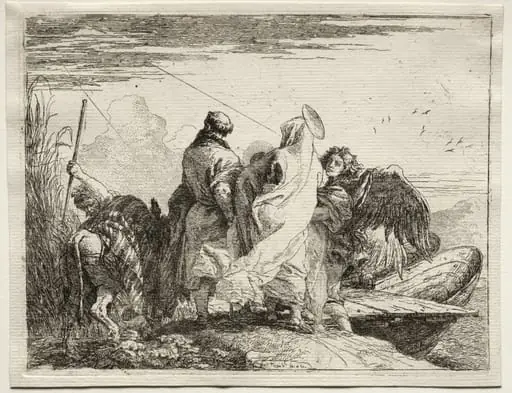 Flight into Egypt: The Holy Family Leaving the Shore
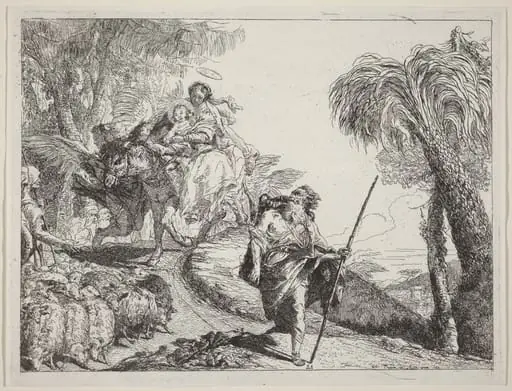 The Flight with Joseph in the Foreground
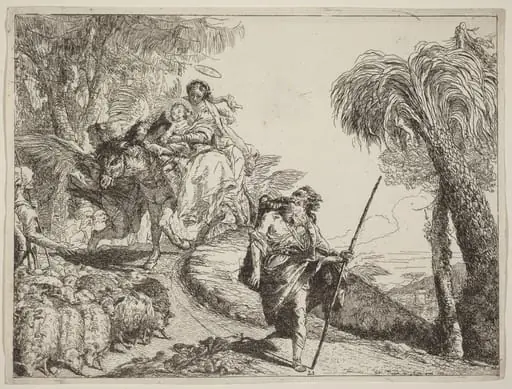 The Flight with Joseph in the Foreground
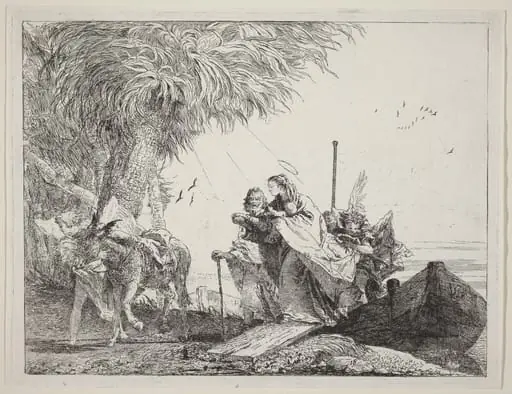 The Holy Family Disembarking
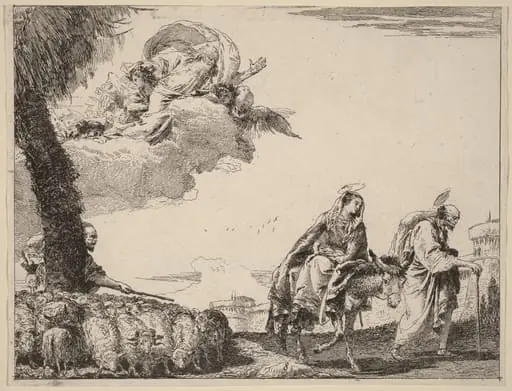 The Flight with the Holy Family at the Right
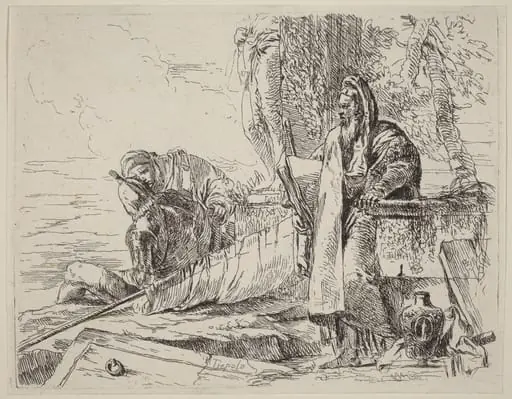 Standing Philosopher and Two Other Figures
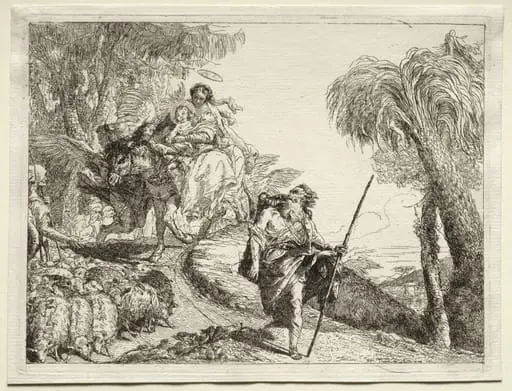 Flight into Egypt: The Holy Family and the Flock of Sheep
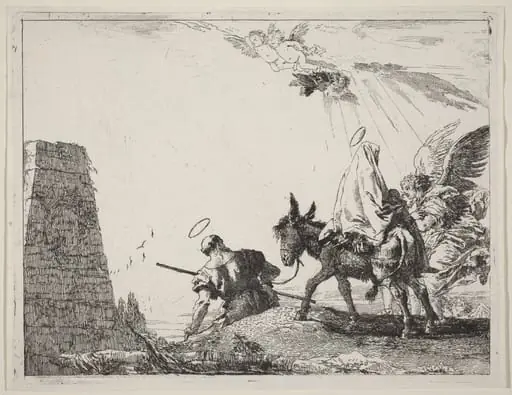 The Flight with Obelisk at the Left