Artwork
Standing Philosopher and Two Other Figures
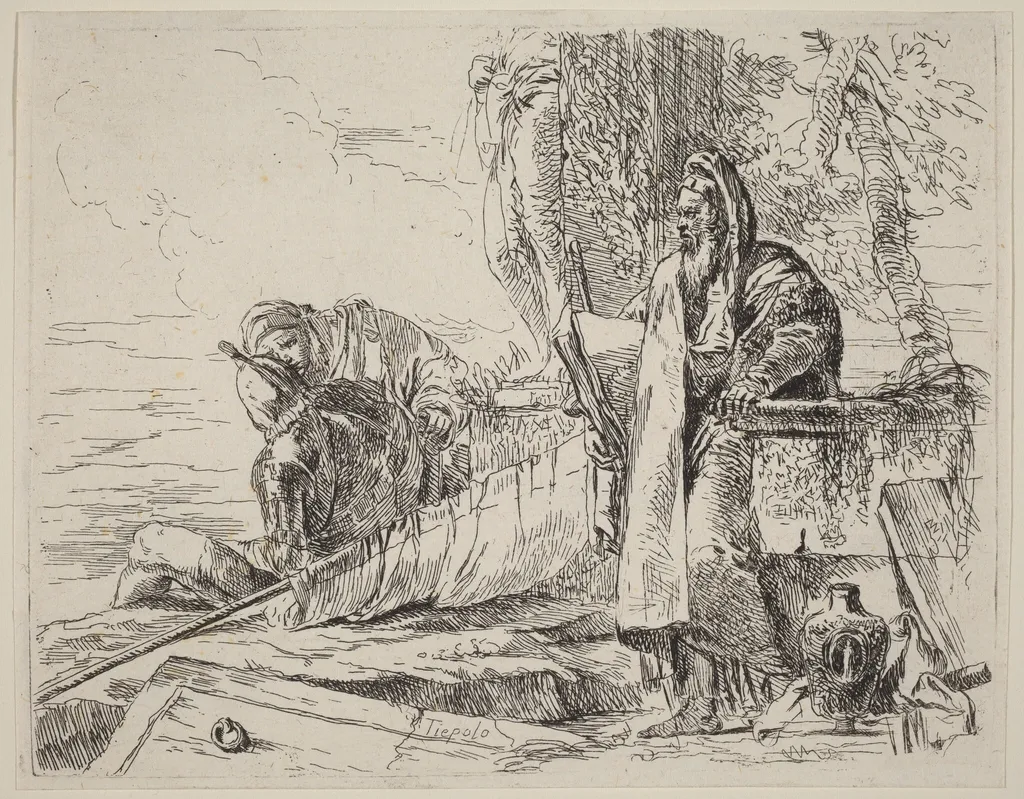
Standing Philosopher and Two Other Figures is an ink print by the Rococo painting artist Giovanni Battista Tiepolo. It is held in the collection of the National Gallery of Art.
About this work
Overview
It belongs to a series of experimental prints made in his final years, where he prioritized expressive line over finished composition.
Created in 1785 near the end of his life, this etching by Giovanni Battista Tiepolo reflects his continued engagement with graphic arts after decades as a celebrated painter. Unlike his grand frescoes, this work is intimate and spontaneous, capturing three figures in a loose, rapid hand. It belongs to a series of experimental prints made in his final years, where he prioritized expressive line over finished composition.
Subject & Meaning
The central figure, standing with a long staff, may represent a philosopher, though no specific identity is confirmed. The seated and leaning figures appear to observe or interact subtly, suggesting a moment of contemplation or dialogue. The ambiguity of their roles invites interpretation without anchoring them to a known narrative, aligning with Tiepolo’s interest in evoking thought rather than telling stories.
Technique & Style
Tiepolo employed quick, fluid etching lines to convey motion and weight with minimal strokes. Shading is achieved through hatched and cross-hatched marks, not tonal washes, giving the image a scratchy, sketchlike quality. The absence of detail and the asymmetrical composition reflect a focus on gesture and rhythm, characteristic of his late graphic work, where spontaneity replaced polished finish.
History & Provenance
This print was made during Tiepolo’s final years in Madrid, where he worked on royal commissions. Unlike his earlier, widely circulated engravings, these late etchings were largely personal experiments, rarely intended for public sale. Few examples survive, and this piece likely remained in his studio or among close associates until entering institutional collections in the 19th century.
Context
In the late 18th century, Tiepolo’s Rococo style was waning in favor of Neoclassical restraint. Yet his etchings, including this one, reveal a quiet rebellion—returning to the immediacy of drawing. He drew inspiration from classical antiquity and Renaissance figures, but filtered them through a personal, almost informal lens, distancing himself from prevailing academic norms.
Legacy
Though overshadowed by his monumental paintings, Tiepolo’s late etchings influenced later artists drawn to expressive line and informal composition. This work exemplifies how a master of grand decoration could turn inward, using the simplicity of etching to explore gesture and presence. Today, these prints are valued for their unguarded vitality and technical freedom.
Artist & collection

Artist
Giovanni Battista Tiepolo, also known as Giambattista Tiepolo, was an Italian painter and printmaker from the Republic of Venice who painted in the Rococo style, considered an important member of the 18th-century Venetian school.

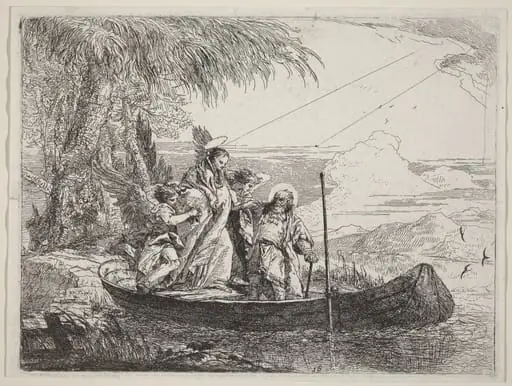 The Madonna, Child, and Angels Entering the Boat
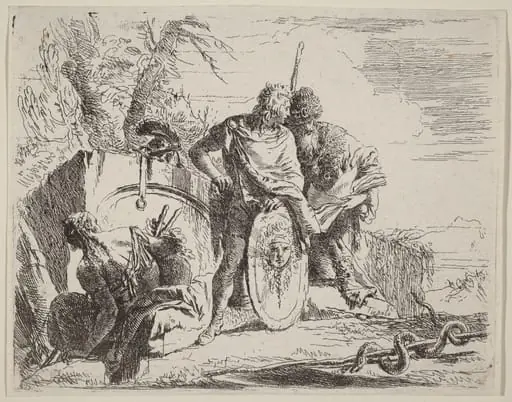 Young Soldier with Philosopher and Seated Woman
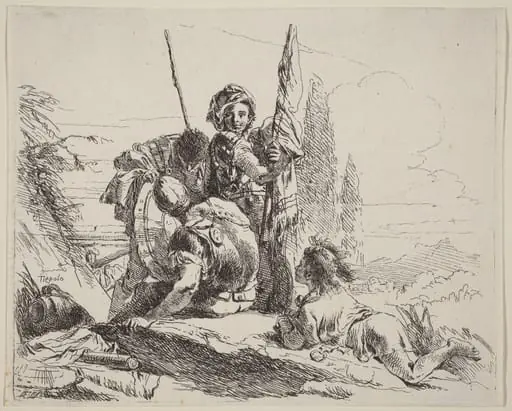 Three Soldiers and a Youth
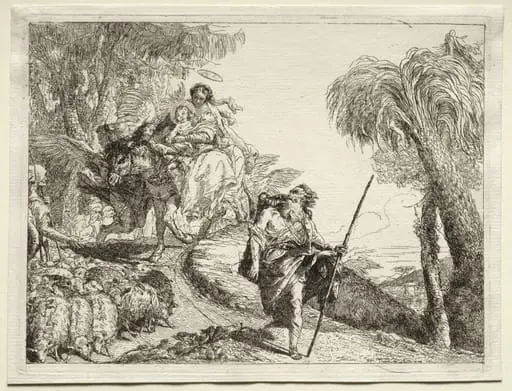 Flight into Egypt: The Holy Family and the Flock of Sheep
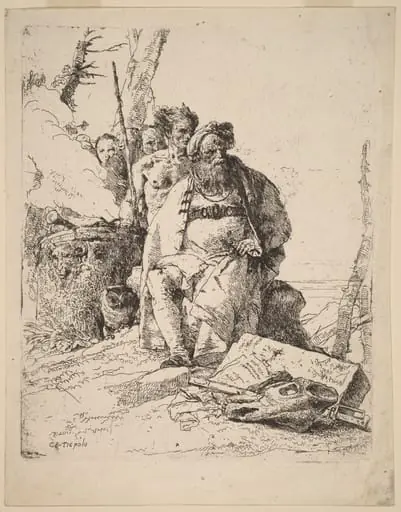 Seated Magician with Other Figures beside an Altar
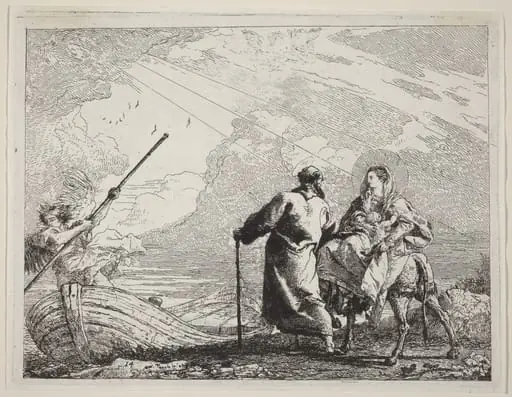 The Holy Family at the Bank of the River
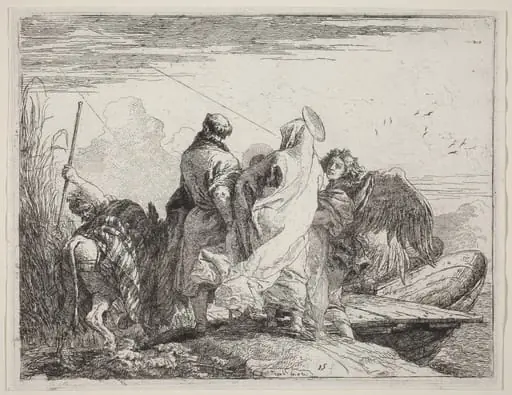 The Holy Family Preparing to Embark
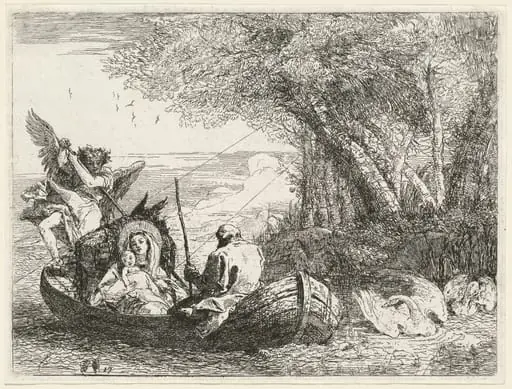 The Holy Family Being Ferried Across the River
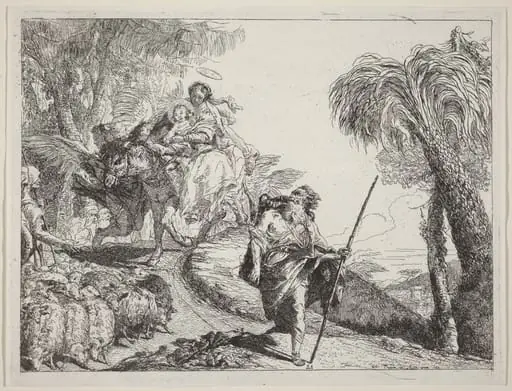 The Flight with Joseph in the Foreground
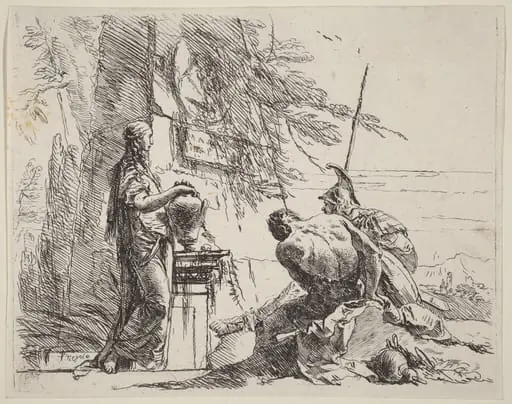 Standing Woman and Seated Men before an Obelisk