Artwork
The Parting of Saints Peter and Paul
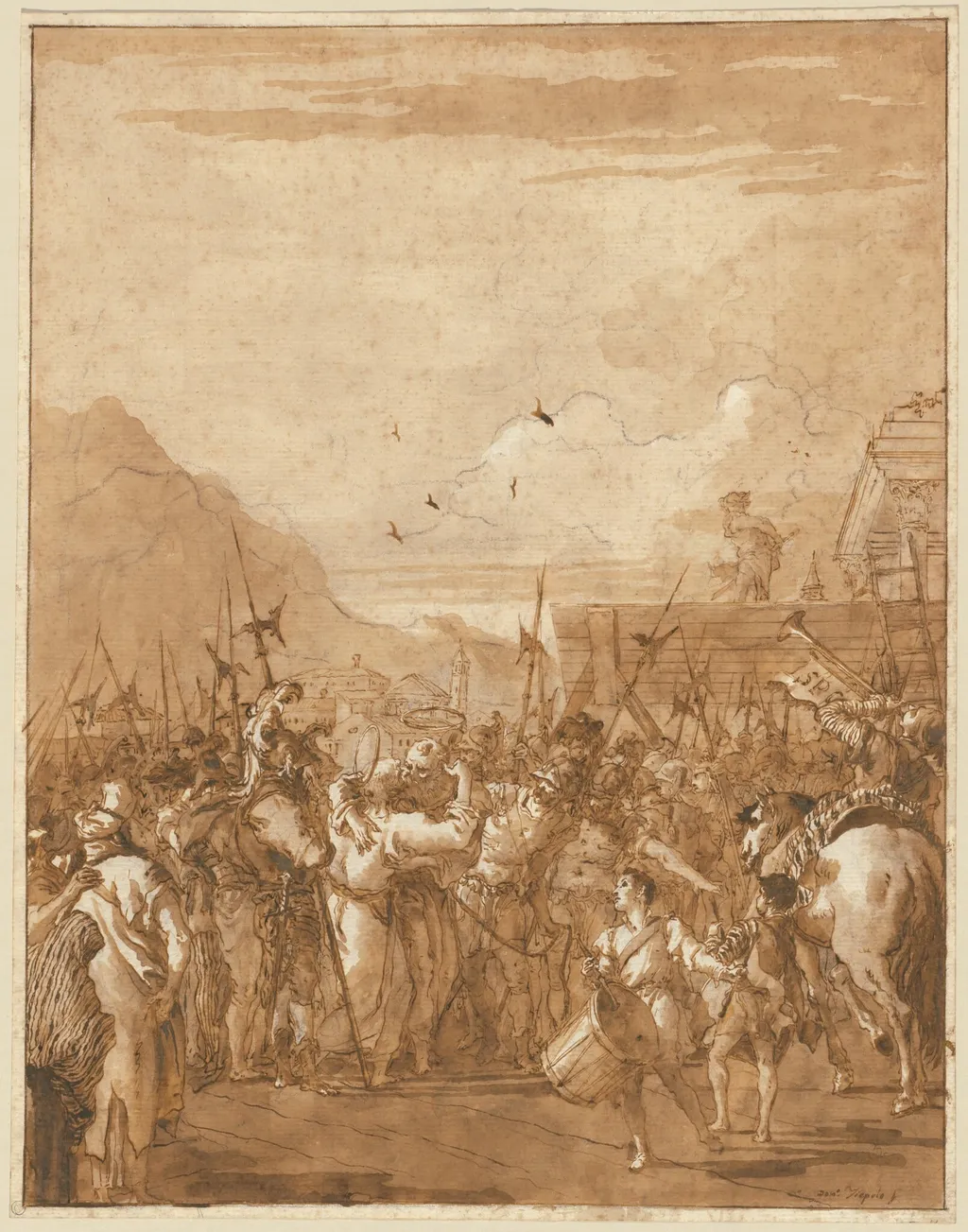
The Parting of Saints Peter and Paul is an ink drawing by the Romanticist artist Giovanni Domenico Tiepolo. It dates from 1790 and is held in the collection of the National Gallery of Art.
About this work
Overview
Created in 1790, this ink and wash drawing by Giovanni Domenico Tiepolo captures a moment of religious farewell with dynamic energy.
Created in 1790, this ink and wash drawing by Giovanni Domenico Tiepolo captures a moment of religious farewell with dynamic energy. Executed on laid paper using charcoal underdrawing, pen, and brown ink, the work reflects the artist’s late-period focus on expressive, rapidly rendered compositions. Its spontaneous quality suggests it was made as a preparatory study or personal exploration rather than a finished piece.
Subject & Meaning
The scene depicts the traditional parting of Saints Peter and Paul, a moment of spiritual transition before their martyrdom. Figures surge in all directions—some waving banners, others gesturing in agitation—conveying emotional turbulence. A distant city under a brooding sky frames the event, while a solitary observer on a balcony introduces a contemplative counterpoint, hinting at divine witness or human isolation amid chaos.
Technique & Style
Tiepolo employed loose, energetic lines and layered washes to suggest movement and volume without detail. Charcoal underdrawing anchors the composition, while ink strokes vary in density to model forms and imply depth. Areas of the paper remain deliberately bare, enhancing the sense of urgency and atmospheric tension. The absence of polished finish underscores the drawing’s function as a working study, prioritizing emotional impact over refinement.
History & Provenance
The drawing emerged from the later years of Tiepolo’s career, following his return to Venice after years abroad. It likely belonged to his personal collection or was made for a private patron, as few such works from this period were commissioned. Its survival reflects its value as an artistic record rather than a public commission, offering insight into his evolving approach to narrative and gesture.
Context
In the 1790s, Tiepolo increasingly turned to intimate, emotionally charged subjects, distancing himself from the grand frescoes of his father’s era. This drawing aligns with a broader shift in Venetian art toward introspection and theatricality, influenced by Enlightenment thought and the fading of Baroque spectacle. The crowded, unstable composition mirrors societal tensions in late 18th-century Europe.
Legacy
Though not widely exhibited in its time, the drawing is now recognized as a key example of Tiepolo’s late style—where spontaneity and psychological depth replace formal grandeur. It influenced later artists interested in expressive draftsmanship and the emotional potential of unfinished works, contributing to 19th-century reevaluations of sketch as artistic statement.
Artist & collection
Artist
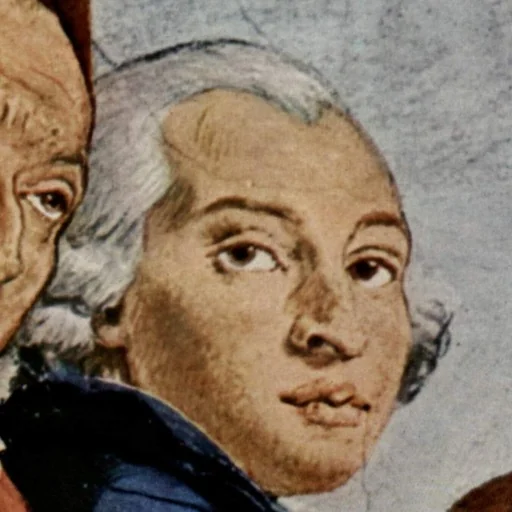
Giovanni Domenico Tiepolo (August 30, 1727 – March 3, 1804) was an Italian painter and printmaker in etching. He was the son of artist Giovanni Battista Tiepolo and elder brother of Lorenzo Baldissera Tiepolo.

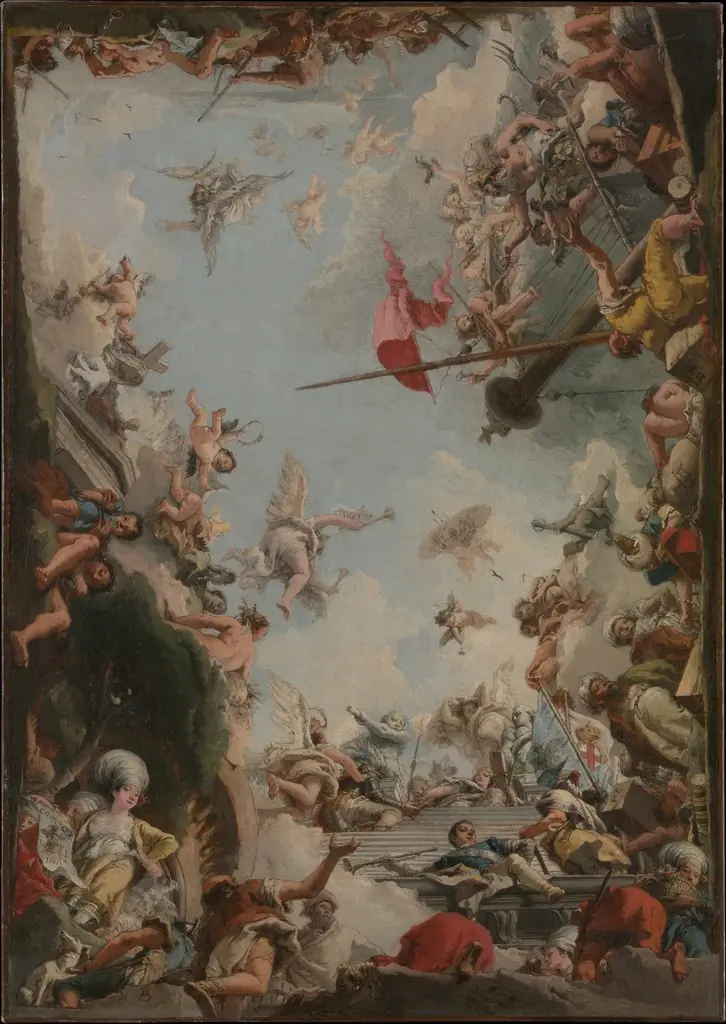
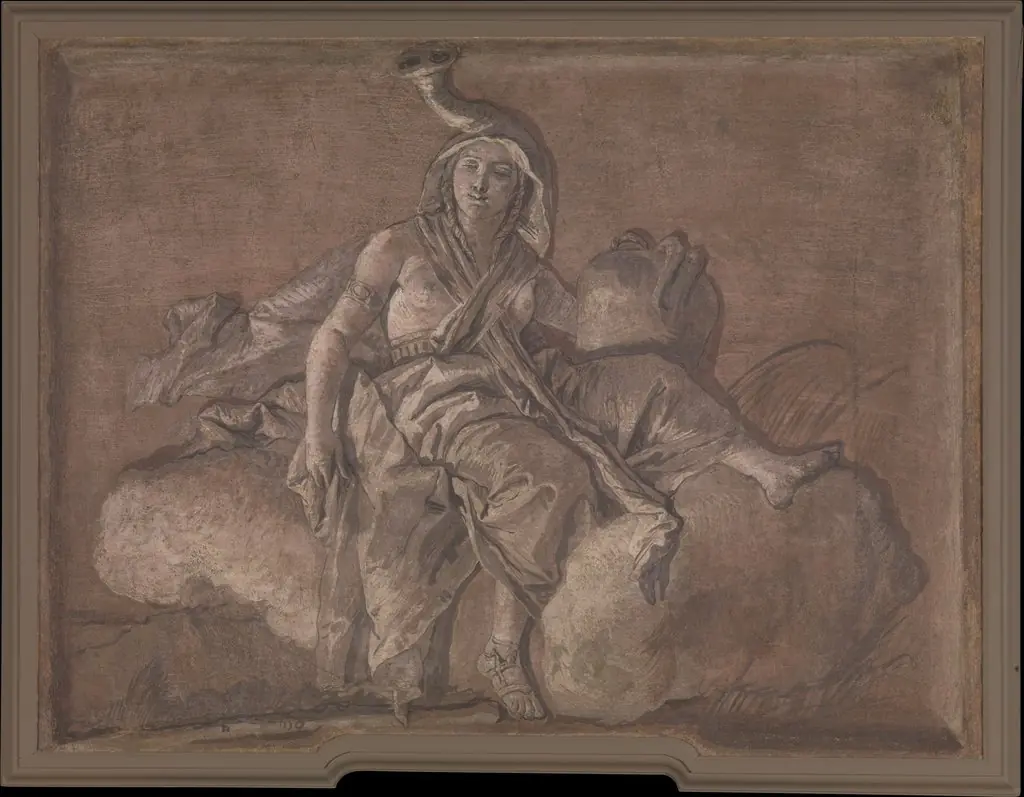
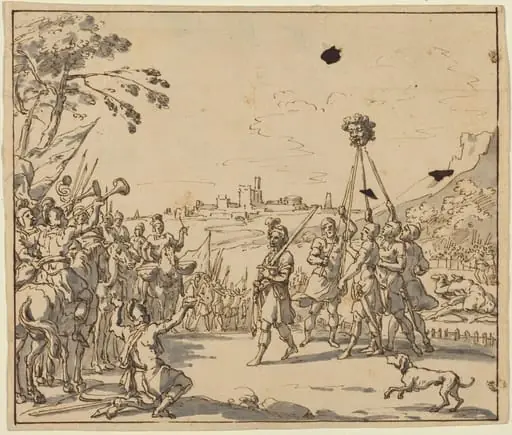 The Triumph of David
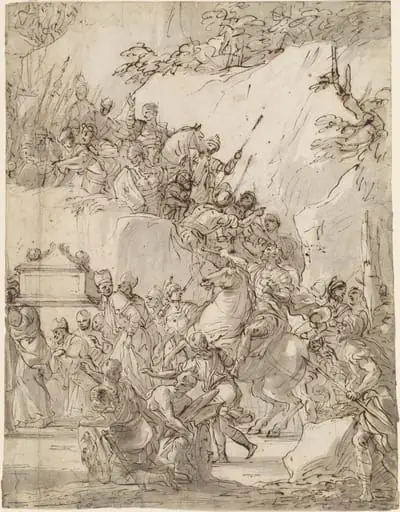 The Transport of the Ark of the Covenant
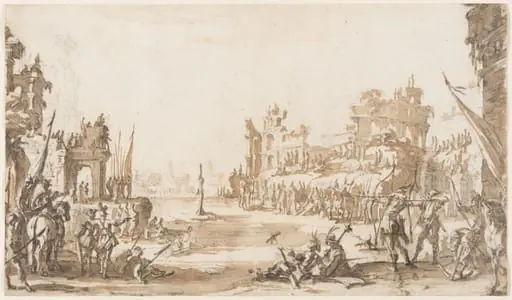 The Martyrdom of St. Sebastian
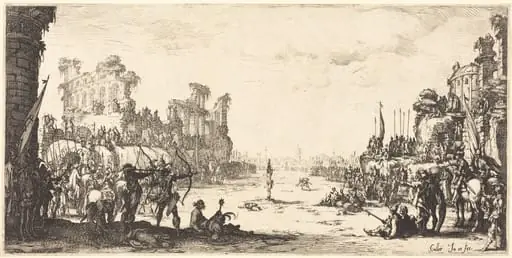 The Ordeal by Arrows (Saint Sebastian)
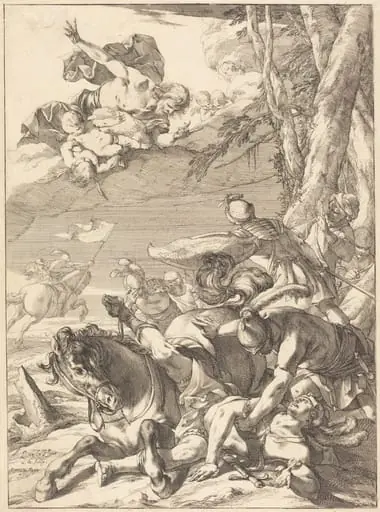 The Conversion of Saint Paul
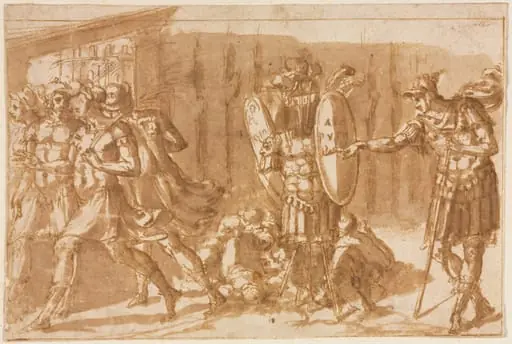 Victorious Soldiers with Trophy
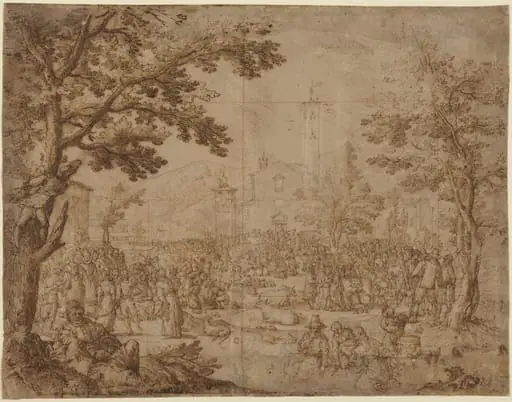 The Fair at Impruneta
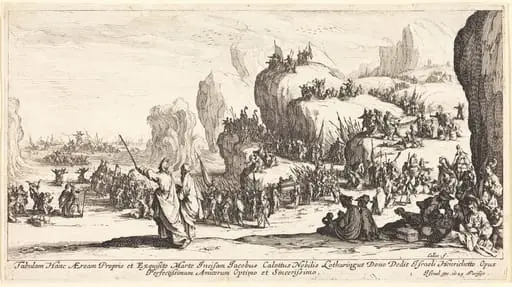 The Crossing of the Red Sea
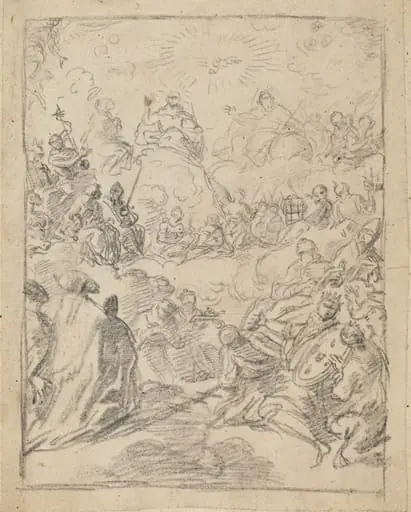 The Triumph of the Trinity (The Gloria)
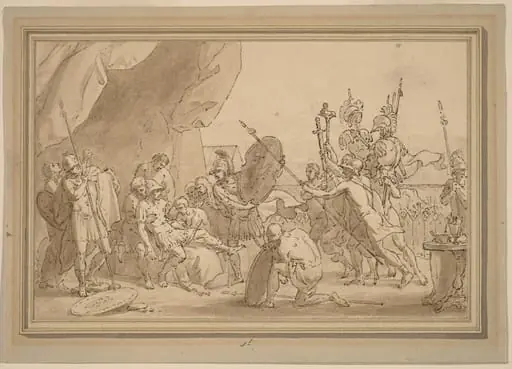 Death of a General
 The Crossing of the Red Sea
 Jacopo Marcello Directing the Assault of Gallipoli