Artwork
The Martyrdom of St. Sebastian
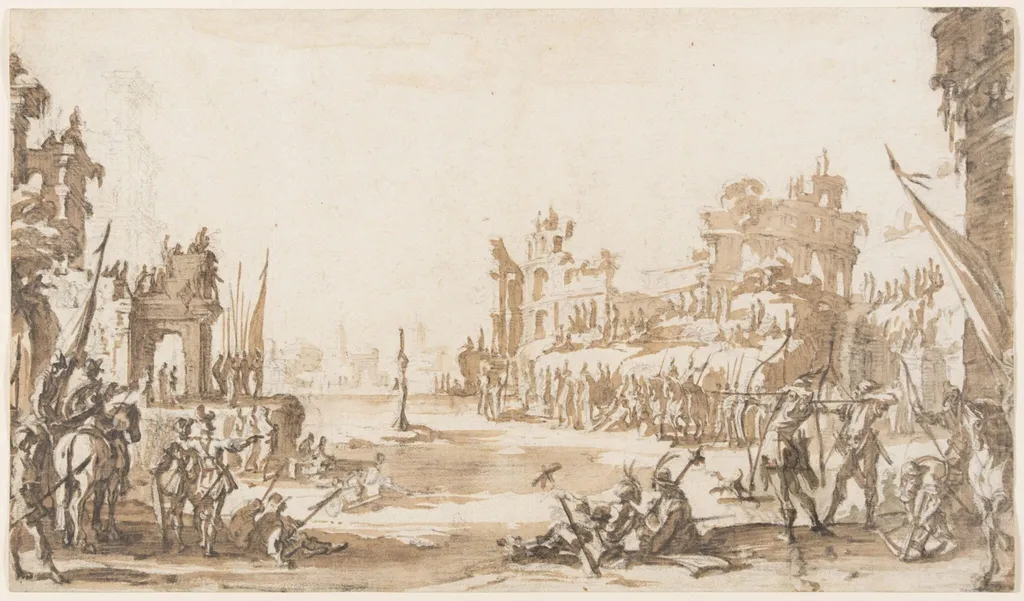
The Martyrdom of St. Sebastian is a drawing by the Baroque artist Jacques Callot. It dates from 1625 and is held in the collection of the Victoria and Albert Museum.
About this work
Overview
This pen and bistre drawing, dated 1625, is attributed to Jacques Callot. Measuring approximately 20 by 28 centimeters, it captures the martyrdom of Saint Sebastian through a dynamic, densely populated scene. The composition balances figures in motion with architectural elements, rendered in a fluid, energetic line that conveys immediacy rather than polished finish.
Subject & Meaning
Rather than isolating the saint, Callot embeds him within a tumultuous military engagement, blurring sacred narrative with secular violence.
The drawing depicts the execution of Saint Sebastian, traditionally tied to his persecution under Roman emperor Diocletian. Rather than isolating the saint, Callot embeds him within a tumultuous military engagement, blurring sacred narrative with secular violence. The chaotic crowd and battling figures suggest a world indifferent to martyrdom, emphasizing the brutal intersection of faith and power.
Technique & Style
Executed in bistre ink, the drawing relies on rapid, overlapping strokes to model form and shadow. Cross-hatching—intersecting parallel lines—builds tonal depth, particularly in armored figures and architectural details. The sketchy, almost improvisational quality contrasts with the precision of Callot’s later etchings, revealing an exploratory approach to composition and texture.
History & Provenance
Created in 1625, the drawing reflects Callot’s engagement with both religious themes and contemporary military imagery. Its early ownership remains unrecorded, but it entered public collections in the 20th century, where it has been studied as an example of Baroque draftsmanship. The work’s condition suggests it was likely a preparatory study rather than a finished piece.
Context
Callot’s depiction aligns with 17th-century European fascination with martyrdom and military spectacle. The crowded, disordered scene mirrors the era’s visual culture, where battle imagery often served as both documentation and moral commentary. The ornate background architecture may reference contemporary urban spaces, grounding the biblical narrative in familiar settings.
Legacy
Though less celebrated than Callot’s etched series, this drawing offers insight into his working methods and thematic preoccupations. Its use of cross-hatching influenced later draftsmen, while its chaotic composition foreshadows the dramatic intensity of Baroque art. Scholars examine it as a bridge between preparatory sketch and finished print, illustrating the artist’s evolving technique.
Artist & collection
Artist
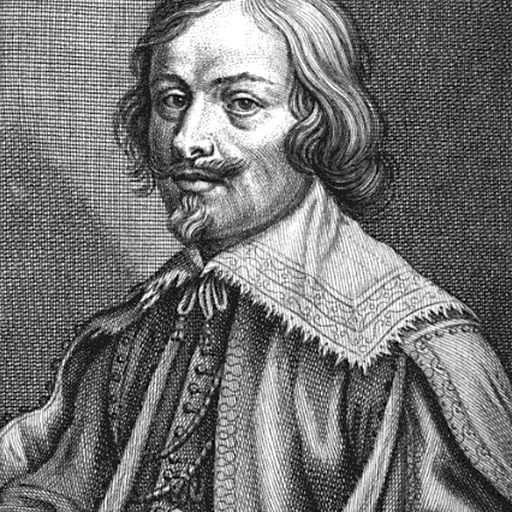
Jacques Callot was a baroque printmaker and draftsman from the Duchy of Lorraine.

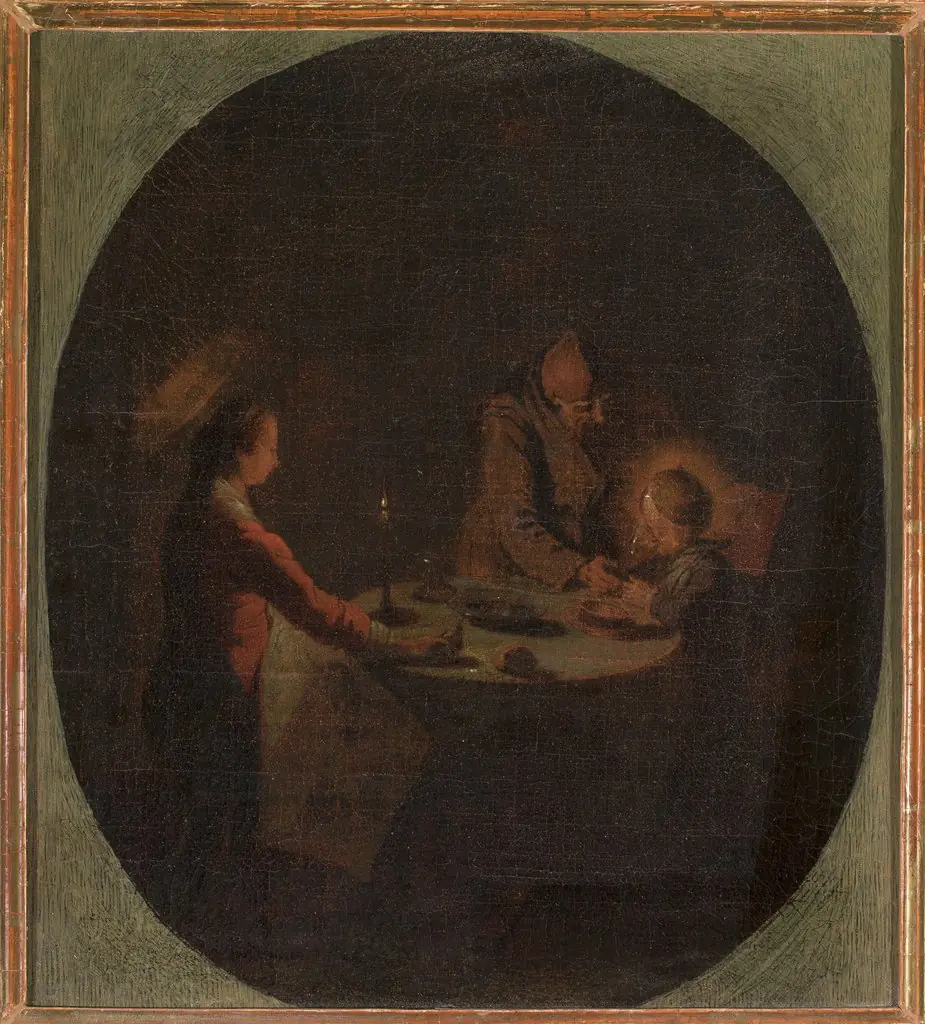 Holy Family at supper
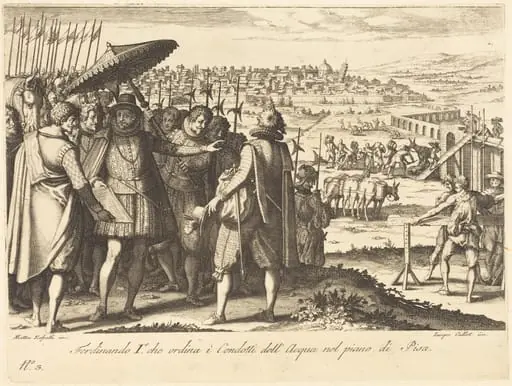 Restoration of the Aqueduct at Pisa
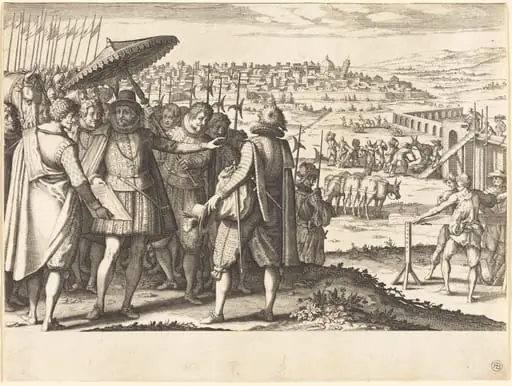 Restoration of the Aqueduct at Pisa
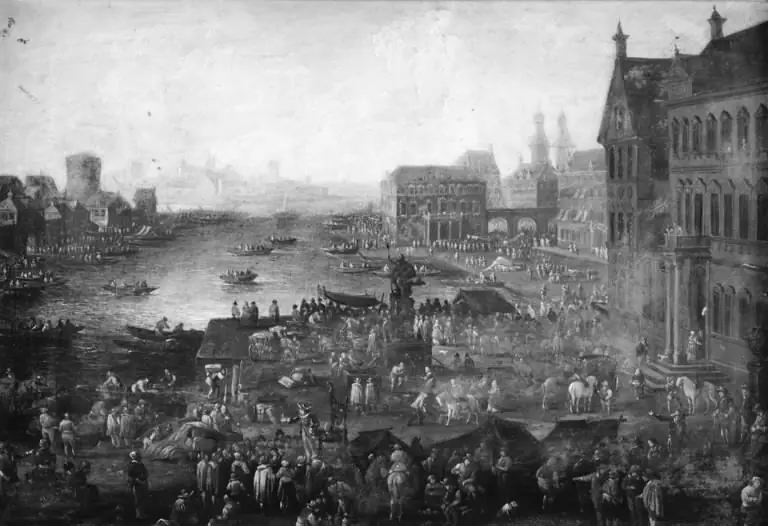 Square in Paris with Many Figures
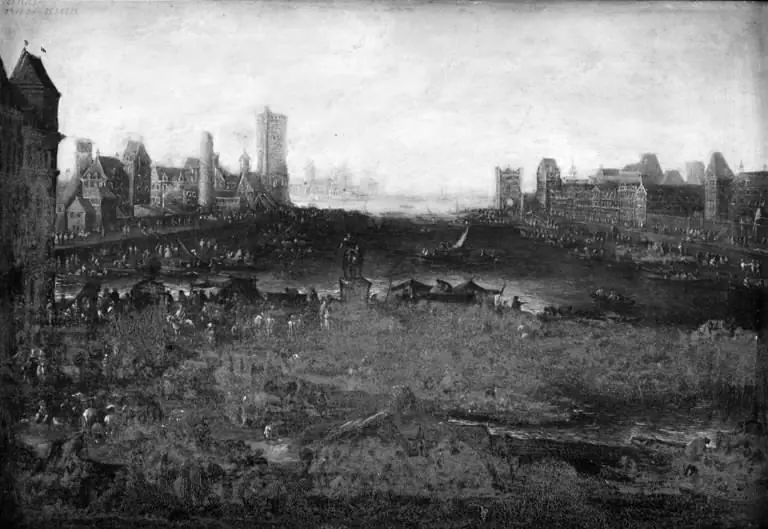 Square in Paris with Many Figures
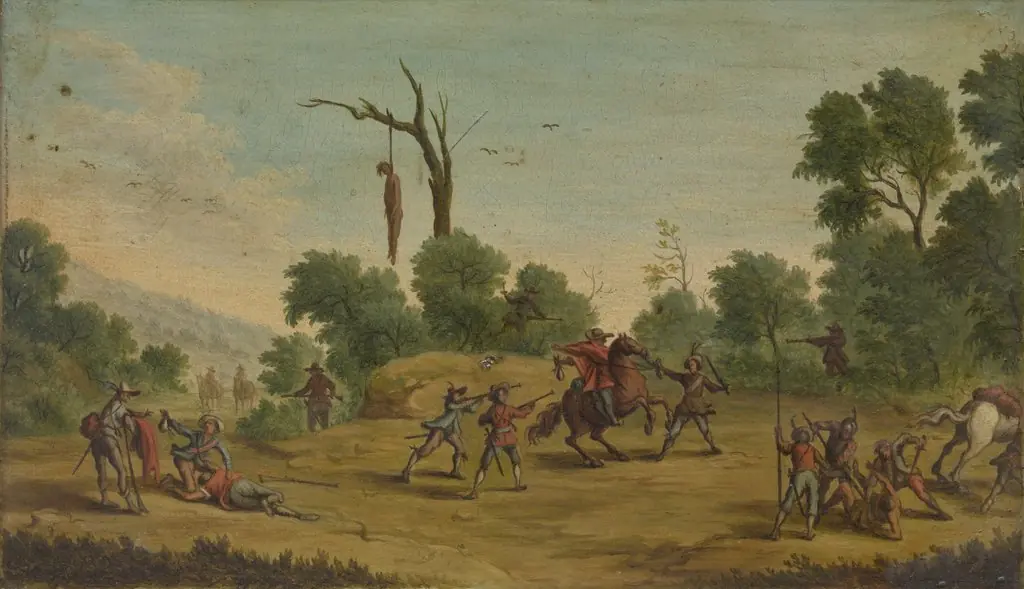 Horsemen Attacked by Robbers
 HOW WILL A COVERED PART BE CORRECTED?HOW WIKA A COVERED HEART DEED CORRECTED?
![Christ Walking on the Water [second plate], by Jacques Callot](https://artifactworldgallery.com/img/jacques-callot--christ-walking-on-the-water-second-plate--2069f3bfe4cb2126-w320.webp) Christ Walking on the Water [second plate]
Christ Walking on the Water [second plate]
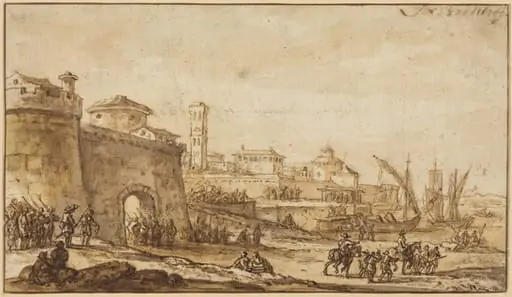 A Coastal Scene with a Fortified Town
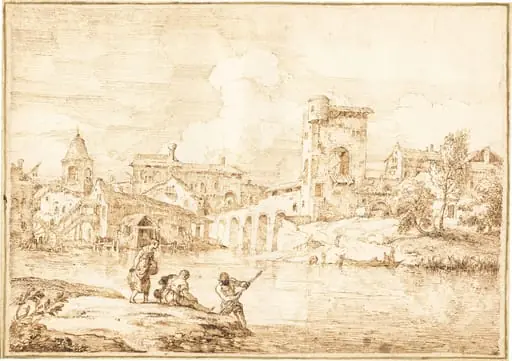 A Fortified Village along a River
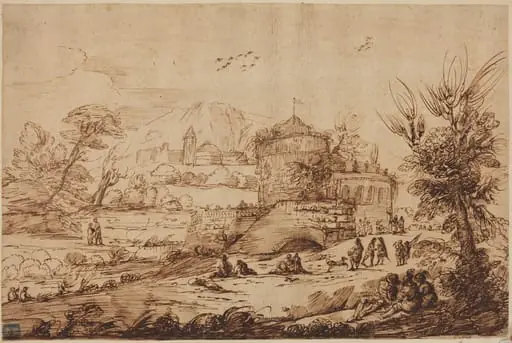 Landscape with Fortress and River
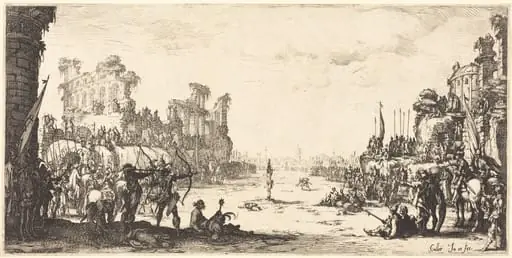 The Ordeal by Arrows (Saint Sebastian)
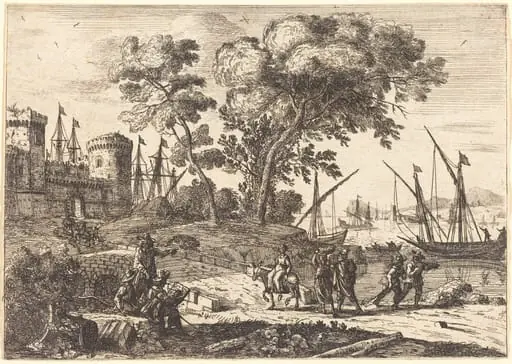 Coast Scene with an Artist (Le dessinateur)
![View of the Castle Sant'Angelo and the Ospedale di Santo Spirito [recto], by Étienne Dupérac](https://artifactworldgallery.com/img/etienne-duperac--view-of-the-castle-sant-angelo-and-the-ospedale-di-santo-spi--b09ebaffc1ffa770-w320.webp) View of the Castle Sant'Angelo and the Ospedale di Santo Spirito [recto]
View of the Castle Sant'Angelo and the Ospedale di Santo Spirito [recto]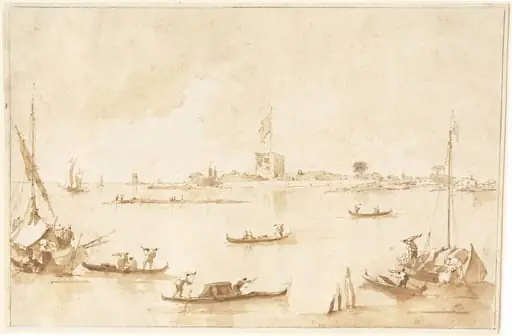 The Fortress of San Andrea from the Lagoon
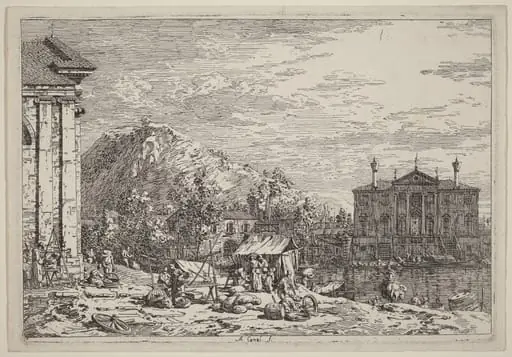 The Market at Dolo
 Capriccio of a Port Scene
 The Parting of Saints Peter and Paul
 Fish Market
 The Fair at Impruneta