Artwork
Kidneys
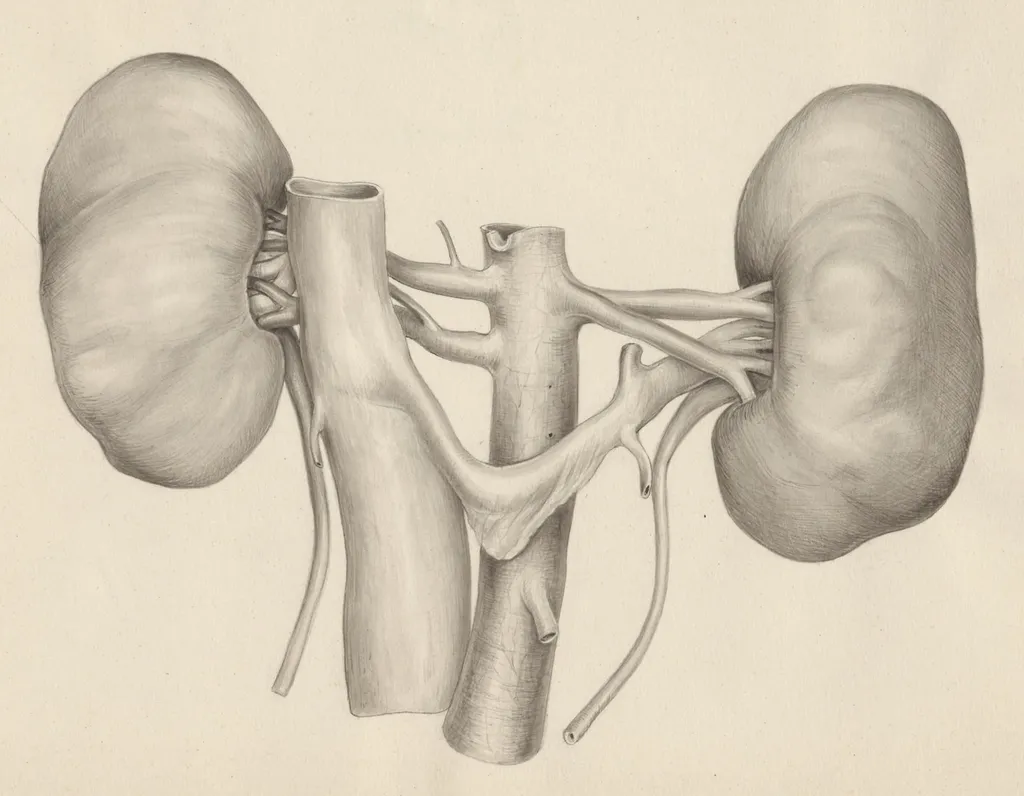
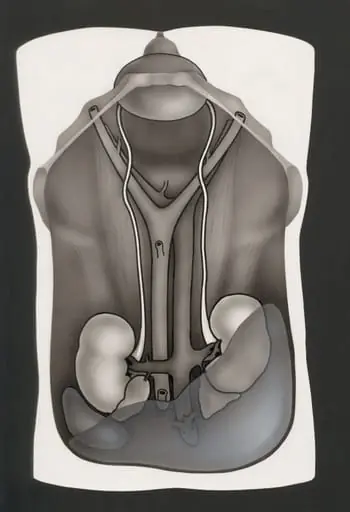
Kidneys is a drawing by J Tinkelenberg. It dates from 1958 and is held in the collection of the Leiden University Libraries. Created in 1958 by J.
About this work
Overview
The composition isolates the organs without contextual elements, emphasizing their form and internal relationships.
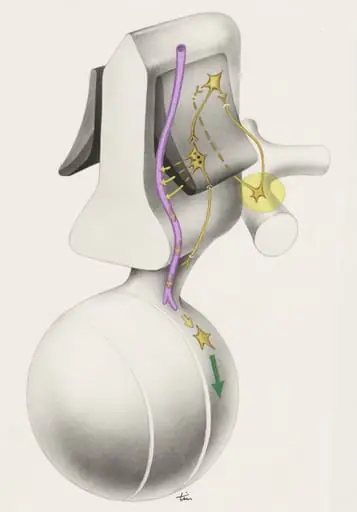
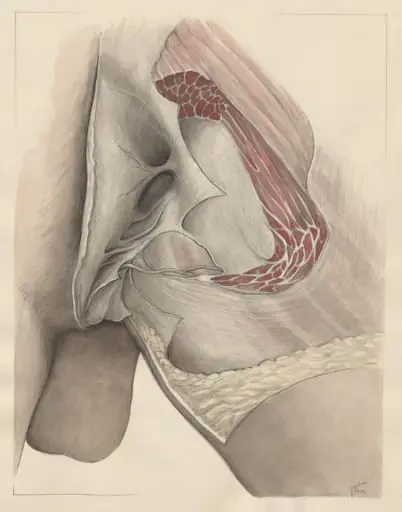
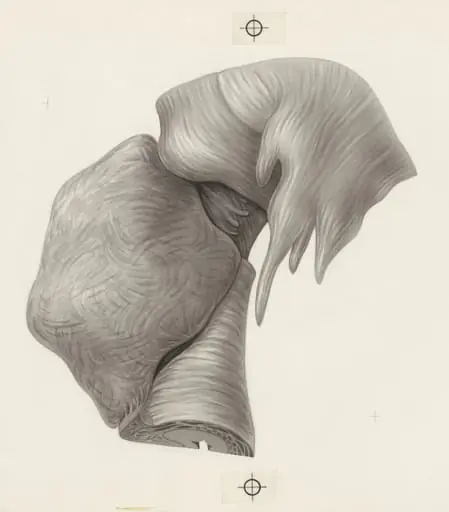
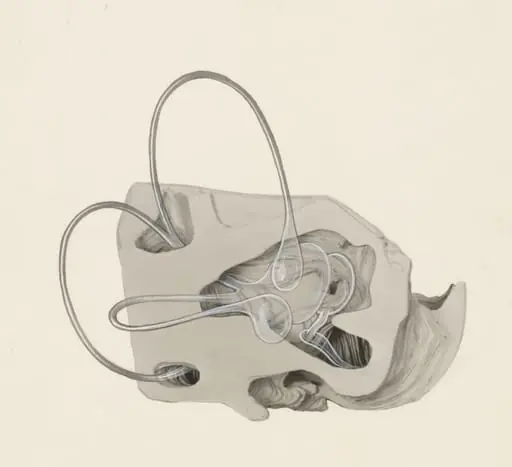
Created in 1958 by J. Tinkelenberg, this anatomical drawing depicts human kidneys with clinical precision. Executed in ink or graphite, the work is part of the Museum of Ethnography’s collection. It belongs to a tradition of scientific illustration, prioritizing structural clarity over artistic expression. The composition isolates the organs without contextual elements, emphasizing their form and internal relationships.
Subject & Meaning
The drawing presents the kidneys as isolated biological entities, rendered without surrounding tissue or bodily context. Their bean-like shape, renal vessels, and ureters are depicted with functional accuracy, suggesting an educational or diagnostic purpose. The absence of emotional or symbolic content reinforces its role as a visual reference, likely intended for medical study rather than aesthetic contemplation.
Technique & Style
Tinkelenberg employed controlled, smooth linework and subtle tonal shading to model the kidneys in three dimensions. The surfaces appear solid, with a texture resembling modeled wax or clay rather than organic flesh. Cross-hatching and graduated shadows define contours without decorative flourishes, reflecting a methodical approach aligned with scientific drafting standards of the mid-20th century.
History & Provenance
The work entered the Museum of Ethnography’s holdings after its creation in 1958, though its original commission or context remains undocumented. It is not attributed to a public exhibition or publication at the time. Its preservation suggests it was valued as a pedagogical artifact, possibly used in medical training or as part of a larger anatomical archive.
Context
In the late 1950s, anatomical illustration was transitioning from hand-drawn plates to photographic documentation. Tinkelenberg’s work represents a bridge between these eras—meticulously rendered by hand yet devoid of stylistic embellishment. It aligns with institutional efforts to standardize visual medical knowledge, particularly in educational settings where clarity outweighed artistic interpretation.
Legacy
Though not widely known outside institutional collections, the drawing exemplifies mid-century medical illustration’s commitment to objectivity. Its restrained aesthetic continues to serve as a reference for how biological forms can be communicated with precision. It remains a quiet testament to the role of draftsmanship in advancing scientific literacy before digital imaging became dominant.
Artist & collection
Artist
This artist carved and painted the hidden systems we carry inside. Their sculptures trace the bend and flow of joints and veins in delicate wire or clay, while watercolors map the first threads of life in an embryo.…