Artwork
Muscular tissue
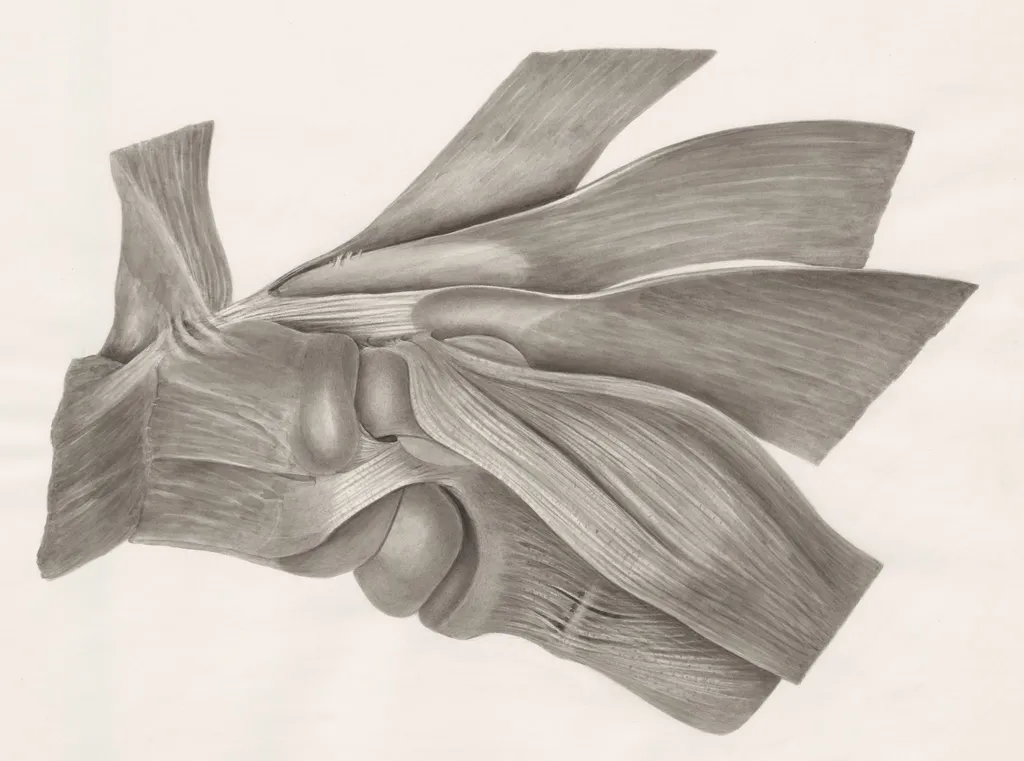
Muscular tissue is a drawing by H.G, Wetselaar. It dates from 1970 and is held in the collection of the Leiden University Libraries. Created around 1970 by H.
About this work
Overview
It was produced as a scientific study, not for aesthetic display, and is now part of the Museum of Ethnography’s collection.
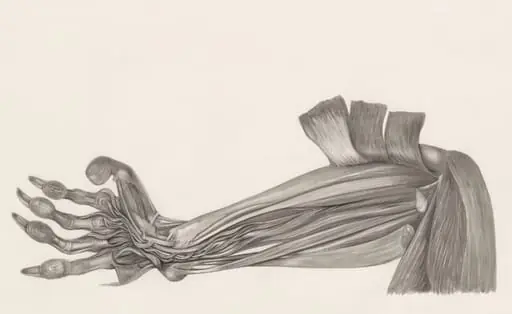
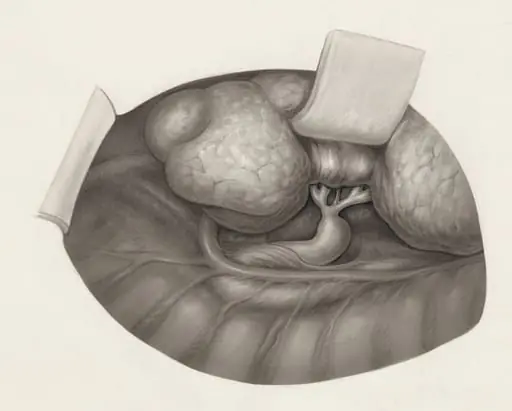
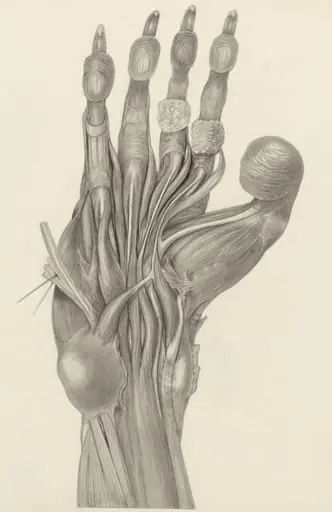
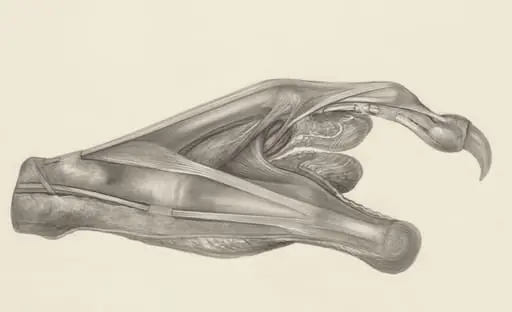
Created around 1970 by H.G. Wetselaar, this detailed drawing depicts human muscular tissue in close-up. Executed in grayscale, the work emphasizes the intricate arrangement of fibers and tendons. It was produced as a scientific study, not for aesthetic display, and is now part of the Museum of Ethnography’s collection. The precision of the rendering reflects its function as an educational tool in anatomical observation.
Subject & Meaning
The drawing isolates a section of muscle and tendon, revealing the complex interplay of connective fibers. Rather than depicting the body as a whole, it focuses on microscopic structure to illustrate biological function. The intent was not symbolic but analytical: to clarify how tissues transmit force and maintain structural integrity. This approach aligns with mid-20th century efforts to visualize internal anatomy for medical and anthropological study.
Technique & Style
Wetselaar employed fine, layered lines to simulate the texture and three-dimensionality of muscle fibers. Cross-hatching and graded shading define form without color, relying on tonal variation to suggest depth. The lines are deliberate and dense, avoiding flourish in favor of clarity. This method, common in scientific illustration, prioritizes accuracy over expression, allowing the viewer to trace the direction and density of tissue bundles.
History & Provenance
The drawing was produced in the early 1970s as part of a broader project documenting human anatomy for educational use. It entered the Museum of Ethnography’s holdings shortly after completion, likely through academic donation or institutional acquisition. Its presence in an ethnographic context suggests its use in comparative studies of human physiology across populations, though no specific cultural association is documented.
Context
During the 1960s and 1970s, detailed anatomical drawings remained vital in fields where photographic technology could not yet capture microscopic structures with sufficient clarity. This work reflects a transitional period in scientific visualization, where hand-drawn illustrations still played a key role in teaching and research. Similar drawings were used in medical schools and anthropological archives to convey structural knowledge inaccessible to the naked eye.
Legacy
Though largely superseded by digital imaging, this drawing endures as an example of meticulous hand-rendered anatomy. It represents a method of observation that valued patience and precision over technological speed. Its preservation in an ethnographic museum underscores the historical link between biological study and cultural documentation, reminding viewers of the labor behind scientific representation.
Artist & collection
Artist
H.G. Wetselaar spent his days hunched over microscopes in a quiet Leiden lab, sketching what most people ignore. His pencil caught the raw architecture of bodies we pretend are smooth—like the knotted muscles of a…

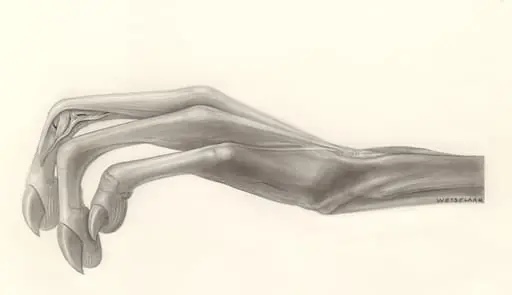
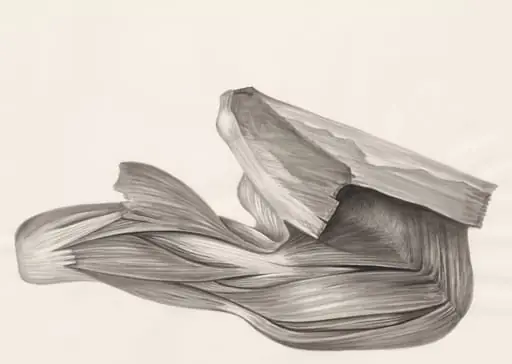 Muscular tissue of a lizards leg
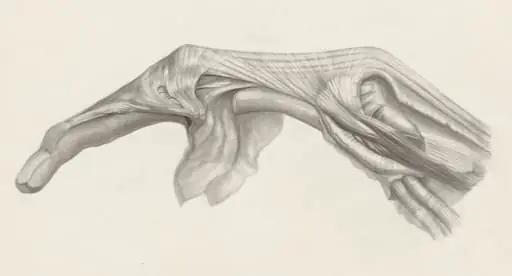 Muscular tissue of the finger
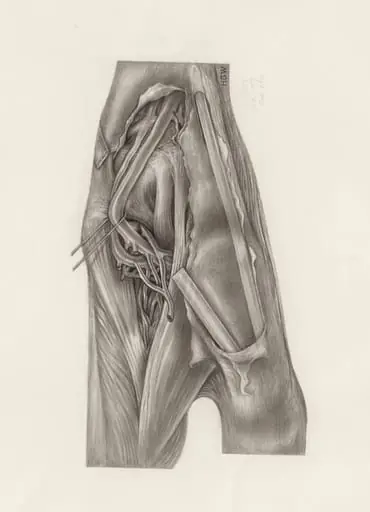 Muscular tissue of the upper extremities
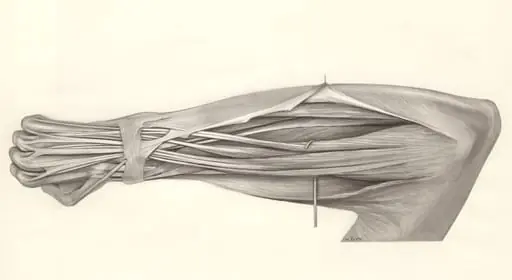 Muscular tissue of the lower arm
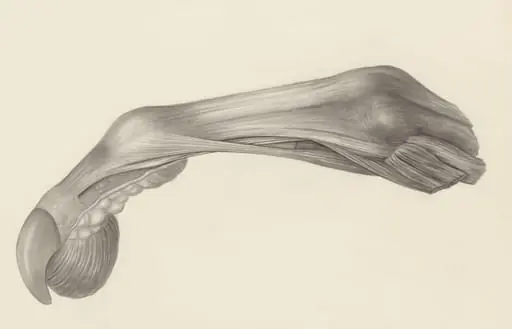 Muscular tissue of the finger of a rhesus macaque
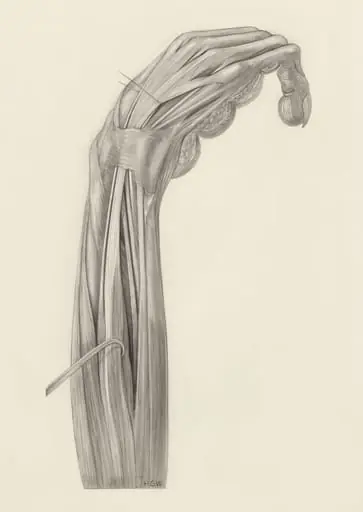 Muscular tissue of the arm of a rhesus macaque
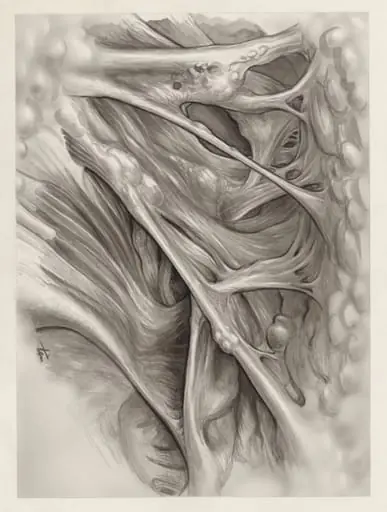 Muscular tissue of the hand or fingers
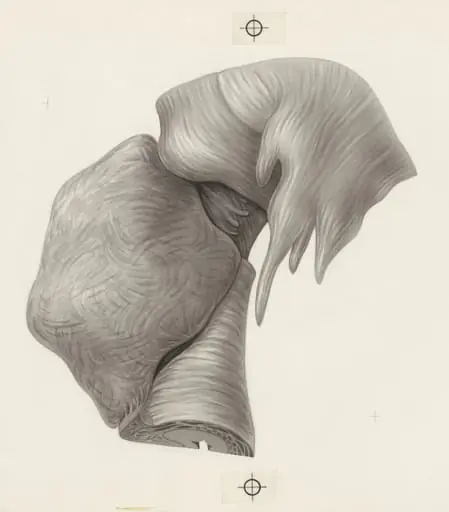 Human tissue
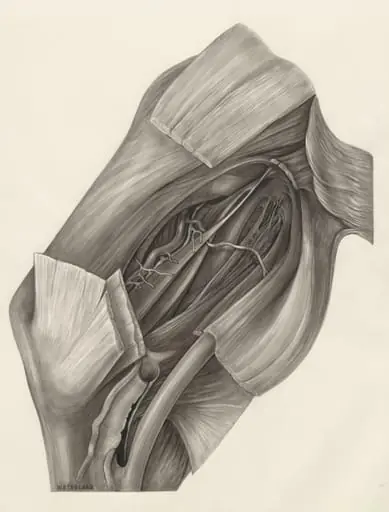 Muscular tissue of the hand or fingers
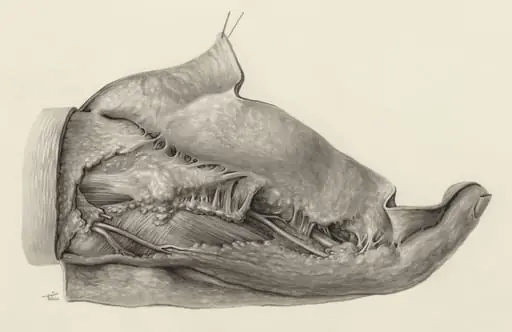 Muscular tissue of the hand and finger