Artwork
Lungs
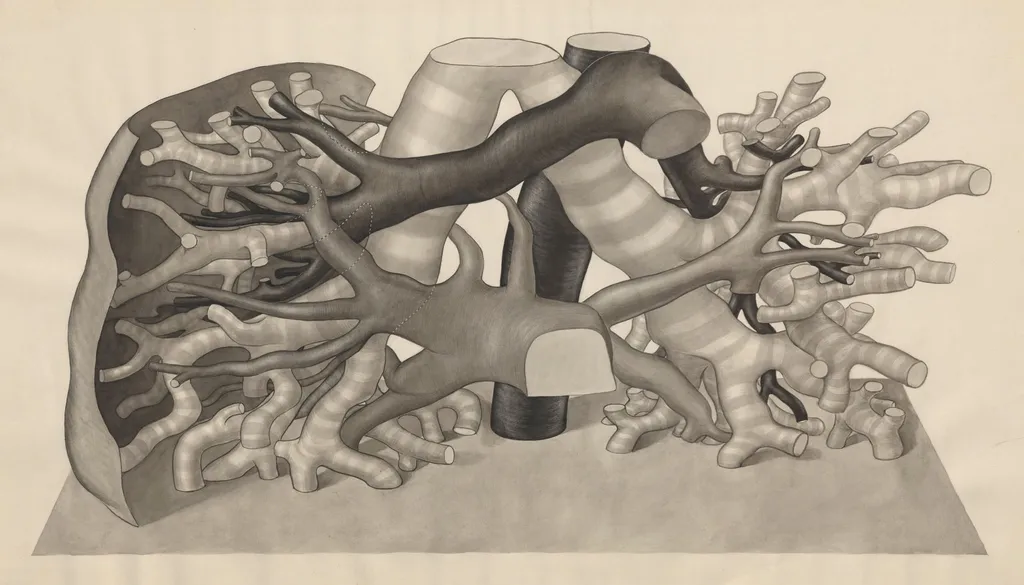
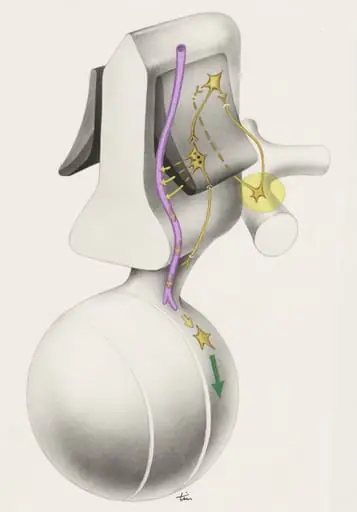
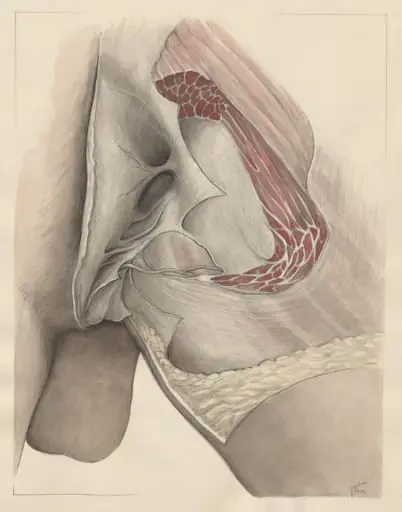
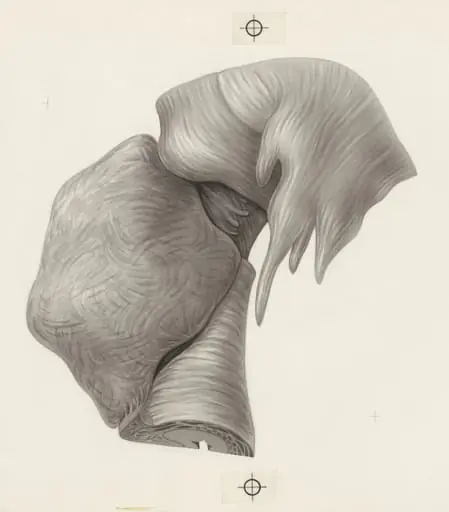
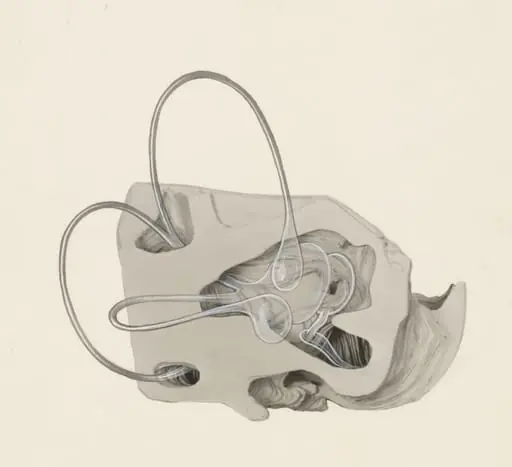
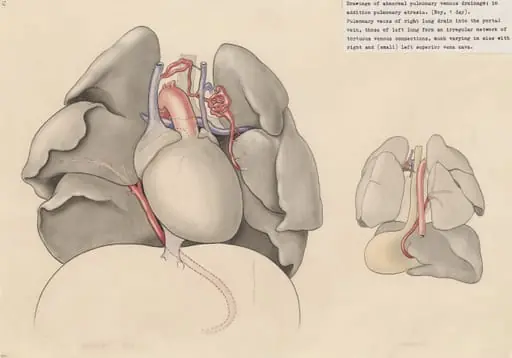
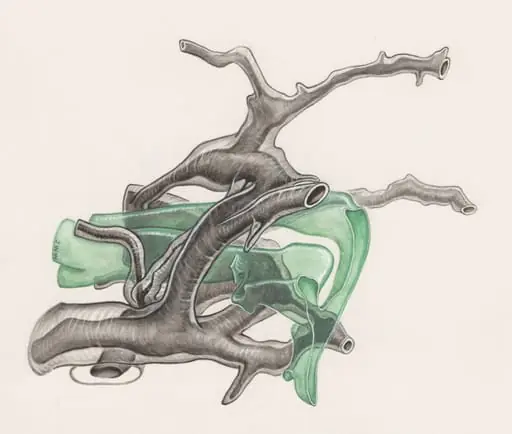
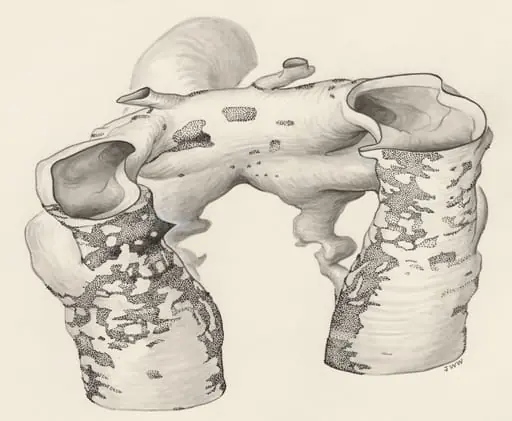
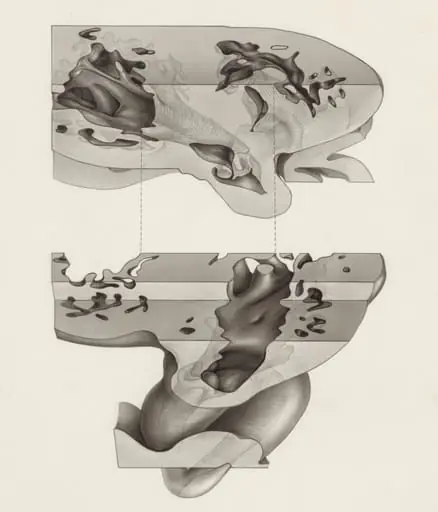
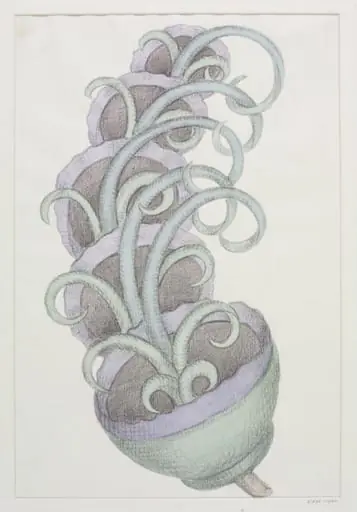
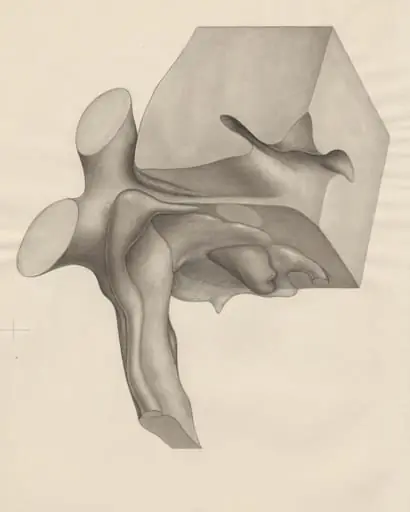
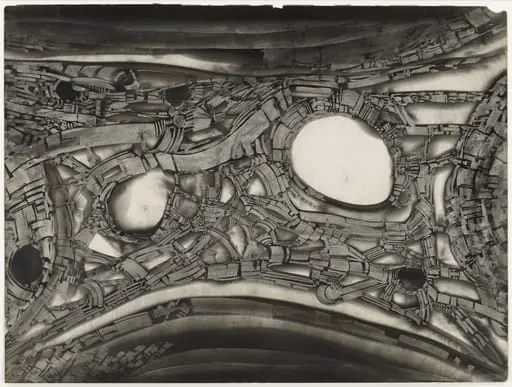
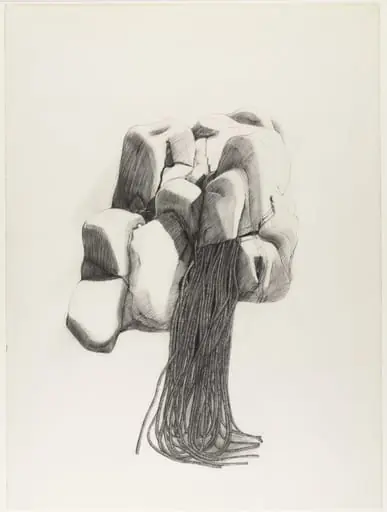
Lungs is a drawing by J Tinkelenberg. It dates from 1950 and is held in the collection of the Leiden University Libraries. Created in 1950 by J.
About this work
Overview
Created in 1950 by J. Tinkelenberg, this graphite drawing depicts an internal anatomical form rendered with meticulous line work. The piece is held in the collection of the Museum of Ethnography and presents a surreal fusion of biological structure and abstract composition. Rendered entirely in grayscale, it avoids color to emphasize texture and spatial depth through dense, overlapping strokes.
Subject & Meaning
The drawing portrays the human lungs as a dense network of branching vessels and air sacs, arranged within the implied cavity of a thorax.
The drawing portrays the human lungs as a dense network of branching vessels and air sacs, arranged within the implied cavity of a thorax. Rather than serving as a clinical illustration, the work transforms anatomical precision into a visual metaphor—suggesting the fragility and complexity of internal life. The tangled forms evoke both organic growth and entanglement, inviting contemplation of the body as a landscape of hidden systems.
Technique & Style
Tinkelenberg employed dense cross-hatching and fine linear gradations to model volume and shadow without color. The close-packed lines create a tactile surface, mimicking the porous texture of lung tissue. The absence of outlines and the reliance on tonal variation give the image an ethereal, almost ghostly quality, blurring the line between scientific diagram and poetic abstraction.
History & Provenance
The work entered the Museum of Ethnography’s collection shortly after its creation, likely acquired as part of a broader interest in visual interpretations of the human body. Its provenance remains modest, with no public record of exhibition prior to its inclusion in the museum’s holdings. It has not been widely reproduced, contributing to its quiet presence within the collection.
Context
Emerging in the postwar period, the piece reflects a broader cultural fascination with internal anatomy and the psychological weight of the body. While medical illustration was becoming more standardized, Tinkelenberg’s approach diverged by prioritizing emotional resonance over didactic clarity. The work aligns with contemporaneous artistic explorations of the body as a site of mystery rather than mere function.
Legacy
Though not widely known outside institutional circles, the drawing exemplifies a quiet tradition of artists engaging with anatomical forms beyond utility. Its influence is subtle, resonating in later works that merge scientific observation with expressive line. It remains a reference point for those studying the intersection of medical imagery and artistic interpretation in mid-20th-century drawing.
Artist & collection
Artist
This artist carved and painted the hidden systems we carry inside. Their sculptures trace the bend and flow of joints and veins in delicate wire or clay, while watercolors map the first threads of life in an embryo.…